As Jammu and Kashmir is racing for the budget estimate announcements next week, Masood Hussain offers an idea of hopes and expectations from Omar Abdullah’s second budget as UT’s Finance Minister

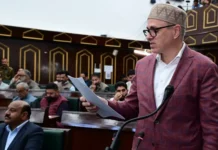
When Omar Abdullah rose in the Jammu and Kashmir Assembly on March 7, 2025, to present his first budget ever as Chief Minister, the exercise carried more political weight than fiscal novelty. This was not merely an annual statement of income and expenditure. It was an attempt to stabilise a strained economy, reassure creditors, calm stakeholders, and leave behind a framework that would not mortgage the future of a region already burdened by debt, disrupted trade cycles, and a fragile revenue base.
The Story, So Far
For the financial year 2025–26, Jammu and Kashmir required an expenditure of Rs 112,310 crore. Of this, Rs 58,624 crore would come as grants from the central government, precisely the Ministry of Home Affairs. The UT’s own tax revenues were projected at Rs 21,550 crore, while Rs 10,355 crore was expected from non-tax sources such as royalties, fees, and dividends.
Even after exhausting these streams, a gap remains. To bridge it, Omar suggested to mobilise Rs 7,453 crore through Additional Resource Mobilisation (ARM), largely via asset monetisation. Despite this, the fiscal arithmetic still demanded that Rs 14,328 crore be raised through fresh borrowing during the year.
It is this dependence on debt that has become the most sensitive fault line in the Jammu-Kashmir budget.
By the end of fiscal 2023-24, Jammu and Kashmir’s outstanding public debt stood at Rs 1,25,205 crore, equivalent to 51 per cent of its Gross State Domestic Product (GSDP), a ratio that places the UT among the more heavily indebted sub-national entities in the country.
Asked about the sustainability of this trajectory, soon after his presentation in the assembly, Omar Abdullah struck a note of caution rather than bravado. “I am sure that we do not raise more debts for our generations,” he said, acknowledging the intergenerational implications of unchecked borrowing. He pointed out that repayment liabilities in the fiscal 2025-26 were “slightly lower” and argued that his government was tightening debt discipline by keeping borrowings within approved ceilings.
More quietly, but significantly, the administration has begun contributing to the Reserve Bank of India’s contingency mechanisms, the Consolidated Sinking Fund (CSF) for debt repayment during fiscal stress and the Guarantee Redemption Fund (GRF) for sudden financial obligations. Officials describe this as an attempt to introduce financial shock absorbers into a system that has historically functioned on ad-hoc support.
A Catch-22 Situation
Despite all the compliances, Jammu Kand ashmir’s revenue side reveals dependence, but the expenditure side exposes rigidity.
Nearly Rs 23,894 crore is earmarked for salaries, while Rs 15,300 crore will go towards pensions, together consuming more than a third of the total budget. Asset maintenance requires Rs 848 crore, and another Rs 8,603 crore falls under a broad ‘others’ category. Power purchase alone is expected to cost Rs 9,000 crore, reflecting both structural energy deficits and contractual obligations.
Debt servicing further tightens fiscal space. Principal repayments will amount to Rs 5,669 crore, while interest payments will touch Rs 11,518 crore. Besides, the government must allocate Rs 6,205 crore as grants-in-aid and Rs 4,335 crore as its matching share for Centrally Sponsored Schemes (CSSs).
After accounting for these committed expenditures, only Rs 17,680 crore remains for pure developmental activity, supplemented by Rs 8,487 crore routed through CSSs. For a region with massive infrastructure gaps, this margin is thin.
An Eroding Base
Compounding these pressures is a visible slowdown in Goods and Services Tax (GST) collections, arguably the most worrying trend confronting the administration right now.
Official data shows that GST revenues in Jammu and Kashmir grew steadily from Rs 7,272 crore in 2022-23 to Rs 8,128 crore in 2023-24, before rising further to Rs 8,680 crore in 2024-25. However, by the first quarter of 2025-26, stress signals had become unmistakable. Revenues fell by nearly nine per cent compared to the corresponding period of the previous year.
The half-year review suggested that Jammu and Kashmir has a fall of almost four per cent in its tax kitty: GST collections were down by 7.25 per cent, Excise down by 1.87 per cent, and road and vehicle tax fell by 5.02 per cent. Only two taxes exhibited growth; the taxes on fuels improved by 10.25 per cent, and the income from stamps and registrations surged by 7.55 per cent. “Against the overall tax collection of Rs 7054 crore by September 2024, the collections were only Rs 6777 crore,” an official privy to the developments said. “It is a 3.93 per cent fall, and it will nosedive further as the GST slabs shifted majorly and items getting better taxes are not taxed or fetch a small tax now.”
What worries policymakers is that the slowdown has persisted. Even as pockets of resilience are visible in districts such as Budgam and Pulwama, overall collections have not returned to earlier peaks. Omar Abdullah has already raised these concerns with the Union Finance Minister, warning that prolonged GST stress could undermine the UT’s already narrow fiscal autonomy. “I hope the central government will chip in to manage the shortfall,” a senior officer, who has been associated with budget making for a long time, said. “But to what extent? That remains to be seen.”
However, the non-tax revenue, which comprises mostly the services have improved in the first half of the fiscal year 2025-26. Against a collection of Rs 3577 in 2024, the collections were at Rs 4207 crore in 2025. By September 2025, the officials had highlighted the massive resource gap of almost Rs 10,519 crore and liability on account of works and GPF amounting to Rs 9192 crore.
Quick Fixes
Post-2019 budgets, officials and analysts acknowledge, have largely been arithmetic of Centrally Sponsored Schemes, tied grants and committed expenditures. This has narrowed the scope for locally tailored policy measures, even as successive budgets have projected outlays exceeding Rs 1 lakh crore. In reality, stakeholders argue, actual spending and its on-ground impact have fallen short of these headline figures. Never ever has Jammuand Kashmir ever been able to reach an expenditure of one lakh crore rupees. This is even though Omar’s first budget had certain populist social welfare measures.
Debt has remained a growing concern. Policy makers have increasingly relied on borrowing to bridge gaps, pushing up the debt stock and, in turn, debt-servicing obligations. The result, critics say, is a shrinking share of funds available for fresh developmental activity, with a growing portion locked into interest payments and committed liabilities.
Stakeholder Appetite
Beyond spreadsheets and projections, the budget has unfolded against a backdrop of mounting pressure from stakeholders who see policy bottlenecks translating into operational crises.
In the weeks leading up to the budget, Omar Abdullah met delegations from the Kashmir Chamber of Commerce and Industry (KCCI), the Federation of Chambers of Industries Kashmir (FCIK), transport unions, hoteliers, horticulture exporters, cold storage operators, and representatives of the construction and power sectors. Their concerns were varied, but the underlying theme was common: rising costs, delayed payments, regulatory uncertainty, and shrinking margins.
No sector has articulated this discontent more sharply than local industry. The Federation of Chambers of Industries Kashmir (FCIK) has pointed to a stark paradox: more than Rs 1.9 lakh crore spent on capital expenditure over the last six years, yet local manufacturing units remain starved of orders.
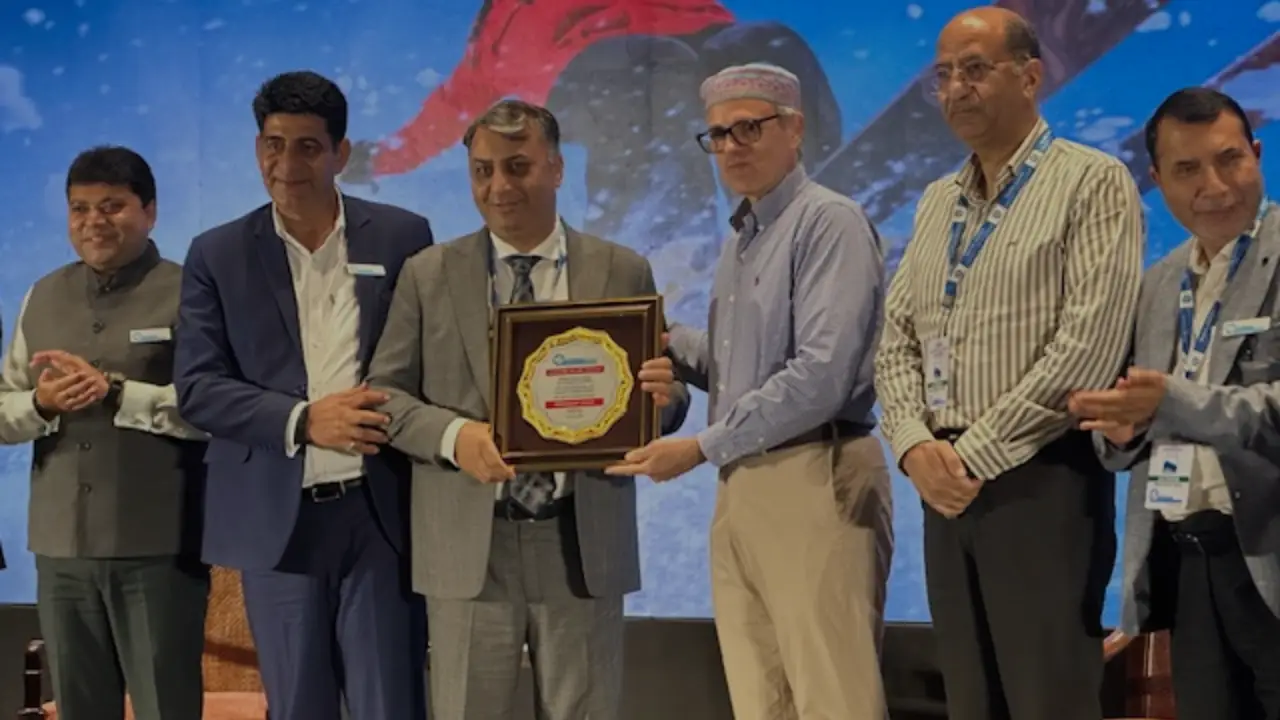
According to FCIK, between 2020-21 and 2024-25 alone, the government spent over Rs 1.58 lakh crore on capital works, with another Rs 32,607 crore earmarked for the current financial year. Additional spending by central public sector undertakings, defence and paramilitary forces has further expanded the public investment footprint. Yet, the chamber says, local MSMEs have been systematically excluded from procurement flows.
“Despite this massive public investment, local MSMEs are facing an acute shortage of orders. Many units are either closed or on the brink of closure,” FCIK said, arguing that the problem lies not in lack of spending but in how procurement decisions are structured.
Until 2017, local industries enjoyed cost equalisation measures such as tax remissions, toll exemptions and procurement support that recognised their structural disadvantages. The dismantling of toll posts after the creation of the Union Territory and the shift to GeM-based procurement and national e-tendering, industry bodies say, has ended the level playing field.
Government purchases, once characterised by price preference for local suppliers, are now largely routed through open platforms and turnkey contracts. These are increasingly cornered by non-local manufacturers, while contractors independently source industrial goods, diluting MSME reservation benefits.
The poultry sector is cited as a telling example. Once dominated by local farmers, it has, according to stakeholders, been “decimated” by unrestricted inflows after toll post removal, with non-local operators now controlling large parts of the market.
Ahead of the budget and the ongoing review of the Industrial Policy 2021-30, FCIK has proposed a fundamental overhaul of the Public Procurement Policy. It has called for a shift from symbolic price preference to assured purchase preference, arguing that guaranteed orders would revive factories and employment without imposing additional fiscal burden.
Among its key proposals are revival of SICOP as a nodal procurement agency for MSE-reserved items, reforms in e-tendering and turnkey practices to ensure MSME participation, mandatory segregation of industrial goods from civil contracts, and strengthening local filters on the GeM portal.
FCIK has also flagged deep regional imbalances in industrial infrastructure. Kashmir, it claimed, has significantly less industrial land than Jammu, while within Kashmir, North Kashmir remains severely underserved. Similar disparities exist in Jammu’s hilly regions, including the Chenab Valley and Pir Panjal districts. The chamber has urged the government to invest in large, contiguous industrial estates in underrepresented areas and promote activity-based clusters.
Contractors Concerns
Even government contractors raised red flags over delayed payments, cautioning that liquidity stress in the private sector would eventually circle back to public works and employment.
Contractors in Jammu and Kashmir are facing two problems. One, they are implementing government works, but the payments are inordinately delayed. This eats into their margins. In Kashmir alone, the government is withholding Rs 1275 crore from the contractors, a figure that was put at Rs 6200 crore by the government in March 2025.
The second issue is that the works are limited, and the erstwhile state is opened for contractors across the country. This has taken competition to a new level. “We had a drainage project that had Rs 46 lakh allocated,” one engineer explained. “It was awarded to a contractor for Rs 20 lakh, and the project is complete,d but payment is yet to be made.”
The engineer said that there are too many contactors and quite a few works and this has taken the competition to a level where the project owners are worried about the quality of work. This, he said, is a national trend now. “People are desperate to survive,” he said.
Trade Chambers, Retail
Trade bodies in Jammu have raised parallel concerns. The Chamber of Commerce and Industry (CCI), Jammu, has sought extension of incentives offered to new industries to existing units, power amnesty for commercial users, purchase preference for locals, freight subsidies, interest subvention and resolution of long-pending land and lease issues.
The Indian Chamber of Commerce (ICC), Jammu Chapter ,has stressed the need for a pragmatic, fiscally balanced industrial policy that strengthens existing units while attracting fresh investment. Its proposals include turnover-linked incentives, working capital subsidies, continued SGST reimbursement, interest subvention for modernisation and expansion, and capital subsidies, particularly to encourage renewable energy adoption.
Agriculture
Agriculture and allied sectors, which sustain a large share of the population, have alleged they are being excluded from meaningful consultation, warning that weak planning and delayed implementation have diluted the impact of generous allocations. They have sought a Rs 300 crore revolving fund to ensure uninterrupted implementation of schemes, revival of commercial floriculture, performance audits of public assets, permanent grain mandies, district-level skill centres and climate-resilient agriculture planning.
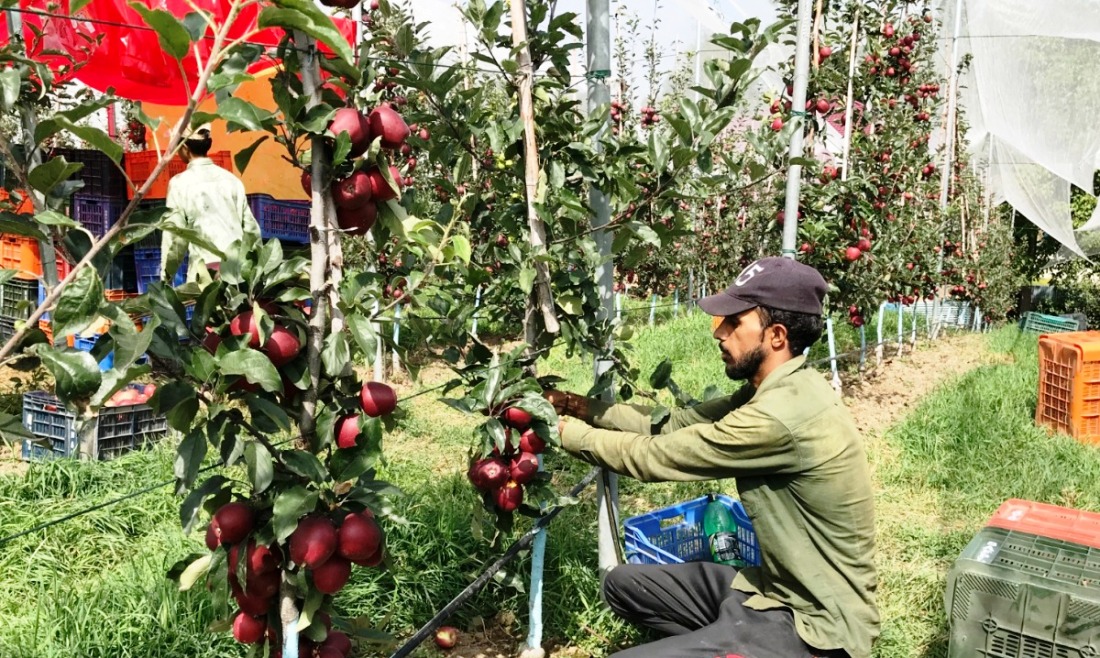
In Kashmir, apple growers have demanded a Rs 2,000 crore relief package, citing repeated natural disasters, including floods in 2025. Horticulture bodies have called for crop insurance, revival of the Market Intervention Scheme for apples, establishment of cold storage and CA facilities, and a dedicated horticulture estate.
Climate change has also entered the budget discourse more explicitly. CPI(M) legislator MY Tarigami has pitched for a dedicated climate change fund, arguing that flash floods, droughts and climate-induced migration now demand systematic financial planning. PDP’s Waheed Parra has sought a cancer institute in J&K, citing alarming mortality figures and the financial ruin faced by families seeking treatment outside the UT.
Environmental groups have placed specific demands on the table. The Environmental Policy Group has asked for a Rs 10 crore allocation to conserve the Guryul Ravine near Srinagar, recently declared a Geo-Heritage Site of National Importance. Scientists consider the site globally significant for preserving evidence of the Permian–Triassic mass extinction, yet it faces threats from unregulated activity and nearby construction.
Responses, So Far
Omar’s response, according to those present in the meetings, was measured rather than populist. He promised targeted interventions where fiscal space allowed, but repeatedly returned to the constraints imposed by debt servicing and revenue uncertainty. “You cannot spend what you do not have,” one official paraphrased him as saying during a closed-door interaction.
In that sense, the 2025-26 budget does not offer dramatic announcements or sweeping new schemes. Instead, it reflects an attempt to hold the line, to prevent slippage, stabilise finances, and pass on a system that is at least fiscally intelligible to whoever takes charge next.
Whether that restraint will be read as responsibility or timidity is a political question. Economically, however, Omar Abdullah’s last budget reads like a document shaped less by ambition than by arithmetic, and by the recognition that Jammu and Kashmir’s biggest challenge today is not announcing new promises, but keeping the old ones solvent.