The fiscal management of Jammu and Kashmir is no better under Union’s watch with a surge in debt amidst massive revenue shortfall leaving a paltry sum for developmental activities writes Masood Hussain
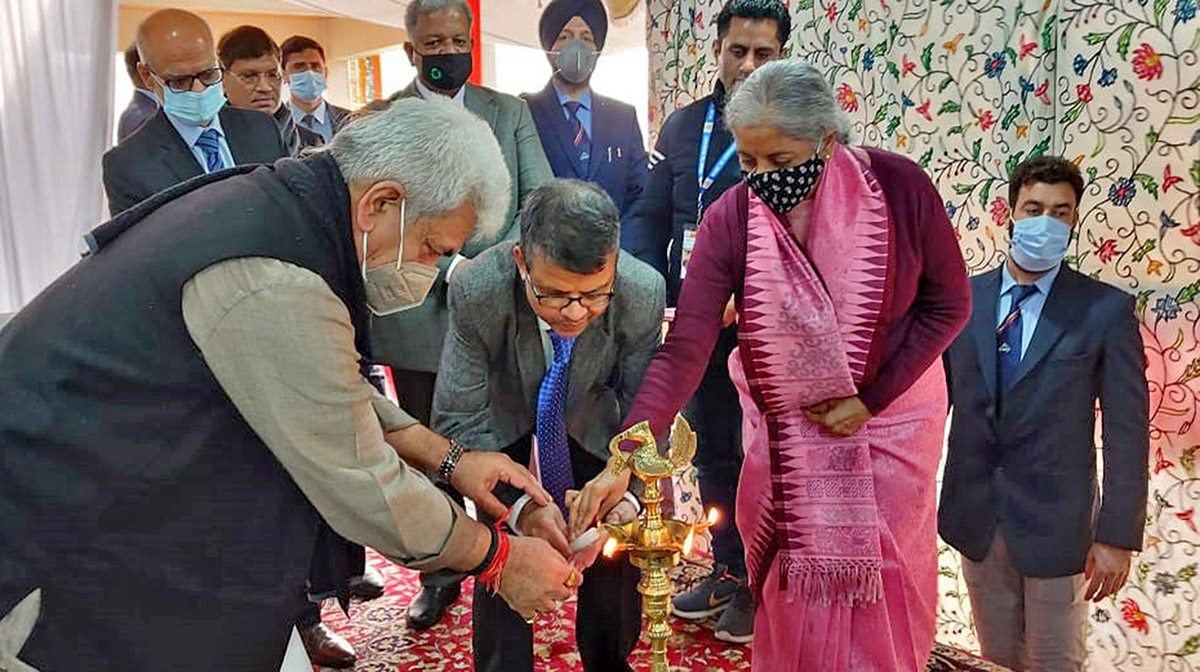
Among the many enviable firsts that Nirmala Sitaraman has as Finance Minister, one that doesn’t do much credit to the federal system is that she is the only Union Finance Minister who has presented the most budgets for an erstwhile state. Sitharaman has perhaps presented more Jammu and Kashmir Budgets, six in a row, than any finance minister of the erstwhile state except for Abdul Rahim Rather!
The “unprecedented socio-economic development” after the “historic reforms initiated in August 2019,” it is expected, would be reflected in improved fiscal management and better budgetary practices. BJP has been driving the entire governance in Jammu and Kashmir since the summer of 2018.
Does, what is widely expected to be the last budget of Jammu and Kashmir to be presented in the Parliament, leave a better legacy for the next government in the erstwhile state than what it says it had inherited? It does not seem so. Nothing tangible has changed. If anything, the financial health of the government of Jammu and Kashmir has worsened.
Identifying the reasons for the “legacy of very high fiscal stress”, Sitharaman observed that it was due to “the committed nature of the major expenditures not supported by a proportionate increase in its revenues”. Further, “its dependence on a central grant is to the tune of around 70 per cent of its total expenditure. The perpetual fiscal stress leads to frequent use of ways and means advances and overdraft.” On none of the indicators referred to has Jammu and Kashmir fared better than in the past. For one, the financial dependence has, if anything increased and is set to increase further thanks to the budget for this year.
Cure Worse Than Disease
Sitharaman has announced taking over the entire costs of Jammu and Kashmir Police (JKP), the second most populous department of the erstwhile state government. “It is observed that around 11 per cent of the budget of Jammu and Kashmir is used for Police. Such expenses on policing being unavoidable leaves limited space for spending on development and welfare projects,” the finance minister said. “I am happy to inform this House that the Union Government has agreed to take the entire burden of the budget of police from the Union Territory of Jammu and Kashmir. The Central Government will now provide for the salary, pension and other costs of Jammu and Kashmir Police for which an allocation of Rs 12,000 crore has been made in the annual budget.”
While no one is looking the gift horse in the mouth, is underwriting committed expenditure by the Union government the best way to put Jammu and Kashmir on the path of improving fiscal management? Experts say it will be detrimental to the fiscal management and health of Jammu and Kashmir in the long run. The same amount could have been given as an earmarked annual indexed capex grant to create infrastructure. The developmental impact of that would have been far greater.
“By taking full financial responsibility for J&K police, the Home Ministry effectively assumes administrative control of the police force,” 4-time lawmaker and Communist leader Yousuf Tarigami said on Twitter. “Instead, the FM should have enhanced the region’s budgetary allocations, allowing J&K to efficiently meet the demands of its police and other departments.”
Continuity Without Change
The entire six consecutive budgets (including the one in February 2024) that Nirmala Sitharaman presented to Lok Sabha, retain a uniform line. This budget too is more about continuity than about change. “It is”, a former finance minister said, “Not the sixth budget, but the sixth copy of the first budget!”

Has the integrity of budgetary numbers improved? Take three examples. Sitharaman last year estimated to borrow Rs 12439 crore. This year, the Parliament is informed that they borrowed Rs 23594 crore, double of what it had approved. There is no explanation as to why one of the most crucial figures was so off the mark. If there was a revenue shortfall, what caused it?
Fiscal deficit, which is the most important indicator of fiscal performance, was estimated to be 1.6 per cent of the GSDP. The revised figure is 5.36 per cent. As and when the actuals are released it is expected to be closer to 6 per cent – the highest in recent times.
The 2023-24 budget had proposed an Additional Resource Mobilisation (ARM) of Rs 7800 crore. The number looked steep by any yardstick. On a tax base of Rs 20000 crore, this meant an incremental tax/GDP of over 30 per cent which is unheard of in the annals of budgetary history. This year, the ARM is just Rs 1000 crore as a revised estimate!
The Finance Minister, it would appear, has owned to her fiscal failure up by announcing “a lump sum special grant of Rs 5,000 crore” as additional central assistance. This “unprecedented assistance”, she said will result in getting the fiscal deficit to GDP ratio to three percent “well within the target” for the fiscal 2024-25. Besides, this will enable the government “to correct the legacy of financial challenges and work towards fulfilling the developmental needs and aspirations of the people, while maintaining stable fiscal health”. The Union Finance Minister can fund her fiscal follies and failures, the state finance minister can’t!
Banking on a Mid-Size Company
For the Finance Minister of the Government of India, to talk about a small-sized commercial bank in the budget speech is not only unprecedented but also unwarranted. Following Prime Minister Narendra Modi’s pre-poll Srinagar speech, Sitharaman talked about Jammu and Kashmir Bank (JKB), asserting its “complete turnaround” is a success story. She said the government improved its capital adequacy and corporate governance and facilitated the reforms to limit the concentration of power, professionalization of management and induction of a professional Board.
The fact is that the JK Bank has had an uninterrupted dividend run of 75 years seems to have been forgotten! The Bank has always been a profit-making company since its inception in 1936, except for two out of 75 years.
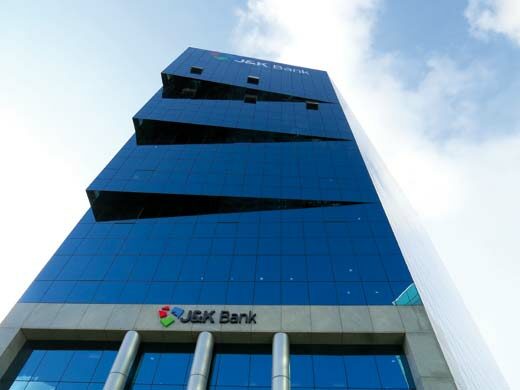
“When the Bank suffered losses due to the financial indiscipline and the consequent high NPAs, the Union Territory government reinforced the Bank by infusing substantial equity capital over 2019 to 2022. These steps facilitated the transformation of the Bank’s financial health and enabled its business growth and transition out of losses of the pre-2019 period. The success of reforms facilitated by the government is exemplified in the business results of the Bank and its turnaround in the last five years,” she said. “The Union Territory government has further decided to eliminate the pension over dues for safeguarding the financial position of the bank.”
Besides, the finance minister also highlighted as a major success the use of technology helping the government in managing disbursements of funds without pilferages. Using Aadhar, the budget reveals by March 2024 Rs 6000 crore was “seamlessly disbursed” to over 70.46 lakh beneficiaries. “Through biometric verification and provision of e-POS machines, about Rs 230 crore has been saved through DBT and Aadhar-based verification under ration supply,” the minister said. “Similarly, savings of over Rs 200 crore have been ensured by leveraging DBT under social security schemes.”
Budgetary Arithmetic
The minister said her government which directly ruled Jammu and Kashmir for six consecutive years continues working on the mantra of ‘reform, perform and transform’. In the Budget Estimates for 2024-25, the revenues of the Jammu and Kashmir government have been pegged at Rs 98,719 crores. Of this, Rs 31,586 crore are from tax and non-tax sources, which include Rs 14,000 crore of SGST and IGST, Rs 2,500 crore of Excise Duty, Rs 1,900 crore of taxes on sales and trade, Rs 800 crore from stamps and registration and Rs 1560 crore of other taxes.
Besides, the government will get Rs 9,726 crore of non-tax revenue of which Rs have Rs 6,000 crore will come from power tariffs only. The Jammu and Kashmir government plans to raise Rs 1,000 crore through ARM envisaging asset monetisation and channelising of resources into the system pool.
To fund its total expenditure of Rs 1,18,390 crore, the Jammu and Kashmir government will borrow Rs 19,671 crore in 2024-25.
Of the entire income, Rs 67133 crore will come in the form of grants from the centre, which means 56.70 per cent of the overall spending. The documents suggest that on the income side 46 per cent will be the central grants, 18 per cent will be Jammu and Kashmir’s own tax collections, 10 per cent will come from central sponsored schemes, eight per cent will be Jammu and Kashmir’s own non-tax revenue, one per cent will be additional resource mobilisation and the balance 17 per cent will be market borrowings.

On the expenditure side, the budget suggests that the primary revenue expenditure would be Rs 71,214 crore, which includes Rs 29,412 crore as salary (25 per cent of overall spend) to staff; Rs 14,058 crore as pensions (12 per cent) to the retired workforce and Rs 8,142 crore to ‘other’ requirements. This means 60.15 per cent of the overall budget will go to fund the staff that runs the governance structure in Jammu and Kashmir.
Debt serving and interest and repayment, are big-ticket items. The budget estimates that the Jammu and Kashmir government will pay an interest of Rs 10,272 crore and make repayments of Rs 11,710 crore which means a total outgo of Rs 21,982 crore. This takes 18.56 per cent of the budget.
The budget has also set aside Rs 9,400 crore for the purchase of power, a service that Jammu and Kashmir’s unbundled power sector offers. That takes another seven per cent of the estimated expenditure in Jammu and Kashmir this fiscal.
This eventually leaves less than 15 per cent for the developmental activities. Though Rs 16,576 crore of Capex and PMDP and Rs 7,711 crore under centrally sponsored schemes make Rs 24,287 crore, more than 20 per cent of the budget estimates, the numbers seem to have a crisis somewhere.
But, the numbers in Jammu and Kashmir budgets are used to losing their meaning a year later. In fiscal 2022-23, for instance, revenues were estimated to be Rs 1,02,322 crore but now the pre-actuals of that year suggest the revenues were only Rs 68,976 crore only; less by nearly a third.
Living on Borrowed Time
In fiscal 2023-24, there are clear shortfalls on almost all fronts, on both sides of the income and expenditure. The only surge is in the borrowings. Against an estimate of having revenue receipts of Rs 1,06,061 crore, the actual collection was only Rs 84603 crore – a shortfall of more than 20 per cent. Though the central grants also exhibited a sluggish devolution – only Rs 59,666 crore came against Rs 64,319 crore, the riot was a Jammu and Kashmir manufacture.
Almost all taxes were on expected lines. The only crisis was in the GST collections as Jammu and Kashmir could collect only Rs 9,700 crore against an estimate of Rs 13,174 crore – a shortfall of more than 26 per cent. Another crisis was the power tariff collection. Against an anticipated collection of Rs 6,000 crore, the power utilities across Jammu and Kashmir could collect only Rs 4,654 crore, a shortfall of more than 22 per cent.
The third major hit came from the ambitious bureaucratic target of raising Rs 7,800 core through additional resource mobilisation. Now the revised estimate shows only Rs 1000 crore, a climb-down of a record 87 per cent. The prior year suggests the target was there but not a single penny was raised.
On the expenditure side, the budget had set aside Rs 3,040 crore for power purchases but ended up spending Rs 6500 crore, a more than 100 per cent surge. There were good savings on the salary count – against an estimate of Rs 33,530 crore the net outgo was only Rs 30,575 crore. However, the pensions saw a surge from an anticipated Rs 12,525 crore to Rs 13,664 crore. This was supposed to upset the estimates.
The budget had sought permission to raise a loan of Rs 12,429 crore, and it ended up raising Rs 23594 crore, almost doubling the liability in one year. Eventually, this impacted the Vikas story: against an anticipated expenditure of Rs 17,961 crore on PMDP and other Capex provisions, the revised estimates suggest only Rs 13424 crore was spent (a fall of more than 25 per cent); the centrally sponsored spend was phenomenally low – against Rs 15232 crore only Rs 8076 crore is the revised estimate, which is 48.98 per cent less expenditure.
But this is the new legacy of fiscal management. In 2022-23, the budget estimates suggest an expenditure of Rs 36192 crore under PMDP and CSS. The pre-actual figures that Sitharaman placed in the house on July 23, suggest only Rs 10574 crore was spent which is a historic 70.71 per cent compromise on developmental activities in a year. The year also recorded a doubling of borrowings.
New Initiatives
Sitharaman’s sixth consecutive budget offers a huge listing of developmental works that are supposed to happen this year. All the new works are to be undertaken either under CSS or NABARD loan as activities under PMDP stand identified in anticipation of the package.
Jammu and Kashmir is currently facing a serious livelihood issue as the unemployment rate is one of the highest in the country. The budget has mentioned ‘jobs’ at five places but these are linked to future or ongoing investments in energy, agriculture and horticulture. Almost twenty references to ‘employment’ are linked to the private sector barring one in the Kashmir Pandit case in which it has been assured that “276 posts out of 6000 posts under PM-Package for Kashmiri Migrants to be filled in 2024-25”.
Interestingly, the number of people on the staff of the government of Jammu and Kashmir is gradually nose-diving. The disclosures made under Fiscal Responsibility and Budget Management (FRBM) Act 2006, mandatory disclosure of all the budgets of Jammu and Kashmir, Sitharaman has put the number of employees at 414300, which is even less than 417613, the same document’s February 2024 version said were on the rolls of the government in February 2014. In less than five months, the staff position has fallen by 3313 people. By the end of 2023-24, Jammu and Kashmir had 412277 people on its rolls.
Downsizing the government and squeezing the public expenditure seems to be continuity for the last many years even as the debts and liabilities surge.
LG Speaks
In Srinagar, LG Manoj Sinha said the budget with a “focus” on employment, skilling, MSMEs and the middle class, seeks to translate the vision of empowering all sections of the population. A DIPR statement said that in anticipation of the budget, a detailed analysis of the fiscal situation of Jammu and Kashmir was carried out by the Finance Department to address the legacy challenges which include high staff strength, low revenue base, and high debt load. “The high fiscal stress caused by the committed nature of the major expenditures has increased the UT’s dependence on central grants,” the statement said. “To address these challenges, the UT government has increased tax and non-tax revenues through improved GST return compliance, improved billing and collection efficiency, increased dealer registration, and transparent excise auctions.”
Meanwhile, the Sitharaman budget has reduced the duties on 25 critical minerals including lithium. This happens in anticipation of a huge reserve of lithium that is at the last stage of exploration in Reasi. The outcome of fiscal planning has always remained subservient to the implementation of the budgets. It remains to be seen how Sithraman’s sixth consecutive fiscal document will roll out in a year when Jammu and Kashmir is expected to have elections.