Moments after submitting draft private bills for the upcoming budget session, lawmakers posted texts online and triggered a public debate. Will these papers manage the passage in the house especially when the sector contributes 15 per cent of Jammu Kashmir’s tax income, asks Masood Hussain
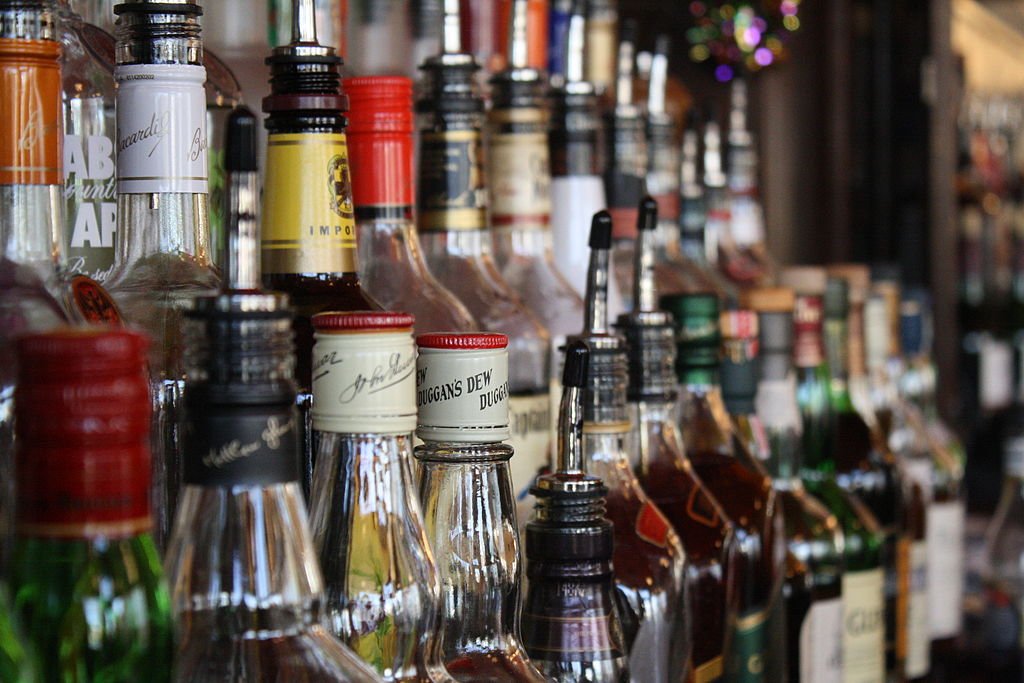
Within and outside the legislature, every time people wishing to stay distinguished from the rest of the folks in Jammu and Kashmir have turned to liquor. An Ummul Khabais in Islam (mother of all impurities), the agitation against the opening of a wine shop in Anantnag in 1982, was a major landmark in separatist Shabir Shah’s political career. More than 65 people were injured in the few-day agitation. Post-1987, the erstwhile Muslim United Front (MUF) lawmakers piloted an antiliquor bill and it witnessed defeat at a time when the initiators had gone for Friday prayers.
In the fall of 2011, Dr Farooq Abdullah’s mere reference to the trade triggered a major controversy with several protests across Kashmir seeking a ban on the wine trade in the erstwhile state.
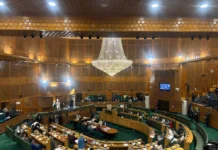
Now, in 2025, when the hugely disempowered assembly of Jammu and Kashmir, elected after six years of direct central rule, is readying for the budget session, several lawmakers from different political parties have submitted private member bills seeking a ban on manufacture, sale and consumption of wine in Jammu Kashmir. While skirted opposition, Peoples Democratic Party’s Kupwara lawmaker Fayaz Ahmad Mir has proposed “prohibition on the advertisement, sale, purchase, consumption, and manufacture of alcoholic beverages”, ruling National Conference’s Lal Chowk MLA Ahsan Pardesi has moved a draft to ban the trade “spiritual Sufi-Reshi” space, which is also a Muslim-majority region, where “alcohol hurts the sensibilities”.
Interestingly, ahead of the beginning of the session, the lawmakers and parties have taken to cosy social media to trigger a debate. They have shared the texts of their submissions to elicit reactions and to score brownie points over each other. While this offers an idea about how the new course of lawmaking in a digital era could be in future (thanks to Donald Trump disposing of files online as Elon Musk beams them on X), the fact remains that showcasing initiatives to people before it is taken up in the assembly takes the sting out of it. Now many lawmakers and parties are supporting the move and quite a few have raised the issue of apparent breach of privilege of the house.
History apart, these draft bills might have been provoked by the recent video clips that were viral showing domestic tourists consuming sharaab while enjoying snowfall in some of Kashmir’s periphery. Those clips triggered anger, hate and tons of concern in a society that has a historic projection of being conservative.
Inebriating In Kashmir
Barring the 1990 upheaval, Kashmir always had access to liquor. Till the middle of the Dogra era, most of the Gupkar was a vineyard, a tradition set by the Mughal occupation and effectively disrupted by Pathans. For the Dogra monarchy, Gupkar was a money-minting machine where distilleries were operational. Ranbir Singh and Pratap Singh made huge efforts in expanding the vineyards in and around Dal Lake.

M Dauvergne, who operated from Kashmir between 1856 and 1882, initially experimented with winemaking and later Durbar permitted him to hire experts, Paris gardener M Ermens, vineyard specialist M Bouley and experienced distiller M Peychaud. Their efforts succeeded in 1885 when Kashmir’s state-run vineyards were spread over around 900 acres with 4,58,000 vines.
Years before the partition, when the area became the power street, wine-making evaporated.
Kashmir revived part of the process much later post-partition when Sheikh Mohammad Abdullah met the United Breweries founder Vittal Mallya, the father of now fugitive Kingfisher promoter, Vijay Mallya. In 1973, three years after they first met, they decided to introduce hops cultivation in the Shilwat belt of Sonawari. Hops are required for beer and Mallays wanted to create a cheap alternative to the imports from Germany andthe Czech Republic.
“It was a very successful project and we used to get a raw material with high alpha acid value,” Vijay Mallya told reporters in January 2009, when he flew to Srinagar and addressed a news conference, within days after Omar took over as the Chief Minister. “The project was inaugurated by Sheikh Abdullah. The crop facility for hops used to balance the sweetness of the malt with bitterness but later it was destroyed by militants.”
Interestingly, there was only one pre-condition for approval of the project – UB Group would not market the brand in Kashmir that it would produce with Kashmir ingredients. It started from a 2-acre nursery and then hops cultivation spread across the village cluster. Till recently one could locate and see the big earthen vessels scattered in the fields of Shilvat. These were steam boilers used for processing hops.
One major thing on Vijay’s mind – at the time of his 2009 visit – was to use the cross-LoC trading window to import zero-duty cheap molasses from Pakistan but was unsure if it would eventually be permitted.
In 1976, Mallya’s started Optrex Private Limited, a pharmaceutical unit producing eye drops at Zainakote, which ceased production and closed down in 1986. He had promised to explore its reopening. The situation of UB Group later took a nosedive and Mallya had to escape to London.
After militancy’s impact started fading, the opening of wine shops resumed in Kashmir. Initially, it was in highly secured zones and gradually it started moving out. In 2024, the news that a liquor shop licence at Qazigund fetched the government Rs 5.23 crore in auctions generated a piece of national news suggesting that wine is back in fashion in Kashmir.
Post Liberalisation
While the wine retailing revival has been a gradual process in Kashmir, the sector has witnessed massive shifts after 2018 summer when the central government started ruling Jammu and Kashmir directly. The wine trade was liberalised and access to a drink was slightly made easier. In 2020, the excise department identified 183 locations — 116 in Jammu and 67 in Kashmir, for liquor sales. For modest liquor-consuming Kashmir having only four wine shops in Srinagar, it was a quantum jump.
The opening of shops, especially in historically dry areas, was widespread. In almost every town, the people came out to protest in Kupwara, Doda, Qazigund, and Srinagar. However, the initiative was not halted.
The new policy, however, changed the sector completely.
The introduction of e-auctioning as part of the Jammu and Kashmir’s Excise Policy in 2021 changed the players overnight. Most of the traditional players lost their livelihoods and now they are running the Jammu Old Wine Traders Association and seeking rehabilitation.
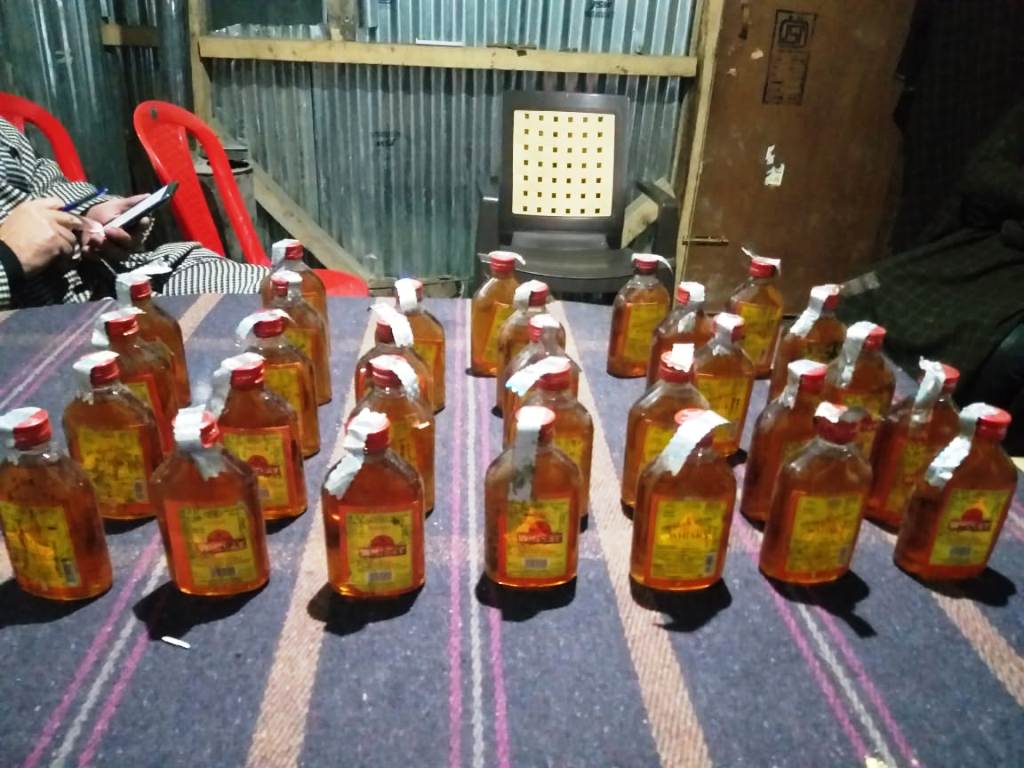
In the April 2021 auction, the majority of 228 liquor traders lost their shops. Most of them were in liquor selling for four to five decades. “Only 20 of the traders managed to retain their shops while the rest of over 200 have lost their business in the e-auction, directly and indirectly affecting 30,000 families,” the association leader Charanjeet Singh said. The intervention was too disruptive. “Two of our members died in the past week due to the depression. Avtar Singh was perturbed after losing his shop and suffered a massive heart attack resulting in his death, while a woman, who was also a co-owner of a shop, breathed her last two days ago.”
Though Singh and his colleagues claimed they were ousted from the race to pave the way for the “liquor mafia from outside”, officials said that was untrue.
A Windfall
The policy shift made the liquor sector a lucrative thing for the taxman. Two incomes are coming from the sector and both are managed by the Jammu Kashmir Excise Department. The first is the e-auction when the department locates a spot and seeks bids. Over the years this income has gone through the roof. Against a paltry income of Rs 10 crore in 2020, the 2021 auction fetched the government Rs 140 crore. In 2023, it was an income of Rs 261 crore which 257 bidders paid for 34 locations. It reached Rs 270 crore in 2024-25 auctions.
The second income comes from the excise duty on the product itself. “Duty is paid at four different stages,” a senior Excise officer said. GST does not cover liquor.
Till 2018-19, the excise department had two major incomes: toll tax and liquor excise duty. In that year, excise income was Rs 2184 crore, and Rs 909.10 crore of it came from toll tax collections. With the toll tax done away with at Lakhanpur, the policy intervention changed the situation completely.
The excise duty income from liquor took off from Rs 1353.81 crore in 2020-21, reached Rs 1777.36 crore in 2021-22, to Rs 1796.05 crore in 2022-23 and Rs 2486.34 crore in 2023-24. “We believe it will cross Rs 2600 crore by the end of 2024-25,” a top officer in the finance ministry said.
The government has already started the process of e-auctioning the ine shops for the next fiscal. Of 305 shops across Jammu and Kashmir, 14 will be in Kashmir including seven in Srinagar city and one each in Sonamarg, Pahalgam, Qazigund, Gulmarg, Baramulla, Uri and Kupwara.
Major Jammu Economy
Wine is consumed across Jammu, Ladakh and Kashmir. Despite being a tourist place, Kashmir’s alcohol consumption has remained modest. The major consumption is in Jammu. “In the last financial year, Jammu and Kashmir consumed 423 crore bottles of wine, whisky and other things,” one officer said. “It is a major sector. We have distillers with huge capacity and apart from serving the local market; we are selling our brands across India.”

Modern Breweries, a Jammu wine maker promoted by Devans, has been manufacturing the Godfather beer since 1984 and now controls three per cent of India’s beer market, which is around Rs 50,000 crore. It even exports beer to Singapore, Hong Kong, the US, and Australia. “We have a 30 per cent share in Jammu Kashnmir’s beer market,” Prem Devan, the company’s promoter said. “The sector is growing.” Currently, Jammu alone has six distilleries, 12 bottling plants and three breweries.
A Dry State
Permitting or denying liquor is the prerogative of the government. It has nothing to do with faith or culture. Bihar decided to become a dry state and it passed legislation. There is some kind of ban, partial or complete in vogue in various Indian states including Gujarat, Mizoram, Nagaland, and Lakshadweep UT. The Constitution does permit banning substances that are somehow injurious to health. Some of these states did permit certain trade with many conditions. Jammu and Kashmir can become yet another dry region. A ban on various foods and drinks is already in vogue in and around Katra for reasons of faith.
As and when the bills of the new lawmakers will be taken up, the government will come up with two responses, something that has historically remained the argument. One, Jammu and Kashmir is a huge tourist space and it may ill afford to ban liquor. Second, liquor is a major source of income for Jammu and Kashmir which has already lost toll tax to the post-2019 interventions. The government can, however, promise that it will reduce the number of vendors and ensure they operate far away from religious places and educational institutions. It can even bring the numbers down.
“It is a huge source of income,” one officer said when asked about the social media debate. “Do these gentlemen know that the salary they take has part of it coming from excise collections too? Excise duty income constituted 15 per cent of the tax income of Jammu and Kashmir last year.”
Nevertheless, it is going to be a good debate. The response to the bills may not help understand who is pro-liquor and who is against it. The government may have to assure people that for mere money minting, it will not introduce liquor to areas where people have historically stayed away. Jammu and Kashmir is a low liquor consumption area where less than five per cent of men drink and most of them are restricted to Jammu.