by Syed Shadab Ali Gillani
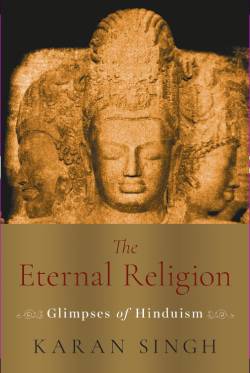
In The Eternal Religion: Glimpses of Hinduism, Dr Karan Singh provides a concise overview and interpretation of Hinduism, emphasising its historical inclusivity. He argues that recent political entities in India have exploited religion for divisive purposes.
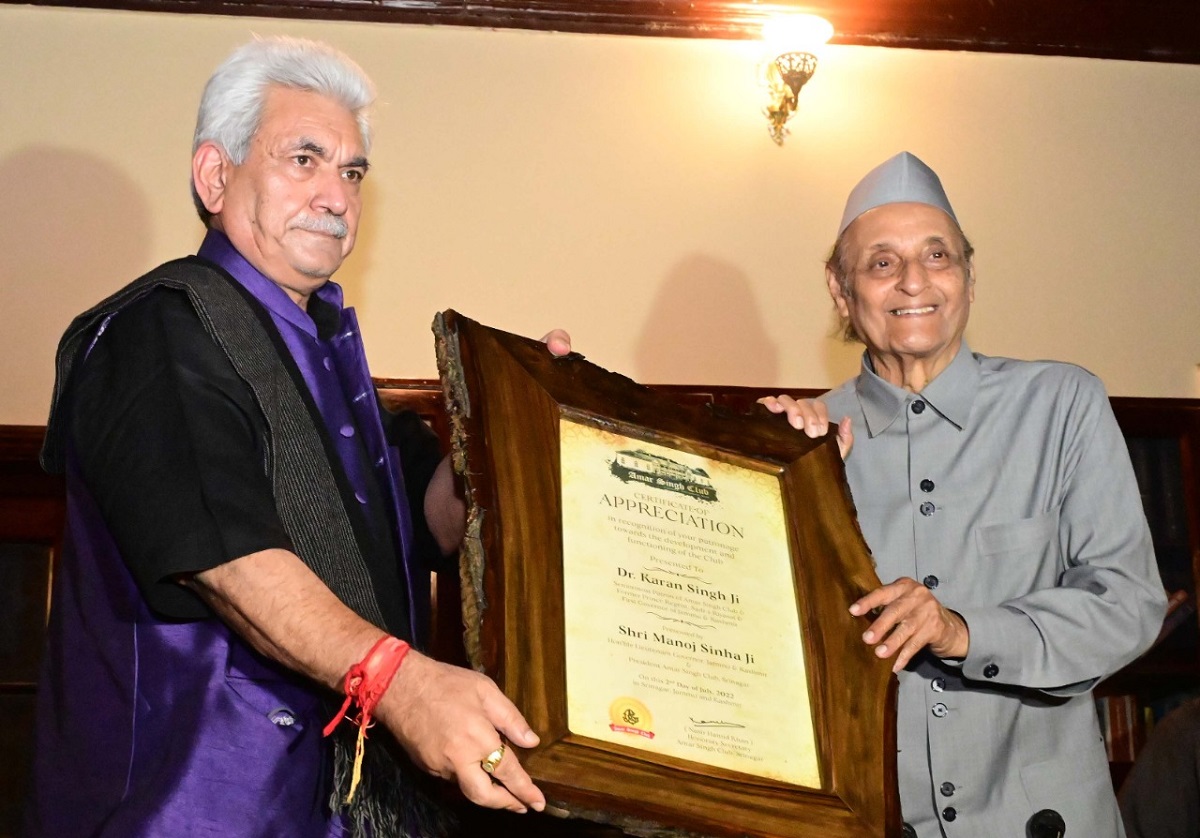
Despite distortions over time, Singh underscores Hinduism’s foundational principles of equality and spirituality. The book aims to elucidate the core philosophical framework, exploring concepts like Vedanta, yoga, and the teachings of the Upanishads and Bhagavad Gita.
The book delves into the idea of vasudhaiva kutumbakam (world as a family) and profiles influential figures like Swami Vivekananda. He reflects on the compatibility of Hindu teachings with secularism, drawing from his travels and carefully selected excerpts from scriptures.
The book aims to highlight Hinduism’s diversity, offering a clear and accessible perspective without pedantry. Singh observes that Hinduism, a diverse umbrella of belief systems unified by cardinal virtues, encourages a personal quest rather than dogma. This perspective allows for varied, individualistic spiritual paths leading to the divine.
Integrative Knowledge System
Singh clarifies Hindu philosophical plurality through Vedanta and Yoga, presenting them as integrative “knowledge systems” harmonising faith and reason. Despite metaphysical debates, Vedanta advocates conscious truth-seeking for transcendence.
Patanjali’s focus on samadhi aligns with diverse yoga traditions, offering paths like jnana yoga, karmic work, bhakti, and tantric practices. These represent legitimate yet unequal means to the shared goal of enlightenment. Singh emphasises Hinduism’s unique template, valuing freedom alongside responsibility.
Karma is a crucial concept that guides the jiva’s future based on ethical actions and gunas. Vedanta and Yoga offer therapeutic paths within the cycle of samsara. Singh’s exploration reveals the interconnectedness of these systems, deepening the understanding of Hinduism’s inclusive worldview.
Active Engagement
Shifting from theory to application, Singh emphasises Krishna’s teachings in the Bhagavad Gita, merging metaphysical insights with practical wisdom. In contrast to passive monastic doctrines, Krishna urges Arjuna to engage actively in worldly affairs, promoting resolute action with detachment. Discipline takes precedence over dogma in Krishna’s guidance, the book suggests.
In a passage, Krishna underscores the path of detached karma yoga: “Fix your mind on Me, be devoted to Me, sacrifice to Me, bow to Me…” Metaphysical unity with Brahman aligns with the active struggle against forces threatening dharma’s primacy, highlighting the ongoing battle against adharmic influences. Singh presents Krishna’s synthesis as a contemporary touchstone in Hinduism, avoiding philosophical introspection while steadfastly upholding the principles of righteousness.
Play and Avatars
Beyond texts, Hindus find significance in tangible temple rituals, festivals, and mythic performances celebrating the Divine Play. Hinduism envisions cyclical times with divine descents to restore dharma. Singh discusses Vishnu’s Dashavatar sequence, spanning from fish to Buddha, delivering salvation and embodying contemporary ideals. Krishna and Rama embody virtue triumphing over evil, guiding devotees facing moral dilemmas. Their captivating lilas and charm, conveyed through art, unveils truths through relatable stories, the author believes.
Cultural expressions connect laypeople with Hinduism’s concepts, grounding lofty theology within familiar settings. Singh highlights Hinduism’s accessibility through these forms, bridging the gap between abstract principles and everyday experiences.
Esoteric Secrets
Beyond public festivals, ascetics and tantrics engage in intense sadhana for divine visions. Hindu spiritual practice involves external ritual action and inner processes like visualisations, mantra repetition, and energy control. Tantra reimagines reality’s elements as coded manifestations of divine shakti, with knowledge dispersed among texts and enigmatic gurus.
Seekers undergo initiations to unlock insights under authorised teachers, maintaining secrecy. Hinduism operates on distinct exoteric-esoteric axes, with discretion in sharing transcendental knowledge. The tradition nurtures genuine yearning through practical steps suitable for various spiritual aptitudes and life stages (ashramas).
Singh examines Hindu perspectives on the feminine Devi, challenging Western translations. He explores treatises like the Candrajnanagama, illustrating cosmic ontology through the Shiva-Shakti dyads. The Devi transcends gender, embodying generative Shakti deserving veneration.
Encountering the “Other”
Hindu doctrines, with universal principles, have engaged diverse cultures in South Asia for millennia. Singh assesses tensions between Hindu pluralism and disruptions by Muslim conquerors and European colonists. Disturbances led to a consolidated Hindu identity in opposition to foreign faiths, narrowing fluid Indic boundaries.
Hindus seldom pursue large-scale conversions, despite hosting asylum-seeking groups. Singh notes Indonesia’s Hindu-Buddhist kingdom tolerated tribal customs, syncretically assimilating animistic elements. This cultural amalgamation explains Bali’s resilient Hindu legacy today. Singh highlights Hinduism’s open architecture as a model for managing multicultural diversity amid external pressures.
Humanistic Universalism
In conclusion, Singh presents Hinduism’s spiritual humanism as the eternal religion of the world. Its diverse scriptures remain perpetually relevant, guiding human dilemmas across vastly different contexts in history. Its impetus extends beyond houses of worship, dwelling in the yearning of lost travellers for cosmic belonging and purpose amid the apparent void. Truths emerge through revelations or rational inquiry, whether in the numinous presence beneath holy basalt or the sowing of seeds in fertile soil.
Hinduism thrives wherever sincere seekers gather at fate’s threshold, channelling humility and awe in the face of existence’s grandeur. It endures in unsung heroes combating wickedness through truthful words and selfless deeds. And it flourishes in the pure wonder of little children beholding squirrels dancing and leaves twirling in the brisk air. Singh invites readers to the hearth of dharma echoing wisdom through bygone ages, anticipating new messengers for those yet unborn.