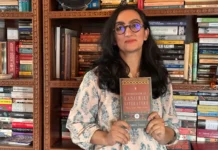
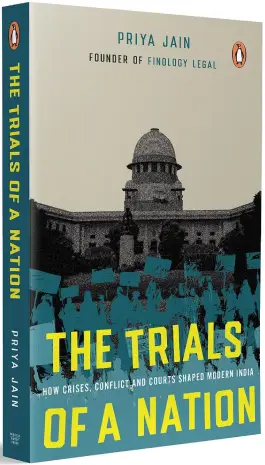
In her latest book, Priya Jain traces Kashmir’s history and Article 370’s abrogation, examining how law, politics, and identity collided on August 5, 2019, writes Babra Wani
In The Trials of a Nation: How Crises, Conflict and Courts Shaped Modern India, legal educator Priya Jain revisits the defining constitutional moments that transformed India. From the making of the Constitution to the abrogation of Article 370, the book explores 10 different chapters of legal importance; all these chapters are a part of India’s history.
It is said that history is often remembered through some major events and landmarks like elections, wars, assassinations or political upheavals. And beneath each of these defining moments lies a story, the legal story, where the legality of the cases and events is discussed and through this book, Priya has attempted to explore the legal perspectives of the most important events of Indian history.
Published by Penguin Random House India, the book is exploring the most interesting landmarks of both India’s history and its legal system. Jain, a lawyer and founder of Finology Legal, presents ten defining episodes that continue to influence India’s constitutional landscape. Rather than writing a legal textbook, she approaches these moments as interconnected chapters in the story of the republic, with a simple language that is accessible to the common public, beyond lawyers and students of the law.
Beginning with the framing of the Constitution and India’s first general elections, the narrative moves through the Emergency, reservation policies, economic liberalisation, the Ram Janmabhoomi-Babri Masjid dispute, the 26/11 Mumbai attacks, the Nirbhaya case, the Right to Privacy judgment and the abrogation of Article 370. All of these events and incidents hold a significant space in the history of India. While most of the people only followed the narratives, Jain has tried to explore the legal provisions too giving people an idea about the laws, the judgements. Out of these incidents the 26/11 Mumbai attacks, the Nirbhaya case, Abrogation of Article 370, the Babri Masjid case had India’s most attention.
A good point in this book lies in its words. Jain’s writing is clear, conversational and free from unnecessary legal jargon, making complex constitutional developments understandable without diluting their significance. Rather than overwhelming readers with technical provisions, she explains why these constitutional moments and these incidents mattered, and why they continue to matter today.
Among the book’s most compelling sections is its discussion on Article 370, a subject that continues to generate intense legal and political debate. Rather than beginning with constitutional clauses, Jain first takes readers into Kashmir’s layered past. She traces the region’s historical evolution, the accession of Jammu and Kashmir to India, and the constitutional framework that eventually gave rise to Article 370. This historical approach acknowledges that constitutional provisions cannot be understood in isolation from the circumstances that shaped them.
The Kashmir Chapter
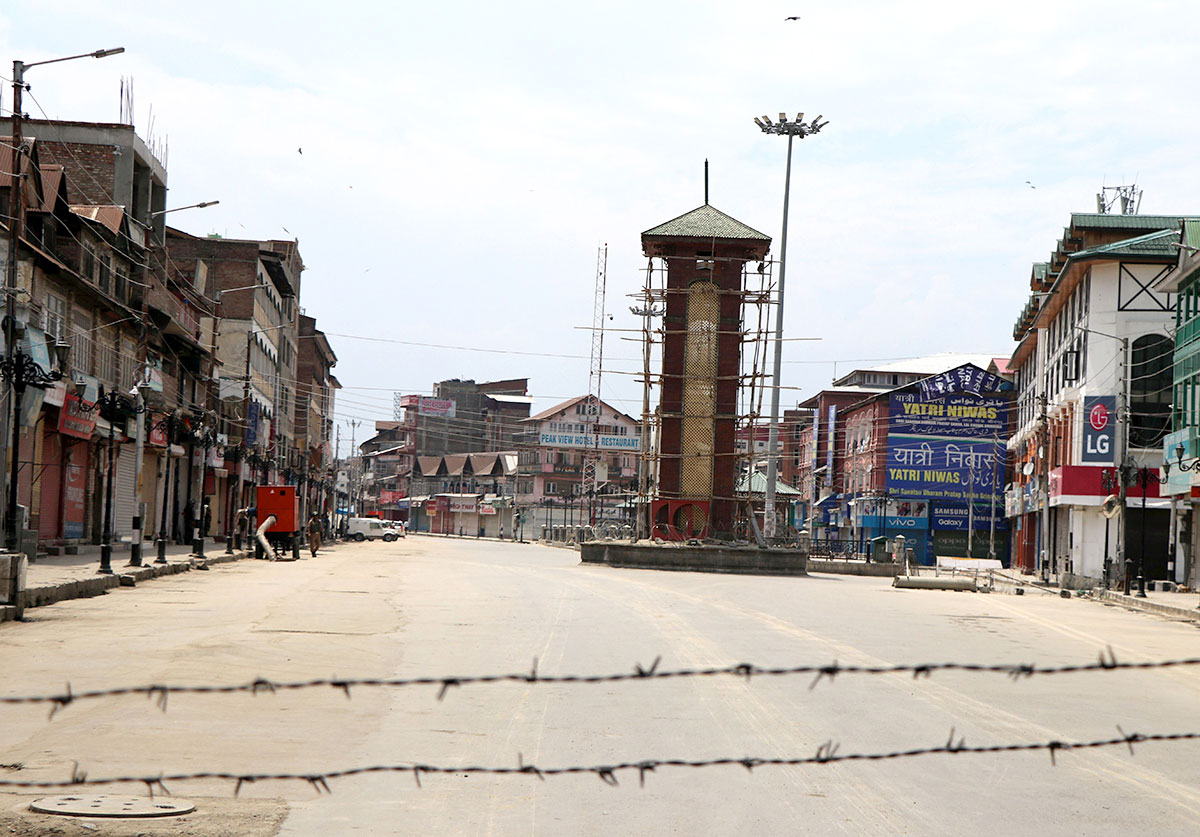
For readers from Jammu and Kashmir, the chapter carries particular significance. The abrogation of Article 370 in August 2019 remains one of the most consequential constitutional developments in recent Indian history. The year saw uprisings, and curfews that lasted for two to six months before everything started getting back to normal. There was a complete media blackout too. Restrictions under Section 144 were put in place across Kashmir immediately following the abrogation.
While the discussion around the issue is mostly polarised, Priya Jain has attempted to get in the nuances of the issue. She writes, “To understand Kashmir is to confront the essence of India itself; its promises, its contradictions and its future.” Priya has attempted to answer every possible question regarding Kashmir and Article 370 in this chapter.
She has begun the chapter by introducing Kashmir through its geography, civilisation and political evolution, suggesting that no constitutional debate can be understood without appreciating the history that preceded it. She has attempted to trace Kashmir’s journey through successive periods of rule, from ancient Hindu dynasties and the arrival of Islam to Mughal, Afghan, Sikh and Dogra rule. Instead of presenting history as a mere chronology, Jain uses it to illustrate why Jammu and Kashmir developed a distinct political identity that later influenced its constitutional relationship with India.
Jain reminds readers, “Kashmir goes beyond being a piece of land; it is a colourful quilt of cultures, languages, beliefs, and struggles. This layered history can be tracked back over a thousand years.”
She details how Maharaja Hari Singh’s delayed decision and the subsequent 1947 tribal invasion from Pakistan led to the signing of the Instrument of Accession. Initially, powers extended to India were restricted to Defence, External Affairs, and Communications.
Under negotiations involving N Gopalaswami Ayyangar and Sheikh Abdullah, Article 370 was inserted into Part XXI of the Indian Constitution as a temporary, transitional, and special provision to acknowledge Jammu and Kashmir’s unique position until its own Constituent Assembly could decide its permanent fate.
Jain emphasises that Article 370 was originally designed as a constitutional bridge. However, as decades passed and the state Constituent Assembly dissolved in 1957 without a clear recommendation on repeal, the clause became a legal fortress. Over time, it grew into an intense political fault line. For its supporters, the provision served as a defensive barrier that preserved Jammu Kashmir’s unique cultural identity, autonomy, and local land rights. She notes that critics argued that it encouraged separatism, hindered economic development, created political unaccountability, prevented full legal equality for women and disadvantaged groups, and maintained an emotional distance between the state and the rest of the country.
She writes, “Although several Presidential Orders extended many Indian laws to J&K, sometimes erasing the separation between the state and the rest of the country, it still maintained a separate constitutional identity, unlike any other state in India. However, this uniqueness became a source of political discomfort for many in India.”
Jain has tried to carefully walk the readers through the legal mechanics and human reality of August 5, 2019.
She writes, “In the 2019 general elections, the BJP returned to power with a stronger mandate than ever before. Backed by a majority in Parliament and a militant political will, the party had both the numbers and the momentum. Decisions were made in private, not just to test Article 370, but to eliminate it completely.”
Run Up To Abrogation
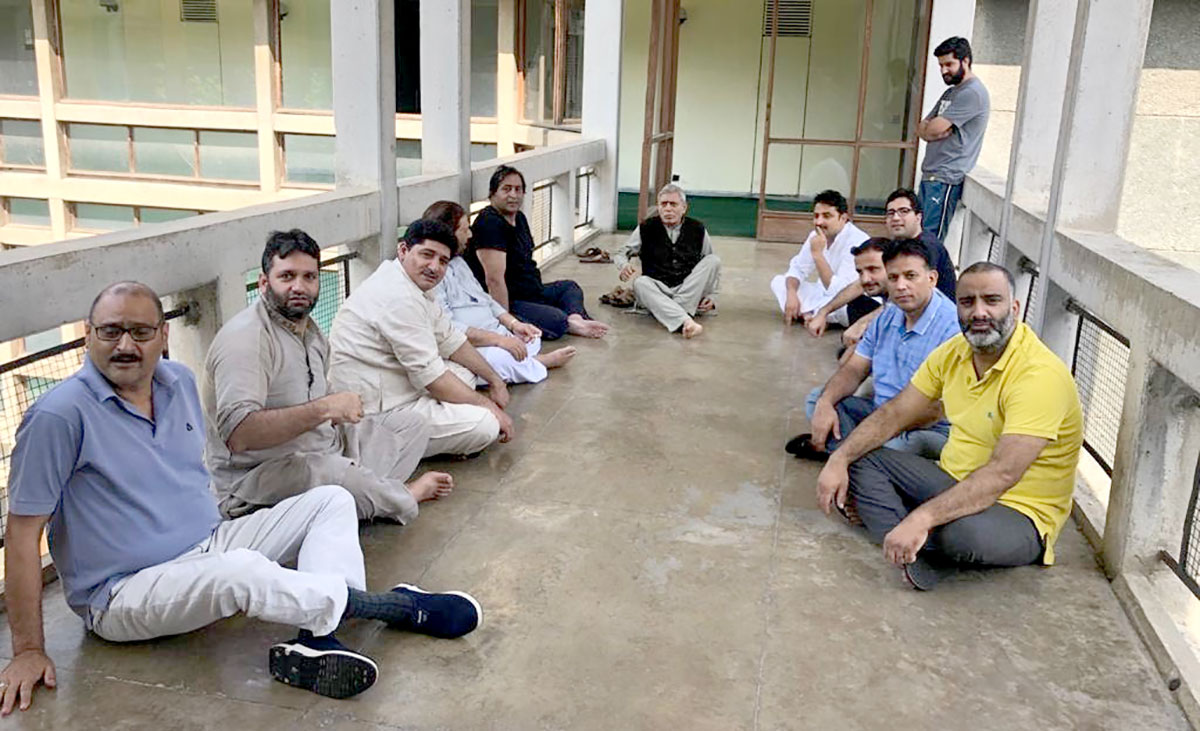
Kashmir, being sensitive, demanded cautious handling. In late August 2019, a series of sudden events took place in the Valley. Thousands of paramilitary forces were sent in. Tourists and Amarnath Yatra pilgrims were evacuated. Local leaders like Mehbooba Mufti and Omar Abdullah, former Chief Ministers, were discreetly placed under house arrest. Schools and colleges closed, phone and internet services were cut and an ominous stillness spread across the region.
“Then, on 5 August 2019, the hush was shattered, not in Srinagar, but New Delhi.”
She writes, “Home Minister Amit Shah rose in the Rajya Sabha and made a historic announcement: Article 370 was effectively being abrogated. But there was a twist; it was not being repealed outright. Instead, the government found a legal loophole.”
Since Jammu and Kashmir no longer had a functioning state government, the Centre invoked President’s Rule. Acting as the ‘state government’ as Jammu Kashmir was under President’s Rule, the Union Government utilised Clause (1)(d) of Article 370. As Priya rightly notes, “Essentially, the same Article was invoked to make itself inactive.”
By substituting the recommendation of the Jammu Kashmir Constituent Assembly with that of the Governor acting as the state government, Home Minister Amit Shah introduced the order effectively rendering Article 370 inoperative and passing the Jammu and Kashmir Reorganisation Act, 2019, which downgraded the erstwhile into two Union Territories, Jammu Kashmir and Ladakh. This drastic move was accompanied on the ground by unprecedented security measures, including long curfews, Section 144 restrictions, mass detentions of political leaders, and a complete media and communication blackout.
The State of Kashmir
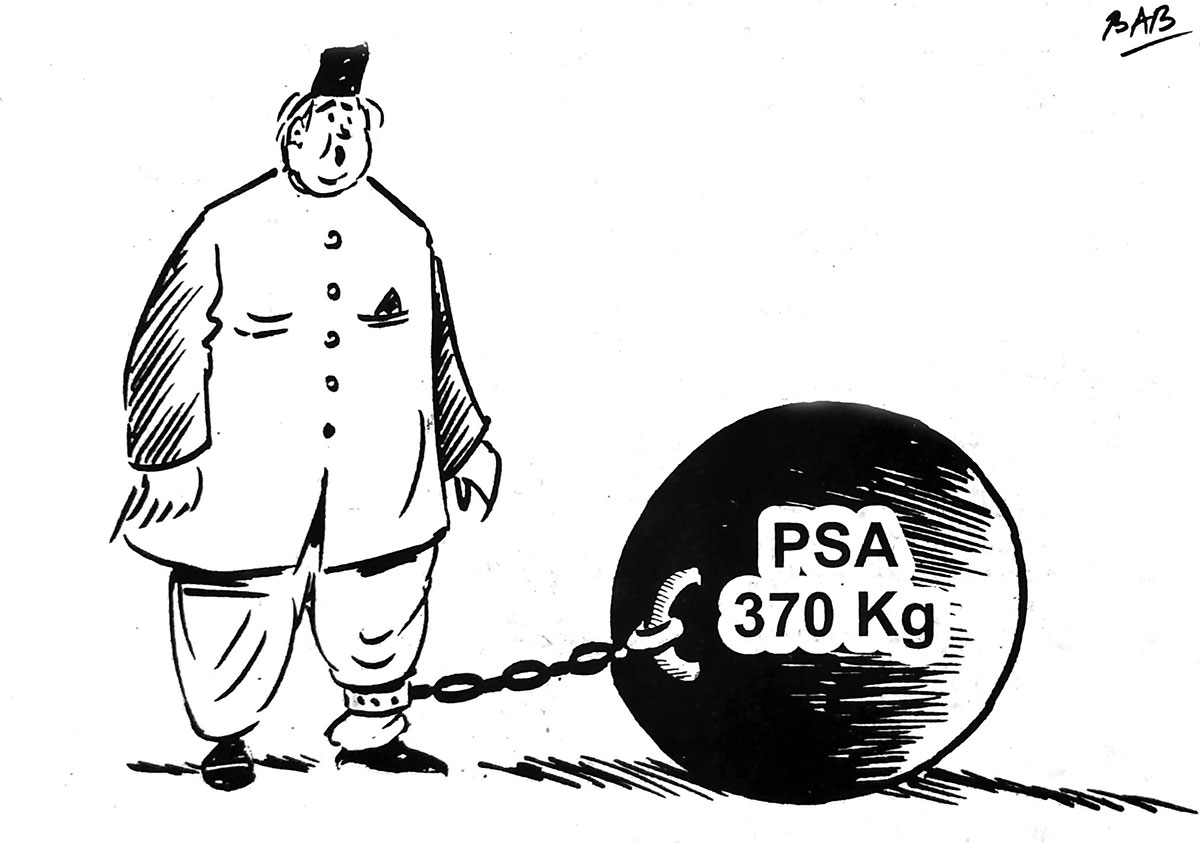
“While the legal and political scenario changed in Delhi, the Valley remained tightly secured. Streets were deserted, shops shut and communication lines dead. There was little room for protest or mobilisation. Some praised the move as brilliant, while some perceived it as a violation of constitutional trust. What followed was a troubled peace,” Priya notes. “In the months after the abrogation, Kashmir experienced a heavy military presence. Internet access was restricted, communication stifled, and public life closely monitored. Thousands of political activists and workers were detained under preventive laws like the Public Safety Act (PSA). International media and human rights groups protested loudly, but the government stood firm, claiming these steps were necessary to preserve law and order and prevent violence.”
She writes on August 5, 2019, “India did more than abrogate a constitutional article; it redrew the political map and changed the emotional relationship between the Centre and the State. In one move, the bridge meant to gain Kashmir’s trust was destroyed, paving an unknown and untested path in its place. The abrogation was later upheld by the Supreme Court in 2023.”
Jain then tracks the post-abrogation trajectory, including the December 2020 District Development Council elections. Priya notes that in these elections, the People’s Alliance for Gupkar Declaration (PAGD), a coalition of regional parties like the National Conference and PDP, came forward as a key contender, winning a majority of seats in Kashmir. “The BJP was successful in Jammu, revealing the intense regional and communal divisions that persist in moulding J&K politics.”
The book has also discussed statehood in some details. She writes that since 2020, discussions about granting Jammu Kashmir statehood have increased. In Parliament and other public statements, the government has repeated that statehood will be granted ‘at an appropriate time’ as the security situation improves and the democratic procedure progresses. Prime Minister Narendra Modi and Home Minister Amit Shah have both stated that Jammu Kashmir will not remain a UT forever, implying the Centre’s willingness to restore full statehood at some future point, but without specifying a timeline.
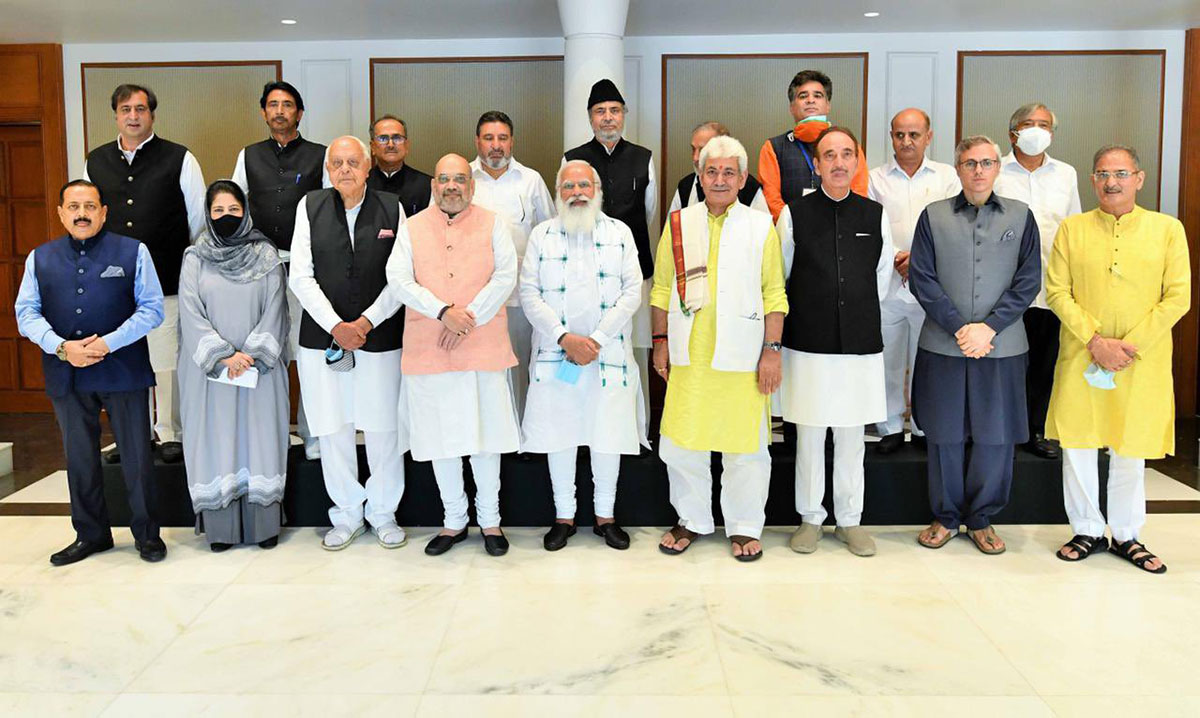
She also writes about the high-level meeting that took place in New Delhi in June 2021, involving the Centre and mainstream leaders from Jammu and Kashmir. The Centre invited fourteen political leaders, including Farooq Abdullah and Mehbooba Mufti, to discuss the way forward. This meeting was seen as the first genuine outreach since the 2019 abrogation. Some of the key issues discussed included the release of political detainees, restoration of statehood and early elections for a Legislative Assembly.
She has also written about the 2022 Delimitation Commission report that redrew assembly constituencies to increase seats from 83 to 90 to give Jammu a greater representation and the landmark 2023 Supreme Court verdict which upheld the abrogation. In her concluding thoughts on the region, Jain issues a stark reminder that there is danger in beauty. Citing security challenges such as the 2025 incident in Pahalgam, she notes that Kashmir serves as a strategic and symbolic point of contention between India, Pakistan, and increasingly China. Beyond borders or legal arguments, Jain asserts that the Kashmir issue is fundamentally about people trapped between diplomacy and denial, warning that until peace is prioritised over politics, the region will remain a “crown of thorns.”