Four members of a 9-member family in a north Kashmir village died in a road accident while they were driving with 1200 litres of water for their kitchen. Faiqa Masoodi spent 24 hours in the village to understand the chronic thirst that neither resident’s votes nor the ‘good governance’ has been able to quench
In Muharram, water and thirst remain a key focus in Muslim societies as people remember the Karbala. Volunteers set up special booths to distribute water. Tragically, a Kashmir family deep north lost four of its members in pursuit of quenching their thirst.
The entire village is grieving.
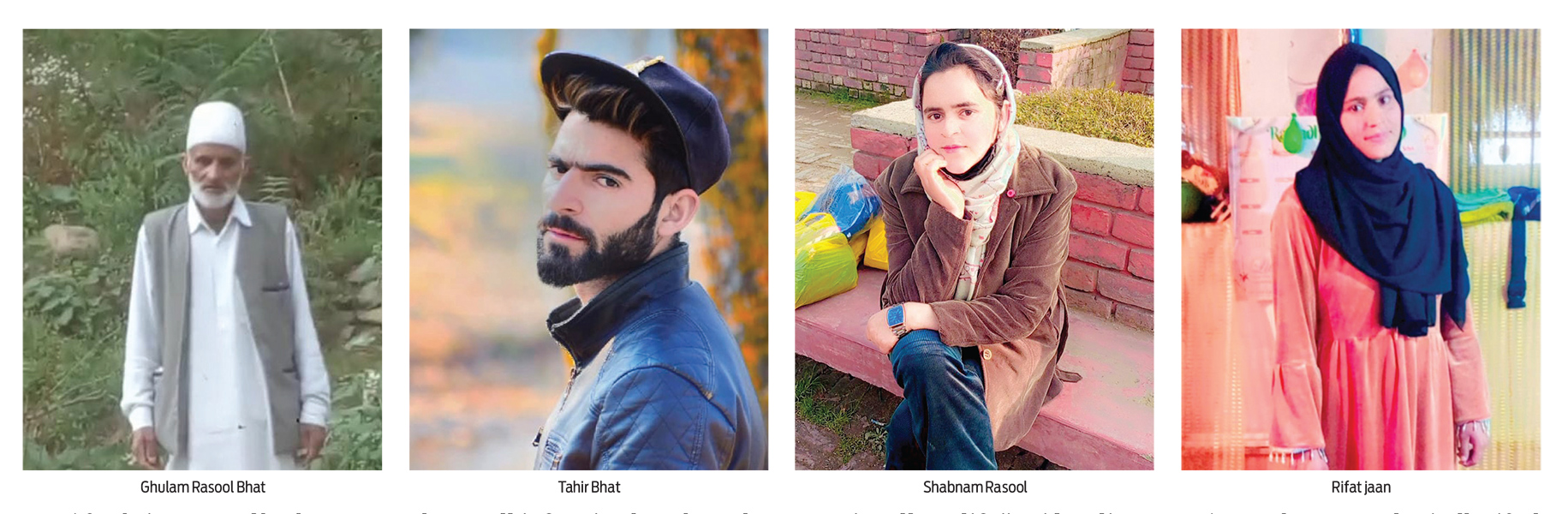
“I miss you. I will call you back in a while after we finish fetching the water,” were the last words of Ghulam Rasool Bhat, 60, the patriarch of a family of nine, before tragedy struck them on July 8, 2024.
Asmat, 21, Bhat’s ambitious daughter studying and living with her acquaintances in Baramulla, was the last to speak to her four family members at around 8:30 PM, just before their lives ended and their phones fell silent forever.
Two hours later, the four bodies were first discovered by Bhat’s youngest son Arshid, 16. Arshid and his twin sister, Rifat, were inseparable. Carrying Rifat’s lifeless body, her skull broken, Arshid returned home. Since then, he has been in shock, unable to cry.
Ghulam Rasool, along with his 23-year-old son Tahir Ahmad, the sole breadwinner for the family, and daughters Shabnam, 18 and Rifat,16 went to a nearby water source emerging from a mountain, hoping to fill their 700 litres and 500 litres of water tanks to last them for the coming day.
The girls accompanied their brother leaving aside the clothes they were washing, to take a ride in the recently purchased, second-hand Tata mobile.
Tahir, a young, well-built lad who took up family responsibilities at a young age, worked at a private parking facility in Srinagar’s Maisuma. Having come home on Sunday, on the eve of the tragedy, he thought he would collect ample water for the family that would last them for the coming few days.
Around 7:40 in the evening, he told his sisters to hop into the vehicle despite their mother’s reluctance and left saying, “Yeimkut chi gasaan bechari zah, dikh chakras gasni” (They don’t go anywhere, let them have some fun).
Bhat senior, who left the mosque after reciting Azaan and offering Magrib prayers, joined them on the way. “I won’t let you go alone. It’s getting dark, and the army can stop you,” residents who saw him joining his kids remember him saying.
One of the grieving locals said that the army has restricted the movement of locals after 9 PM in the area for security reasons. “Ghulam Rasool wanted to ensure that his kids returned home safely, so he joined them too.”
They never returned home alive.
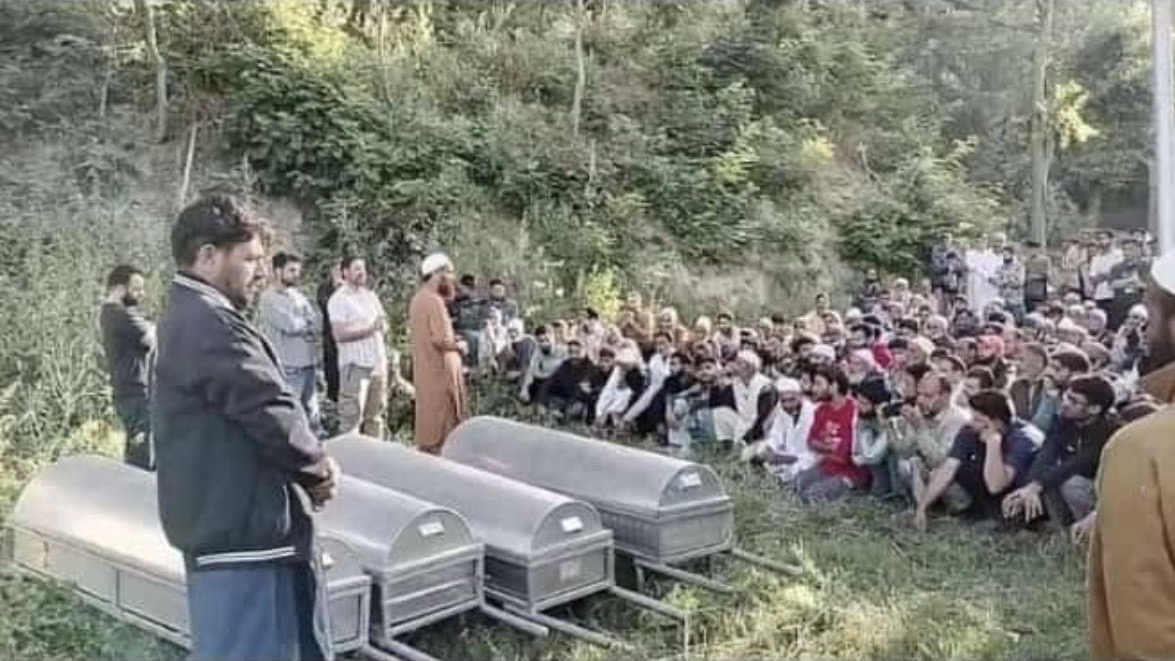
Instead, they came back in coffins, their lives cut short by a cruel twist of fate. The crushed vehicle and the burst and ruptured water tankers at the scene stand as silent witnesses to the last moments of the victims and the suffering of the people of the perpetually thirsty Rajpora village, who have been struggling with a relentless water crisis for decades.
No one knows what happened to the four members of the Bhat family after the last call. No one knows who the first one to die was and who took the last breath. For hours, their status was unknown. It was only when Jana Begum, Bhat’s wife, grew anxious. She called Arshid, asking him to search for his father and siblings as dusk fell.
Arshid, went to the accident site, 1.5 kilometres away, but found no one. He had no idea that his family members were dead or maybe taking their last breaths some 200 feet down the gorge, a place they frequented to quench their thirst.
Returning with locals and a torch, Arshid searched again. It was 10:30 PM. After being stopped by the army, he explained he was looking for his family. Pointing the torch towards the gorge, he found the crushed vehicle. “I don’t know how I covered the 200 feet distance and reached the bottom of the gorge. All I could see was my family lying in a pool of blood, bruised and battered.”
Tahir and Shabnam were thrown from the vehicle, while Ghulam Rasool and Rifat were inside. “The glass slit Tahir’s neck; Shabnam’s head was crushed against a rock. Ghulam Rasool’s body and bones were broken, and Rifat had a head injury,” said a local who accompanied Arshid and recovered the bodies that night.
All were dead upon discovery. Their bodies were taken to a health facility in Zachaldara, where doctors confirmed their deaths.
The Last Call
Asmat fainted every 10 minutes, crying her heart out for her father and siblings. Recalling the last conversation, Asmat said she video-called her sister Shabnam around 8:30 PM. Busy collecting water in a plastic pot and refilling the tanks, Shabnam showed her the other family members, who were on the job. “My father waved at me and said he would call me back after returning home. I waved back at them, ended the call, and got busy with my studies.” Asmat had to write her internal exams the next day.
This was the last conversation they had with anyone. Asmat had visited the family a few weeks earlier and was planning to go home after her exam was over. “My father and sisters would call me and tell me that they missed me. I promised that I would join them soon. My sisters would always come to Handwara to receive me, but this time I had to bring along their dead bodies from the hospital,” Asmat wailed.
Around midnight, Asmat received a phone call informing her about the accident. She was driven from Baramulla to Handwara, where she went directly to the healthcare centre, only to find her father and siblings dead.
Asmat performed the Ghusl (funeral bath) of her young sisters. “They had stones stuck in their throats. Their skulls and bones were broken. I had to tear off the clothes they were wearing. The scene will haunt me for the rest of my life.”
A Thirsty Village
Rajpora, situated approximately 12 kilometres from the main town of Handwara, is one of the sixteen villages in Rajwar Block. The village has a population of around 3,500, living in about 1,200 households. The voter count in the region is only around 1500, which concerns the inhabitants as they feel they lack a voice in choosing their representatives.
About 60 per cent of Rajpora’s population lives below the poverty line, relying primarily on agriculture and physical labour. Among the other villages, according to residents, Rajpora is the hardest hit by water scarcity. The village has lacked access to tap water for decades, leaving residents hunting for water from a nearby stream or other natural sources.
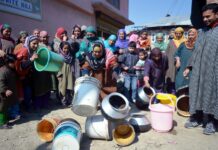
Residents spanning all age groups in the village, ranging from 16-year-olds to 70-year-olds, share stories of their daily hardships in fetching water for their essential needs. A stream runs alongside the village, but it is mostly used for washing purposes as it is contaminated by upstream villages, making its flow unfit for drinking. The villagers rely on natural sources for potable water, many of which have dried up due to climate change, harsh summers, and extreme temperatures.
“I have been married in this village for more than 30 years now and I have seen the villagers battling water scarcity all my life,” said Halima, cursing those responsible for their plight. “Many regimes came, promised, took votes, and disappeared, but our problem was never resolved.”
The villagers lament that despite voting solely for access to water, they continue to suffer. Most of them work during the day and, upon returning home; take their family members along to collect water from natural sources. This routine has been a necessity for generations in the village.
“This is like the tragedy of Karbala in our village. We lost four lives to a basic necessity like water in this 21st century. We have no potable water and, as per routine, we fetch water from a primitive source in the jungle,” said Imran, a resident advocate who is at the forefront of mobilising the villagers to fight for justice for the tragic family and village’s basic rights. “The Bhat family also went there and died tragically,”
The Bhat Family
Ghulam Rasool Bhat headed a family of nine, including his wife, three sons, and four daughters. His eldest son and one daughter were married and lived separately. This left Rasool, who suffered from multiple health issues and had recently undergone eye surgery, dependent on his son Tahir to look after his wife, minor twins Arshid and Rifat, another minor Shabnam, and college-going Asmat.
Tahir had been working in Srinagar for many years, shouldering the entire responsibility of the family. He rarely visited home, focusing on earning enough to support his loved ones.
“Tahir started working from a very young age. He worked at a hotel’s parking and stayed there. He didn’t even visit home on Eid,” a family relative said. “He said he couldn’t afford to take time off, as he had to feed the family and repay a loan despite earning a modest monthly salary.”
Asmat, the most academically gifted of the siblings, aspired to qualify for the Civil Service Exams. After much persuasion, she convinced her brothers to allow her to stay with a known family in Baramulla to continue her studies. Tragically, the other two sisters, who supported Asmat’s dreams, lost their lives in an accident.
“They were not just my sisters; they were my shield. They wanted me to study, earn, and help the family lead a decent life. They motivated my father to send me to Baramulla and assured him they would look after the family in my absence,” Asmat tearfully recalled.
The family lives in a modest house. The vehicle that the deceased family members were on was purchased after selling some land and taking bank finance. It was a second-hand Tata mobile. The locals say that the family members were a great example of unity for the entire village. The siblings were inseparable. Shabnam was recently enrolled in the 11th class while Arshid and Rifat were set to write their tenth class examinations this year.
Despite all the hardships, the senior Bhat made sure that his children received basic education. “He was a poor man but wanted his daughters to get an education. He would sell land and take loans to help the family cope with day-to-day affairs,” said locals.
Tahir worked extra hours to repay the family loan, which unfortunately swelled into lakhs. “My brother had big dreams. He wore old clothes himself but kept his sisters and parents happy. He wanted to start his sheep business eventually,” recalls Asmat, overwhelmed, softly singing the Kashmiri song Chulhama roshay roshay walo myani poshay madno amid frequent wails and cries.
On Sunday, before the tragedy, Tahir visited Handwara to spend time with his family. “He said he was feeling low and tired. He wanted to be with us. He clicked a selfie with me and said he will get it framed and keep it in his room in Srinagar,” said Jana Begum, the mother who lost her three young children and her husband.
On Monday after spending the day with his family, at around 7:40 in the evening, Tahir decided to fill the water tankers from the jungle some, 1.5 kilometres away from his home.
As destiny had it, all four members joined each other to embark on their final journey. “My husband knew that we were poor so he took his young children along with him to die. He wanted to ease the family burden. He took away my young groom and two budding brides. Our house is empty now,” Jana Begum murmured with her voice exhausted and energy over with constant wailing and grief.
Surrounded by wailing women, Jana frets over family survival without means.
The Road to Survival
The path to the water source navigates a dangerous route, with a steep mountain on one side and a deep gorge on the other, traversed daily by villagers in their quest for drinking water. Covering a challenging 1.5 kilometres, some bring back water manually while others employ carts and vehicles to fill their tanks, navigating a narrow, treacherous road where loose mountain stones pose constant danger. Technically, it is a minor slide-prone area.
The area faces the added threat of wild animals roaming even during daytime, posing further challenges for the villagers.
One of the residents of Rajpora financed a concrete tank to tap mountain water, highlighting official neglect. Despite repeated pleas to the Public Health Engineering (PHE) department to lay pipes to make the water accessible, locals say that the authorities remained indifferent—until tragedy struck, claiming four lives.
Overnight, amidst public outcry, pipes began to appear, though locals view this as a superficial gesture to divert media attention.
“They’ve laid pipes half a kilometre now, but it’s just for show. They don’t address our water crisis,” voiced a disheartened villager. Moreover, the unfenced road remains a deadly hazard and has previously claimed lives.
“This road has taken lives before. It urgently needs fencing. The sliding mountain opposite poses a constant danger, yet authorities turn a blind eye,” lamented Syed Imtiyaz, echoing the community’s frustration.
The Unfinished Borewell
Rajpora village has not a single tragedy to narrate. The area has been marred by constant official apathy. Back in 2014, during Choudhary Mohammad Ramzan’s tenure as MLA, a borewell project was initiated. Ghulam Rasool Bhat and his cousin generously donated land for this project, hoping to secure water for their village. However, a decade later, Ghulam Rasool tragically passed away while fetching water, yet the borewell remains unfinished.
Later when Sajad Lone succeeded Choudhary, the borewell was not a priority. Residents claim that Sajad neglected to complete the borewell project, “fearing that credit would be attributed to the NC.”
Ironically, on the day of the accident, Sajad swiftly tweeted his condolences. “Last night, Ghulam Rasool Bhat of Rajpora Handwara, along with his two daughters and son, tragically passed away in an accident. It is heart-wrenching news to wake up to. I personally knew Ghulam Rasool. May Allah grant them Jannat. May their souls rest in peace,” Sajad expressed on X.
Ramzan also mourned the loss, mentioning his efforts to allocate funds for a borewell and water reservoir for Rajpora during his term, though both projects ultimately failed.
The constituency in charge of Engineer Rasheed’s Awami Itehad Party (AIP), Advocate Majid, said that his party has taken up the issue with the district administration. “We are trying to ensure that the borewell is made functional at the earliest and that the family is compensated in the best possible way.”
Firdous Baba, Spokesperson of AIP, who also oversees work on behalf of the jailed MP said that they have mobilised their teams to work for the rehabilitation of the family.
“We have requested the LG administration to provide fair compensation to the family and are working closely with the district administration. We demand a thorough inquiry into the incident and the prompt completion of the borewell project,” Baba said. “We are also trying to compensate the family with MP Contingency funds.”
Aziz Ahmad Rather, Additional Deputy Commissioner (ADC) Handwara, said that he is personally monitoring the progress of the borewell.
“There are three engineering wings involved in this project: Mechanical Engineering, Ground Water Axon, and the Civil Wing. This borewell has been pending for the last 10 years, and the executive engineers of all three wings must collaborate and divide roles,” Rather said. “Director JJM GN Itto has assured us that he will visit the area in the coming days to facilitate this coordination. We have also requested this in writing.”
Aziz acknowledged that the incident highlighted administrative failure. He noted that the borewell would benefit many neighbourhoods. “We need a reservoir costing Rs 10-15 lakh first. A borewell can produce 4,000 litres of water per hour. To manage this, we need a reservoir or a tank to store the water, and we must ensure a proper water gradient. I am acting as the nodal officer for this project,” he explained.
Regarding ex gratia relief for the family, he mentioned that an amount of one lakh rupees has been given to the family. Besides, the DC Kupwara has forwarded a letter to the administration to ensure proper and fair compensation.
However, when contacted, Director Jal Jeevan Mission (JJM) GN Itto said he is unsure about the development as he is currently out of station and the matter pertains to the chief engineer of Jal Shakti, leaving the fate of the borewell uncertain once again, despite the tragic loss of four lives.
Climate Change
A 2019 study highlighted that Kashmir’s average yearly temperature rose by 0.8 degrees Celsius over 37 years (1980-2016). Recent summers have seen unprecedented heat, with notable instances reported.
The Scroll reported that on August 17, 2020, Kashmir experienced its hottest August in nearly four decades, recording a high of 35.7 degrees Celsius. The following year, on July 18, 2021, Srinagar witnessed its hottest July day in eight years, with temperatures peaking at 35 degrees Celsius. The summer of 2022 surpassed these records, with temperatures soaring above 35 degrees Celsius in some areas, marking March as the hottest month in 131 years. In 2023, Srinagar recorded its hottest September day in 53 years, hitting 34.2 degrees Celsius.
This year, the trend persisted with an exceptionally dry winter season. January 2024 was one of the driest and warmest in 43 years according to the meteorological department. On May 23, Srinagar recorded its highest May temperature in over a decade. In July, Srinagar experienced a maximum temperature of 35.7 degrees Celsius — six degrees above the normal.
Satellite data confirms that glaciers in Kashmir are retreating, impacting downstream water availability. Experts are alarmed by reduced winter snowfall and prolonged dry spells in the region.
However, Rajpora’s water crisis is not solely a result of evolving climate patterns in Jammu and Kashmir over the years, as the region has grappled with water scarcity for decades. Nonetheless, increasing temperatures have worsened the issue, leading to the depletion of traditional water sources. Residents who once relied on springs now lament that these sources have been unable to meet the water requirements of the villagers.
Bringing Water to Rajpora: Amidst the turmoil, Asmat finds solace in knowing that her family members will be remembered as martyrs, whose sacrifice aims to bring water to Rajpora Village.
In a unified voice, residents demand that the borewell should bear the names of the four family members as it is their blood that now fuels the villager’s hope to finally see tap water—a long-awaited miracle.