Girls at a Budgam school keep fainting. Doctors call it anxiety, villagers blame jinn, and the girls are quietly leaving, reports Afreen Ashraf
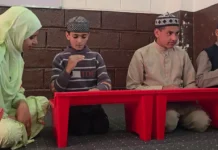
Inside an old house in Gogji Pathri, a remote village in Budgam, around six girls had gathered to talk. Some sat with their faces covered while Haya, 16, spoke about incidents that had left her and her family worried and searching for answers.
Haya began by recalling an incident a year ago, when she suddenly fainted while taking part in a race at her school.
“All I remember is that I was running when I suddenly fainted,” recalled Haya. “The school staff took me to the hostel and later sent me home.” At first, she thought it was nothing more than exhaustion. She believed it was a one-off incident and that things would return to normal in a few days.
But they did not. “Since that day, such incidents kept repeating,” she said.
“We took her to the hospital in Budgam. They said she was showing symptoms of depression and anxiety,” recalled Haya’s sister, sitting beside her during the conversation. The doctor prescribed medication, including one to help her sleep. Haya said the medication brought its own difficulties. “It made me feel sleepy at night and dizzy in the morning. Eventually, I started finding it difficult to fall asleep without taking it.” The treatment brought little relief, and the episodes continued.
Haya’s sister recalled one such episode at home. The two sisters were upstairs, chatting, when Haya, leaning against the doorway, suddenly lost consciousness. There was no warning; they had been talking normally when she collapsed. Her sister also recalled how Haya would sometimes lose awareness of her actions. “At times, she would do anything. She could even try to choke someone,” she said, adding that Haya often became agitated when scolded. On two occasions, she said, Haya had even tried to attack her.
Not Alone
Haya, however, was not the only girl in the room with an account of sudden fainting and experiences she struggled to explain. Among the others was Ziya, another 16-year-old, who, unlike Haya, had her first such episode inside her high school classroom.
“I do not know what happened to me at that moment,” Ziya recalled. “As far as I remember, I was sitting in class, doing my classwork. The next moment, I realised I was somewhere else. When I asked what had happened, I was told that I had fainted.”
Ziya vividly remembers what followed. “All I could feel was a soreness throughout my body, as if it were a soulless body,” she said.
Same drill and eventually she was told that her symptoms were related to anxiety.
Also in the room was a mother who had come to share what her daughter had been through. Her daughter’s experiences began with sudden episodes of fainting, and change in her behaviour.
Her daughter, Ifra, had come home after taking her Class 8 board examination. At first, she looked fine. As evening set in, her family noticed something was wrong.
“She came back like any other day,” her mother remembers. “Then around evening, she started laughing. There was no reason. No joke, no story. Just laughter. It was strange. I didn’t know what to think.”
After that, things got worse. Ifra’s behaviour changed. Her mother said she started hurting herself. One evening, the family found that Ifra had gone into the bathroom and cut her wrist. She was discovered in time, but the family was terrified.
At times, Ifra would leave the house without saying a word. She would wander outside, sometimes shouting, sometimes walking aimlessly. When she came back, she was angry. She would lash out at her mother, hitting and pushing her.
As the situation kept getting worse, the family decided to take her to a doctor. Ifra went for counselling for 15 days. Her mother was hopeful, but nothing changed.
“They talked to me,” she said. “They asked me questions. I still felt the same. I still felt lost.”
The Epicentre
The girls’ experiences began differently, but each was linked to the same place: the school. Some of the girls said they were getting better, though not through medical care alone. A few credited faith-healers with helping them.
For some families, the explanation had gradually shifted. They stopped thinking of it as a health issue and started believing it was something supernatural, that djinn were involved. Haya’s family, for example, had come to believe a story long told in the village, that djinn had been connected to the school for years and that Haya was affected by them. Similar ideas helped Ifra’s family make sense of her changing behaviour. These beliefs rest on no established facts, but for families trying to understand what they had seen, they became part of the story.
The families believe that this whole story must have a link with the local school where they study.
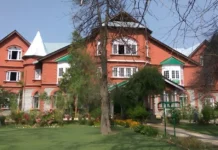
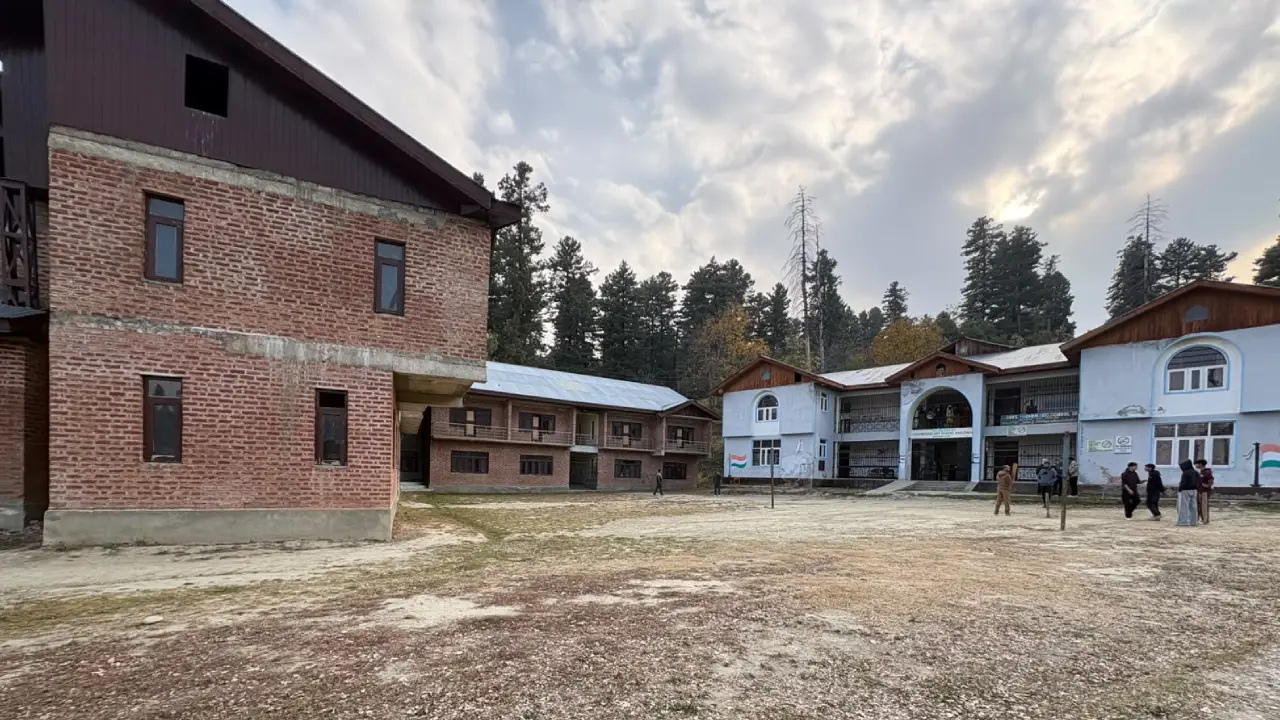
Government Higher Secondary School Gogji Pathri is situated on a high ground. The school qith 100 students opens every morning. For some families, the school has come to be linked with a series of these troubling incidents involving girls who say they fainted or had unexplained episodes.
People in these families and in the village say similar events have been reported for years, making the school a source of worry in the area.
While speaking to residents about the school, we came across two sisters waiting for a Sumo that carries children. As the conversation turned to the incidents, the elder sister recalled that similar episodes had taken place in 2009, when she was in Class 10. One sister also reminded the other of an incident from their school days, when she had set her schoolbag on fire for no apparent reason.
For several residents, these memories are connected to a long-held belief about the school’s past. Locals believe that one part of the school premises was once inhabited by djinn, and for them, this explains the incidents reported over the years.
“There is one room in the school that we believe has some issue,” said one villager. “Whenever that room is opened, girls start experiencing incidents.”
While speaking to an almost 80-year-old shopkeeper in the village, another account emerged. According to him and other villagers, when such episodes were reportedly more frequent some years ago, a religious ritual was conducted on the school premises. Pirs were invited to the school for seven days, after which, villagers said, the area was closed.
Residents recalled that reports of these episodes were heard less often afterwards. “Since then, at least I have not heard of any incident,” one villager said. However, the fear has not entirely faded. The elderly shopkeeper said he would not be surprised if girls began reporting incidents again. For him, the possibility that the episodes could return remains very real.
Frightened
Whether these memories match today’s symptoms is unclear. But the belief linking the school to djinn did not start with today’s students, and it is now shaping families’ choices about education.
Families said they reported the incidents to the school authorities. However, they claim the department has been reluctant and has refused to register complaints or look into them. “Last year, my parents reported it to the school, but their response was that the students were purposely trying to create a fuss on the school campus,” said Haya.
For Haya, the experiences have changed her relationship with the school. Once simply a place to study, it has become one she is afraid to return to. “I refuse to go,” she said.
Ifra’s mother said Ifra is currently preparing for her Class 10 board examinations. Once the exams are over, she does not intend to send her daughter back to the school. The family is considering another secondary school in Nagam despite the longer distance she would have to travel. “I will not compromise on her safety,” the mother asserted.
Ziya, too, plans to continue her education at another secondary school.
For these families, the decision to move their daughters is rooted in fear. In a region where female literacy in rural areas stood at just 51.64 per cent in the 2011 Census, such fear could deepen existing gaps. For families like Ziya’s, another school may feel necessary for their daughter’s safety, but it also means a longer journey and more barriers to her education.
The School
For the girls of Gogji Pathri, the question is also whether the school is equipped to support them when an episode strikes on its premises. To find out, we visited the school.
When we visited the school, students were moving through the corridors while a group of boys played cricket. We spoke to some of the girls about the episodes reported at the school. Some denied that anything unusual had happened, while others appeared hesitant to speak about their experiences.
The school administration, however, rejected the villagers’ interpretation of the incidents. Principal Mehraj Ahmad, who has served at the school for six years, said there was no problem at the school.
“There is no issue in this school,” he told us. “The girls come from far-off areas. They have to walk a lot. Sometimes they may faint for this reason.” He added that a lack of awareness had led people to give these incidents a name.
The principal also pointed to the students’ health. He said a health screening conducted in September had found most of the girls examined to be anaemic. However, the number of students screened and the findings of the drive would need to be checked against health records.
Conversations with staff members raised another important question: what happens when a student experiences an episode or needs medical or psychological support during school hours?
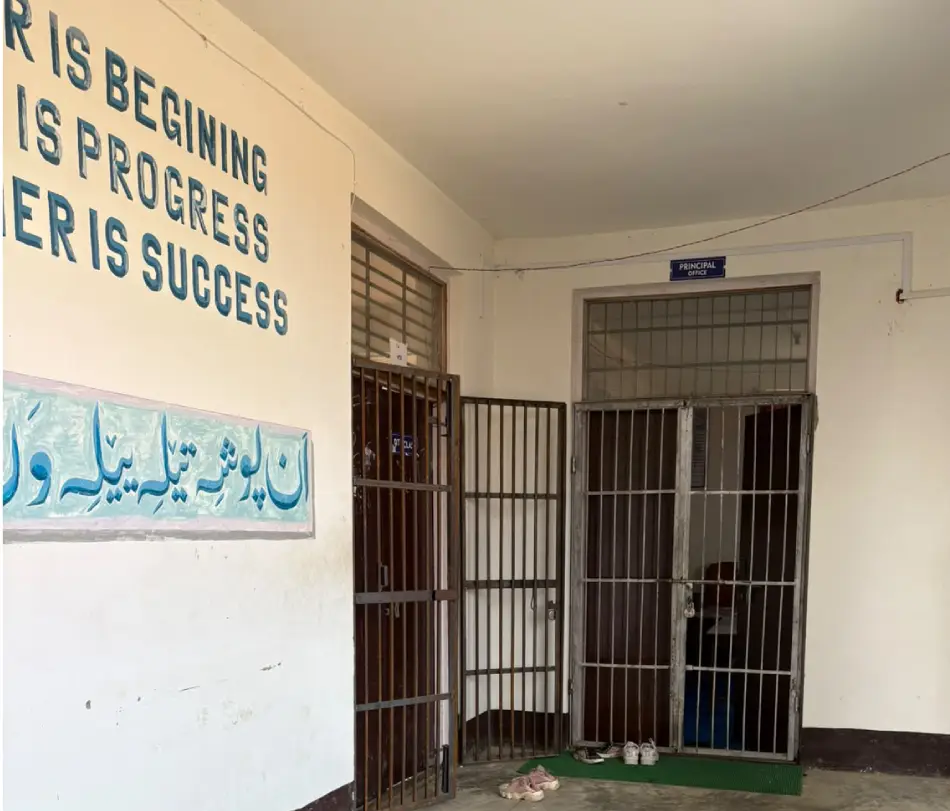
The institution has no mental-health support facility or system for students experiencing such distress. While teachers may respond when a student falls ill, there is no arrangement to assess or support girls who experience recurring episodes. The gap matters most when families are already struggling to understand what their daughters are going through.
Another concern emerged: the school has no female teaching staff. The administration said its remote location makes it difficult to bring women teachers to the school.
A male teacher explained why this absence matters. He said that if a girl were facing an emotional difficulty, she might feel more comfortable approaching a female teacher and sharing what she was going through. That option is not available to the students here.
Gogji Pathri is not alone. Similar cases have appeared across Jammu and Kashmir over the years, often leaving students, parents and teachers confused about what was going on.
In June 2019, three dozen students, mostly girls, at a government school in Sitti village of Kathua district reportedly started crying uncontrollably, screaming and rolling on the classroom floor. Videos of the event spread on social media with claims that the students had been taken over by spirits. Medical teams were sent to the school, and officials later called the event a case of mass hysteria. Three years later, in August 2022, students at Government High School Arampora in Sopore protested, refusing to return to their school building. They said that students often fainted or collapsed in classrooms and believed the building was haunted. Some said they were scared to attend classes and asked that the school be moved elsewhere.
Psychiatrist Explains
Dr Mushtaq Margoob, a renowned Kashmiri psychiatrist, said the beliefs around these incidents are not new. He offers a medical view, pointing to adolescents’ vulnerability to a state called ‘dissociation’.
“When people are in their adolescent years, they are more likely to experience what we call dissociation,” he tells us. He explained that strong emotions can sometimes cause behavioural changes that others may see as signs of possession.
Margoob recalled a case from Tangmarg in the 1990s, when students in Classes 7 and 9 reportedly had strange experiences. During his visit, he found amulets tied all over the school, from the gate to the principal’s room.
He said the incidents were later traced to the students’ fear of losing their school. The girls had reportedly been told that the school would be moved and that the building would be given to the Border Security Force (BSF).
“It was a girls’ school,” he recalled. “They were told that the school would be moved elsewhere and that the same property would be handed over to the BSF. Those were cases of trauma.”
Dr Margoob described the incident as a case of “hysteria.” He also spoke of what he called a “copycat phenomenon,” where one student’s experience might influence the fears and behaviour of others.
These explanations, however, cannot diagnose what is happening to the girls at Gogji Pathri through comparison with other incidents. Each student would need a personal medical assessment.
Depression?
Research on student mental health across 16 schools in Srinagar and Ganderbal found high levels of academic stress among students in Classes 9 to 12, with many saying they felt anxious and depressed. Of the 97 students found to have problems, nearly 70 per cent were between 13 and 16 years old. A 2019 study by Paul and Khan, published in The International Journal of Indian Psychology, also found that the rate of mental health disorders among school-going children in Kashmir was much higher than in some other states.
Haya will not go back. Ifra will leave after her exams. Ziya is already looking elsewhere. Whatever is happening inside Gogji Pathri’s school, it is losing its girls, and nobody in charge has yet asked why.
(Wajeeha Hajira and Nidha Ashraf has also contributed to this report)