SRINAGAR: A study of foot-and-mouth disease (FMD) outbreaks in Kashmir has found that the virus strains detected in cattle across four districts were genetically closely related to one another and shared evolutionary links with sequences previously reported in the United Kingdom.
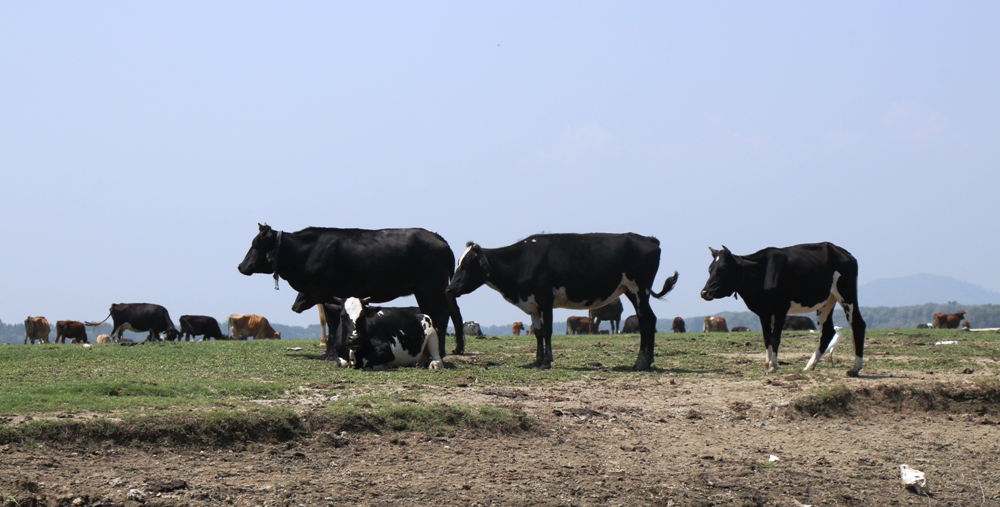
The research identified serotype O as the predominant strain in the sampled outbreaks, with the virus detected in 46 of 50 tissue samples collected from affected cattle in Pulwama, Srinagar, Ganderbal and Kupwara. The findings provide a molecular picture of the virus circulating in the Valley and could help improve disease surveillance and inform strategies for controlling outbreaks.
The study, Genetic Diversity of FMD Virus from Outbreak Cases in Cattle of Kashmir, was published in The Pharma Innovation Journal, 2023.
The study was conducted by Sanmeet Kour, Dr Deepali Kalambhe and Sharjeel Ashraf, whose institutional affiliations span Sher-e-Kashmir University of Agricultural Sciences and Technology of Kashmir (SKUAST-Kashmir) and Guru Angad Dev Veterinary and Animal Sciences University (GADVASU), Ludhiana.
Sanmeet Kour was affiliated with the Division of Veterinary Microbiology and Immunology at SKUAST-Kashmir and was also identified as a PhD scholar in the Department of Veterinary Microbiology at GADVASU, Ludhiana, Punjab.
Dr Deepali Kalambhe was an assistant professor at the Centre for One Health, Division of Veterinary Public Health and Epidemiology, GADVASU, Ludhiana. Sharjeel Ashraf was a PhD scholar in the Division of Veterinary Medicine at SKUAST-Kashmir.
High Detection Rate
Of the 50 tissue samples examined, 46 tested positive for the foot-and-mouth disease virus, giving a detection rate of 92 per cent. The samples were collected from cattle showing clinical signs of the disease, including high fever, excessive salivation, fluid-filled blisters around the mouth, nostrils, feet and teats, and difficulty walking.
Pulwama accounted for the highest number of positive samples, with 17, followed by Srinagar with 15, Ganderbal with eight and Kupwara with six. The researchers cautioned that the failure to detect the virus in all 50 samples could have resulted from problems with sample quality, RNA extraction, complementary DNA synthesis or the sensitivity of the testing method. The figures describe the samples examined in the study and should not be interpreted as district-wise prevalence rates among the wider cattle population.
Dominant Serotype
Laboratory testing identified serotype O as the predominant virus type in the four outbreaks investigated. None of the samples tested positive for serotypes A or Asia 1.
Foot-and-mouth disease is a highly contagious viral infection affecting cloven-hoofed animals, including cattle, buffaloes, sheep, goats and pigs. It can cause fever, blisters around the mouth and feet, reduced productivity and, in severe cases, death, particularly among young animals. Its economic consequences can be substantial for farmers because infected livestock may suffer reduced milk production, impaired growth and other losses.
The identification of the dominant serotype matters because the virus exists in different forms, and immunity against one serotype does not necessarily protect an animal against another. The researchers noted that the virus’s genetic diversity complicates disease control and makes the identification of circulating strains important when considering vaccination strategies.
The absence of serotypes A and Asia 1 in the samples, however, does not establish that these types are absent throughout Kashmir. The finding applies to the outbreaks and samples examined in this investigation.
Genetic Analysis
To investigate the virus beyond its clinical symptoms, the researchers analysed a region of its genetic material known as the VP1 gene. This region is widely used in studies of foot-and-mouth disease because variations in its sequence can help scientists distinguish viral strains and reconstruct their evolutionary relationships.
The team used reverse-transcription polymerase chain reaction (RT-PCR) to detect the virus and amplify the relevant genetic material. The amplified fragments were sequenced, and the resulting sequences were compared with previously published virus sequences available in genetic databases.
Four sequences obtained from the Kashmir investigation, designated JK1, JK2, JK3 and JK4, were used for the phylogenetic analysis. This method examines genetic similarities and differences to establish how closely related different virus samples are and how they may have diverged from common ancestors over time.
The four sequences showed between 91 and 99.95 per cent identity with sequences in the database, according to the paper. The researchers found that the Kashmir sequences clustered closely together, suggesting that the sampled viruses shared a relatively recent common ancestor.
International Links
One of the study’s notable findings was the close genetic relationship between the Kashmir sequences and several sequences previously reported from the United Kingdom.
The paper identifies KJ831717 and KJ831678, associated with porcine samples, and KR265076 and EU552188, associated with Bos taurus, the scientific name for domestic cattle, among the sequences showing close evolutionary relationships with the Kashmir samples.
The researchers also compared the Kashmir sequences with previously reported serotype O sequences from Hyderabad, West Bengal and the National Dairy Research Institute in Karnal. In the phylogenetic analysis, the four Kashmir sequences formed a distinct cluster and were not closely related to those particular Indian sequences.
The findings indicate that the sampled Kashmir viruses had genetic relationships with strains reported in other parts of the world, while differing from the specific Indian sequences included in the comparison.
However, the genetic similarities do not establish that the virus was introduced into Kashmir from the United Kingdom, nor do they demonstrate a direct route of transmission between the locations. Phylogenetic analysis identifies evolutionary relationships; establishing the geographical origin or movement of a virus requires additional epidemiological evidence.
Disease Control
The researchers emphasised that understanding the genetic characteristics of foot-and-mouth disease viruses circulating in Kashmir is important for strengthening disease surveillance and developing effective control measures.
They noted that outbreaks continue to affect cattle and other susceptible animals in the Valley, with consequences for the economic well-being of farmers. Genetic information can help researchers monitor changes in circulating strains, investigate relationships between outbreaks and assess whether existing disease-control measures are appropriate.
The paper also highlights a gap in scientific information about the prevalence, epidemiology, economic impact and genomic characteristics of different FMD virus variants in Kashmir. Addressing these gaps, the researchers argue, is important when considering vaccination and other control strategies.
The study provides an initial molecular assessment of the strains identified in the sampled outbreaks. Its findings nevertheless need to be interpreted within the limits of its design: the investigation covered 50 samples from four districts, and the detailed evolutionary analysis was based on four virus sequences. Broader surveillance across more districts, outbreaks and time periods would be needed to establish how representative these findings are of the wider cattle population in Kashmir.