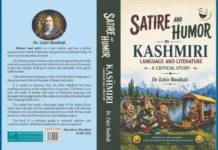
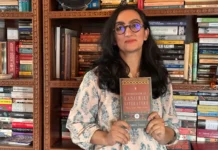
Manoj Kumar Jha’s In Praise of Coalition Politics reflects on India’s coalition resurgence and Kashmir’s post-370 realities, urging dialogue, dignity, and integration over control, nationalism, and developmental symbolism, writes Muazzam Khursheed
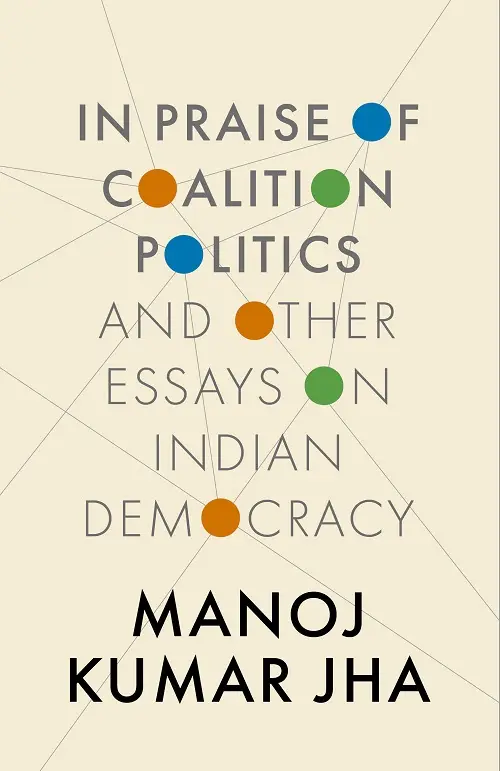
Manoj Kumar Jha, Rajya Sabha MP from the Rashtriya Janata Dal and former professor at the University of Delhi, has written a timely collection of essays in In Praise of Coalition Politics and Other Essays on Indian Democracy. The volume reflects on the resurgence of coalition politics in India’s political landscape, even after more than a decade of single-party dominance by the BJP. Today, nine states are governed through coalitions, and even at the Centre, the BJP relies on the support of allies such as Nitish Kumar’s JDU and Chandrababu Naidu’s TDP. As Jha observes, the age of coalitions has returned after “BJP’s near-total dominance of the electoral chessboard for nearly a decade.”
Among the strongest sections of the book is Jha’s writing on Kashmir, where he moves beyond electoral arithmetic to reflect on a wounded history that continues to haunt Indian democracy. He recalls the recent terror attack in Pahalgam, which reignited simmering tensions between India and Pakistan, once again turning the Valley into a flashpoint of military exchanges. For Jha, such episodes reveal not just cycles of provocation and retaliation, but a deeper truth that for ordinary Kashmiris, stability is fragile, their lives always negotiable in the grand theatre of geopolitics.
Article 370
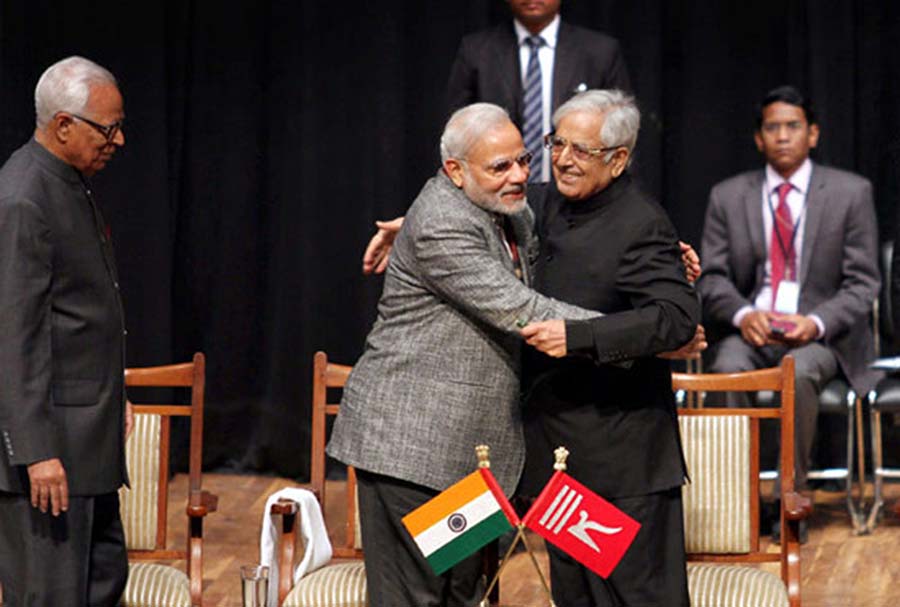
Jha then turns to the aftermath of the abrogation of Article 370. He argues that Kashmir has since been “gripped not only by an overwhelming military and surveillance apparatus but also by a framework of narratives built around claims of historical rectification, administrative streamlining, and national integration.” Elections and welfare schemes may continue, but what Kashmir has truly lacked, he insists, is the basic democratic experience of being heard. In times of crisis, he notes, governments rally around questions of loyalty, reducing politics to a stark “choice between nationalism and treason.” “Yet the enduring question remains: do we seek to own Kashmir only as territory, or do we wish to connect with its people?”
Here, Jha recalls Jayaprakash Narayan’s remark in a 1966 letter to Indira Gandhi: “We profess democracy but rule with force in Kashmir.” Six decades later, he argues, this warning remains relevant. The core issue has never been Article 370’s provisions but the failure to make Kashmiris feel better. For decades, Kashmiris have been expected to “perform gratitude” for developmental schemes, as though belonging could be earned through thankfulness. But as Jha sharply notes, “gratitude cannot be commanded and dignity cannot be administered.”
He elaborates on the “sea of difference between integration and absorption.” Integration, he suggests, is built on mutual respect, trust, and recognition of differences; absorption erases identity in the name of uniformity. The Constitution’s strength, he argues, lies in its embrace of diversity, a vision where distinct histories and traditions are valued as integral threads in the national fabric. By this standard, the abrogation of Article 370, hailed by some as a historic moment, fell short of a historic vision. It has not ushered reconciliation or genuine political engagement but locked the region into “a cycle of episodic violence and euphoric indifference.” Six years on, democratic space remains stifled. “No political party in Kashmir can operate normally,” Jha writes, as governance is driven by bureaucrats rather than elected representatives.
The Development Debate
Jha does not deny the roads built, the railway expansion, or the record tourism numbers in the Valley. Yet he insists that “development cannot be a substitute for democracy,” and the much-needed “healing touch” remains absent. The deeper tragedy, he argues, lies “not just in what the state has done, but in what the nation has permitted.” The silence or complicity of large sections of Indian society has normalised a situation where political freedoms are curtailed. The triumphant declarations of “normalcy” after August 2019, he urges readers to ask, should be judged not by the absence of protest but by the presence of genuine political consent.
For Jha, the official narratives that dominate national television continue to frame Kashmir through the narrow lens of security, where the Kashmiri is either a victim, a suspect, or someone to be rescued, rehabilitated, or arrested, but never trusted. This is perhaps the most telling reality of the post-abrogation order: a vision of integration without trust, equality, or dialogue.
Jha’s most poignant passages highlight the lived reality of Kashmiris. What may appear to outsiders as just another episode of India-Pakistan tensions is, for those in the Valley, a recurring experience of fear and uncertainty. Each exchange of fire reverberates immediately in villages and homes, reinforcing the fragility of life. “The terrorist strike in Pahalgam and the military exchange that followed,” he writes, “may seem like a familiar cycle of provocation and retaliation, but for Kashmiris it was yet another reminder that their lives are always negotiable.”
Mortal Narratives
At the heart of Jha’s reflection lies a call to resist complacency. “We must remember that no narrative is immortal. Narratives are only as strong as the truths they contain.” For him, the tragedy of Kashmir is not only that it has been reduced to a “file of national security” but also that an entire civilisational legacy has been neglected. Kashmir is not just a theatre of conflict; it is also “a place of poets, shawl weavers, saffron fields, and apple orchards, of cold springs and sanctuaries, the home of Lal Ded and Habba Khatoon, of Sufi shrines and ancient temples.” When Kashmiris say they “feel like Palestinians now,” Jha argues, they are not making an abstract comparison but voicing mourning for the loss of belonging in the Indian constitutional order.
Yet Jha remains clear that it is not too late. Listening, however, must be more than a performance. “Welcoming Kashmiris back into the Constitution’s fold does not require theatrics or triumphal declarations,” he writes. “It requires the courage to admit an uncomfortable truth: that a government can enforce control over territory, but it cannot force loyalty.” For him, India must remember the republic it set out to be, one that cherished diversity as a treasure, not a problem to be managed.
The book closes with a warning: the aftermath of the Pahalgam attack must not become an alibi for “yet another season of silence.” Dignity can be restored only through renewed dialogue, small acts of constitutionality and a civil society free from suspicion. As Jha reminds, “No narrative is set in stone.” “The story of Kashmir will not be written only by governments. History will also ask: who stood for justice when it mattered, who listened when it was unpopular, and who had the vision to see not only the land but also the people who call it home?”