SRINAGAR: Undergraduate students in Kashmir Valley show strong awareness and favourable attitudes towards environmental protection and sustainable development, but their engagement largely stops at routine practices such as saving electricity and water, with participation in environmental activism and civic action remaining relatively low, according to a new study.
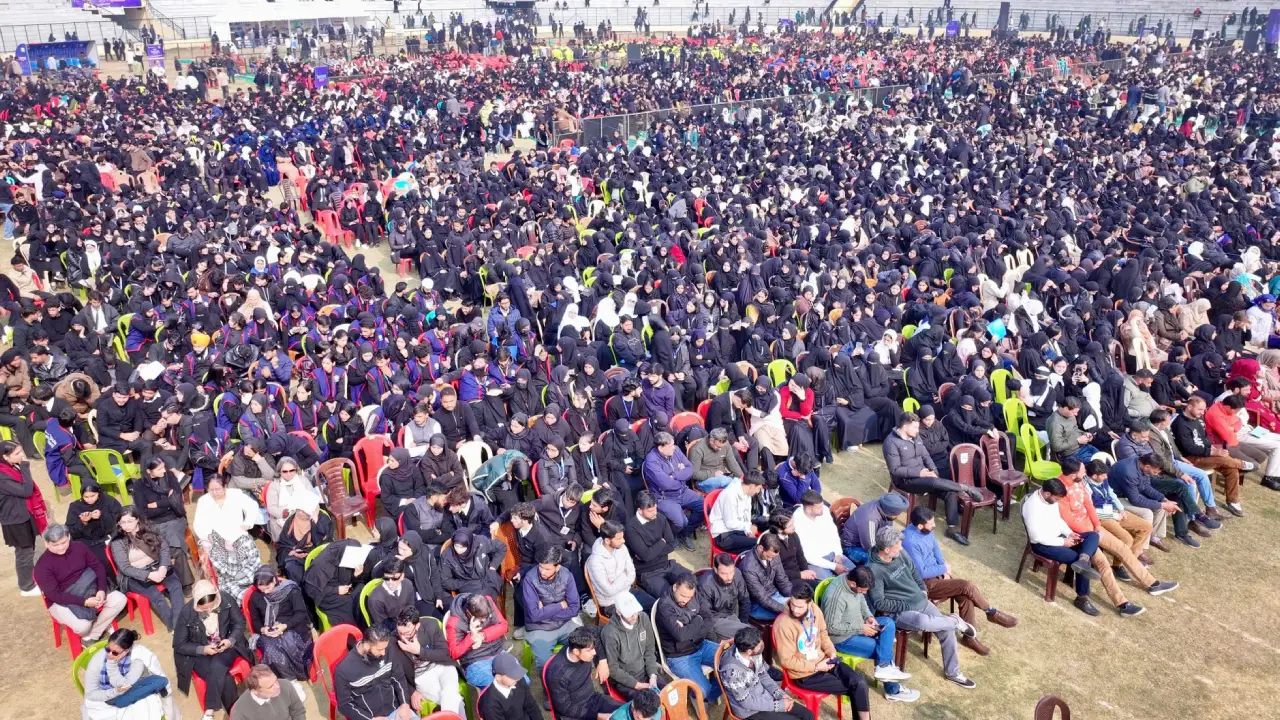
The study, based on responses from 1,200 undergraduate students across 20 government degree colleges in the Kashmir Valley, found a significant but modest association between students’ attitudes towards sustainable development and their pro-environmental behaviour. The researchers, however, caution that the finding does not establish causality.
The paper, Understanding student sustainability attitudes and behaviours through demographic insights in Kashmir Valley, Jammu and Kashmir, India, has been published in Discover Sustainability, a Springer Nature journal, on April 5, 2026. It is authored by Rouoof Habib Ganie, Pratima Gajbhiye, Abdul Qayoom Mir, Mohmad Abass Bhat, Harish Kumar M, Satish Kumar, ArunKumar Bongale, Chandrakant Sonawane, Choon Kit Chan, Subhav Singh and Deekshant Varshney.
The paper’s authors are affiliated with Lovely Professional University, the J&K Higher Education Department, Government Degree College Awantipora, Symbiosis International (Deemed University), CHRIST University, The Islamic University in Najaf, INTI International University in Malaysia, Chitkara University, Graphic Era University, Noida Institute of Engineering and Technology and Sharda University.
The researchers found that 86 per cent of the students agreed that human interference with the environment can have disastrous consequences, while 88.8 per cent recognised a direct connection between environmental quality and people’s overall well-being. As many as 81.7 per cent favoured biodiversity conservation over industrial expansion, and 76.8 per cent said environmental protection should take precedence over unchecked development.
The study also found strong support for sustainability-oriented economic and social policies. About 78.5 per cent of respondents agreed that government economic policies should promote sustainable production, while 84.7 per cent said reducing hunger and poverty should take priority over increasing the economic well-being of industrialised nations. More than 80 per cent supported student-centred, future-oriented and interdisciplinary approaches to education and greater connections between local and global sustainability issues.
But the researchers found a marked difference between what students believe and what they do.
The most common pro-environmental behaviours were simple actions requiring little effort. Turning off lights when leaving a room recorded the strongest response, with 51 per cent strongly agreeing that they practised the behaviour. Reducing water use while brushing teeth or bathing was another commonly reported practice, with 43.5 per cent strongly agreeing.
Recycling and picking up litter showed moderate levels of participation. However, the study found that environmental advocacy was considerably weaker. Considering environmental issues while voting had the lowest level of strong agreement, at 29.2 per cent, while only 31.2 per cent strongly agreed that they participated in environmental protests.
The researchers attributed the limited civic engagement partly to contextual and institutional constraints. They said prolonged socio-political uncertainty and political sensitivity in conflict-affected regions could encourage caution among young people about public demonstrations and advocacy. They also pointed to limited institutional platforms for organised environmental engagement and a weak presence of local environmental organisations.
The study found that students were nevertheless moderately involved in behaviours such as encouraging others to adopt environmentally friendly practices and discouraging environmentally harmful behaviour.
The demographic analysis showed statistically significant differences in pro-environmental behaviour by gender, residence, academic stream, semester and father’s occupation, although the effect sizes were generally small. Female students recorded a slightly higher mean pro-environmental behaviour score than male students, while urban students scored higher than their rural counterparts. Science students recorded the highest level of pro-environmental behaviour among the academic streams examined.
Academic progression also emerged as an important factor. The researchers found differences across semesters, with the sixth-semester group recording the strongest pro-environmental behaviour score in the study. Father’s occupation also showed a statistically significant association, with students whose fathers were in government service reporting higher pro-environmental behaviour.
By contrast, parental education and household income did not have a statistically significant effect on pro-environmental behaviour. The researchers concluded that academic exposure and institutional context appeared to be more consistent influences than family background. Most of the demographic variables explained less than 5 per cent of the variance in the outcomes, indicating modest practical effects.
The study was based on a cross-sectional quantitative survey conducted between November 2023 and August 2024. The researchers selected 20 of the 73 government degree colleges in the Kashmir Valley, taking two colleges from each of the 10 districts. Students aged 17 to 20 years from the first to sixth semesters participated in the survey.
Although the methodology section initially describes student selection as simple random sampling, the paper later clarifies that participants were recruited online through official student WhatsApp groups using a voluntary-response approach and characterises this as convenience recruitment within purposively selected institutions. The authors acknowledge this as a limitation.
The researchers used a 14-item Pro-Environmental Behaviour scale covering habitual behaviour, recycling, sustainable consumption and environmentally driven civic action, along with a 20-item Attitude Towards Sustainable Development scale covering environmental, economic, social and educational dimensions. Structural Equation Modelling was used to examine the relationship between the two constructs.
The structural model found a statistically significant association between sustainability attitudes and pro-environmental behaviour, with a beta coefficient of 0.283 and a p-value of 0.000. The authors describe the model fit as moderate or adequate and say the result should be interpreted cautiously because the incremental fit index was below conventional thresholds.
The paper concludes that the gap between favourable sustainability attitudes and broader environmental action is more likely to reflect institutional and contextual constraints than an absence of sustainability orientation among students.
It recommends integrating sustainability education across academic disciplines, expanding student-led and campus-wide sustainability initiatives, creating stronger institutional platforms for environmental engagement, promoting experiential approaches to sustainable consumption and improving recycling facilities and access to sustainable products on campuses.