by Mir Aasima Altaf
Despite local healthcare facilities, Kupwara residents often travel to Srinagar for reliable diagnostics and specialist treatment, exposing deep infrastructure, staffing and accessibility gaps.
Kashmir is renowned across the world for its breathtaking scenic beauty and is often described as a paradise on earth. Nestled in the northern part of the Indian subcontinent, the region has long attracted visitors, writers, and travellers, each carrying their own perceptions of its landscape. Yet, beyond its mountains, lakes, and picturesque valleys lies another reality that deserves equal attention: the everyday challenges faced by its people. Among these, health and access to adequate healthcare remain critical areas of concern.
While Kashmir is frequently represented through the lens of its natural beauty and tourism, the health-related difficulties experienced by people in its remote districts often receive far less attention. This article seeks to look beyond the familiar image of Kashmir and examine the healthcare realities in one of its most challenging districts, bringing attention to the experiences and circumstances of its people.
Kupwara is a district located in the northwestern part of Kashmir. Established in 1979, the district covers an area of approximately 2,379 sq. kilometres and shares about 240 kilometres of its boundary with the Line of Control (LoC). It is situated roughly 90 km from Srinagar, the summer capital of Jammu and Kashmir, and has a population of approximately 8.70 lakhs (2011 Census).
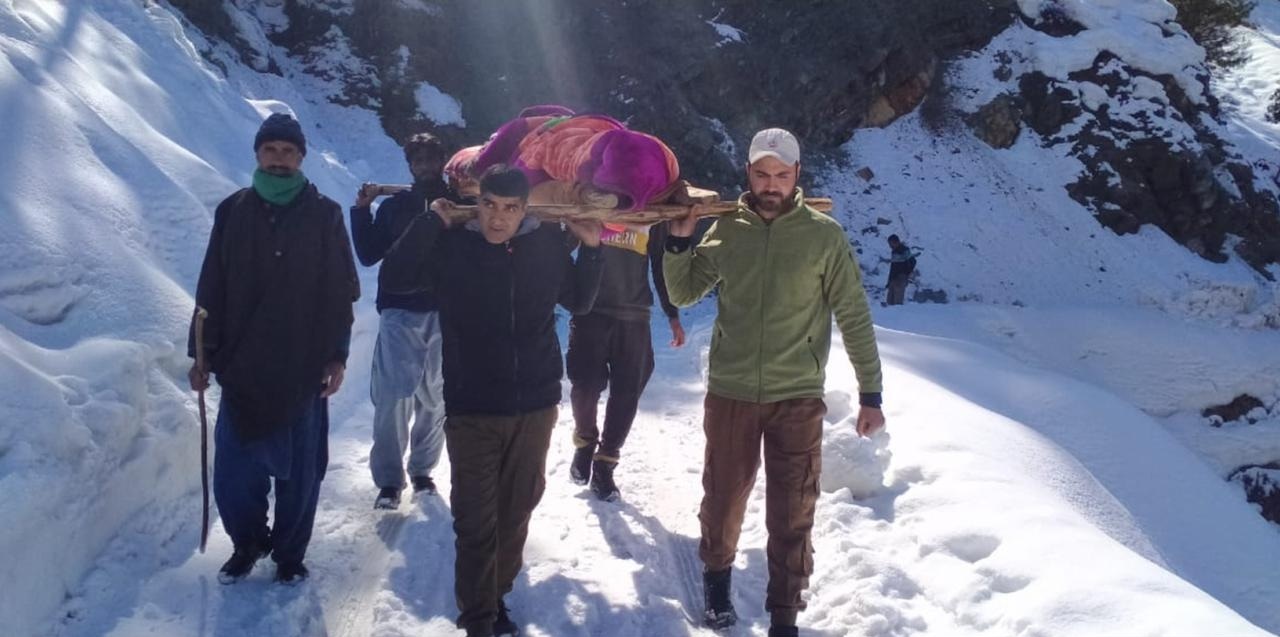
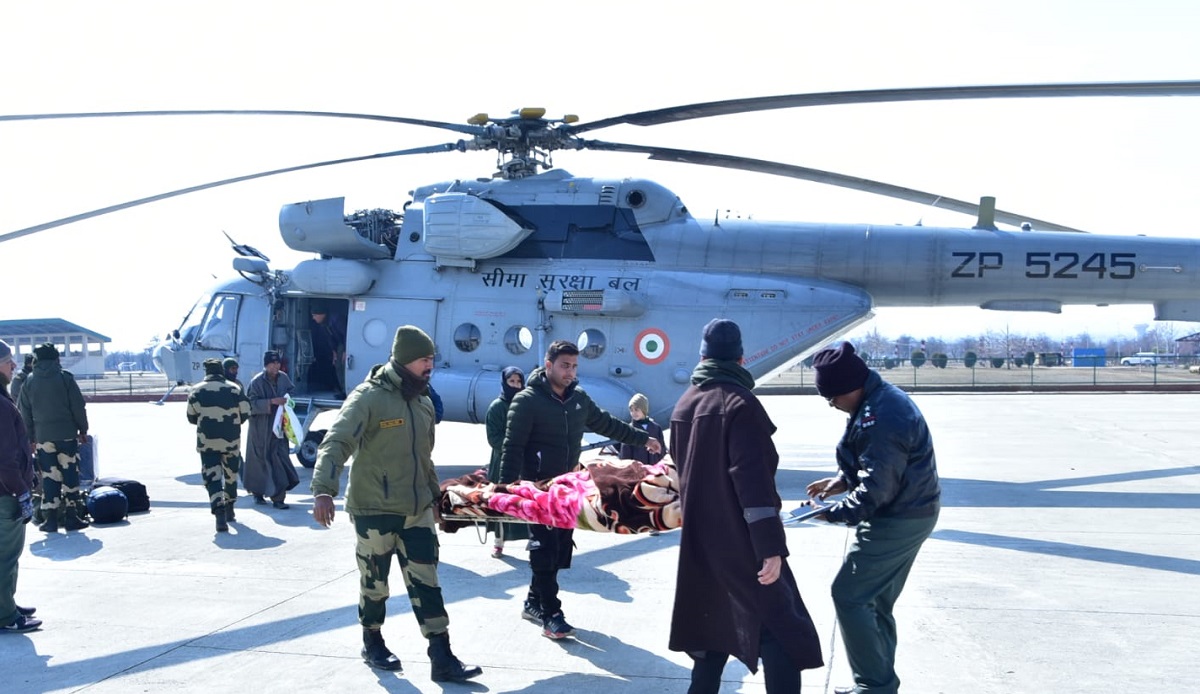
The geographical location and mountainous terrain of the district significantly influence the lives of its inhabitants. During the winter months, heavy snowfall often disrupts transportation and communication, leaving many areas isolated. More than just a geographical challenge, Kupwara’s position along the volatile LoC has historically complicated infrastructure development. Decades of border tensions have left civilian projects, including healthcare, playing catch-up. In remote, snowbound areas, this isolation can turn minor medical emergencies into life-threatening crises.
Why do residents of Kupwara travel to Srinagar for treatment despite having local healthcare facilities?
Despite the availability of government and private healthcare facilities in Kupwara, a section of residents continues to prefer Srinagar for medical consultation, diagnostic tests, and treatment. The root of this mistrust lies in severe infrastructural and human resource deficits at the local level.
The District Hospital and remote Primary Health Centres (PHCs) in district blocks frequently suffer from a lack of advanced diagnostic equipment. Furthermore, there is a chronic shortage of specialist doctors. This preference for Srinagar is not always driven by the availability of specialised services alone; in some cases, it reflects a profound lack of confidence in local healthcare facilities.
Some residents claim that they have had to repeat diagnostic tests in Srinagar after undergoing them in Kupwara, only to find differences in the reported results. Similarly, concerns about the quality and reliability of medicines available locally have contributed to a perception that treatment in Srinagar is more dependable.
This creates a vicious cycle: patients lose faith in local diagnostics, leading to the frustrating reality of having to repeat the same blood tests or scans in the capital.
This dependence on Srinagar becomes even more significant in the case of maternal healthcare. For women from remote and difficult-to-reach areas of Kupwara, accessing timely and specialised gynaecologic and obstetric care can be challenging. When complications arise, referral to higher-level facilities means travelling a considerable distance. For pregnant women in snowbound areas, this is a daily gamble, often leading to preventable tragedies when ambulances cannot navigate the blocked roads.
The human toll of these deficits is best understood through lived experiences. Consider a father from a snowbound village who, during a peak winter storm, carries his feverish child for miles because an ambulance cannot reach them, only to find the local Primary Health Centre (PHC) lacks essential paediatric medicines.
The issue is not simply whether healthcare facilities exist in Kupwara, but whether they possess the capacity, diagnostic accuracy, and specialist availability to handle real emergencies.
This physical struggle is compounded by a severe financial toll. When locals lack faith in local diagnostics, they are forced to travel to Srinagar. For families with limited financial means, this requires paying twice: first for the initial, unreliable tests in Kupwara, and again in the capital. The resulting expenses for travel, accommodation, fresh consultation fees, and new medications can easily push a household into debt.
Ultimately, the question remains: who bears the price when a patient is forced to seek a second opinion just to get an accurate diagnosis?
Resolving these entrenched challenges demands systemic reform rather than temporary fixes. The District Hospital in Kupwara must be upgraded with advanced diagnostic equipment and a consistent supply of quality drugs. To retain medical talent, the administration needs to incentivise specialists with better housing, financial allowances, and clear career progression.
Besides, winter preparedness must be proactive, with emergency supplies pre-positioned in isolated villages before the snow sets in. Finally, expanding robust telemedicine networks would allow patients in remote PHCs to consult with capital-based experts without undertaking the arduous physical journey.
Kashmir’s breathtaking landscapes will always draw the world’s admiration, but true appreciation of the region must include a commitment to the well-being of its people. The residents of Kupwara deserve a healthcare system that reflects their dignity, not just their geography.
(Ideas are personal.)