SRINAGAR: The Kashmir Valley faces the potential for a major, destructive earthquake as centuries of accumulated tectonic strain along the Kashmir seismic gap combine with liquefaction-prone sediments, rapid unplanned urbanisation and a built environment that remains poorly prepared for strong ground shaking, according to a new review published in the Proceedings of the Indian National Science Academy.
The study estimates that the accumulated seismic deficit could correspond to an earthquake of about magnitude 8.7, while the authors place the scientifically assessed Maximum Credible Earthquake for the Kashmir seismic gap in the Mw 8.5-8.9 range. They stress, however, that these estimates carry uncertainties arising from geodetic coupling and interpretation of historical earthquake records.
The review, Looming seismic threat: a comprehensive review of earthquake hazard in the Kashmir Valley, North-western Himalaya, India, has been authored by Waseem Qader, Irfan Maqbool Bhat and Mehran Qurashi, all associated with the Islamic University of Science and Technology (IUST), Kashmir, Awantipora. Qader and Bhat are affiliated with the Centre for Disaster Risk Reduction, IUST, while Qurashi is affiliated with the Department of Architecture, IUST.
The paper was published online on January 21, 2026 in Proceedings of the Indian National Science Academy. The journal is published by Springer, with the copyright held by the Indian National Science Academy.
A Seismic Gap
At the heart of the paper is the Kashmir seismic gap, a segment of the Himalayan arc that the authors say has remained without a major rupture for centuries while tectonic forces have continued to accumulate strain.
The Kashmir Valley sits within the collision zone between the Indian and Eurasian plates. The continuing convergence produces crustal shortening and loads the fault systems beneath the Himalaya. The paper identifies the Main Himalayan Thrust (MHT) as the principal structure accommodating this convergence.
The authors use a shortening rate of about 12 mm a year, a rupture length of about 400 km and a locking depth of approximately 15 km in their seismic-moment calculations. Their model produces an annual seismic-moment accumulation of about 2.16 × 10¹⁹ Nm. On that basis, they estimate a slip deficit equivalent to approximately Mw 8.1 per century.
The authors then calculate that, if the 1132 AD earthquake, estimated in the paper at Mw 7.6, was the last major event to release substantial strain from the relevant segment, roughly 893 years of seismic deficit would have accumulated in their model. That produces an estimated cumulative potential of approximately Mw 8.7.
But the paper does not present 8.7 as a precise prediction of the next earthquake.
Instead, it discusses a range of possible outcomes. Reassessment of the 1555 and 1885 earthquakes could imply that those events did not rupture the full width of the MHT. If so, the accumulated slip could be 9-14 metres and a multi-segment rupture could approach Mw 8.9. Conversely, if historical earthquakes released more slip than currently estimated, the potential could be toward the lower end, around Mw 8.5. The paper therefore identifies Mw 8.5-8.9 as the current Maximum Credible Earthquake range for the Kashmir seismic gap.
The review also cites an earlier probabilistic assessment estimating an 88 per cent likelihood of a major earthquake of magnitude 7.7 or greater within the next half-century. That figure is an estimate from the cited study rather than a prediction made independently by the three authors.
Kashmir Vulnerability
The threat is not determined by earthquake magnitude alone.
The authors argue that the physical characteristics of the Kashmir Valley can substantially amplify earthquake effects. Large portions of the valley consist of unconsolidated alluvial and lacustrine sediments. These softer deposits can amplify seismic waves compared with harder bedrock.
The paper also identifies widespread liquefaction potential. Saturated, unconsolidated soils can lose strength during intense shaking, behaving temporarily more like a fluid than a stable foundation material.
The authors say groundwater levels in the valley are generally shallow, commonly 4-6 metres below ground level, although the water table can be shallower than 1 metre in some artesian areas. Such conditions can increase the susceptibility of soils to liquefaction during strong shaking.
The review identifies particularly high liquefaction susceptibility in parts of the central basin and along areas associated with the Jhelum and Ravi river systems. It specifically mentions western Srinagar, Baramulla and Kupwara among areas where geological and groundwater conditions contribute to the risk.
The significance of these findings lies in the interaction between earthquake shaking and the valley floor. A large earthquake could produce not only structural shaking but also ground failure, liquefaction, fissuring and landslides.
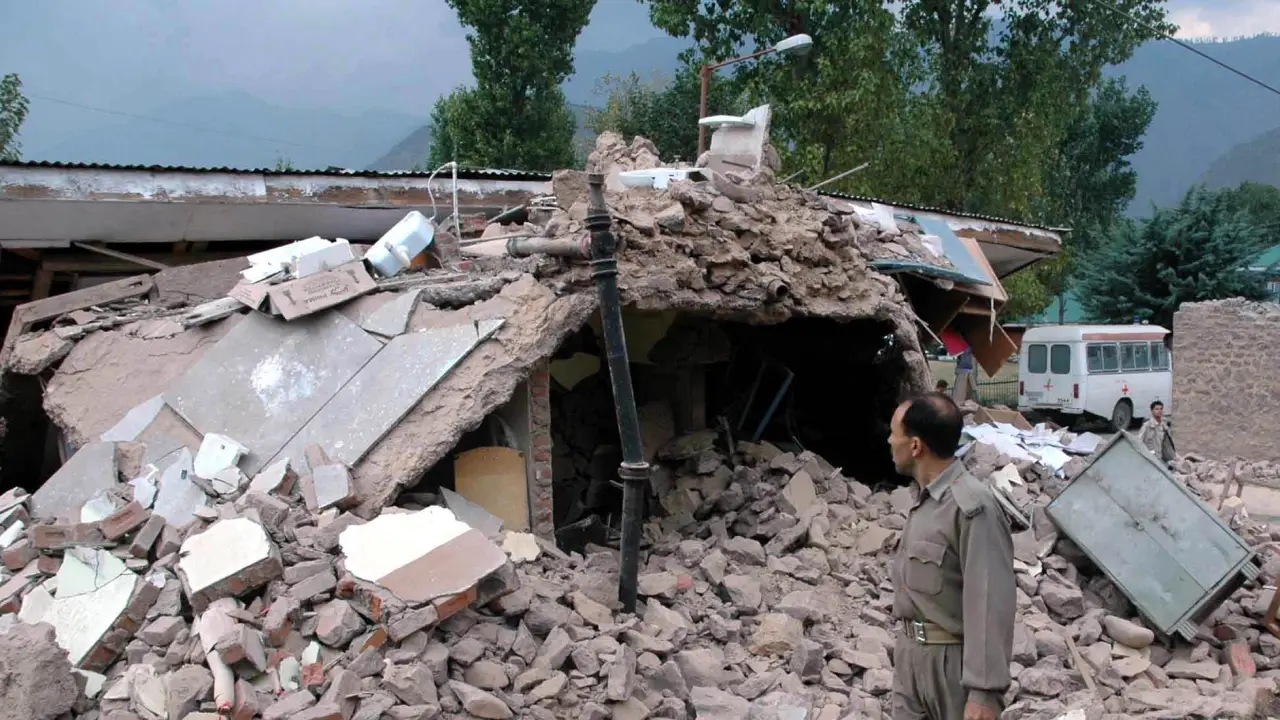
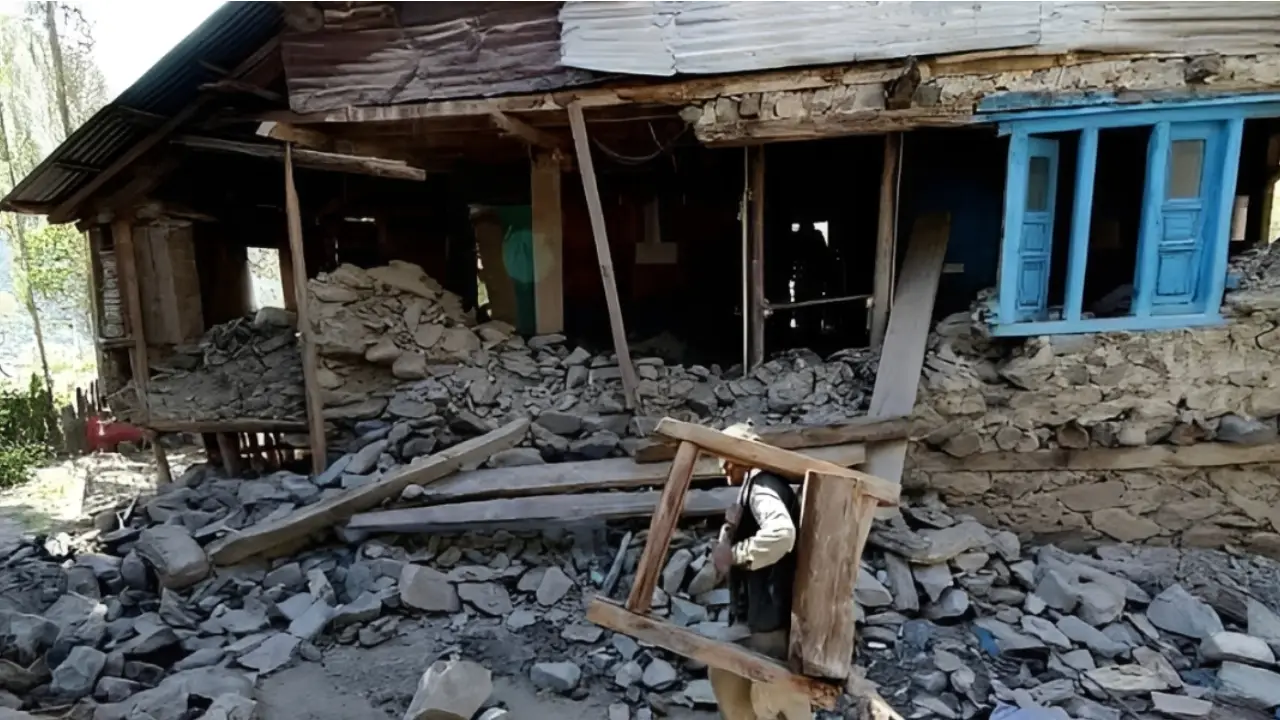
The authors note that the 2005 earthquake produced sand blows, fissures and lateral spreading, providing direct evidence of the valley’s susceptibility to ground failure.
Srinagar’s Rapid Growth
The paper places particular emphasis on the transformation of the built environment.
According to the review, Srinagar’s population increased from approximately 0.25 million in 1961 to 1.5 million in 2011, accompanied by rapid and often unplanned expansion. In parts of downtown Srinagar, building density is reported to exceed 15 buildings per hectare, reaching as high as 46 buildings per hectare in some pockets.
This density matters because closely packed buildings can collide during strong shaking, while narrow roads can severely constrain evacuation and emergency response.
The authors say many residential buildings are constructed by semi-skilled masons without adequate training in earthquake-resistant construction. They also point to a road network that can be less than 8 feet wide in places, potentially obstructing evacuation and rescue operations after a major earthquake. Expansion into wetlands, marshes and other geotechnically fragile areas further increases exposure to amplified shaking and liquefaction.
The paper’s broader conclusion is that earthquake risk is therefore not simply a geological problem. It is the product of hazard, exposure and vulnerability.
As the authors put it in their abstract, the convergence of “high seismic potential with acute physical and social vulnerability” creates a scenario for a “widespread catastrophe.”
The Construction Problem
One of the more consequential arguments in the review concerns the shift in Kashmir’s construction culture.
Traditional Kashmiri construction systems such as Taq and Dhajji-Dewari used timber extensively to provide flexibility and dissipate earthquake energy. The paper describes Taq as timber-laced masonry and Dhajji-Dewari as a timber frame with masonry infill.
The authors say these systems divide a building into smaller, energy-absorbing structural units. Timber plinth beams, wall plates, suspended timber floors and segmented lintel arches help reduce inter-storey movement and prevent brittle wall failure.
By contrast, the review says many contemporary residential buildings rely on non-engineered brick masonry combined with rigid reinforced-cement-concrete diaphragms. Irregular layouts, weak wall-slab connections, inadequate reinforcement and poor workmanship can leave such structures highly vulnerable to earthquake damage.
The paper describes a persistent “myth of strength” in parts of the informal construction sector, in which the weight of concrete is mistaken for structural safety. The authors argue that concrete construction without proper engineering, ductility and reinforcement detailing does not necessarily provide earthquake resilience.
They say seismic detailing is sometimes omitted because of the additional cost, which they estimate at around 10-15 per cent of construction costs, while municipal structural audits remain limited. Their proposed response includes formal training for local masons and mandatory on-site structural inspections.
The authors do not advocate simply returning to historic construction. Rather, they call for the principles embodied in traditional systems to be researched, codified and incorporated into modern construction.
The History
The review places the current risk against a long historical record.
It traces Kashmir’s earthquake history back to 2082-2041 BCE, when, according to the historical reconstruction cited in the paper, a major earthquake of more than Mw 7.5 struck the northern Kashmir Valley and was associated with a landslide at Khandanyar, Baramulla, which blocked the Jhelum and flooded low-lying parts of the valley.
Among the most important historical earthquakes discussed is the 1555 event, estimated at Mw 7.6-8.0. The paper notes that the precise location remains debated, but historical accounts indicate extensive damage, ground ruptures, landslides and collapsed dwellings.
The 1885 Baramulla earthquake, estimated at Mw 6.3-6.8, is another major reference point. The paper says it ruptured the approximately 54-km Baramulla-Loridor Fault, caused more than 3,000–3,500 deaths and destroyed an estimated 75,000 poorly constructed huts. It also triggered a major landslide at Loridora.
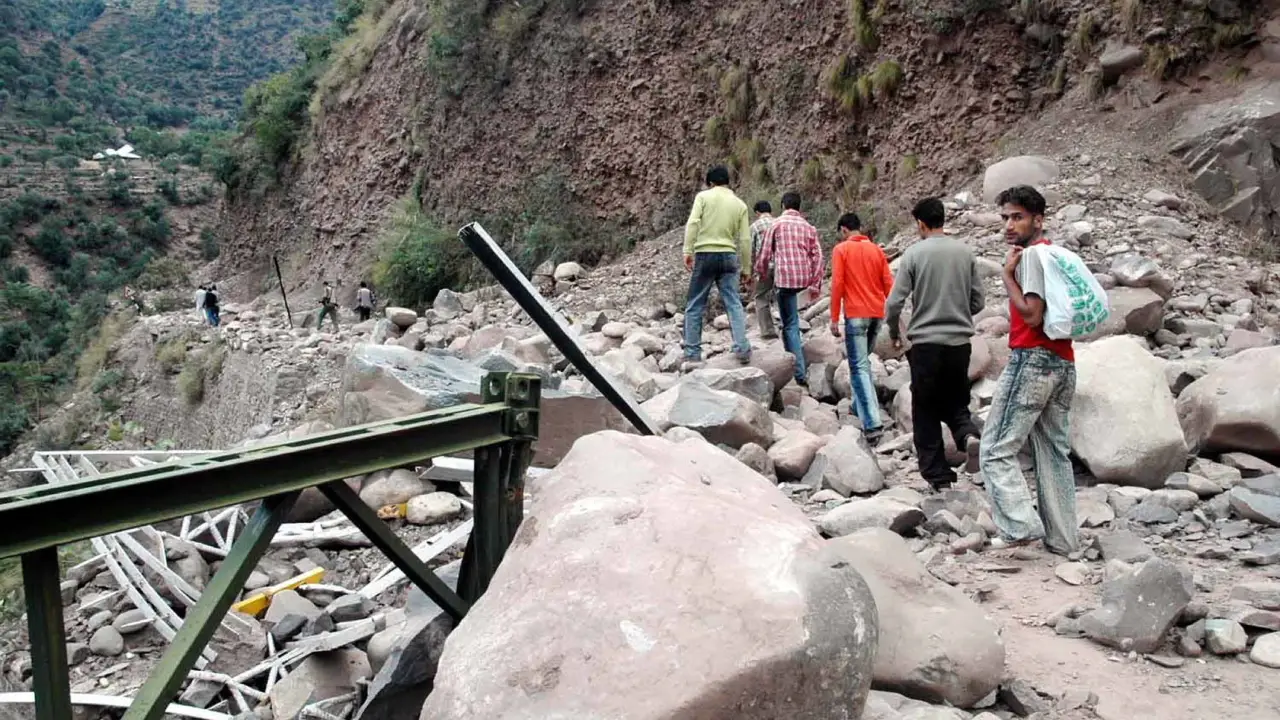
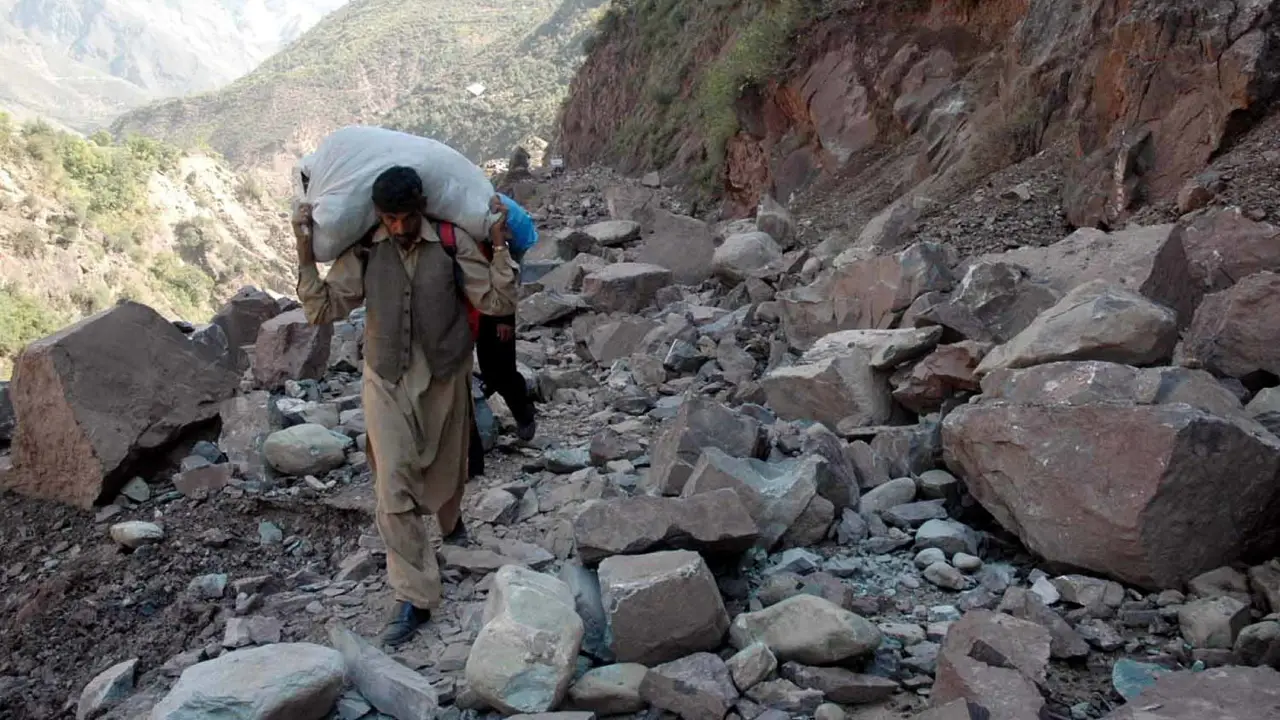
The 2005 Kashmir earthquake, with an estimated magnitude of Mw 7.6, remains the most recent major earthquake to directly affect the region. The paper records more than 1,300 fatalities in the Teetwal-Karnah and Uri areas on the Indian side of the Line of Control and tens of thousands of deaths in Pakistan-administered Kashmir.
The review uses these events to underline a central point: a lack of a recent great earthquake should not be interpreted as an absence of seismic hazard.
Recent Tremors
The valley has not been seismically inactive.
The authors cite waveform analysis that documented 432 seismic events between 2019 and 2022, generated by local and teleseismic sources. In 2023, 17 tremors were recorded, five exceeding Mw 4.0. Between January and June 2024, 32 earthquakes ranging from Mw 3.2 to 5.4 were recorded. The paper also notes twin Mw 4.9 and Mw 4.8 earthquakes in Baramulla in August 2024.
The review says around 100 earthquakes were recorded across Jammu and Kashmir and Ladakh during the two-year period covered by its recent assessment.
The authors caution that these small and moderate earthquakes do not by themselves establish that a major earthquake is imminent. Their significance, in the paper’s analysis, is that they demonstrate continuing activity within a tectonically stressed region while geodetic observations indicate that the MHT remains substantially locked.
What Next?
The paper paints a potentially severe picture of the consequences.
It cites previous estimates suggesting that a worst-case Mw 9.0 earthquake could cause hundreds of thousands of fatalities. It also notes that the 2005 earthquake killed more than 75,000 people across Kashmir and displaced more than three million people, according to the sources cited by the authors.
The economic consequences could be equally extensive. The authors note that the 2005 earthquake caused approximately US$5 billion in losses, and argue that a future high-magnitude event could exceed that figure several times over.
Agriculture, tourism, trade and public services could all face prolonged disruption, while reconstruction could place sustained pressure on government and community resources.
The vulnerability extends beyond individual houses. Roads, bridges, electricity networks, water systems and telecommunications could be damaged or disrupted. Hospitals and schools housed in structurally vulnerable buildings could themselves become casualties of the disaster, reducing the region’s capacity to respond.
The Hydropower Sector
The review also considers whether large hydropower projects in the Chenab-Kishtwar corridor could influence local seismicity.
The authors point to projects including Pakal Dul, Kiru and Kwar, located close to active structures such as the Kishtwar Fault. They explain that reservoir filling can, in some circumstances, alter pore pressure and effective stress and potentially reactivate pre-existing fractures.
But importantly, the paper does not claim that hydropower development has been demonstrated to be causing earthquakes in the region.
Instead, it says that empirical evidence establishing a causal relationship between hydropower activity and seismicity in the Kashmir and Chenab valleys remains insufficient. The authors describe current discussion of reservoir-induced seismicity in the sector as “largely speculative” and call for long-term monitoring combining local seismic networks, reservoir-level observations and InSAR/GPS data.
Early Warning
The authors’ principal message is that the region should not wait for a major earthquake before acting.
They recommend development of a Himalayan Earthquake Early Warning System (HEEWS), with Kashmir Valley potentially serving as a pilot area. The proposed system would involve a dense network of seismometers, public alerts through mobile and cell-broadcast systems and clearly defined public response protocols.
They also call for mandatory seismic safety audits of hospitals, schools and emergency-response facilities, followed by retrofitting of vulnerable critical infrastructure.
One proposal is the creation of a dedicated “Seismic Resilience Fund” to finance retrofitting, alongside municipal-level officials empowered to enforce seismic building standards.
Modern Seismic Policy
The paper gives particular importance to Taq and Dhajji-Dewari.
Rather than treating traditional architecture merely as heritage, the authors argue that its structural principles should inform contemporary earthquake-resistant construction. They recommend research and codification of these techniques, including the development of a “Kashmir-Specific Seismic Construction Handbook” and vocational programmes to train a new generation of artisans.
The proposal effectively calls for a hybrid approach: modern engineering and seismic codes combined with structural principles that evolved through generations of Kashmiri construction experience.
Another major recommendation is to take seismic micro-zonation out of specialist reports and put it into the hands of communities.
The authors argue that detailed maps showing liquefaction and landslide risks have limited value if they remain accessible only to technical specialists. They propose simplified, vernacular-language “Hazard and Risk Maps” for individual communities.
Such maps, they say, should inform evacuation routes, land-use planning and local disaster-management plans and should be incorporated into drills at the tehsil, block, ward and panchayat levels.
The broader objective is to make seismic risk a matter of everyday public preparedness rather than an issue addressed only by scientists and government departments.
The Bottom Line
The authors conclude that Kashmir is at a critical juncture because the region’s tectonic hazard is being compounded by its own development trajectory.
Their conclusion is deliberately framed around prevention. They write that the valley’s risk arises from the combination of “intense seismic hazard, highly amplifying soft sediments, rampant unplanned urbanisation, and vulnerable infrastructure.”
But the review does not argue that catastrophe is unavoidable. Instead, it says the period before the next major earthquake represents an opportunity to reduce vulnerability.
Its prescription is a combination of early warning, seismic-code enforcement, retrofitting of critical infrastructure, modernisation of traditional earthquake-resistant construction, community-level hazard mapping, trained construction workers and stronger disaster-management institutions.
The authors describe the required shift as one from reactive disaster response to proactive prevention. In their formulation, the objective is not to predict exactly when the next major earthquake will strike, but to ensure that Kashmir is substantially less vulnerable when it does.