Amid challenges on multiple fronts, the space once held by longstanding bookshops is steadily shrinking. While a few continue to struggle for survival, many have already shut down their shutters. Yet, despite these shifting realities, bookstores remain an enduring part of our intellectual landscape and cultural identity, writes Muhammad Nadeem
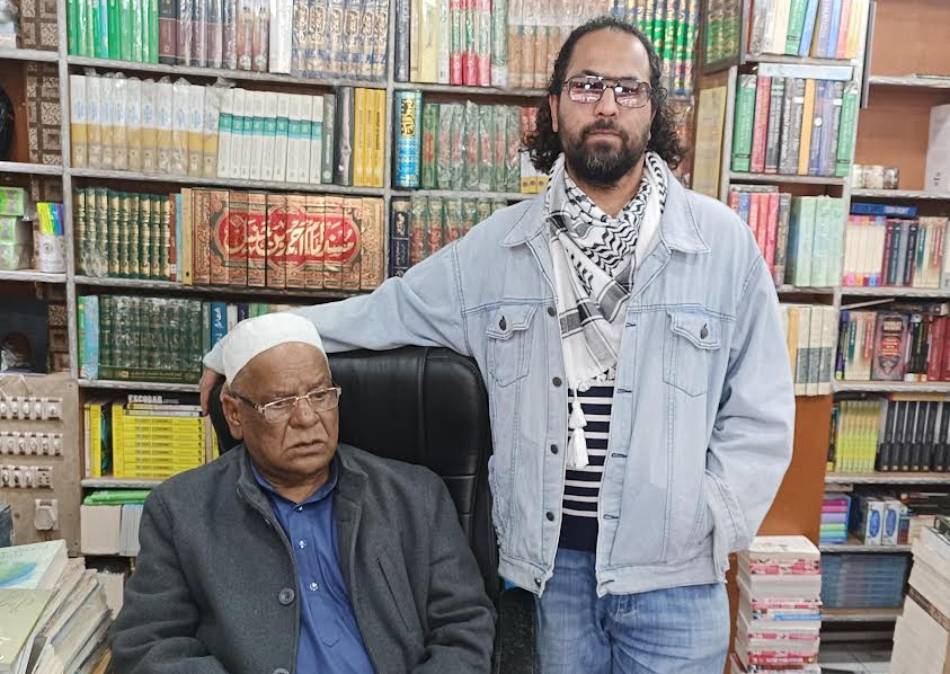
In Lal Chowk, the heart of Srinagar, where Kashmir’s cultural, commercial and political pulse has throbbed for generations, a quiet extinction unfolds. One of the prominent bookshops of the place, Bestseller, which endured four decades of difficulties on different fronts, has finally ceased its operations, forever.
An establishment of reverence, rather than a retail business space, it functioned as a repository of aspirations. For countless lovers of literature, including myself, this shop offered sanctified social space to connect and contribute to the larger good of society.
It was a space where entering meant traversing corridors of possibilities. A place where Islamic theology shared space with Kashmiri poetry, well-worn novels, and political discourse, besides putting tradition into practice. Its closure represents more than the end of a business; it marks the disappearance of a sanctuary, a library of dreams, and a significant chapter in Kashmir’s collective memory.
Compelled by the circumstances, the proprietor has abandoned literature for livelihood. Opting for a more pragmatic merchandise as per the requirement of the market, the owner chose the choice of surging customer base over his concern for sinking readership.
This closure of an iconic bookstore in the city centre is not an isolated event, but one among a series of landmark bookshops shutting their shutters. However, this transformation raises important questions about the challenges confronting Kashmir’s intellectual landscape, the implications for its literary heritage, and the significance of bookstores as spaces of social integration and identity formation.
The Challenges
Amid avenues to opt from, bookstores have shown resilience to resist their physical extinction, but the tide to survive is turning. The technological interventions coupled with market trends, the physical stores are getting difficult to manage. Partly decline in the readership of the erstwhile scale and majorly the online selling and screen preferences has hit the idea of ritual of reading: a strain in the physical relationship of a reader and a book.
Despite interventions of staying relevant by including stationery, gift items and educational material, the bookshops meant to engage readers are on the brink of getting lost in the closets of history. The online sales and decreasing margins have made it difficult for physical store owners to survive, compelling them to think about the alternatives. However, the shops offering academic and school books have sustained due to their demand and supply from the schools and other educational institutions.

Ashes and Absences
Some names once held the weight of literary reverence— The Kashmir Book Shop and Hind Book Shop among them. Though little is recorded online about their exact founding or closure, those who lived through the golden age of Kashmir’s print culture remember them vividly—quiet temples of thought nestled in the commercial heart of Srinagar, their windows filled with titles in Urdu, Kashmiri, and English, catering to the curious minds of students, poets, and passersby, alike.
Something is haunting about a vanished bookshop. When a textile store disappears, it is a matter of commerce; when a bookstore vanishes, it is a cultural rupture. The absence leaves behind not just an empty shop front but a rupture in memory, a missing shelf in the house of knowledge. These two bookshops, once vital to Lal Chowk’s literary pulse, now survive only in scattered recollections and fading references.
A Home of Paper and Ink
As I grew older, my visits to Bestseller became more frequent, more purposeful. It was no longer just about magic tricks and illusions—it was about searching for answers, for stories that could explain the world I was beginning to understand. Every time I stepped into Lal Chowk, my first instinct was to head to Bestseller. It felt like returning home.
“Indeed, Bestseller is now following the fate of Kashmir Book Shop and Hind Book Shop—both once iconic, now reduced to selling mobile accessories and spare parts,” Gulam Rasool Bhat, an administrator and the custodian of one of the largest personal libraries in Kashmir, shared with me. “I remember Sani speaking to me about it—his voice heavy with dejection. There was a quiet resignation in his words, but more than that, there was heartbreak.”
Faizan Bhat, a writer and an avid reader, recently told me, his voice tinged with emotion, “It is a personal loss to me. Whenever I came to Lal Chowk, Bestseller was always my first stop. It was like a home. Sanaullah Uncle would offer us discounts and even let us take books on credit. I do not have words for what this loss means.”
Bestseller was not only a bookshop, it was a bridge between the divide. A link between personal choices and political preferences. A sync between secular thoughts and sacred beliefs. Its owner, Sanaullah, wasn’t merely a businessman—he was a patron of literature, a gentle facilitator of dreams since 1985.
Often, he would go out of his way to find rare titles for his readers, sourcing books from outside the valley to continue engagement with books. The profits were never his priority. His son, Sani Yasnain, inherited not just the shop but also that spirit. His warmth, his attentiveness, his humility—all made Bestseller feel more like a sanctuary than a store.
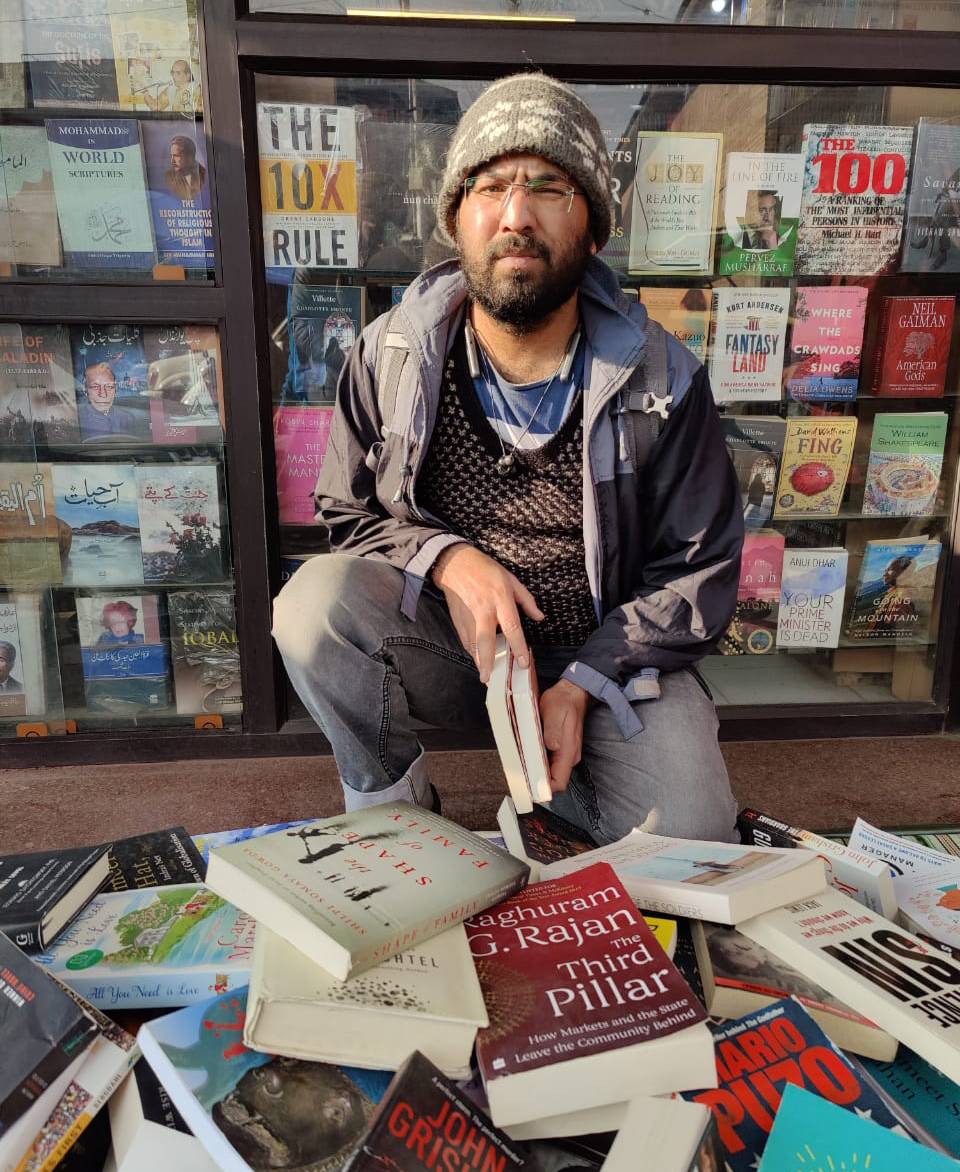
Taking a step further from his father, Sani joined his father in 2017 after completing his MBA from Pune. In an attempt to reignite passion for books and reinvent the wheel, Sani started a concept of “books by kilo” in Srinagar. This was possibly to counter online selling, while improving the affordability. However, the idea did not help to keep the cart going.
Khawar Khan Achakzai, another passionate reader with a stethoscope in one hand and a book in the other, echoed the grief. “It is sad how such a wonderful bookstore is being forced to shut down,” he told me. “Mainly because of a shrinking readership in Kashmir.”
The Last Breath?
Not all stories end in silence. Some flicker, quietly, defiantly.
Take Password Bookshop, for instance. Once tucked proudly in a prominent corner of Regal Chowk, it too has had to shrink, conceding more than half its space and now operating from a section so hidden that new customers struggle to find it. And yet, it endures. Like a stubborn root clinging to the soil, it refuses to be washed away.
Even Gulshan Books, that beautifully curated sanctuary floating on the waters of Dal Lake, has to shut down that branch. That bookstore, coupled with a quaint coffee shop, had become a pilgrimage site for tourists and bibliophiles until the government refused to extend the lease. “We were told to shut shop. No reason given,” said its owner, Ajaz Sheikh. “Even during shutdowns, we remained open. The youth loved the place. We even provided free internet to students.” But Gulshan continues the business from three branches.
A Whisper of Hope
And then, there are the young keepers of this fragile flame.
Mubasher of Iqra Bookstore runs his entire book business from home. There is no shopfront, no neon sign announcing his presence. But through his phone and laptop, he connects with readers across Kashmir and beyond. He curates titles with care, sells books online, and delivers them from Budgam to Bengaluru. In a landscape where so many shelves are being cleared for groceries, Mubasher’s modest enterprise feels nothing short of revolutionary.
Or consider Wullar Book Shop, founded by Sameer—a name that now echoes with quiet reverence in the literary circles of north Kashmir. Just recently, Sameer celebrated the fourth anniversary of his bookshop. In Kashmir, where even shops older than the Constitution vanish overnight, four years is no small feat. Wullar Book Shop is more than a store—it is a lighthouse on a foggy lake, guiding young readers back to the shore of printed words.
Even Hilal, of Khan News Agency, once known for its neatly stacked shelves of newspapers and glossy magazines, has had to reinvent his modest space. With the dwindling demand for print media, he quietly transformed his corner into a small bookshop—an unspoken adaptation to changing times, a gentle pivot from headlines to hardcovers.
The Future
Perhaps it lies not in recreating the grand halls of the past, but in imagining humbler, more resilient spaces—living rooms that double as libraries, mobile carts that carry poetry through markets, digital storefronts where the written word travels silently across borders.
Perhaps the bookstore of the future will be smaller but more intimate. A corner in a café. A book club in an attic. A shelf in a classroom. A WhatsApp group trading PDFs and dreams.
But most importantly, it will be shaped by the same impulse that led a young boy to pool coins for a magic trick book. It will be powered by the same spirit that drove Noor Mohammad to haul manuscripts across Lahore and Delhi. It will be written in the same ink with which Sani still records memories. That impulse, that spirit, that ink—it has not dried.
The readers are fewer, the shops more hidden, but the yearning endures. The vanished bookstores are not forgotten; they are folded into Kashmir’s collective memory, like pressed flowers between the pages of a book that no longer exists.
The story of Kashmir’s bookstores is not over.
It is simply between chapters.