Hachette India published Mallika Ravikumar’s book about the integration of 565 pre-petition principalities and states offers an interesting read with Kashmir emerging as the only story that still is a work in progress, writes Muhammad Nadeem
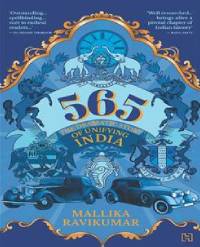
Mallika Ravikumar’s 565: The Dramatic Story of Unifying India delves into the complex, multilayered saga of India’s unification post-independence, with a particular focus on the integration of over 500 princely states. This narrative, driven by figures like Sardar Vallabhbhai Patel, Lord Mountbatten, and VP Menon, portrays the tumultuous process of nation-building, displaying the fusion of historical drama and nuanced analysis of the political, cultural, and personal motivations that influenced India’s leaders and rulers.
Background
The unification process was steeped in geopolitical challenges. Before independence, British India consisted of two primary entities: directly controlled territories and princely states under British “paramountcy,” where the latter comprised over 500 kingdoms that ranged vastly in size, influence, and wealth. As the British prepared to depart in 1947, Lord Mountbatten, the last viceroy, advanced the deadline for independence to August 15, leaving less than three months to secure India’s territorial integrity. In response, India’s new leadership, including Patel and Pandit Nehru, committed to unifying India and prevent any fragmentation that could destabilize the nascent nation.
Political Strategies
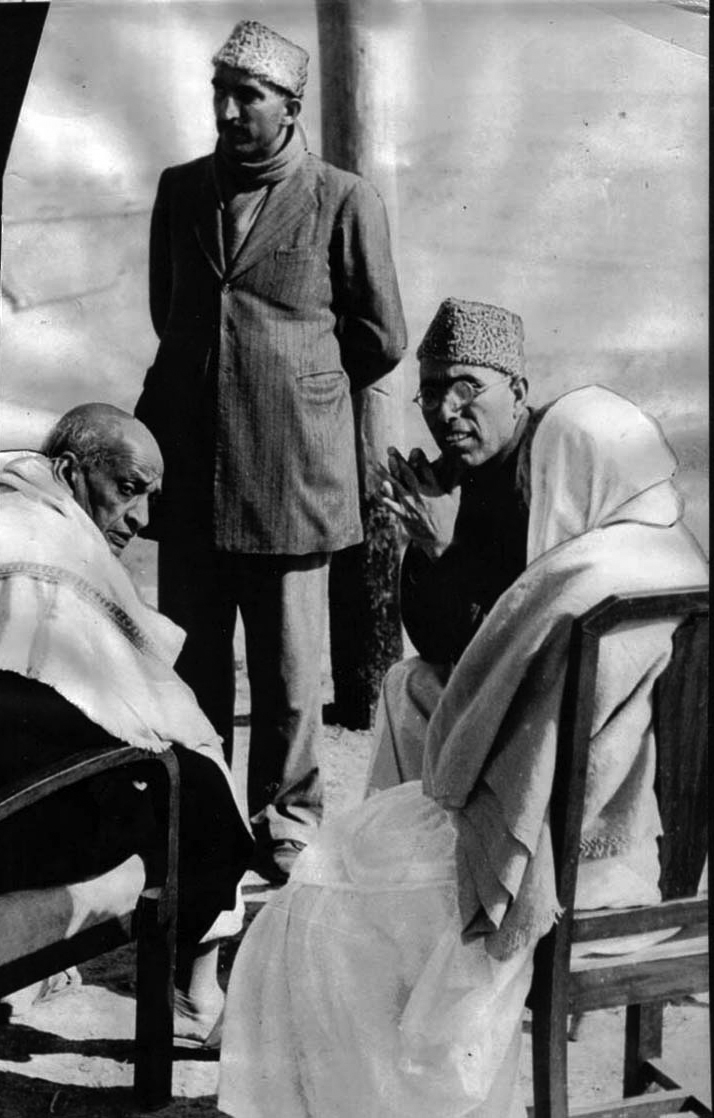
At the helm of Malikka’s narrative are the tenacious and, at times, sharply contrasting personalities who drove this integration. Patel and Menon led the charge to coax, negotiate, and occasionally pressure the princes into signing the Instrument of Accession. Patel’s resolve is encapsulated in his declaration to Mountbatten: “I am prepared to accept your offer… provided you give me a full basket of apples.” Patel’s metaphor of the “basket of apples” for India’s 565 princely states symbolises the national ideal of wholeness.
Menon’s instrumental role in devising the Instrument of Accession is also a testament to the bureaucratic acumen that supported India’s political ambitions. In his interactions with various leaders, Menon demonstrated remarkable adaptability and persuasiveness, capitalising on the pressure to drive home the necessity of unification. As Mallika’s work indicates, Menon’s approach was to “use the paucity of time to our advantage,” reflecting the broader ethos of urgency and diplomacy underpinning the integration efforts.
Storytelling
Mallika crafts her historical recounting through vivid dialogues and reconstructed scenes that humanise historical figures while presenting factual details. Her portrayal of Mountbatten’s discussions with Patel reveals the internal conflicts and political calculations each leader navigated. In one evocative scene, Mountbatten proposes concessions allowing princes to retain their titles, decorations, and certain privileges, to which Patel agrees despite his disdain for the monarchy, a decision driven by his vision of a unified India above all else.
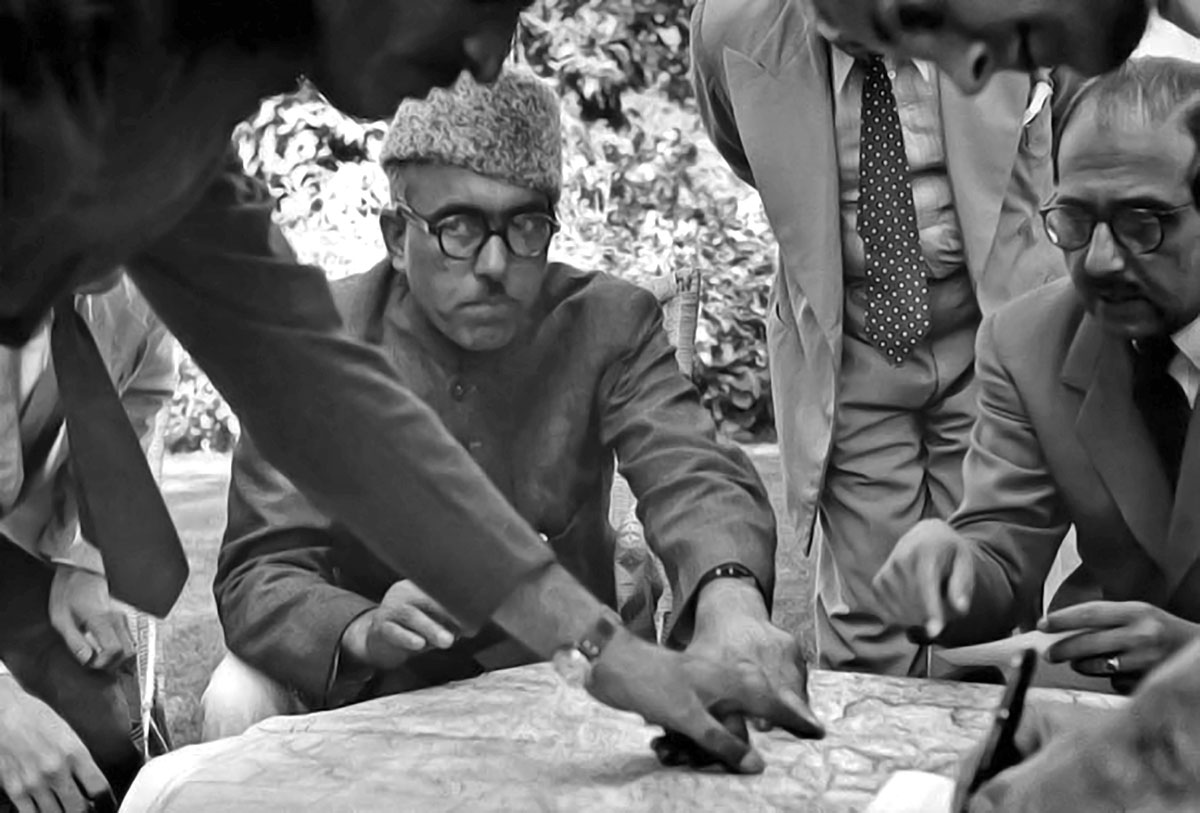
The dialogue format becomes especially potent when depicting the tensions in princely Kashmir, where Maharaja Hari Singh’s vacillation between joining India, and Pakistan, or remaining independent adds drama to the larger narrative. When Mountbatten suggests that Kashmir consider aligning with Pakistan, Hari Singh’s response— “Jammu and Kashmir shall be independent” —underscores the precarious nature of Kashmir’s position. This interplay of dialogue and action creates an immediacy that draws readers into the decisions being made, both public and personal, and the sheer weight of the stakes involved.
Identity
In 565, the theme of sovereignty is explored through the conflicting aspirations of the princely rulers and the Indian leaders’ determination to forge a cohesive national identity. For the maharajas, joining India implied the dissolution of their autonomy and the end of centuries-old traditions of rule, while for Indian leaders, the choice for unification was more existential. Malikka conveys this conflict in Patel’s conviction that “we cannot allow the country to splinter into pieces,” reflecting the leaders’ vision of a united India as essential to securing its sovereignty in a turbulent world.
Identity, both national and regional, is another recurring theme, especially in the Kashmir chapter. Malikka dissects the religious, cultural, and political dimensions influencing Kashmir’s accession. Sheikh Abdullah’s impassioned statement, “Kashmir has no future with Pakistan,” echoes the emotional and ideological rifts in the valley. In contrast, Abdullah’s determination to create a Naya Kashmir aligns with the broader vision of India as a secular, pluralistic state.
Contribution to Indian Historiography
565 stands out not only as a historical account but as a meditation on India’s fragile post-colonial unity. Mallika sheds light on a frequently overshadowed segment of Indian history—the unification of princely states. In so doing, she situates the book within the broader historiography of Indian independence, contributing a detailed perspective on integration that complements accounts focused on the partition and communal violence of the period.
Presenting each princely state’s story individually also serves to decentralise the narrative, offering multiple perspectives on whether the unification was an automatic process and the result of negotiation and struggle. This structural approach aligns well with modern historiographical trends that emphasise the multiplicity of voices and experiences in shaping historical outcomes.

Narrative Techniques
The focus of this review centres on the period leading to the accession of Jammu and Kashmir to India in 1947. Malikka’s approach is to take the reader deep into the personal lives of major figures like Maharaja Hari Singh, Muhammad Ali Jinnah, and Sheikh Mohammad Abdullah. This narrative technique is powerfully realised through detailed dialogues, emotive descriptions, and keen insights into the characters’ internal struggles, particularly in moments of political pressure.
The text highlights Gandhi’s confrontation with Maharaja Hari Singh’s Diwan, RC Kak, which serves as a microcosm for the broader tensions between princely states and the central Indian leadership. Gandhi’s position, as described, is unequivocal— “The only person the people respect is Sheikh Abdullah; the people want their beloved leader released from jail.” This assertive stance illustrates Gandhi’s sway over popular opinion, while his words serve as a reflection of the emotional tug-of-war around Kashmir, with “tremors…sure to follow” in the political landscape.
Jinnah’s own manoeuvring is marked by a blend of pragmatic calculation and idealistic ambition, particularly when the author details his view of Kashmir as integral to his dream of Pakistan. The book depicts him contemplating the strategic importance of tribal fighters along the North-West Frontier, potentially mobilising a lashkar of “over 200,000 soldiers.” This establishes not only his readiness for a conflict if necessary but also underlines the lengths to which Pakistan’s leaders were prepared to go to secure Kashmir.
The Ruler’s Dilemma
In portraying the internal conflicts of Maharaja Hari Singh, Malikka reveals the maharaja’s cultural and religious dilemma. As “a Dogra Rajput, a Kashmiri Hindu,” the maharaja faces the existential question of his rule over a Muslim-majority state. His choice is starkly limited: while Pakistan offers political solidarity, he fears it might strip him of his authority in a theocratic structure. India, conversely, promises democracy but with little respect for royalty. Malikka’s depiction of Singh’s musings, “The only reasonable choice open to him was to join neither, while maintaining cordial relations with both,” humanises him by illustrating a monarch struggling to retain sovereignty in a rapidly shifting world order.
Precision and Exploration
Malikka divides the narrative into thematically distinct but interlinked sections, using titles such as An Offer from Pakistan and Operation Gulmarg to mark key turning points in the story. This structure, paired with a pacing that mirrors the increasing political urgency of the time, enhances the reader’s engagement by transitioning seamlessly from deliberations among leaders to the on-ground ramifications of their decisions.
The thematic division also allows Malikka to explore the implications of broader geopolitical issues on Kashmir’s future. The segment titled Blockade and Browbeat, for instance, highlights the grim reality of political pressure tactics. This section is particularly evocative as it sheds light on the suffering of common Kashmiris, a people wedged in a war of attrition between two neighbours. By painting a vivid picture, the author lays bare the ‘reality’ that pervaded the diplomatic landscape.

In the section, The Lashkar Rises, Malikka portrays the tribal invasion as both a religiously driven mission and a politically calculated manoeuvre by Pakistan. This chapter is notable for its dramatic portrayal of jihad-inspired zeal among the Pathan tribesmen, such as Majid, who dreams of heroism and riches as he embarks on the invasion. Malikka uses descriptive language to emphasise the fervour with which these tribal forces anticipated the campaign, depicting Majid as he “offered thanks to Allah for bringing him to the threshold of the land of milk and honey.” This technique amplifies the sense of impending tragedy and the heartbreaking aspirations that drove thousands of young men to liberate a distant land.
Intellectual Significance
565 provides a case study of how nationalism and religious fervour can be harnessed for geopolitical objectives. By portraying Kashmir as the proverbial chess piece, Malikka raises questions about the legitimacy of political power and the ethical boundaries of diplomatic and military strategies. The contrast between Nehru’s secular ideals and Jinnah’s focus on creating a Muslim-majority state sharpens the book’s intellectual engagement, inviting readers to ponder the heavy price of independence and the inherent limitations of both secular and religious nationalism.
The narrative’s intensity is further heightened by the existential crisis faced by the Indian leaders, who fear that losing Kashmir might spell doom for the nascent nation’s secular ethos. Patel’s pragmatism in convincing the maharaja to accede to India and his willingness to “befriend Abdullah” for the sake of national integrity reveal the tightrope Indian leaders walked to secure Kashmir. This not only gives the narrative an air of urgency but also emphasises the weight of their decisions on the future of India’s national identity.
Game of Power
The book portrays the intricate power dynamics at play during the partition of India. One key aspect is the Maharaja’s dilemma, as embodied by Hari Singh’s internal conflict. As a Kashmiri Hindu ruler, he wondered about his future in a nation created for Muslims. Simultaneously, India’s disregard for royalty under Nehru’s vision for a democratic republic left him questioning the relevance of monarchy.
Another narrative thread explores Jinnah’s strategic manoeuvring. His calculated response to Operation Gulmarg exemplifies this: Jinnah calmly instructed, “Go ahead with the operation… But don’t tell me.” This gesture underscored the complex moral considerations of leadership during partition.
The book also highlights Sheikh Abdullah’s popular movement. Abdullah’s release from prison proved pivotal. Upon release, he declared, “The decision must prioritise Kashmir’s people.” He reassured the Maharaja that his throne was safe, seeking only democratic constitutional governance.
The Geography of Conflict
Malikka demonstrates exceptional skill in explaining how geography shaped the conflict. The strategic significance of Gurdaspur becomes clear when she writes: “Had Gurdaspur been awarded to Pakistan, Maharaja Hari Singh would have lost land access to India and sooner or later, joined Pakistan. But, by giving Gurdaspur to India, the boundary award had, in effect, kept alive India’s hopes of gaining Kashmir.”
Malikka constructs a historically dense narrative, balancing documentary realism with character-driven moments that reveal the psychological weight of decisions. The vividness of her language—such as the “eerie silence and dense cold air, thick with uncertainty” in Srinagar as Menon and Colonel Manekshaw evaluate the situation—reflects the urgency and apprehension of the time.
Menon’s insistence that Singh sign the Instrument of Accession is filled with tension, underscoring how close Kashmir came to being lost to Pakistan due to the Maharaja’s reluctance to align with either country. This complexity, where personal pride and political allegiances intertwine, is a recurring theme as Malikka emphasises the difficulties that even the most prominent figures faced in these moments of crisis.
Conflict and Decision
Malikka captures the back-and-forth nature of the Kashmir conflict, detailing how the arrival of Pakistani-supported raiders, the instrument of accession, and the entry of Indian troops into the region created an explosive political situation. The sections describing Brigadier Rajinder Singh’s battle near Uri illustrate the grit involved in defending Kashmir. Singh’s command to “blow up the bridge” to prevent the enemy’s advance highlights the tactical manoeuvres that bought crucial time for Indian reinforcements.
Similarly, the tension in the government’s response to the invasion reflects the uncertainty that clouded every decision. Malikka imagines, “Nehru’s face lost colour as he read Abdullah’s note,” showing how even seasoned leaders grappled with the urgency of protecting Kashmir amid ideological disputes.
Malikka also draws attention to the terms of the accession, which demanded that the Maharaja include Sheikh Abdullah in the administration, thereby moving toward democratic governance. This requirement, while seen as a strategic compromise, marked a shift from feudal to participatory rule and positioned Kashmir as a unique entity within India, balancing local self-governance with national affiliation.
Malikka’s depiction of Baramulla, transformed from a vibrant town to a “smouldering mound of fire and ash” as it was overrun by raiders is descriptive. Descriptions of “bloodstained shoes” and the brutalities inflicted on civilians paint a harrowing picture of the human cost of this conflict. This tragic portrayal is juxtaposed with the strategic decisions being made in Delhi, where leaders faced “endless defence committee meetings to make preparations” for military intervention.

History and Emotion
Malikkar’s narrative in 565 is marked by its blending of objective historical recounting with emotional storytelling. She employs shifting perspectives—from the vantage points of state leaders to the on-the-ground experiences of soldiers and civilians—creating a narrative that is both comprehensive and deeply personal. This approach effectively humanises the historical narrative, allowing readers to not only understand the political stakes but also empathise with those affected by the conflict.
Another notable technique is Malikka’s use of symbolism, particularly in her portrayal of Kashmir itself. The imagery of the “fog-covered poplars and willows” reflects the clouded future of Kashmir amid geopolitical turmoil. This use of natural imagery conveys both the beauty of the region and the tragedy of its transformation into a war zone.
Kashmir’s Accession
The book captures the tensions that would come to define Indo-Pakistani relations and, more broadly, the ethical dilemmas surrounding intervention and sovereignty. Malikka provides readers with a profound understanding of how the Kashmir issue was not merely a regional struggle but a linchpin in South Asian geopolitics, foreshadowing decades of strife.
Mountbatten’s insistence on a “referendum” to be held in Kashmir once peace was restored raises questions about autonomy and the promises made to the Kashmiri people, promises that remain contentious today. Malikka’s nuanced depiction of these issues invites readers to ponder the complexities of self-determination, governance, and national identity.
As Dr Shashi Tharoor aptly notes, 565 is “sure to enthral readers,” and it challenges us to re-examine the stories of India’s founding with fresh eyes and renewed appreciation for the complex tapestry of unity amidst diversity.
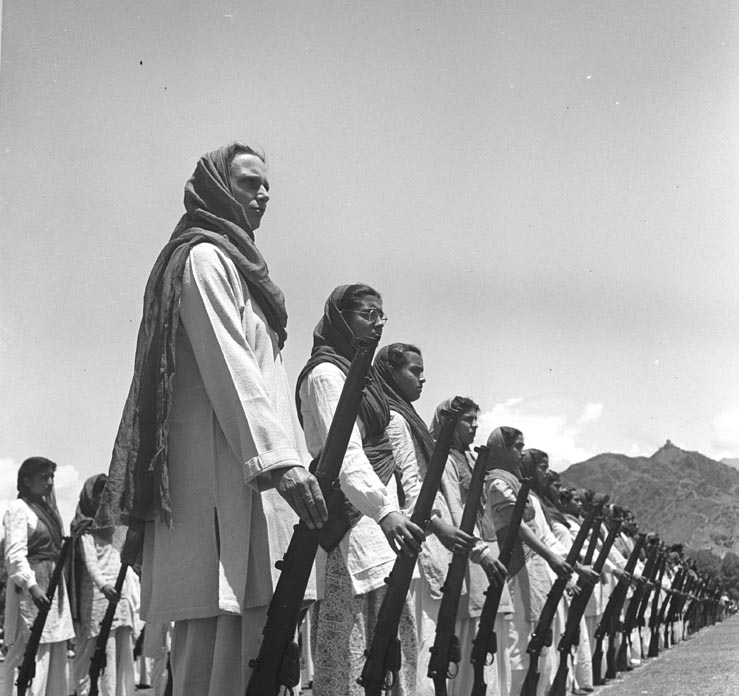
Malikka’s account culminates in a “war of nerves” that ends with the maharaja’s reluctant accession to India. Yet, the author leaves readers with a sense of foreboding, hinting at the enduring consequences of this unsteady decision. In doing so, she underscores how the accession of Kashmir to India was not a resolution but rather the beginning of a long and complex conflict. The Kashmir dispute, as Malikka notes through her historical lens, remains “a reminder of the dreams that were shattered, the promises that were broken, and the deep scars left on both nations.”
Consider the tense exchange between Gandhi and Maharaja Hari Singh, where Gandhi directly confronts the ruler: “’It is clear Your Highness does not enjoy the confidence of his people.’ And the diwan,’ Gandhi looked straight at Kak, ‘appears to be a most unpopular man.’” Such moments transform historical facts into compelling drama without sacrificing authenticity.
By engaging with the text, readers are encouraged to consider the larger questions of identity, allegiance, and humanity within the broader canvas of nation-building.
And, in the case of Kashmir, Malikka seems to end up doing exactly what Hari Singh did – do what you please regardless of what subjects think about. Notwithstanding this, she cannot have the courage to deny one truth in the end ”Of all the chapters in this book, Kashmir alone is a story that is still unravelling,” so is to say that the conflict is far from over. The dispute and the suffering are ongoing.
Illustrations by Ishan Trivedi complement the narrative, adding a visual dimension that helps readers contextualise the events described. These drawings amplify the historical gravitas of the work, presenting iconic figures and events with the illustrative clarity of graphic novels, making the dense history more accessible and emotionally resonant.