Starting with a single poster, Kashmir’s police followed the faintest dots to uncover a sophisticated terror module involving well-placed professionals, held responsible for the devastating Delhi blast that killed 13 innocent people. As the multi-agency investigation unfolds, a dumbfounded Kashmir finds itself reliving a crisis it believed had finally faded after many years of peace, writes Masood Hussain

On a chilly October night in Srinagar’s Nowgam area, a series of freshly pasted Urdu posters began catching the eyes of residents heading home. The pro-Jaish-e-Mohammad, a Pakistan-based militant outfit long proscribed in India, posters set off alarm bells within the security grid.
The very next day, the Jammu and Kashmir Police registered a case under the Unlawful Activities (Prevention) Act, treating the posters as more than mere graffiti. Surveillance footage from Nowgam and adjoining areas was examined. The clips, as it turned out, showed a man moving stealthily at night, pasting the sheets before slipping away on a motorcycle.
On the evening of October 17, a day after the appearance of the posters, police asked Nisar Ahmad Dar of Nowgam to bring his elder son, Arif Nisar, 22, to the police station. He did it on October 18. Soon, cops picked 19-year-old Class 12 dropout Yasir-ul-Ashraf, who ran his father’s copper utensils shop near the police station, and 25-year-old Maqsood Ahmad Dar, a commerce postgraduate working as an accountant at an iron-and-steel shop. Investigators eventually traced the man to South Kashmir, where interrogation of a few detained youths pointed to the involvement of a local cleric, Maulvi Irfan. Police sources described Irfan as “no stranger to security agencies,” claiming that he had previously been on their watch list. His questioning, the newspaper reported, proved to be a turning point. He began to talk within hours.
“We picked up two youths and they led us to a man in Ganderbal,” some security sources told The Indian Express. “This man led us to Mufti (Irfan). It was during Irfan’s questioning that the mention of the Faridabad doctor first came up. But even he did not know that they had gone so far (in terms of planning a terror attack),” the source said. He had met a doctor in 2023 and retained the contact. An erstwhile paramedic at the GMC Srinagar, the cleric served as an Imam at a mosque in Nowgam.
It was during this questioning that the name of a young doctor from Anantnag, Dr Adeel Ahmad Rather, first surfaced. Born and educated in South Kashmir, Rather, a resident of Qazigund, had worked as a senior resident at the Government Medical College (GMC) Anantnag until late 2024, before moving to Saharanpur in Uttar Pradesh. An MD in General Medicine, he was arrested by the Jammu Kashmir Police on the evening of November 6. He was brought to Srinagar for questioning, and he revealed too many things. This was for the first time, according to media reports, that Adil mentioned the names of two other doctors, Dr Muzammil Shakeel and Dr Shaheen Shaheed.
Rifle In Locker
The next major development came on November 8, 2025, when police reported that an AK-47 rifle was recovered from a locker inside GMC Anantnag. “Srinagar Police, with assistance from the Joint Interrogation Centre (JIC) Anantnag, seized the weapon at the college premises and detained the individual for interrogation, ” police said. The detained doctor was taken into custody. Soon, police filed an FIR under Sections 7 and 25 of the Arms Act, along with Sections 13, 28, 38, and 39 of the UAPA.
The recovery was alarming both for the institution and the security grid because it was the first time that a weapon was found inside a hospital locker in Kashmir. GMC administrators immediately ordered an audit of all personal lockers and staff spaces.
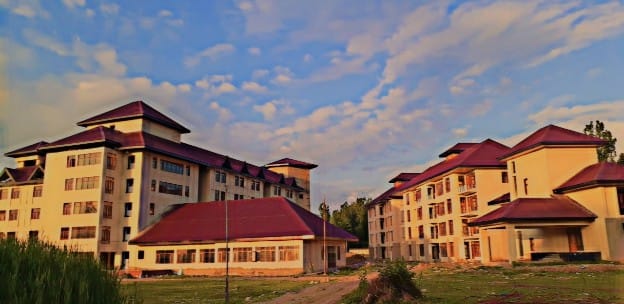
Soon, Rather’s questioning led sleuths to an address in Faridabad’s Dhauj village, on the outskirts of Delhi. There, the Jammu Kashmir Police, aided by Haryana counterparts, raided a rented accommodation linked to another Kashmiri doctor, Dr Muzammil Shakeel Ganai, a student pursuing his post-graduation at Al-Falah Medical College, identified first by the cleric Wagay. The seizures were literally a full-fledged arms factory: 2,900 kilograms of IED-making material, including an initial recovery of approximately 360 kg of suspected ammonium nitrate, along with weapons caches in Faridabad, including one assault rifle, one pistol with live rounds, three magazines for the rifle, and other ammunition. Sleuths termed it “a bomb-making factory in a residential flat”.
A statement issued by the police said the explosive material included ammonium nitrate, potassium nitrate and sulphur, of which 360 kg of material was inflammable, possibly ammonium nitrate. In the cache were a Chinese Star pistol and a Beretta pistol.
The Indian Express reported that Ganai was detained 10 days before but formally arrested on November 9. Subsequent media coverage suggested that Ganai was in fact arrested first, and it was during his questioning that the trail widened to Rather, the two doctors working at private medical facilities, one in Faridabad and the other in Saharanpur.
Officials confirmed that a woman doctor from the same college was arrested after a rifle and ammunition were recovered from her car. Muzammil had hidden the gun in her car, but she panicked after his arrest and threw it in a dustbin in Faridabad, The Times of India reported, it was later recovered by the police.
The Female Doctor
This lady doctor is the lone non-Kashmiri in the group that is responsible for the mayhem. Identified as Dr Shaheen Saeed, aka Dr Shaheen Shahid Ansari, she is a pharmacologist who once headed the Department of Pharmacology at Kanpur Medical College from September 2012 to December 2013, and has now emerged as a key figure in the terror module.
Shaheen joined Kanpur Medical College as a lecturer in 2012 before being transferred to Kannauj Medical College, and more recently worked at Faridabad’s Al-Falah School of Medical Sciences and Research Centre, where she came into close contact with co-accused Dr Muzammil Ahmad Ganai and Dr Umar Nabi. Officials believe that Shaheen was privy to the logistics and planning undertaken by the Kashmir doctors’ cell, including plans aimed at the December 6 Babri Masjid anniversary, and that she was aware of the expansion of their network, which drew in figures such as Haryana preacher Maulvi Ishtiyaq, whose rented premises at Al Falah were used to store explosives.
The Uttar Pradesh ATS has also detained another Kanpur doctor, Arif, for his alleged links to her, while Shaheen’s brother, Dr Parvez Ansari, was taken into custody along with her. Preliminary searches at their family home in Lucknow’s Kandhari Bazar yielded nothing suspicious, though their father and elder brother were questioned by the UP ATS and JK Police.
Shaheen’s former husband, Kanpur eye surgeon Dr Jafar Hayat, told The Indian Express that he has had no contact with her since their mutual divorce in 2013, twelve years after they married, and that she left their two young sons in his care. He said he never noticed unusual behaviour during their marriage, apart from her repeated insistence that they move to Australia or Europe, where she believed medical teachers were in demand.
The Bomber
By now, the Jammu and Kashmir Police were working in tandem with the Intelligence Bureau and the National Investigation Agency (NIA). Investigators linked the arrests to “a larger inter-state and transnational module” that allegedly had links with both proscribed outfits, Jaish and Ansar Ghazwat-ul-Hind.
The investigation began to point toward a third name: Dr Mohammad Umar Nabi, a resident of Koil village in Pulwama. Police told reporters that Umar, a doctor who had earned his MBBS and MD from Government Medical College, Srinagar, and later taught at Al-Falah Medical College in Faridabad, had gone missing shortly after the arrests of Rather and Ganai. “He switched off his phone, left his accommodation, and was last seen driving a white Hyundai i20,” the report said.
A senior investigator told The Print that “Umar appeared to have panicked after his associates’ arrests. There is evidence that he had been in touch with them till hours before the raids.” The missing doctor soon became the most wanted man in the case. His family home was demolished during the intervening night of November 13 and 14
In Srinagar, police believed the posters, the Faridabad cache, and Umar’s disappearance were connected parts of a single plot. This led to the apprehension that something is being cooked, and the National Capital Region could be a target.
As the investigation grew in scale, Kashmir, after years of relative calm, found itself at the centre of an unfolding terror probe once again. Sleuths were shocked at “the sophistication of the network” and the “professional backgrounds of those allegedly involved.”
A Devastating Blast
It was around 6:52 in the evening on November 10, 2025, when the routine chaos outside Delhi’s Red Fort turned into a scene of devastation. A white Hyundai i20, parked near Gate No 1 of the Lal Qila Metro Station, erupted into a fireball. Within seconds, smoke and screams filled the air. Eyewitnesses described “a flash, followed by an enormous bang”. Vehicles nearby caught fire, and the sound reverberated across Chandni Chowk’s narrow arteries.
At least 13 people were killed and dozens were injured. The victims included passers-by, a group of tourists, and commuters waiting for traffic to clear. Among the dead, police believed, was the driver himself, and later identified as Dr Mohammad Umar Nabi, the missing Kashmiri doctor investigators had been searching for since the Faridabad raid. CCTV footage, as cited by PTI, showed a masked man entering the car moments before the explosion.
Quickly, the Delhi Police cordoned off the area and initiated an anti-terror investigation. The police registered a case under the Unlawful Activities (Prevention) Act and the Explosives Act, confirming what they were already whispering: Delhi was witnessing its first major terror strike in over a decade.
In a late-night report, The Federal stated that the blast was being “probed as a terror attack” with “direct links to a network of Kashmiri doctors and professionals arrested in recent days.” The report said investigators believed that Umar Nabi had driven the car to the spot and may have detonated it deliberately. “He felt cornered after his associates’ arrests,” an intelligence source told The Federal, suggesting the act could have been a suicide mission.
Officials quoted by the Daily Excelsior said the vehicle was traced through registration records, originally owned by Md Salman of Gurgaon, later sold to Tariq Ahmed Dar, a Pulwama resident, before being used by Umar. The paper said Delhi Police detained each of the former owners for questioning, confirming the chain of possession.
It was a well-coordinated security operation that was being carried out across many states. In Kashmir, the Pulwama district authorities conducted a DNA test on Umar’s mother to match her samples with the human remains retrieved from the blast site. By then, police had taken the mother and her two sons to the hospital to collect DNA samples and arrested three persons connected to the sale and purchase of the Hyundai car.
In Pulwama, Umar’s family home was raided. India Today and Daily Excelsior both reported that his mother, Shamima Bano, and two brothers were taken into custody for questioning. DNA samples were sent to Delhi for comparison. “He had told his mother last week not to call him, that he was studying in the library,” an officer quoted by PTI revealed. “That was the last message before he switched off his phone.”
By midnight, part of the national capital city was on lockdown. The Delhi Police Commissioner, Satish Golcha, convened an emergency meeting at Police Headquarters, while the Home Ministry issued a high alert across the NCR.
PM, HM Reacts
Prime Minister Narendra Modi, who was in Bhutan at the time, also spoke publicly, saying, “All those responsible for the Delhi blast will be brought to justice.” His remarks reflected the seriousness with which New Delhi viewed the incident, not merely as an isolated act but as part of a renewed terror pattern.
Home Minister Amit Shah later wrote on X: “No stone will be left unturned; this network ends here.” He said central and state agencies were working around the clock to trace all members of the module.
In the following hours, police and forensic teams scoured the site for evidence. The Forensic Science Laboratory (FSL) collected residue samples from the car’s remains and neighbouring buildings. Initial analysis, according to NDTV, indicated traces of ammonium nitrate mixed with fuel oil, a classic improvised explosive formula. “This matches the material seized in Faridabad,” an officer told the channel.
By the next morning, investigators from multiple agencies, Delhi Police’s Special Cell, the NIA, and intelligence operatives from Jammu and Kashmir, were piecing together fragments of the puzzle. The media reported that technical data pointed to encrypted communications between Umar and other arrested suspects in the days before the blast. “The pattern shows coordination,” a senior intelligence official was quoted as saying, “not random panic.”
In Delhi, the Red Fort and its surrounding zone resembled a fortress. NDTV reported that metro stations, railway terminals, and airport security had been put on maximum alert. Entry to the Lal Qila Metro Station was sealed, while traffic restrictions were imposed along Netaji Subhash Marg and Daryaganj. The report quoted a senior Delhi Police official saying, “We are treating this as a full-fledged terror strike.”
The mood across the capital was one of unease. The Red Fort, long a symbol of India’s sovereignty and freedom, was now part of a terror crime scene. For the security grid, the challenge was no longer confined to Kashmir. As the days unfolded, Delhi Police and central agencies began exploring whether similar cells could be operating silently in other cities. “The blast may have been one of several planned,” an unnamed official told NDTV. “We are still checking the communications to determine the scale.”
By November 11, the day after the explosion, the narrative had moved from “mystery car blast” to “coordinated terror conspiracy.” Arrests were being made, DNA tests were underway, and Kashmir, after years of relative calm, was again in the headlines for all the wrong reasons.
The Threads Tighten
By November 11, 2025, when Delhi was still reeling, both in shock and in its sudden transformation into a high-security zone, the larger investigation was already spreading outward, to Pulwama, Faridabad, Saharanpur, and beyond.
Delhi Police had now officially categorised the case as a terror attack and filed an FIR under the Unlawful Activities (Prevention) Act and the Explosives Substances Act.
The network, as described by The Indian Express, had the hallmarks of “a meticulously organised trans-state terror operation” connecting small urban centres in North India to the national capital. Investigators believed the arrests of Dr Adeel Ahmad Rather and Dr Muzammil Ahmad Ganai days before the blast might have triggered a desperate final act by their associate, Dr Umar Nabi.
Investigators soon linked the Faridabad seizures to digital traces on Umar Nabi’s devices. “Encrypted messages showed active communication between the accused across at least three states,” a police source told NDTV, confirming that the same messaging platforms used in the Kashmir module had been active until a few hours before the blast.
The investigation was now being coordinated by a joint task force involving the National Investigation Agency (NIA), the Intelligence Bureau, and the Delhi Police’s Special Cell. The NIA formally joined the probe on November 11, as reported by The Indian Express, taking over analysis of digital evidence and cross-border communications. A senior NIA officer was quoted as saying: “This is not just a localised plot; there are elements of coordination beyond our borders.”
According to NDTV, Delhi Police’s preliminary assessment found striking similarities between the chemical composition of the Red Fort blast residue and the explosives seized from Faridabad. An officer told the channel, “Both contain ammonium nitrate, fuel oil, and the same category of timing devices. The design matches perfectly.”
The Delhi Police Special Cell also revealed new details about the car used in the explosion. The vehicle, a white Hyundai i20 with Haryana registration HR26 CE 7674, had changed hands three times. Investigators revealed that the car was sold from Gurgaon to Okhla, then to Ambala, and finally used by Umar Nabi. Media quoted a senior officer as saying, “We are probing whether this chain of transfers was deliberate, intended to obscure the trail.”
For security forces in Jammu and Kashmir, the event reopened old scars. After years of relative calm, particularly following the decline in local militant recruitment since 2021, Kashmir’s name was once again entangled in a national terror narrative.
A senior Police officer voiced the frustration of the rank and file: “For years, we have seen young boys drift into militancy. But now to see doctors and scholars drawn into this, it is devastating.”
That grief and confusion echoed across the Valley. Religious leaders and civil society groups issued statements condemning the attack. Many called for “soul-searching” about the social spaces being exploited for radicalisation.
Jammu and Kashmir’s Lt Governor Manoj Sinha held a high-level review meeting in Srinagar to assess the implications of the case. “We cannot allow peace to be derailed,” he was quoted as saying.
Fear, and Forensics
Within days, the Red Fort blast had fully transformed from a breaking news event into a national crisis, binding together threads of terror, technology, and tragedy.
According to NDTV, the Forensic Science Laboratory’s preliminary report confirmed what investigators already suspected: the explosive used in the Red Fort blast was composed of ammonium nitrate mixed with fuel oil, precisely matching the chemicals recovered in Faridabad.
The finding established a direct link between the seized cache and the Delhi explosion, effectively tying the deaths of thirteen innocent civilians to a terror network rooted in Kashmir’s professional class.
As the investigation widened, PTI reported that security agencies had detained several individuals across Delhi, Uttar Pradesh, and Haryana for questioning. These included people connected to the purchase of vehicles and rental properties, as well as financial facilitators believed to have helped launder money through hawala channels.
Now the hunt is for another doctor, a paediatrician. Dr Muzaffar Ahmad Rather, 33, from Qazigund and elder brother of Adeel, who secretly left India in mid-August and is now believed to be hiding in Afghanistan, according to investigators. Intelligence officials told The Print that Muzaffar was tasked with liaising between the Kashmir-based module and jihadist commanders in Afghanistan on bomb-making and assault techniques.

Before disappearing, Muzaffar told his family he wished to “serve a truly Islamic society” and had travelled earlier, in 2021 and again in 2022, with fellow doctors Muzammil Ahmad Gani and Umar un Nabi to Turkey in unsuccessful attempts to reach Afghanistan. His name resurfaced during the interrogation of the accused arrested after the Red Fort blast, in which Umar died when the explosives-laden i20 he was driving detonated.
The police believe Muzaffar left for Dubai in August and then slipped into Afghanistan, with a Red Corner Notice request now moved through Interpol. The Rather family has said it is “impossible to believe” the brothers’ involvement, but officials maintain Muzaffar played a significant communications and logistics role in a plot they describe as the largest planned attack since 1993.
Disbelief in Kashmir
In Jammu and Kashmir, the ripples were intense. The arrests of two doctors and the involvement of a third had “sent shockwaves across Kashmir’s medical fraternity.” At the Government Medical College in Anantnag, where Dr Adeel Ahmad Rather had once worked, faculty members expressed disbelief. “He was an intelligent boy, serious about his patients,” a senior professor told the paper. “We could never have imagined this.”
Civil society groups and clerical bodies in Kashmir condemned the attack and called for restraint in public rhetoric. Several issued joint statements emphasising that “Kashmir’s identity cannot be defined by isolated acts of madness.”
On November 12, the Union Cabinet passed a resolution condemning the Red Fort attack and expressing condolences for the victims. The statement described the incident as “a cowardly act intended to disturb peace and progress” and vowed that “those behind it, directly or indirectly, will face the full weight of justice.”
Prime Minister Modi, addressing shortly after returning from Bhutan, said the attack “will not shake India’s resolve.” His remarks were direct: “Our enemies believe they can divide us through fear. But every attempt will only strengthen our unity.”
The Implications
For Kashmir, the implications were profound. The Valley had witnessed its longest stretch of peace in years, and the sudden linkage to a terror plot reignited old wounds. Yet, as local commentators noted, the violence came not from its crowded markets or orchards, but from educated hands working far from home. In Kashmir, people talk in whispers about how the space for even working is shrinking because of these acts of mayhem and violence. The University where one of the accused was teaching is home to dozens of Kashmiri medical students and the faculty. All of them will now have to go through a scan, and many others later if at all the campus survives.
Jammu and Kashmir Chief Minister Omar Abdullah, like every other person in the erstwhile state, condemned the blast while warning against stereotyping Kashmiri Muslims. “We must remember one thing. Not every resident of Jammu and Kashmir is a terrorist or associated with terrorists. These are only a few people who have always ruined peace and brotherhood here,” Omar told The NDTV. “When we look at every resident of J&K and every Kashmiri Muslim with a single ideology and think that each one of them is a terrorist, it is difficult to keep the people on the right track,”
Terming the security operation of busting the module, “part-lucky, part unlucky”, Omar called for severe punishment for the guilty and protection of the innocent. He believes this was not the first time when “educated people” were involved in sabotage.
Post Script
At least nine people, including a tailor, a civil servant and many police officials, were killed in a blast when they were inspecting the recoveries comprising inflammable chemicals at Police Station Nowgam.