SRINAGAR: A study of 100 fisherwomen in Kashmir has found that 96 per cent of respondents were illiterate, 65 per cent had married before turning 18, and nearly nine in 10 households in the community were headed by men. The study has highlighted the educational deprivation, early marriage and limited decision-making power confronting women in the traditional fishing community.
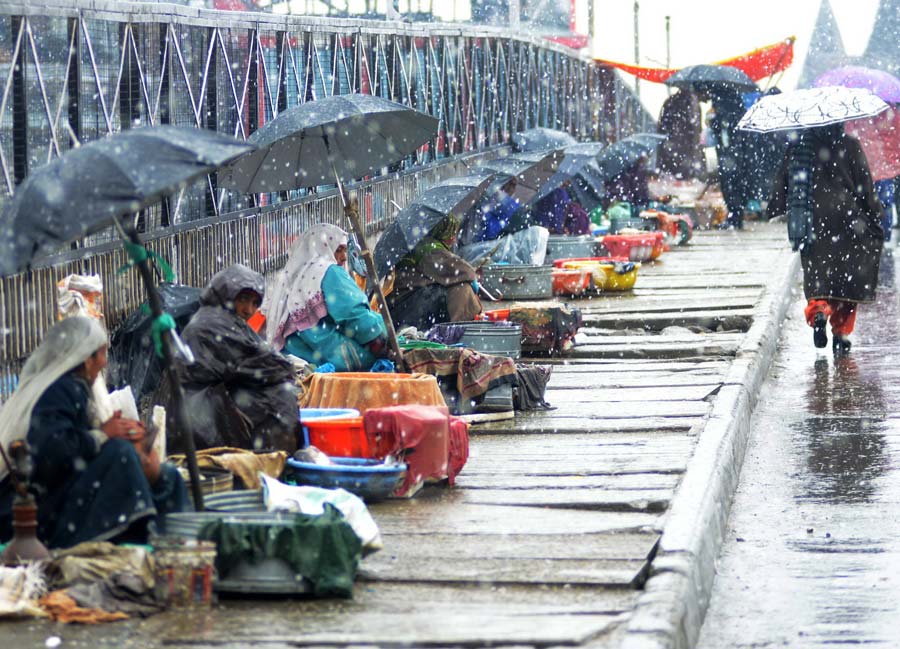
The study also found that 89 per cent of the women worked between three and eight hours daily in occupational activities, while 11 per cent put in nine to 12 hours, underscoring the heavy workload borne by women who help sustain their families through fishing-related work.
Titled A Sociological Study of Fisherwomen in Kashmir (With Special Reference to Srinagar District of Jammu and Kashmir State), the paper examines the contribution of fisherwomen to household income, their work culture, marriage patterns, education and family structures. It was authored by Mudassir Assad and Indira Barman of the Department of Sociology and Social Work, Government Home Science PG College, Hoshangabad, Madhya Pradesh. The paper was published in the January 2014 issue of The International Research Journal of Social Sciences and Humanities.
Labour Burden
The study portrays fisherwomen, locally known as Gad-Hanzni, as central to the survival of fishing households, with responsibilities extending well beyond domestic work. Traditionally, men go fishing at night, while women sell the catch during the day, allowing men time to rest before returning to the water.
In the absence of adequate fish markets, women often have to move from place to place to find customers.
This arrangement, the authors argue, reflects a division of labour shaped by economic necessity and the demands of the occupation. Women’s public-facing work, however, has historically attracted social disapproval, contributing to a divide between the fishing community and the wider Kashmiri society.
The authors describe these women as exceptionally hardworking, noting that their occupational responsibilities frequently overlap with their household duties. The findings indicate that 89 per cent of respondents worked between three and eight hours a day, while 11 per cent reported working between nine and 12 hours.
The paper’s central concern is that this sustained contribution has not translated into corresponding educational or social advancement. Despite their role in maintaining household livelihoods, fisherwomen remain disadvantaged in access to education, economic resources and decision-making.
Early Marriages
Marriage patterns emerged as another significant finding, with 65 per cent of the women surveyed reporting that they had married before the age of 18. The remaining 35 per cent had married after turning 18.
The study also found that marriage largely took place within the community’s existing kinship and occupational networks. According to the authors, 95 per cent of respondents had married within their kin group, while the remaining five per cent had married within the same occupational group.
The findings point to the persistence of traditional marriage practices in the fishing community. Read alongside the high level of illiteracy documented by the study, the prevalence of early marriage raises questions about the opportunities available to girls to continue their education and pursue alternatives beyond inherited occupational roles.
The paper, however, does not establish a direct causal relationship between early marriage and educational deprivation. Its findings describe patterns among the 100 women interviewed rather than demonstrating why these patterns persist.
Family Changes
The study identifies a gradual shift in household arrangements, with the traditional joint family increasingly giving way to nuclear families. Although the authors note this change, they do not quantify the proportion of respondents living in either family structure.
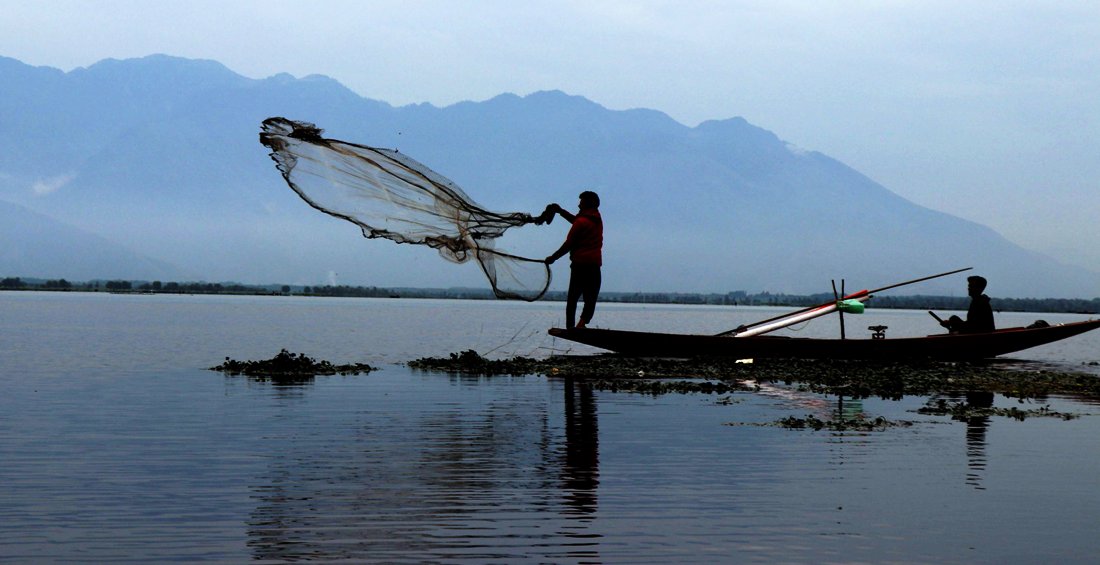
Male authority within households remained pronounced. The researchers found that 91 per cent of the households were headed by men, while women headed the remaining nine per cent.
These figures indicate that women’s substantial contribution to family livelihoods did not necessarily translate into formal household leadership. The study also describes fisherwomen as having a limited role in political activity and identifies their position as disadvantaged in both economic and social hierarchies.
The authors place these findings within the wider circumstances of the Gad-Hanj community, whose livelihoods are closely linked to Kashmir’s lakes and waterways. Although the community has historically depended on fishing and related occupations, its members face economic insecurity and unequal access to resources.
Poor Housing
Living conditions provide another indication of the economic challenges facing the respondents. The study found that 38 per cent lived in kuccha houses, 34 per cent in pucca houses and 28 per cent in tin or wooden sheds. All respondents reported living in houses they owned.
The finding on ownership needs to be read alongside the condition of the housing itself: owning a dwelling did not necessarily mean that the household enjoyed adequate living standards. The paper characterises the community’s living conditions as poor and assesses living standards through factors including food habits, clothing and housing.
The authors also describe fishing households as having uncertain incomes, which can vary from month to month and season to season. In their account, this instability is compounded by declining fish catches, prompting some men in the community to seek alternative occupations.
The paper identifies the community’s dependence on water resources as a defining feature of its economic life. It also notes that the government permits fishing in return for a nominal levy, while distinguishing between occupational groups within the broader Gad-Hanj community, including fishermen, water-nut gatherers, vegetable growers and boat operators.
Study Method
The researchers based their findings on interviews with 100 fisherwomen selected through random sampling, using a structured interview schedule. They also used observation as a research tool and analysed the collected information after organising it into coded data.
The abstract states that the study was conducted in June 2012. Although the title refers specifically to Srinagar district, the methodology section identifies the fieldwork locations as Srinagar, Baramulla, Bandipora and Pulwama districts. This distinction is important in understanding the geographical scope of the research.
The findings should also be interpreted in light of the sample size. The study provides a snapshot of the circumstances of the women interviewed; it does not establish that the same percentages apply to every fisherwoman or household across Kashmir.
Policy Support
The authors call for targeted measures to improve the economic and social position of fisherwomen, arguing that their contribution to household survival has not been matched by adequate access to resources and opportunities.
They recommend that government agencies facilitate the formation of self-help groups to help women address business-related difficulties and improve their collective economic position. They also call for better access to credit, training, equipment and technology, which could help women strengthen their livelihoods and improve their ability to manage occupational challenges.
Beyond financial assistance, the paper emphasises the need for greater social recognition of fisherwomen’s work. The authors argue that society should acknowledge the importance of their services rather than reinforce perceptions of their inferior status.
The recommendations reflect the study’s broader argument: improving the condition of the fishing community requires attention not only to income but also to education, working conditions, access to resources and women’s position within households and society.
Wider Context
The paper situates Kashmir’s fisherwomen within a broader body of research on women working in fishing communities elsewhere in India. Studies cited by the authors have examined women’s involvement in processing and marketing fish, their exposure to underpayment and exploitation, and the role of self-help groups in improving economic independence.
Drawing on this literature, the authors highlight a recurring disparity: women undertake substantial responsibilities in fishing-related activities but often have limited influence over the resources, decisions and opportunities that shape their lives.
In Kashmir, the study argues, this disparity is particularly visible in the combination of occupational hardship, widespread illiteracy, early marriage and limited household leadership. Its findings offer a picture of women whose labour is essential to the survival of their families, even as their access to education and economic advancement remains severely constrained.
The research ultimately calls for a shift from treating fisherwomen merely as contributors to a traditional occupation to recognising them as workers who need meaningful access to education, financial support, skills and greater social and economic agency.