A third-generation wildlife conservationalist from Kashmir, Kashif Farooq Bhat, blends family legacy with scientific training to protect the critically endangered Hangul, confronting habitat loss, climate disruption, conflict pressures, and community scepticism in Dachigam, reports Syed Shadab Ali Gillani
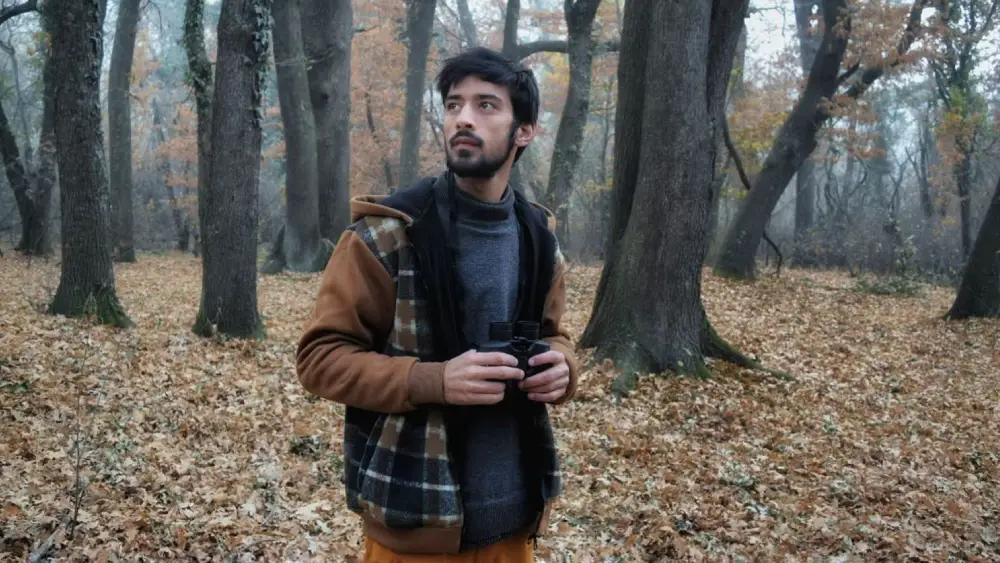
In Srinagar’s Zabarwan foothills, Hangul, the Kashmir Stag, is fighting its silent battle against extinction within and outside the Dachigam National Park. Sharing the same ecosystem and walking the same trails that his forefathers tread, Kashif Farooq Bhat, 24, carries a legacy heavier than the backpack of camera gear he shoulders.
Kashif is the third generation of his family that has stood sentinel over this forest. From the days when the Maharaja hunted these woods to the turbulent years of political instability, and now into an era of climate anxiety, the Bhat bloodline has been inextricably knotted with the fate of the Cervus hanglu hanglu.
“Protecting the Hangul in Dachigam has always been my family’s legacy,” Kashif said, his voice carrying the quiet confidence of someone who grew up listening to the forest’s secrets before he could even read them in textbooks. “Both my paternal and maternal grandfathers were involved in it. With over 30 years of service, my father is still into it.”
The Forest Bloodline
Kashif’s maternal grandfather, the late Abdul Rahman Mir, was a legend in these woods. He served at a time when the forest was wilder, the boundaries between man and beast more fluid. Kashif recounts a story that has attained nearly mythical status in his family, a tale that earned his grandfather the prestigious Wildlife Service Award from the Sanctuary Nature Foundation in 2003.
“Once he was walking on this trail of Dachigam with a British filmmaker,” Kashif narrated, his eyes lighting up with the memory of the story told to him as a child. “Suddenly, an Asiatic black bear with cubs appeared. She attacked the filmmaker.”
In that split second, Rahman made a choice that defines the ethos of a wildlife guard. “Two things came to his mind: save the British filmmaker, and ensure the black bear did not get hurt,” Kashif explained. Mir jumped between the enraged mother bear and the foreigner. He fought the bear with his bare hands and a stick, sustaining severe injuries, but he ensured that all three, the man, the bear, and the filmmaker, survived the day.
On the other side of the family tree, his paternal grandfather, Ghulam Mohuiddin Bhat, was a man of steel who died in service. Kashif describes him as a solitary warrior. “He was the only person who was patrolling. He only had a stick in his hand,” Kashif said. When he encountered armed poachers on the high ridges of Dachigam, he did not retreat. “He picked up the stick and chased them. He grabbed them and took them to the gate of Dachigam from the top of the mountain.”
This is the DNA of Kashif; his father, Farooq Ahmad Bhat, has continued this vigil for 35 years, witnessing the park transition from a quiet sanctuary to a zone hemmed in by development and conflict.
The Awakening
For Kashif, the realisation of his destiny did not come in a classroom, but through a grim discovery made when he was just a boy.
“It all started when I was very young,” he recalled. One evening, a call came to his grandfather’s house: a carcass had been found. Young Kashif insisted on tagging along. “When I went with him, we found a Hangul that a leopard killed.”
Until that moment, the Hangul was just a word, an abstraction. Seeing the carcass changed everything. “I had an image of Hangul as a small animal,” he admitted. “When I saw it, it was a very majestic animal. Its antlers were enormous.” The sight of the dead stag, magnificent even in death, ignited a curiosity that would eventually consume his life. He wanted to see a live one.
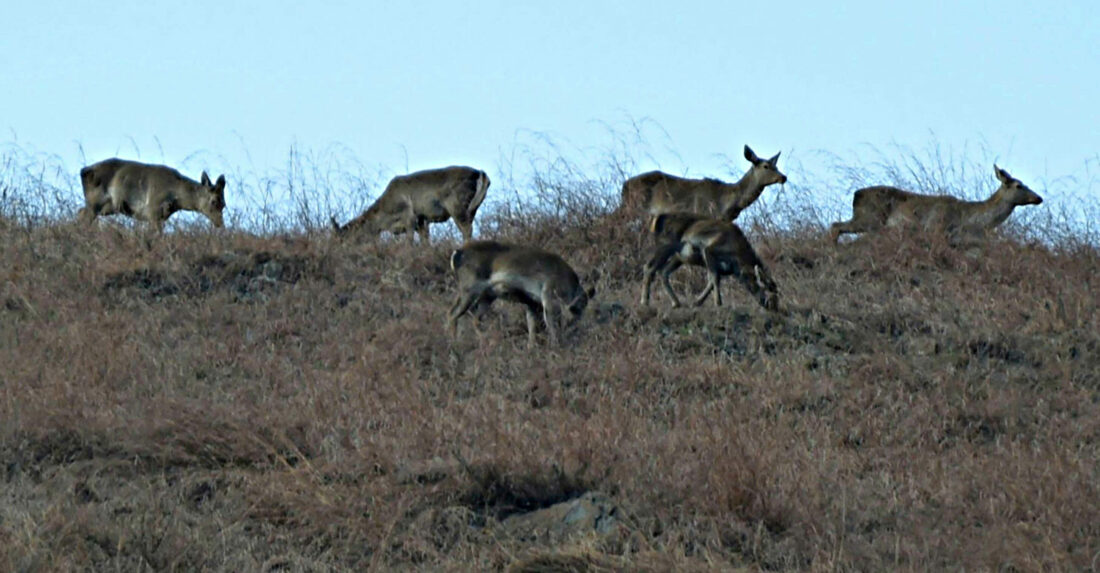
Kashif returned to Dachigam repeatedly, armed initially with a camera, seeking to capture the ‘ghost’ of the forest. In 2019, just after completing his twelfth grade, the moment arrived. “On the second day, I saw a very big male Hangul,” he recalled. “I took the first photograph of Hangul on that day. So, I was very happy that my passion increased.”
That photograph was the turning point. Kashif realised that passion alone was not enough to save a species teetering on the brink; he needed science. He travelled to Integral University in Lucknow for a Bachelor’s in Agriculture, and later to Aligarh Muslim University to master Wildlife Sciences. He needed to “equip himself scientifically” to understand why the stories of abundance his grandfather told him no longer matched the reality on the ground.
Dwindling Monarch
The Hangul is not merely an animal; it is a symbol of Kashmir’s unique identity. For decades, taxonomists called it Cervus elaphus hanglu, considered a subspecies of the European Red Deer. Much later, a correction was made.
“Recent scientific discovery showed that hangul is not a European Red Deer subspecies. It is Kashmir’s own Red Deer,” Kashif asserted. The name was revised to Cervus hanglu hanglu. “It is found only in Kashmir and nowhere else in the world.”
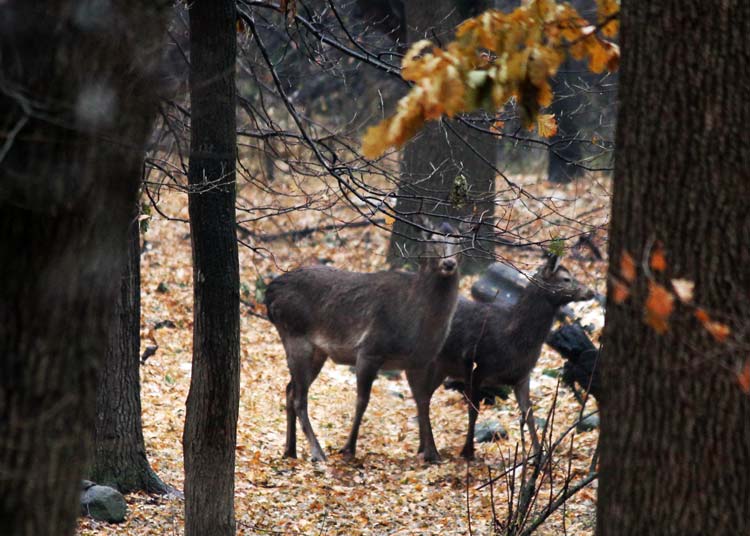
Despite its uniqueness, the Hangul is critically endangered. The last census, conducted in 2023, placed the population at a precarious 289 individuals. While there is hope that the numbers may have crossed 300 in the yet-to-be-released 2025 census, the demographic structure remains alarming.
“The male-female ratio is 10 to 1,” Kashif said. Ten females for a male. In a population so small, such a skew makes recovery a slow, agonising process.
Their dispersal has shrunken. Earlier seen from Chamba (Himachal) to Kishtwar, now they are refugees in their own land, confined largely to the pockets of Dachigam. With the park as the last bastion, there are fragmented sightings in Gurez, Tral, and Shikargah.
The Ten Villages
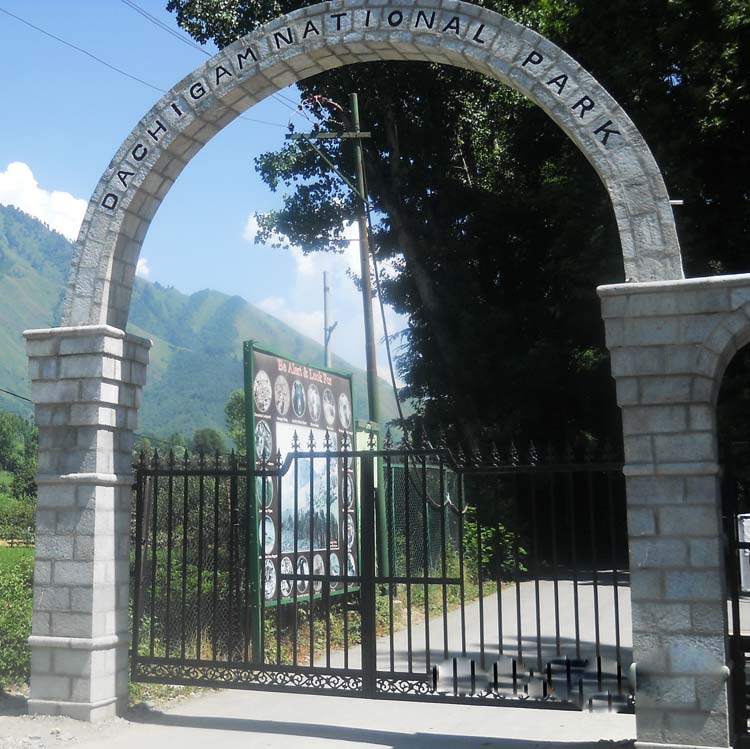
Dachigam itself is a sanctuary to displacement and preservation. The name translates to “Ten Villages” (Da means ten, Gam means village), a reference to the ten settlements that were uprooted by the Maharaja to create this protected enclave.
“Maharaja used to come here often,” Kashif explained, recounting the oral history passed down to him. Suffering from a skin ailment, he found a cure in the pristine waters of a forest spring. “He thought that this place was of importance. So, that is why he declared this place as protected.”
This royal hunting ground, preserved initially for the pleasure of the elite, inadvertently became the lifeboat for the region’s biodiversity. It is a landscape of breathtaking diversity, rising from mixed forests to alpine pastures, home to over 150 bird species, leopards, musk deer, and the yellow-throated marten, etc.
But Kashif’s Dachigam is not Rahman’s Dachigam.
The Shrunken Space
“The change is as huge as the land and the sky,” Kashif said, comparing the past to the present.
The pressures on this ecosystem are multifaceted, driven by human expansion, conflict, and a warming planet. The most visible scar is the encroachment on the park’s periphery. “The outer boundary of Dachigam used to be a grazing land and used to be open,” Kashif noted. Now this buffer zone stands swallowed by orchards and rice fields.
“We are growing apples and maize in it,” Kashif pointed out. This shift has created a deadly lure for wildlife. The Asiatic black bear, finding its natural habitat squeezed and its favourite foods readily available in human settlements, descends. “ So, there is a conflict.”
The conflict is a symptom of a larger malaise: the loss of space. As man moved into the wild, the wildlife returned the favour.
The Silent Killer
Climate change has a huge impact. The delicate rhythm of the Hangul’s life is governed by the seasons, specifically the snow.
“Snowfall has a direct association with Hangul,” Kashif said. The deer practice altitudinal migration, spending summers in the high pastures and descending to the foothills when the snows arrive. But snow patterns have changed.
”The frequency of snowfall has become less and delayed,” Kashif said. “Usually, it used to happen by November-December, but now, it is January.” This disruption alters the Hangul’s migration, keeping them in the upper reaches longer or forcing erratic movements that expose them to new dangers.
Besides, the Marsar Lake-fed Dagwan River, the lifeline of this ecosystem and a crucial feeder to Dal Lake, flow with low discharge. The drying veins of the forest signal a thirst that could eventually drive the wildlife out of the sanctuary entirely.
The Nomad’s Trail
High in the Upper Dachigam alpine pastures, the nomadic Bakerwaals bring their livestock to graze in the summer months, the very same time the Hangul migrates to these heights.
“This Valley is also known as the grazing land of Hangul,” Kashif explained. When the nomads arrive, competition for resources becomes fierce. “There is competition in both,” he said. Competition over grass apart, the invisible threat of pathogens is serious. “Sheep can transmit a disease to Hangul,” Kashif warned. For a population of less than 300, a single outbreak of Foot and Mouth Disease could spell the end.
Till the 1980s, everything was all right. Then militancy broke out. It brought in security forces to monitor militant movement in the forests. Though poaching for meat and antlers has reduced, the disturbed ecosystem survives in a state of flux.
Mud on Boots
Confronted with these immense challenges, Kashif has chosen to stay on the ground. He is leading a project, Mud on Boots, supported by the Sanctuary Nature Foundation.
His approach is rooted in the belief that conservation cannot exist in a vacuum; it requires people. “We do nature education programmes for the local communities,” he said. He goes to schools, to villages like Dara, trying to explain to a weary population why Hangul matters.
“It is an outreach programme,” he said. But in Kashmir, even education is a minefield. “People are afraid to participate because of the tensions,” he said. Parents are hesitant to send their children to camps; the shadow of fear is long. “What will we gain from this?”
He wants a stakeholding in Hangul. “If people understand that Hangul is only with us in the world, then its value will increase in people’s eyes,” he said.
The Road Ahead
Hangul conservation has to be purely scientific. Kashif advocates for rigorous monitoring of the corridors that link the fragmented habitats of Dachigam to Gurez, Kishtwar, and Baltal. “We have to do more research in corridors and monitor their health,” he said. If the Hangul cannot move, it cannot survive genetically.
There is talk of breeding centres, a restart of a programme from the late 2000s. The department is looking to re-establish a centre in Tral.
But for Kashif, the fight is personal. It is about honouring the scars on his grandfather’s body and the solitary vigils of his father. It is about the “internal desire” that drove a boy to photograph a dead stag and vow to protect the living ones.