In Kashmir, the vanishing of rivers, streams, and springs tells a larger story, one of greed unchecked, authority compromised, and ecology undone. From Budgam to Baramulla and beyond, Babra Wani investigates how illegal riverbed mining has ravaged the landscape, leaving communities without water, livelihoods in ruin, and ecosystems on the brink, as the law remains absent or arrives too late
In Budgam’s Beerwah area, 67-year-old Mohammad Aasan stood near the remains of a spring that once nourished his village. Once a playground in his childhood, the spring had dried up, another casualty of unchecked mining. The haven of his youth now lay barren, its absence casting a shadow over daily life.
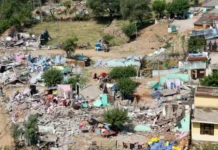
“This is theft,” Aasan said, gesturing towards the cracked soil. For decades, natural springs in the villages of Zainigam, Sail, Kangripora, and Kanigund had sustained communities. Now, nearly 20 have vanished, many in the last four years, following deep, illegal mining along the Sukhnag stream.
Residents informed a visiting National Green Tribunal (NGT) team in December 2024 that excavation, often reaching 10 to 20 metres, had fractured the subterranean water networks that once sustained these springs. Though the NGT managed to stop further illegal extraction, locals feared the damage was irreversible.
Riverbed Mining
Riverbed mining, also known as in-stream or river sand mining, involves the extraction of sand and gravel from a river’s active channel, banks, or coastal areas. When carried out without proper licences or environmental clearances, it becomes illegal and is subject to legal penalties.
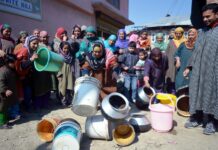
In other parts of Jammu and Kashmir, from Kulgam to Rajouri, the story is the same: drying canals and disappearing streams, with fields left thirsty and livelihoods threatened. Farmers in Shopian, once reliant on perennial stream water, now watched helplessly as irrigation failed. “Our produce has suffered. We had water year-round, now the streams have dried,” a farmer said.
Environmental activist Raja Muzaffar Bhat, who has campaigned against the practice, said that while the NGT had managed to curb illegal mining in Budgam and Pulwama, the activity remained widespread in Kulgam, parts of Shopian, North Kashmir and several Jammu districts. In each case, rivers and streams that once nourished orchards and fields now stood diminished or defiled.
Legal Pushback
The environmental cost spurred Raja to petition the NGT over the illegal mining in the Sasara stream, between Chatripora and Bandzoo in Pulwama. Responding to the petition, the NGT bench of Justice Arun Kumar Tyagi and Dr A Senthil Veil, on December 5, 2024, directed top government functionaries, including the Chief Secretary, the Kashmir IGP, Pulwama’s Deputy Commissioner and the Director of Geology and Mining, to respond.
Local accounts highlighted how the mining had choked irrigation channels, harmed apple orchards, and drained springs, violations of the Jammu and Kashmir Minor Mineral Concession Rules, 2016. The ecological fallout, Raja warned, extended beyond agriculture: mining depleted groundwater, triggered landslides, damaged aquatic ecosystems, and hurt fish populations. It was, he said, both an environmental and economic loss.
His activism earlier succeeded in halting illegal mining in the Doodhganga River, a major water source for Budgam and Srinagar. However, the river’s health had already suffered. At Chadoora and Hokersar wetland, where Doodhganga flows, miners used heavy machinery, flouting environmental norms and damaging the embankments. The narrowing of the river, locals said, was not just about water but about survival.
“We have rules for a reason,” Raja said. “But those breaking them are doing so openly, and we are paying the price.”
Systemic Violations
The NGT ensured that the use of heavy machinery in riverbeds was prohibited. By the time the order was enforced, much of the damage had been done. In several places, the Doodhganga River had shifted course. According to Raja, in areas beyond Chadoora, the riverbed had deepened to such an extent that nearby springs and bore-wells had dried up. Although penalties had been imposed, he questioned whether the environmental impact could be reversed.
The NGT bench of Justice Sudhir Aggarwal and Dr A Senthil Vel noted that violations of the Water Act continued to go unchecked, harming both public health and the environment. The tribunal ordered the formation of a five-member joint committee, comprising representatives from the CPCB, JKPCC, Deputy Commissioners of Srinagar and Budgam, and the Director of Urban Local Bodies, with the JKPCB as the nodal agency.
Mining in the river had been stopped in May 2024, after a campaign launched in 2021 led to the NGT imposing strict penalties. But gravel and boulders continued to be mined illegally. Raja asserted that 95 per cent of all sand, riverbed and clay mining in Jammu and Kashmir was unlawful.
Since 2020, mining leases have been allotted through e-auctions. However, Raja said that project proponents routinely violated Environmental Clearances (ECs) issued by the State Environmental Impact Assessment Authority (SEIAA). These violations led to legal challenges before the NGT in several cases, including those related to the Shali Ganga, Doodhganga, Romshi and Sasara streams, eventually resulting in a halt to many illegal operations.
Despite assessments by the Department of Geology and Mining prescribing sustainable extraction limits, over-mining continued. In the Sthukhnag stream, Beerwah, where no EC had been granted, a construction company extracted boulders and riverbed material worth over Rs 200 crore in three years, of which only Rs 2 crore had been recovered in revenue.
Much of the activity had been sanctioned under Disposal Permits (DPs), meant for post-flood clearance, although there had been no floods in Sukhnag for five years. These permits, Raja explained, were even issued during winters and dry months. Crucially, the Fisheries Department had not been consulted, even though Sukhnag was a notified trout stream.
The NGT acted after receiving documented proof, including findings from a joint site visit on December 26, 2024, and issued a stay on mining in January 2025.
Revenue vs Oversight
In Jammu and Kashmir, the governance of riverbed minerals involves multiple departments: Fisheries, Irrigation and Flood Control, Geology and Mining, Revenue, and the PHE Jal Shakti Department. Since 2020, the Geology and Mining Department has been granting leases via e-auctions, contingent on ECs from SEIAA.
Data available with Kashmir Life suggests that since 2022-23 till September 2025, the Jammu and Kashmir Mining and Geology Department has collected over Rs 462.14 crore. In 2022–23, revenue stood at Rs 101.17 crore. It rose to Rs 175.47 crore in 2023–24. In fiscal 2024-25, the collections were at Rs 128 crore. By September of fiscal 2025-26, it had reached Rs 57.67 crore.
Penalties for violations have also increased. In 2022–23, the amount stood at Rs 16.34 crore, which rose to Rs 19.20 crore in 2023–24. By January 2025, Rs 14.71 crore had already been collected. Despite this, illegal mining without ECs and unauthorised extraction continued, exposing regulatory failures and gaps in enforcement.
A Dying Habitat
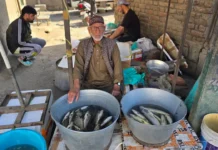
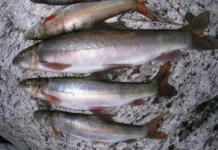
An environmental science student from the University of Kashmir explained that illegal riverbed mining in Romshi, Sasara, Doodhganga, Shali Ganga, and Sukhnag had decimated aquatic life and wiped out fish populations. The consequences had been devastating for hundreds of families dependent on fishing for a livelihood.
A report submitted to the NGT following a joint inspection by officials from the Central Pollution Control Board, JKPCC, Ministry of Environment and the Fisheries Department confirmed that the extraction of boulders and minor minerals at Sukhnag’s Sail area in Beerwah was illegal.
The report noted that in May 2024, 2,000 trout fish were lost from a farm due to the disruption of the water supply caused by illegal mining carried out during the night.
Devastation on the Ground
According to revenue records from the Tehsildar of Beerwah, the Sukhnag riverbed spans 1105 kanals and 6 marlas in Sail village and is classified as state land. Despite no formal auctioning of mining blocks, the Geology and Mining Department had issued 163 Short-Term Permits (STPs) to agencies, including the PWD, PMGSY, NHAI, NBCC, and the Hydraulic Division. These permissions were approved by the Deputy Commissioner of Budgam and the Executive Engineer of the Flood Spill Channel Division in Narbal.
The Fisheries Department confirmed that it had not issued any No Objection Certificates (NOCs), reiterating that the river is officially classified as trout-designated water, where such activity is prohibited. Meanwhile, the Jal Shakti Department reported a fall in groundwater levels and increased turbidity, impacting 28 water supply schemes, 22 reservoirs, and one water treatment plant that relies on the river.
A People’s Concern
In Kulgam district, orchardist Nasir Ahmad Laway said the disappearance of springs and streams had severely affected his land. The imbalance, he added, had worsened flooding during the rains. He described how the “illegal mining mafia” had taken over riverbeds.
Kulgam, an agricultural and horticultural belt, requires large quantities of water. With more water bodies drying up, Nasir said, residents were left with no water for irrigation, particularly as temperatures continued to rise. “The government must act strictly, and people must remain vigilant,” he said.
The impact of illegal riverbed mining extended beyond South Kashmir. In North Kashmir, the Ferozpur Nallah in Tangmarg offered a stark example. Wells once tapped water at 6 metres; now, they needed to reach 20 metres. The Jamia Nag stream, which had supplied drinking water to over 1,000 people, had dried up completely.
Crackdowns
On June 14, Jammu and Kashmir Police seized eight tippers, one tractor, and one JCB for illegal mineral extraction and transport in Police District Handwara. These seizures followed coordinated enforcement drives carried out by teams from several police stations acting on specific inputs.
None of the vehicles had valid documentation, violating the Jammu and Kashmir Minor Mineral Concession, Storage, Transportation of Minerals and Prevention of Illegal Mining Rules, 2016.
In a similar operation in May, ten vehicles, nine tractors and one tipper were seized for violating the same regulations.
The police, in a statement, said the seizures followed routine patrolling and targeted checks. Legal proceedings had been initiated, and strict enforcement would continue.
Data from several reports over the years has shown a steady increase in the illegal mining of sand and gravel across rivers in Jammu and Kashmir.