SRINAGAR: Transgender people in Kashmir continue to face systemic discrimination, family rejection, violence, restricted livelihood opportunities and barriers to education, healthcare and property rights, despite government welfare measures and legal protections, according to a field-based academic study published in Sociological Research Online.
The researchers argue that existing policies have failed to dismantle the structural inequalities that marginalise the community, calling for an integrated welfare strategy that combines institutional reform, inclusive public services and meaningful participation of transgender people in policymaking.
Research and authorship
The paper, Unveiling the Veil: Examining Social Injustice and Marginalisation of Transgender Persons in Kashmir, India, has been authored by Khalid Wasim Hassan of the Central University of Kashmir, Ishfaq Ahmad Wani, affiliated with the Central University of Kashmir at the time of the research, and Janan Ahmad Parray of the University of Kashmir.
Published by SAGE in Sociological Research Online in 2026, the researchers examine how social norms, economic vulnerability, religious interpretations and gaps in government implementation intersect to shape the lives of transgender people in Kashmir Valley. Drawing on interviews and field observations, the study explores discrimination in both private and public spaces, while also examining the role of government policy and religious understandings of transgender identity.
Field Evidence
The study is based on field research conducted between March and June 2023 across three districts of Kashmir Valley. The researchers initially contacted transgender persons in Srinagar and used snowball sampling to reach other members of the community.
Of 15 transgender persons approached, 10 participated in the research. The study also included interviews with two government officials from the Department of Social Welfare involved in welfare policymaking, four social activists working with non-governmental organisations on gender rights, and two Islamic scholars in Kashmir.
Using participant observation, in-depth interviews, focus group discussions and a questionnaire, the researchers examined issues including gender discrimination, livelihood, education, religion, property ownership, political representation, income, expenditure and debt.
The paper cites the 2011 Census figure of approximately 4,000 transgender people in Kashmir Valley, while noting that their gender identity can make them conspicuous in a society structured around conventional gender norms.
The authors caution, through their findings, that the community’s marginalisation cannot be understood merely as a consequence of individual prejudice. Rather, it is reinforced by social institutions and the absence of effective support systems.
Family Rejection
Family rejection emerges as a major factor shaping the vulnerability of transgender people, with some leaving their homes during adolescence to escape mistreatment. In the absence of stable shelter, income and social support, such departures can expose them to homelessness and economic insecurity.
The paper describes the case of a transgender woman, identified by the pseudonym Hadi Jan, who, lacking family support and other means of livelihood, turned to sex work to meet basic needs such as food and shelter. The researchers refer to this as “survival sex”, highlighting how economic exclusion can narrow the choices available to transgender people.
The study also documents the experiences of transgender children subjected to humiliation and violence in educational settings. Raju, a transgender person from Baramulla, recalled being insulted by classmates and physically harassed during games periods.
“My classmates will not call me by name; rather, they will prefer to call me ‘laanch’,” Raju told the researchers, describing how some boys would pull down his trousers. Even after he complained to teachers, he said, they laughed at him.
The Kashmiri term “laanch”, the paper explains, is used derogatorily for people who fall outside socially accepted gender norms.
Another participant, Sehba, who left her family at the age of 15, described being mistreated compared with her siblings. Her father, she recalled, would insist that she should “talk, walk and act like a boy”.
The researchers link such experiences to educational exclusion, arguing that bullying and harassment can push transgender students out of schools and colleges, limiting their future employment and economic independence.
However, the study also records instances in which family acceptance helped transgender people achieve greater social confidence and dignity. The authors cite Abdul Rashid, known as Reshma, whose singing ability brought public recognition, as an example of how family support can enable a transgender person to live with greater acceptance.

Livelihood Crisis
The researchers find that transgender people in Kashmir have limited livelihood options, with many relying on matchmaking and singing at marriage ceremonies.
These traditional occupations have historically provided income and a measure of social recognition. However, changing marriage practices are threatening this source of livelihood.
Babloo, a senior member of the transgender community interviewed for the study, said matchmaking had earned him both income and respect. But the growing preference among young people for “choice marriages” has made him increasingly concerned about his future earnings.
The paper argues that the erosion of traditional occupations, combined with discrimination in formal employment and inadequate social protection, leaves transgender people particularly exposed to poverty.
For those who have been rejected by their families or excluded from education, the lack of alternative employment can become a cycle of economic dependence and social marginalisation.
The authors emphasise that livelihood insecurity is not an isolated economic problem: it is closely linked to housing, access to education, family support and the ability to participate in public life.
Religious Exclusion
The paper examines the intersection of gender and religion in Kashmir, a Muslim-majority region, and asks whether religious identity contributes to the marginalisation or emancipation of transgender people.
Although the researchers acknowledge that Islamic jurisprudence recognises certain rights of transgender persons, their interviews indicate that religious spaces can also become sites of exclusion.
Transgender participants told the researchers that they were not permitted to offer prayers in local mosques. Afreen, a participant who described herself as religious, said attending Friday prayers made men in the mosque uncomfortable.
The study notes that Islamic jurisprudence discusses the category of Khuntha, generally referring to individuals with male and female sexual characteristics. An Islamic scholar interviewed by the researchers maintained that gender differences and multiple genders are recognised in Islam, citing a Quranic verse.
The authors also draw attention to property rights, which they say transgender people in Kashmir may be denied despite provisions within Islamic jurisprudence. A scholar interviewed at the University of Kashmir’s Department of Islamic Studies explained that inheritance shares for transgender persons may be determined according to whether the person is considered more feminine or masculine.
The researchers argue that the existence of religious provisions recognising rights does not necessarily translate into their practical realisation. Their findings point to a gap between religious principles, social attitudes and the lived experiences of transgender people.
Policy Gaps
The study acknowledges the growing institutional recognition of transgender rights in India, including the Supreme Court’s judgment in National Legal Services Authority (NALSA) versus Union of India and the Transgender Persons (Protection of Rights) Act, 2019.
It notes that Jammu and Kashmir introduced welfare measures for transgender people, including categorisation as below the poverty line to facilitate access to subsidies, along with reported provisions for life and medical insurance, monthly sustenance pensions and funding for gender reassignment surgeries.
The authors, however, point to a lack of follow-up and evidence regarding the effectiveness and continuity of these benefits.
The paper also discusses the establishment of the Transgender Welfare Board in Jammu and Kashmir. While the community welcomed its formation, the researchers highlight concerns over the absence of transgender representation in the board’s governing body.
The study cites transgender activist Mehak Mir, who questioned how the community could expect meaningful assistance from the board when no transgender person was included in its governing body.
At the national level, the paper refers to the SMILE programme, Support for Marginalised Individuals for Livelihood and Enterprise, initiated by the Ministry of Social Justice and Empowerment. The programme covers rehabilitation, medical services, counselling, education, skill development and economic opportunities for transgender people.
The researchers also document Jammu and Kashmir’s October 2023 directive recognising transgender as a distinct gender category for recruitment in government jobs. The community welcomed the decision, viewing it as a step towards employment inclusion and wider social acceptance.
The appointment of a complaint officer in the General Administration Department under the 2019 Act is another measure discussed in the paper. An officer told the researchers that his office had received verbal and written complaints from transgender people, including complaints against family members and unidentified individuals, which were forwarded to the respective police stations for further action.
Despite these measures, the authors argue that formal recognition and policy announcements have not been matched by effective implementation.
Structural Violence
One of the paper’s central arguments is that discrimination against transgender people in Kashmir has become embedded in social structures and public institutions, making it persistent and often invisible.
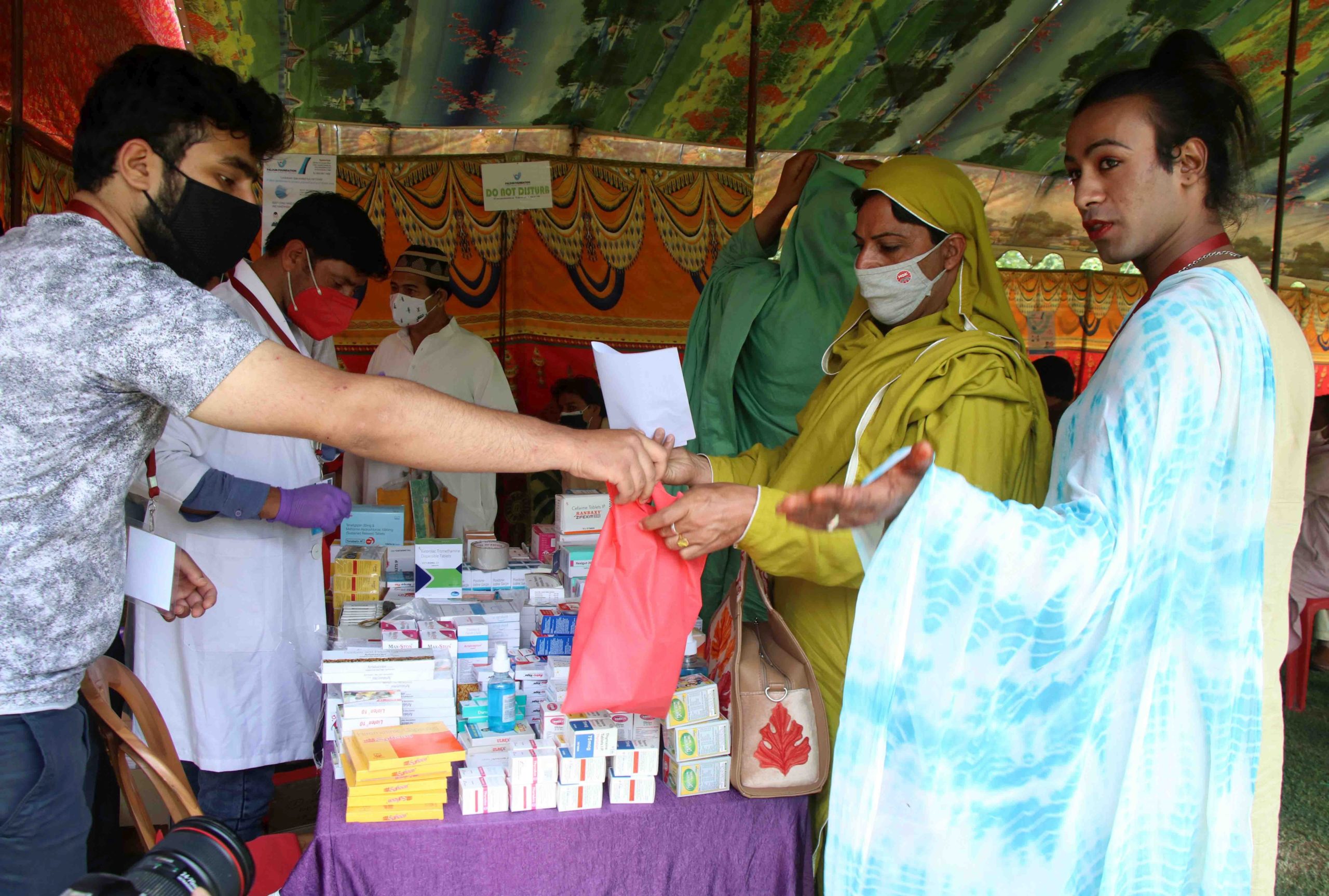
The researchers document accounts of discrimination in government hospitals, where transgender participants reported being treated differently by doctors and paramedical staff.
Afreen described instances in which doctors allegedly refused to touch her and prescribed medicines without conducting proper investigations.
The paper links such experiences to a broader failure to ensure access to essential services. Transgender people who are disowned by their families may end up living in slum areas around downtown Srinagar, where access to water, healthcare and sanitation is also limited.
The authors argue that exclusion from schools, families, workplaces and healthcare facilities reinforces one another, leaving transgender people with fewer opportunities to secure stable housing, income and social protection.
“The violence against transgender people is not confined to individual behaviour, but it takes the form of a large structure which leads to their oppression,” the paper states.
The researchers conclude that existing welfare policies have not adequately addressed these interconnected forms of exclusion. They argue that government institutions must work alongside socio-religious organisations and community leaders to sensitise society about transgender rights and improve access to public services.
Reform Agenda
The researchers call for an integrated transgender welfare strategy that combines institutional and political measures, with the participation of transgender people themselves in shaping policies intended for their welfare.
The paper outlines three principal recommendations for the Jammu and Kashmir administration.
First, it recommends establishing grievance redressal cells at the district level to address complaints of discrimination and violence. Regular sensitisation programmes on sexual orientation and gender identity should also be conducted for employees across public institutions.
Second, the authors call for making educational institutions inclusive and safe for transgender students. They recommend that the Education Department issue an advisory to educational institutions within their jurisdictions, directing them to protect transgender students from bullying and harassment.
Third, the study proposes setting up medical boards at the district level to assist transgender individuals. District civil hospitals, it says, should make provisions for consultation, treatment and counselling tailored to the community’s needs.
The researchers stress that meaningful change requires more than the formulation of policies. It demands sustained implementation, institutional accountability and direct engagement with transgender people to understand their needs and experiences.
Beyond Recognition
In its conclusion, the paper argues that the marginalisation of transgender people in Kashmir is driven by an interconnected set of factors, including social stigma, poverty, violence, family rejection and the absence of reliable social and economic support networks.
While legal recognition and welfare initiatives have created avenues for protection, the authors find that discrimination continues to restrict access to education, employment, healthcare, housing and other essential resources.
The study calls on both the government and society to recognise these challenges, engage with the transgender community and empower its members to participate in decisions affecting their lives.
Its central finding is that legal recognition alone cannot overcome entrenched exclusion. Without accessible welfare services, inclusive institutions, livelihood opportunities and a meaningful role for transgender people in policymaking, the gap between formal rights and everyday life is likely to persist.
The authors argue that addressing this gap requires a coordinated response that confronts not only individual acts of prejudice but also the social and institutional structures that sustain marginalisation in Kashmir.