During his frequent Kashmir visits since 2017, journalist Rohin Kumar explores complex issues involving Kashmir and eventually collects his experiences in a book that Muhammad Nadeem found highly impressive and representative of ground realities
Rohin Kumar’s Lal Chowk (originally written in Hindi and translated by Dharmesh Chubey) is a formidable narrative that encapsulates the heart and soul of Kashmir—a land marked by its breathtaking beauty, and, paradoxically, by its protracted and brutal conflict. In writing Lal Chowk, Kumar sets out to capture the lived realities of ordinary Kashmiris, soldiers, and political leaders, placing them within the region’s broader historical and political context. The book is not merely a chronicle of events, but an exploration of what it means to live in Kashmir, particularly after the abrogation of Articles 370 and 35A of the Indian Constitution in August 2019.
From the outset, Lal Chowk is immersive, striking a balance between being a journalistic account and a human-centred narrative. It is a tale of divided loyalties, profound alienation, and the war of perceptions between the Indian state and the people of Kashmir. Kumar’s approach to storytelling ensures that the book is accessible, while also being dense with intellectual and emotional substance.
The Politics of Optics
One of the core themes of Lal Chowk is the “politics of optics,” a phrase Kumar returns to throughout the book. The term refers to how Kashmir is viewed, interpreted, and manipulated by those in power—whether it be the Indian state, the media, or international actors. Kumar demonstrates how narratives are crafted depending on who is speaking, and how these narratives can distort or erase the voices of those most affected by the conflict.
Kumar discusses the heavy security build-up in Kashmir just days before the revocation of Article 370, which many commentators had not anticipated. He reflects on how this political manoeuvre, while described as a move to “integrate” Kashmir with India, left many Kashmiris feeling even more isolated. This chapter is particularly evocative because it highlights the gap between the official rhetoric of “unity” and the actual lived experience of the people, who are left grappling with a new political reality that brings with it both existential uncertainty and heightened security measures.
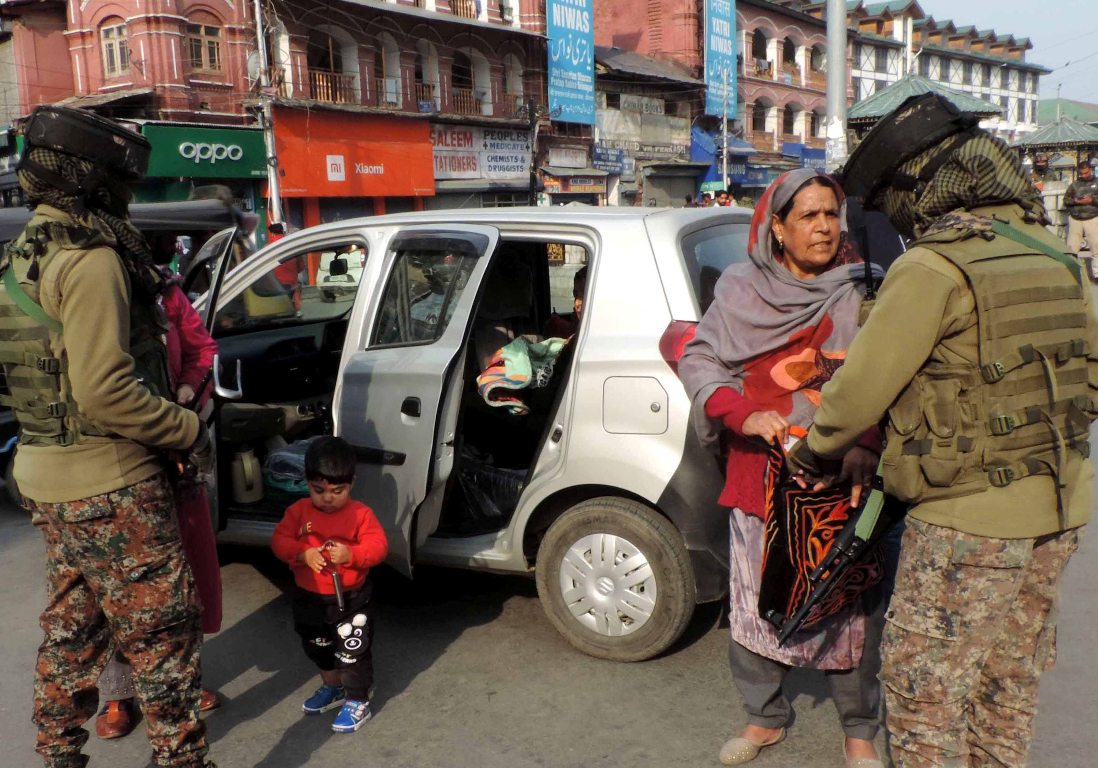
PHOTO BY BILAL BAHADUR
Kumar interweaves personal stories with the larger political developments. In one interview, a Kashmiri youth recounts how he felt betrayed by both the Indian government and the mainstream media, which he believed should have played a more neutral role. “We were left wondering; are we even part of this nation?” he asks, as Kumar probes into the media’s role in further deepening the alienation of the Kashmiri people.
Voices from the Ground
What sets Lal Chowk apart from other books on Kashmir is its centring of the Kashmiri people’s voices. Too often, Kashmir is discussed as a political issue or a security problem, devoid of human context. Kumar, however, places the Kashmiri experience at the heart of his narrative. This is evident in his detailed conversations with civilians who have lived through the darkest chapters of the conflict.
In one memorable passage, a woman describes her life under constant military scrutiny. She speaks of being frisked multiple times a day and how her identity as a Kashmiri woman subjects her to both political and patriarchal control. In this moment, Kumar moves beyond the usual tropes of Kashmir as a “beautiful but troubled land” and instead brings attention to how the everyday routines of Kashmiris have been irrevocably altered by the prolonged conflict. This firsthand account is particularly compelling because it forces the reader to confront the human cost of the political decisions made in Delhi.
Kumar also gives voice to the security forces stationed in the region, whose own experiences are often glossed over in discussions about Kashmir. He describes a conversation with an Indian soldier who speaks candidly about the emotional toll that patrolling such a volatile area can take. “We’re not here by choice,” the soldier admits, acknowledging that many of his colleagues joined the army not out of patriotism but for economic necessity. In another encounter, a CRPF soldier confides his worry for his family back home, even as he maintains a sense of duty to the job. These insights provide a nuanced perspective on the role of the military in Kashmir and complicate the narrative of occupation by showing human vulnerability.
Alienation and Identity
One of the most striking aspects of Lal Chowk is its exploration of the theme of alienation. Kumar delves into the psychological and emotional alienation felt by many Kashmiris—an alienation that has been exacerbated by decades of military presence and political instability. This sense of estrangement from the Indian state is a constant refrain in the interviews and personal accounts that populate the book.

For instance, Kumar documents the impact of the Pulwama attack in 2019, an event that not only resulted in the death of over 40 CRPF personnel but also intensified the climate of fear and suspicion directed at Kashmiris across India. In a poignant anecdote, Faizal, a Kashmiri student living outside the Valley, describes how he feared being ostracized by his Indian friends after the attack. His assumption that Kumar, too, might “distance himself” from Kashmiris in the wake of the attack is emblematic of the profound mistrust that has seeped into social relationships, not just between Kashmiris and the Indian state, but between Kashmiris and the rest of the Indian population.
This theme of alienation is further explored through Kumar’s examination of the region’s political history, particularly in the years following the rigged 1987 elections. For many Kashmiris, this moment represented the beginning of their disenchantment with democratic processes in India. The elections, widely regarded as fraudulent, are a critical turning point in Kashmir’s history. Kumar argues that the event “confirmed to Kashmiris that India did not respect their political rights,” and it set the stage for the rise of militancy in the region.
Gender and Conflict
Kumar’s portrayal of women’s experiences in Kashmir is particularly noteworthy. While much of the discourse on Kashmir focuses on male militants or security personnel, Lal Chowk shines a light on the gendered dimensions of the conflict. Women in Kashmir face a dual oppression: one stemming from the militarisation of the region and the other from entrenched patriarchy within Kashmiri society.
In one section of the book, Kumar details the struggles of women whose husbands have either been killed or have disappeared in the conflict. These women, often referred to as “half-widows,” live in a state of perpetual uncertainty, waiting for answers that may never come. Their stories of loss and resilience form a critical part of the book’s broader examination of how conflict alters not just individuals, but entire communities. Kumar does not shy away from depicting the trauma that women experience, but he also emphasises their strength and agency in navigating a society deeply affected by war.
Moreover, Kumar highlights how the conflict has exacerbated existing gender inequalities. Women, particularly in rural areas, are subject to both the patriarchal norms of Kashmiri society and the violence of the military. The book recounts numerous instances of sexual violence perpetrated by security forces, adding a layer of complexity to the already multifaceted conflict. Kumar argues that while these stories are often silenced or ignored in mainstream discourse, they are essential to understanding the full scope of the human suffering in Kashmir.
Media and the Role of Narratives
One of the most critical aspects of Lal Chowk is its critique of the media. Kumar contends that the media has played a significant role in shaping and distorting the public’s understanding of Kashmir. In the wake of the abrogation of Article 370, for example, many media outlets celebrated the move as a victory for national unity, while sidelining or outright ignoring the voices of Kashmiris who were most affected by the decision. Kumar points out that this selective coverage has deepened the sense of alienation felt by Kashmiris, many of whom now view the Indian media as complicit in their marginalization.
The book is particularly critical of how the media has often acted as an extension of state power rather than as a watchdog. He recounts how, during a visit to Kashmir by European parliamentarians in 2019, local media was restricted from covering the event, while journalists working for national media were given extensive access. This, Kumar argues, is emblematic of a larger problem: the media’s failure to provide a balanced and unbiased account of the situation in Kashmir. As he writes, “I’m not asking for a pro-opposition media, but it can certainly not be an arm of the government”.
Trauma, Resistance, and Hope
One of the most haunting sections of Lal Chowk deals with the psychological trauma that has become endemic in Kashmir. Kumar spends significant time documenting the toll that decades of violence, curfews, and military presence have taken on the mental health of Kashmir’s youth. He writes about the rise in cases of PTSD, depression, and anxiety, particularly among young people who have grown up knowing nothing but conflict. Yet, despite this, Kumar finds moments of resilience and resistance.
In one particular passage, Kumar describes a protest where young men, despite the overwhelming military presence, continue to hurl stones in defiance. These acts of resistance, though often painted as violent and unproductive in media portrayals, are framed in Lal Chowk as expressions of deep-seated frustration and a demand to be heard. For many young Kashmiris, these protests are their only form of agency in a society where they feel politically disenfranchised and socially marginalized.
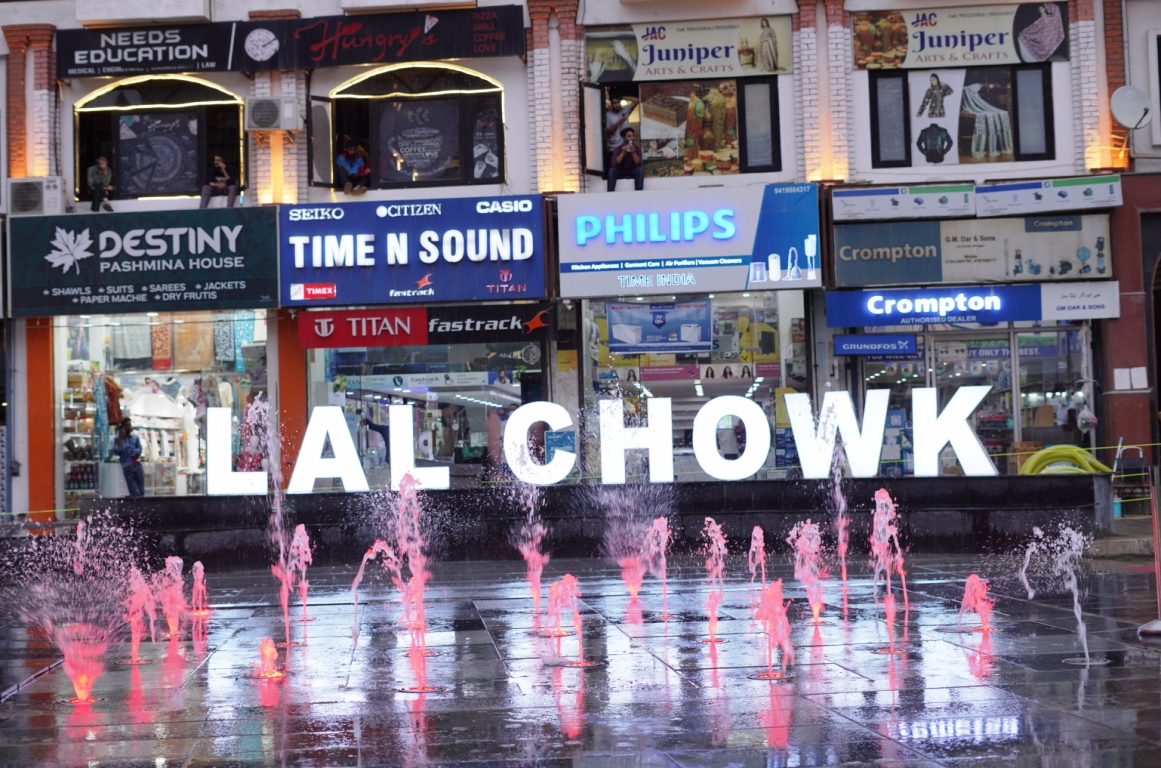
Kumar also emphasises the symbolic importance of Lal Chowk, the iconic square in Srinagar after which the book is named. The square, historically a place of public gatherings and demonstrations, has come to represent the epicentre of resistance against the state. Over the years, it has witnessed countless protests, both peaceful and violent, and has become a symbol of Kashmiri resilience. For many Kashmiris, Lal Chowk is more than just a physical space; it is a metaphor for their struggle for dignity. Kumar captures this sentiment poignantly, describing how the square, “once a place of congregation, has now become a battleground where the hopes and dreams of an entire people collide with the might of the state”.
The Historical Context
Kumar’s exploration of Kashmir’s political history is another of the book’s strengths. He provides readers with a comprehensive overview of key moments that have shaped the region’s modern political landscape, from the accession of Jammu and Kashmir to India in 1947 to the rigged 1987 elections, to the rise of militancy in the 1990s, and the eventual abrogation of Article 370. By situating these events within a broader historical context, Kumar allows readers to understand the long-standing grievances of the Kashmiri people and how these grievances have shaped their relationship with the Indian state.

The abrogation of Article 370, which stripped Jammu and Kashmir of its special status and brought it under the direct control of the Indian government, is a pivotal event in the book. Kumar does an excellent job of unpacking the political, legal, and emotional ramifications of this decision. He explains how, for many Kashmiris, the revocation of Article 370 felt like a final betrayal—a severing of the last symbolic tie that connected Kashmir to India on its own terms. Kumar writes that the decision “collapsed whatever fragile psychological bridge still existed between New Delhi and the people of Jammu and Kashmir”.
The author also delves into the aftermath of this political manoeuvre, detailing the extended curfew, the communication blackout, and the increased militarization of the region. These measures, ostensibly taken to prevent unrest, had the opposite effect of deepening the sense of isolation and resentment among Kashmiris. Kumar notes how the clampdown left the people of Kashmir feeling cut off from the rest of the world, their voices stifled and their lives under siege.
Critique: A Slight Oversight in Nuance
While Lal Chowk is undoubtedly a necessary addition to the discourse on Kashmir, there are moments where Kumar’s narrative could have benefited from a deeper engagement with the complexities of the region’s internal dynamics. For instance, while the book does an excellent job of critiquing the Indian state’s role in the conflict, it could have provided a more nuanced exploration of the role played by the diversity of Kashmiri political factions in shaping the region’s trajectory.
That said, this is a minor critique in an otherwise comprehensive and empathetic account. Kumar’s focus on the human cost of the conflict ensures that the reader’s attention remains where it should be—on the lives of those most affected by the violence.
Human-Centred Journalism
The book’s greatest strength lies in its ability to humanise a conflict that is often reduced to political slogans and statistics. By centring the voices of ordinary Kashmiris—students, shopkeepers, soldiers, mothers—Kumar gives the reader an intimate glimpse into the daily struggles and small victories of a people caught in the crossfire of history.

Lal Chowk challenges readers to think critically about the narratives they have been fed about Kashmir and to question the simplified portrayals of the region that dominates the media. In doing so, it opens up a space for empathy, understanding, and, ultimately, hope. Despite the grim realities that Kumar details, there is a sense that the people of Kashmir, like the iconic square that gives the book its name, will continue to stand resilient in the face of adversity.
For anyone interested in understanding Kashmir beyond the headlines, Lal Chowk is an essential read.