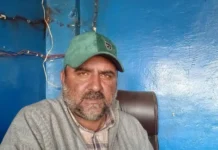
Born blind in rural Kashmir, Mohammed Hanif Malik refused to be defined by his disability. He built a life of remarkable learning, love, and resilience, reports Asrar Syeed
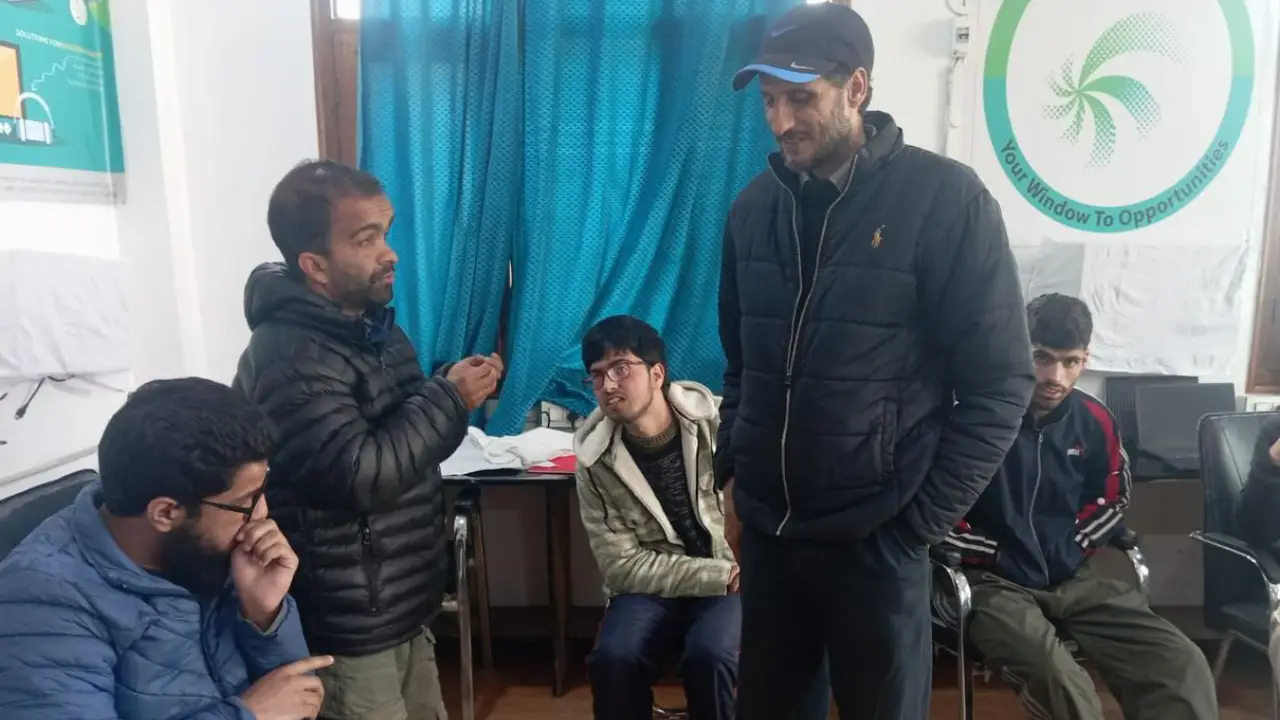
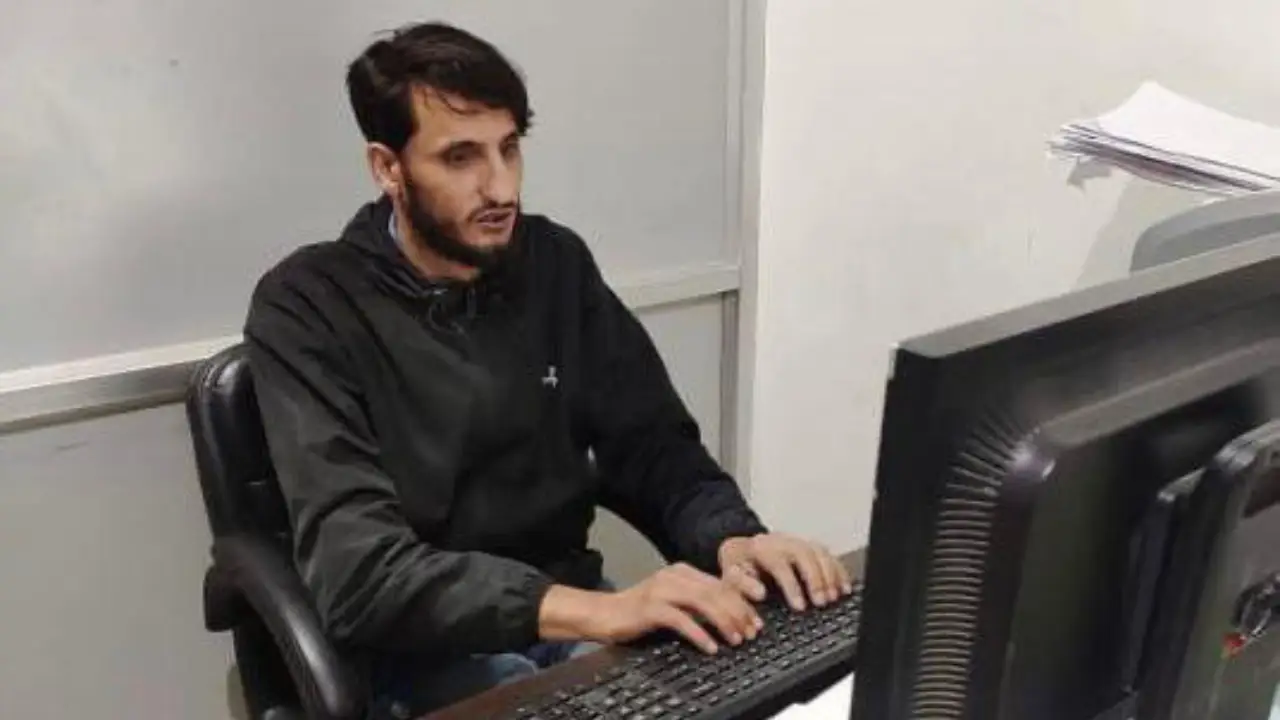
In the offices of the Voluntary Medicare Society (VMS) in Srinagar, colleagues speak of Mohammed Hanif Malik with quiet admiration. They call him the fastest person around a computer. It is a distinction that carries real weight. Hanif has been blind since birth. He navigates keyboards, programmes, and digital systems with an ease that leaves sighted colleagues blinking. He uses screen-reader software to work at speed, memorising keyboard shortcuts that most sighted users never bother to learn. The screen, for him, is irrelevant. He has spent his entire life proving that limitation is largely a matter of perspective.
Born Blind
Hanif was born in 1986 in Andargam Pattan, Baramulla. His father, Saifuddin Malik, was a government schoolteacher. He was also Hanif’s greatest teacher. “My father never allowed me to feel different,” Hanif remembers. “He always pushed me to keep learning and to take my education seriously.” Saifuddin gave his son one principle to live by: learn as many skills as possible, so that the world will search for you, rather than you searching for the world.
Growing up in Kashmir in the 1980s and 1990s was hard for a child with a disability. Specialist teacher training was largely absent from schools. Inclusive education barely existed. Saifuddin saw this clearly. Across the world, teachers working with disabled children undergo rigorous preparation, pedagogical training, disability-specific methods, and therapy-oriented skills. At the time, in Kashmir, almost none of this existed. Children like Hanif were largely left to find their own way.
In 1999, he sent thirteen-year-old Hanif to the All India Blind Configuration Centre. There, Hanif learnt Braille, the tactile reading and writing system devised by Louis Braille in the nineteenth century. A Kashmiri Pandit teacher named Jawahar Lal Koul guided him well. But homesickness won out. Hanif returned to Kashmir and withdrew from the world.
A Father Lost
The years that followed were bleak. Hanif’s motivation collapsed. Then, in 2005, his father died suddenly. The loss was devastating. “He was my best teacher,” Hanif said. “He even taught me the sounds of things when they are dropped, so it would help me throughout my life.” The compass was gone.
What followed was unexpected. Hanif grew close to a woman who would become his wife. She refused to let him give up. She filled in his examination forms. She took him to classes. She repeated what his father had always said. “Without her,” Hanif recalled, “these achievements would have been impossible.”
During this time, Hanif also trained as an electrician. His brother was worried. A blind man working with live wiring seemed dangerous. Hanif disagreed. “If you ask me what the most valuable thing in the world is, I would say vision. Since I cannot see, I want to help others by lighting up their homes.” His health eventually made the work impossible. But the spirit behind it never left him.
A Promise Kept
Before their marriage, Hanif’s partner asked for one promise. He had to complete his education. He had to never stop learning. He agreed. In 2009, they wed. She had fought her family to make it happen. Hanif kept his word. He enrolled on the ninth standard and sat his matriculation and twelfth-standard examinations in Kashmir. He passed both.
He then joined the Institute of Music and Fine Arts in Raj-Bagh, Srinagar. The welcome was cold. Some teachers called him a slow learner. He did not stay. He went to Delhi instead, enrolled at Delhi University, and completed a Bachelor of Arts, followed by a postgraduate degree in Sociology.
The journey to that degree was not easy. Midway through his studies, Hanif heard of a job opening at the VMS, a mobility instructor for visually impaired students. The interview fell on a Thursday. He had papers on Wednesday and Friday. He sat Wednesday’s examination, and then caught a train to Jammu. From Jammu, he travelled to Banihal. From Banihal, he took another train to Nowgam. He reached the VMS offices at half past two. He interviewed. Then he turned around and did the whole journey in reverse. He missed a connection in Jammu. He found the ticket collector, explained his situation, and boarded the next train. He made Friday’s examination. He got the job.
Learner for Life
Hanif joined the VMS in 2017. The organisation works across rehabilitation, healthcare, education, and social welfare. For Hanif, the role felt like a full circle. He had once been the child navigating an indifferent system alone. Now he was the person helping others do what he had done, move through the world with confidence, on their own terms.
In 2022, he was sent to Bangalore for computer training. It meant leaving home again, something he dreads. But the habit held. He went, he learnt, and he came back the fastest person in the office.
Colleagues call him hard-working and polite. The administration values him. Hanif himself keeps it simple. “I accepted my reality from the start,” he said. “Like everyone, I felt low and vulnerable at times. But one thing kept me going, learning something new each day, and trying to be better than yesterday.”
His father told him the world would come looking for him. It did