Entrepreneur Insha Sheikh transforms traditional Kashmiri cornbread into hygienic, packaged retail products, scaling a home kitchen venture into citywide distribution, reports Mehrunnisa Maryam
Makai Tschot (cornbread) and Makai Souett (cornmeal bread) have remained Kashmir’s delicacies for ages, but for the first time, they are sold in unbranded baskets or paper-wrapped packs. Behind this change are scores of hands, working overtime to keep the glycaemic management of the Kashmir stomach in a state of balance,
Insha Sheikh is one of them. A resilient entrepreneur from Shangus in South Kashmir, currently living in Srinagar’s Nowgam, she has successfully bridged the gap between rural tradition and an organised upmarket. Her homemade food venture, Rani Spices, operates from the convenience of her home and has created ripples in the commercial food market.
In the quiet hours before dawn, when the streets of Kashmir belong to the traditional bakers, Kaandurs, Insha is reshaping the city’s culinary landscape. What started as a desperate attempt to save her family from financial ruin has turned into a retail revolution, bringing the rustic Makai Tschot to the polished shelves of Srinagar’s biggest departmental stores.
For years, her father ran a copper business, but as the industry dwindled, the family faced severe financial hardships. Then in 2019, as the family struggled financial crisis, she decided to intervene. A daughter struggled to keep the family afloat.
“We are six sisters, and we do not have any brothers,” she explained, reflecting on the weight of responsibility she felt. Despite having a background in sports, having worked as a government employee in the sports fraternity and studying simultaneously, she realised she needed a more sustainable way to support her father and her household.
The journey began with a simple observation. After moving to Srinagar following her marriage, she noticed her mother buying traditional masal tschot, wrapped simply in newspaper near the Dastgeer Sahib shrine.
“I thought to myself, why can’t we make this at home? Why can’t we make it clean, package it well, and sell it where people actually shop?” she remembered thinking then.
“I saw the demand, especially among people who had migrated from villages to the city,” she recalled. “They missed that authentic taste, but there was no clean, accessible way to buy it in the city.”
Starting with just 2kg of flour in her own kitchen, she began experimenting. She didn’t have a store, necessary tools, so she became her own distributor. Carrying her freshly baked, hygienically wrapped breads, she walked from school to school and shop to shop, introducing people to a cleaner version of the traditional bread they loved. Until one day, someone from the school, moved by her dedication and hard work, encouraged her to start a large-scale production of the whole wheat bread.
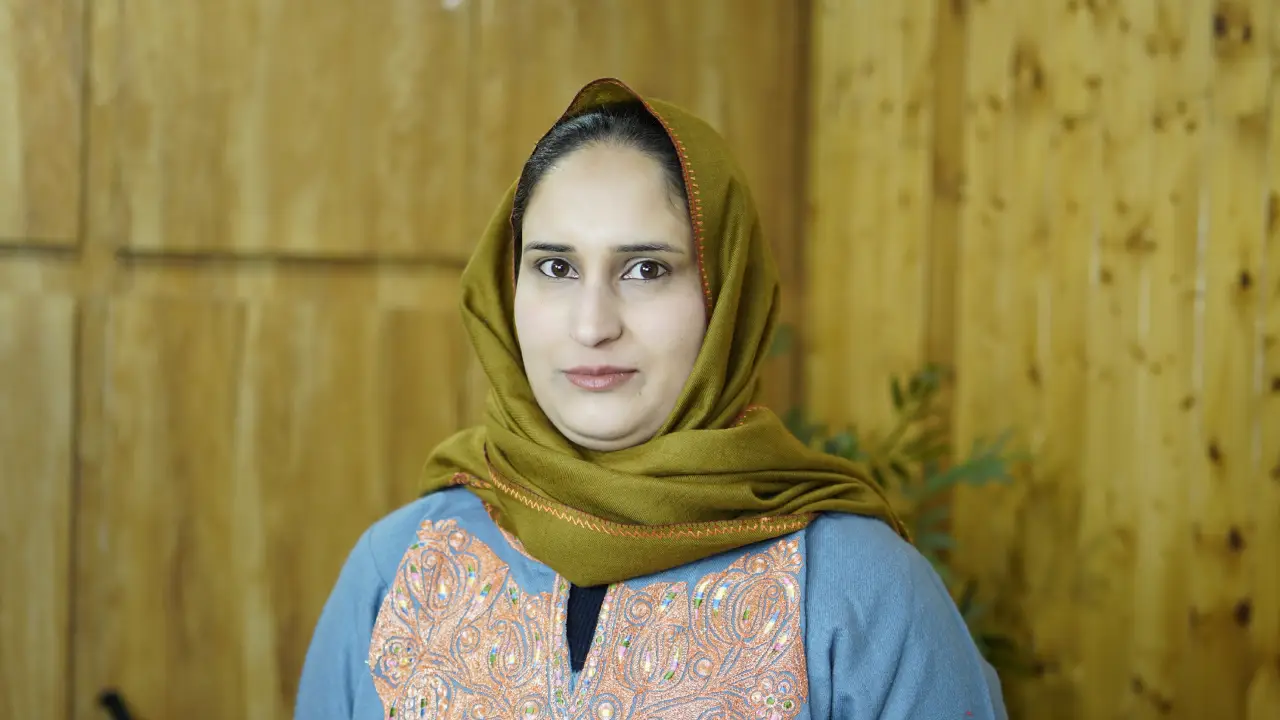
The cornerstone of her success, however, is a deep partnership with her husband, which has evolved her home-based initiative into a robust professional operation. Their collaboration is defined by gruelling physical labour and strategic planning, with both waking up at 3 am daily to begin with dough kneading, before their team of 12 workers, nine of them women, arrive. During the peak summer wedding season, the duo often works up to 19 hours a day to meet the surging demand.
Insha’s husband also manages the complex logistics of the venture, overseeing three vehicles to distribute their products across Srinagar. His support has an immense effect on the success of Insha’s business, as he helped source high-quality clay pots from Uttar Pradesh to ensure their Matka Dahi (curd) met uniform retail standards.
Insha revealed that her daily operations involve a high-volume local distribution around the city. Every morning, by 11 am, her unit dispatches at least 2,000 to 2,500 pieces of hand-patted flour bread to the bustling local markets of Lal Chowk, Soura, and Srinagar.
Unlike the polished retail versions, these breads are sold without labels or fancy packaging. “Consumers take them just like that, two, three, or four at a time,” she explained, noting that vendors in the famous Maharaji Bazar stock her entire range, from whole wheat and rice-flour bread to her specialty including Aloo Parathas, mixed veg Anchaar and Matka Dahi. This dual-market strategy allows her to serve both the high-end supermarket shopper and the traditional local vendors.
With an appreciative market, Insha’s vision is expanding. She is all set to test and launch new products in the upcoming Ramzan, the Muslim month of fasting. She plans to bring back her popular Ramazan Kheer, which sells over 200 to 250 containers a day during the holy month. She previously experimented with a fresh Fruit Salad topped with pomegranate and blueberries. Though she paused production due to the short shelf-life of fresh fruit, it signals her intent to move into the “healthy convenience” sector.
Gradually, her operation has improved and transformed. Her products are now staples in major retailers like 7/11 and Pick’n Choose. What was once a “poor man’s meal” sold on a sidewalk is now a premium item, branded and barcoded for the modern consumer.