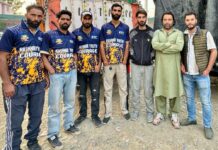
After losing a friend to overdose, four Srinagar youths anonymously rescue addicts through counselling, early intervention, rehabilitation, dignity, and community responsibility, reports Afreen Ashraf
“When we lost Uza to an overdose, we decided we would never let another Uza die,” said Ali, one of four young men who have grouped to fight drug abuse in Srinagar. After their friend died in 2019, they have been working anonymously at the grassroots level and are identifying addicts, counselling them, and driving them to rehabilitation centres well before their condition worsens.
More than five years after Uza’s death, they have not forgotten their classmate. “We were at tuition. It was around 5 pm when I got a call from another friend saying Uza is at SKIMS Soura,” recalled Ali. “We rushed to the hospital. By the time we reached, the doctors had already declared him dead.” It shattered them all. They remember him as a cheerful, interesting and caring friend whom they miss.
A friend’s loss, however, did not let grief overtake them. They converted their pain into purpose. With no official organisation behind them, the group transformed their personal loss into a small but determined grassroots effort, working to spread awareness and fight the abuse.
A Menace
Drug abuse has been growing quietly across Kashmir, affecting thousands of families. Since 2018, Jammu and Kashmir Police have seized over 1.12 lakh kilograms of narcotic substances and arrested nearly 10,000 people under the NDPS Act. Availability, unemployment, stress, and lack of awareness are adding to the mess. Counsellors believe the mindset among teenagers is changing, and families too often discover the problem only when addiction has already taken hold. “A lot of teenagers have begun to see drugs as their only escape,” said one volunteer of the group. “Even a small inconvenience in their lives, and they run toward these substances. ”
Recently, the group received a call about some boys looking for cannabis plants in their neighbourhood. When the volunteers reached the spot, they found three teenage boys. They attempted to flee, but the group stopped them. One of them was preparing for his Class 10 board exam.“Bhayie, paper chuna khealkith… thoda ha ous tension (Brother, I have to write my exams, I was just stressed),” the volunteers remember the school boy telling them.
Time Well Spent
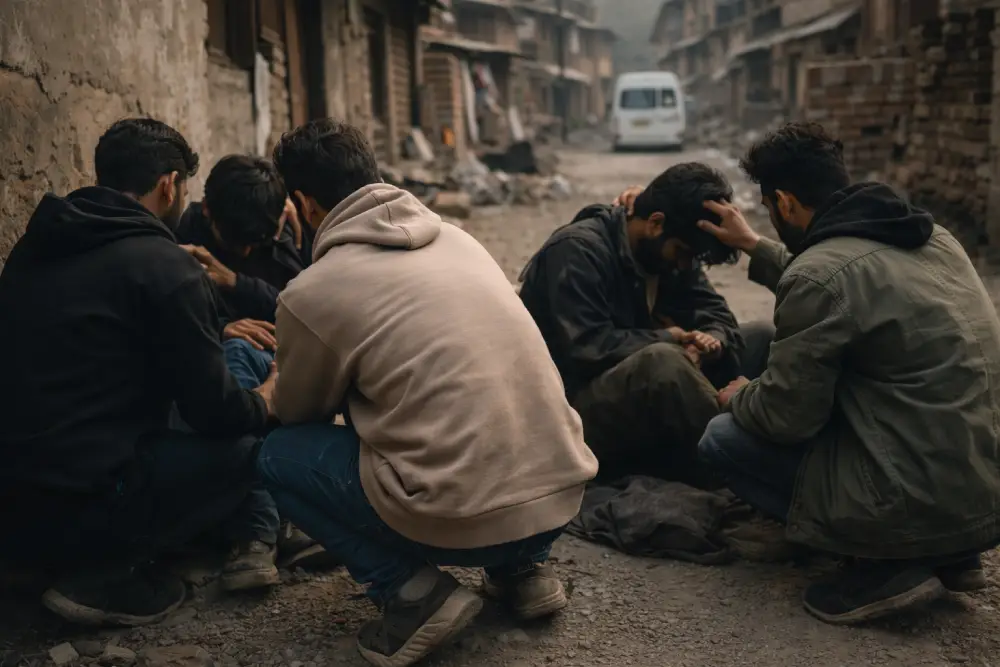
This group spends most of their time moving through their neighbourhoods, looking out for youngsters who might be into drug abuse. They approach them, start counselling, and advise their families on how to respond. Over time, the group has built strong community links and learned to observe without alarming anyone.
“An addict is already fighting an internal battle,” one volunteer said. “If you judge them, you lose them.” They talk to the individual, observe their behaviour, and try to understand how deeply they have fallen into addiction. On a personal level, they work to reduce the person’s drug intake and then guide them to rehabilitation, mostly to the IMHANS or the SMHS Hospital.
In severe cases, they immediately take the individual to a rehabilitation centre and remain by their side until treatment begins. What sets them apart is their attempt to keep the dignity and confidentiality of the addict. Instead of shaming them or putting them on display, they meet each person with patience and empathy, offering help before judgement.
Avoid Shaming
Volunteers recall one incident from Hawal, where a young man was caught with nine grams of heroin, and was immediately labelled a “smuggler” in media reports. “He was an addict, not a dealer. Such judgments destroy lives,” they said. They want police to verify facts before revealing identities and photographs. “Tell me when he comes out of jail, how will society view him? And will he ever be able to recover?” They said legal action is necessary, but maintaining an addict’s confidentiality is equally important if rehabilitation is the goal. “One wrong headline can destroy a person even after he recovers.”
The group has too many stories to tell. A 17-year-old boy, who had slipped into drugs, was stealing money from home. The group spent weeks speaking to him, earning his trust. They finally convinced him to go to rehab. Now, he is working in Qatar and living a normal life.
The group remembers a man who had two young daughters. He was keen to give up the addiction and needed support. “He just needed a hand to pull him out of that hell,” one member said. The group took him for treatment, and stayed in touch till he recovered. Now, he is working again and looking after his family.
Society Must Get In
The volunteers believe the fight against addiction cannot be left to the government alone, and society must jump in. “If every neighbourhood takes responsibility for its own youth, this problem will shrink,” a volunteer opined. “If you see changes in someone nearby, do not wait? Talk to them. Help them at the earliest”
The group said Tablighi Jamaat has consistently supported their counselling efforts and even has taken care of many addicts referred to them. “Whenever we take someone there, they treat them with dignity,” the volunteers said.