by Hurmat Altaf
On the eve of Mother’s Day, the true essence of our gestures lies not in material offerings but in small acts of care, listening to their stories, helping them navigate technology without belittling their efforts, and making them feel included in our lives. The intention behind these gestures should emanate from genuine warmth, a spontaneous affection that assures them of their continuing significance.
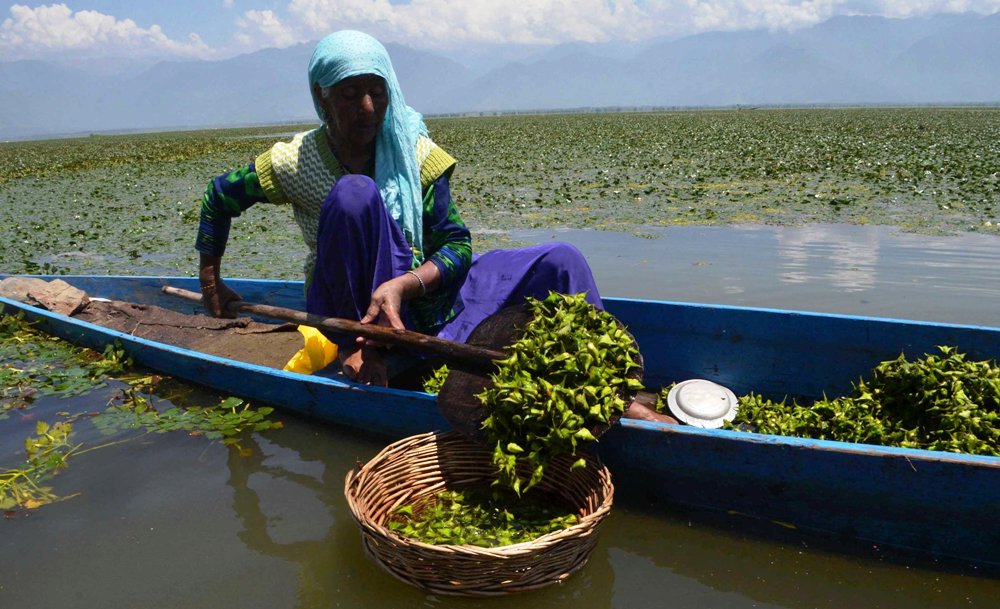
A mother embodies the most selfless form of existence on earth, a human being who dedicates her life to her children without a moment’s hesitation. The concept of motherhood, when viewed through the lens of Carl Jung, evokes both the personal and collective unconscious, bringing forth the archetype of sacrifice. A mother’s sacrifices commence the moment she nurtures a child within her womb, enduring the agony of childbirth and sustaining the newborn with her very essence. This narrative of self-sacrifice weaves through each phase of a child’s life, from infancy to adulthood, an unending saga of love and endurance.
W.B. Yeats, in his poignant poem Among School Children, encapsulates this image of a mother’s unwavering devotion. He writes, “What youthful mother, a shape upon her lap / Honey of generation had betrayed, / And that must sleep, shriek, struggle to escape / As recollection or the drug decide, / Would think her son, did she but see that shape / With sixty or more winters on its head, / A compensation for the pang of his birth, / Or the uncertainty of his setting forth?” Here, Yeats portrays a mother as the very incarnation of human labour, suggesting that even if a mother could witness her child, aged and burdened by life’s vicissitudes at the very moment of his birth, she would still cradle him with the same undying, unconditional love.
The bond shared with a mother is singular, and irreplaceable, and no one can assume the space she occupies in one’s life. Yet, as Mother’s Day approaches, the commemoration often devolves into a superficial celebration of ‘happy’ pictures, fleeting social media tributes, and performative gestures. Beneath the pedestal, however, lies a reality rarely acknowledged, she is also the one we bicker with over TV remotes, the one from whom we conceal shopping bills and the one we text from the next room rather than calling out.
Every day there are countless moments when we assert our independence while simultaneously relying on our mothers to locate the elusive pair of socks in the morning. The absurdities of these interactions reveal a tender irony, the “Gen Z” generation, with its penchant for brands, often conceals the actual price of a 3000-rupee shirt, passing it off as a 300-rupee bargain, only to still hear the inevitable refrain: “It is too expensive.” The dynamics of this relationship extend beyond material exchanges, encompassing secrets whispered in confidence that resurface unexpectedly during casual conversations over tea with distant relatives. These endless tiffs, despite their triviality, are anchored by profound emotional bonds that remain unbroken, a testament to the resilient thread of love that ties a child to their mother.
As time progresses, we become accustomed to our mothers’ unwavering devotion, so much so that we begin to take them for granted until life compels us to reckon with their irreplaceable presence. The very hands that once cradled us now reach out for support, and it is then that we are confronted with the inescapable realisation that the roles have begun to reverse. The selflessness that defined their care when we were children now calls for a reciprocal sense of responsibility. On the eve of Mother’s Day, the true essence of our gestures lies not in material offerings but in small acts of care, listening to their stories, helping them navigate technology without belittling their efforts, and making them feel included in our lives. The intention behind these gestures should emanate from genuine warmth, a spontaneous affection that assures them of their continuing significance.
Yet, generational gaps often create friction, with differing worldviews sparking conflict. Despite moments of irritation, it is imperative to draw upon emotional intelligence, tempering impatience with understanding. Rather than allowing differences to widen the chasm, a conscious effort to resolve disagreements with calm, empathetic communication can bridge the gap, reaffirming the bond that has always been a constant in the ever-changing narrative of life.
It is the boundless affection of a mother that equips us to navigate life’s challenges, offering solace amid the chaos and a sanctuary in times of distress. The unwavering support of a mother remains steadfast through every trial, a constant presence that endures through life’s harshest tempests. Amidst the tumult, she becomes the haven we return to, the comforting embrace that assures us all will be well. Yet, as the years pass, the roles subtly begin to shift. We, in the prime of youth, are charged with the responsibility to stand by them as they once stood by us, for while we grow stronger, they grow older. It is a call to cultivate patience and fortitude, to refrain from actions that might wound the tender hearts that once nurtured us.
The need to acknowledge their sacrifices and the wisdom they have imparted becomes more pressing as time inches forward. By recognising their contributions, we not only honour the legacies they have woven but also reinforce the bonds of love and respect that hold us together. These bonds, once rooted in their care for us, must now evolve into our care for them, a reciprocity that defines the very essence of familial love.
And yet, as I write this, my mother has already called me thrice today, fully aware that I am at work, to ask if I have eaten if I am wearing enough layers, or simply to summon me downstairs to sit with her. Such is the nature of mothers; they never truly retire from the job, no matter how grown-up we believe ourselves to be.
(The author is currently pursuing a Master of Arts degree in English Literature at the University of Kashmir. Ideas are personal.)