SRINAGAR: Healthcare in Kashmir under Muslim rule was integrative, progressive, robust, indigenous, specialised and accommodating, with Hindu vaids and Muslim hakeems practising alongside each other and hospitals providing free food and medicines, according to a study published in 2025.
The study also finds evidence of shafa-khanas, or places of healing, in medieval Kashmir, including a hospital called Darul Shifa built during the reign of Sultan Sikander, where patients were provided free food and medicine and physicians were salaried. But the researchers caution that the historical record of such institutions remains remarkably thin.
Titled Exploring the Enigma of Maristans in Muslim-Ruled Kashmir, the paper was authored by Misbah Rafiq, PhD, senior research fellow, Department of Social Work, University of Kashmir, and Aadil Bashir, PhD, assistant professor, Department of Social Work, University of Kashmir. The paper was published by SAGE Publishing in the Journal of Medical Biography, (Volume 33, Issue 1).
Older Traditions
The researchers place the history of Muslim-era healthcare within a much older medical tradition in Kashmir.
Before the arrival of Islam, Kashmir had developed systems of Ayurvedic and indigenous medicine. Ayurvedic medicine was practised by vaids, while a range of traditional practitioners dealt with particular ailments and procedures, including bone-setting, midwifery, barbering and leech application.
The region’s geography also gave its indigenous medicine a distinctive character. Herbs available in the Himalayas were used in treatment, while Kashmir’s position along the Silk Route exposed its medical practices to remedies and substances coming from beyond the valley.
The researchers cite the example of chob-chin, or Smilax China, a medicinal root brought from China and traditionally used by Kashmiri hakims. The existence of Ayurveda, folk medicine and locally developed remedies therefore predates the arrival of Islam and forms an important part of the medical environment into which Muslim medicine was introduced.
Unani Arrives
The arrival of Islam brought another medical tradition to Kashmir, Greco-Islamic or Unani medicine.
According to the paper, Unani medicine was based on the Greek humoral theory, under which health depended upon a balance between four bodily humours: blood, phlegm, yellow bile and black bile. Illness was understood as an imbalance requiring restoration through methods including herbs, dietary restrictions and blood-letting.
The practitioners of this system, the hakeems, treated a wide range of ailments but did not undertake surgical procedures. Diagnosis commonly involved examining the pulsations of the radial artery, while treatment drew upon both local and foreign herbs.
Medicine, or hikmat, was largely hereditary, the researchers say, but professional competence was not simply inherited. Training involved the study of medical literature and personalised supervision by experienced hakeems.
The hakeem’s house could itself function as a clinic and pharmacy, while accommodation in the surrounding neighbourhood was available for chronically ill patients who needed repeated visits. This, the authors argue, made the system accessible as well as practical.
Shared Practice
One of the study’s more significant findings is that the introduction of Muslim medicine did not displace earlier systems.
Vaids and hakeems continued to coexist. The paper cites the example of Shri Butt, a Hindu physician who enjoyed the patronage of Sultan Zain-ul-Abideen, while Unani medicines were also sold through pharmacies owned by Hindus.
Indigenous medicine, meanwhile, retained its place alongside Ayurveda and Unani practice.
The researchers interpret this coexistence as evidence that healthcare in Muslim-ruled Kashmir was inclusive rather than confined to a single medical tradition.

This is one of the central conclusions of the study: Muslim healthcare in Kashmir did not merely introduce a new system but operated within, and alongside, medical practices that were already established in the region.
Spiritual Dimension
The researchers also identify a strong spiritual dimension in the understanding of illness and cure after the arrival of Islam.
The belief that disease came from Allah and that Allah was the ultimate healer became embedded in Kashmiri religious culture. The paper points to the invocation Ya Shaafi al-Amraaz, “O healer of diseases”, as an expression of this continuing association between medicine, illness and spiritual healing.
Thus, according to the study, Muslim influence on healthcare extended beyond the introduction of Unani medicine. It also added a religious dimension to the understanding of disease and recovery.
Healing Houses
The paper’s principal historical question concerns the shafa-khana, literally a place of healing.
The researchers distinguish the Kashmiri term from bimaristan or maristan, the words commonly used for hospitals in the medieval Muslim world. While bimaristan literally denotes a place for the sick, shafa-khana places the emphasis on cure or healing.
They suggest that the terminology itself represents an interesting shift, from an institution defined by sickness to one defined by healing.
The most important historical reference identified by the researchers concerns Sultan Sikander, the sixth ruler of the Shah Mir dynasty, who ruled Kashmir from 1389 to 1413.
According to the literature examined in the paper, Sikander established a hospital called Darul Shifa. The institution provided free food and medicine to patients, while physicians were paid salaries for their services.
The paper presents this as evidence that organised healthcare and a welfare-oriented approach to medical treatment existed in medieval Kashmir under Muslim rule.
The researchers also point to Sultan Zain-ul-Abideen, who ruled from 1420 to 1470, as an important patron of education and medicine. He is credited in the sources examined by the authors with arranging for physicians from Persia to come to Kashmir to advance medical practice.
Missing Records
Yet the study’s historical reconstruction comes with a significant qualification.
There is a dearth of literature documenting the history of healthcare in Kashmir, particularly during the medieval period. The researchers say their search of local libraries, bookshops and academic databases produced only a limited number of relevant books, one PhD dissertation and a small number of research articles.
This shortage of documentation becomes particularly important when comparing Kashmir with the better-recorded medical institutions of the wider medieval Muslim world.
The maristans of Baghdad, Damascus, Cairo and other centres of Muslim civilisation were often large, organised institutions with specialised wards, pharmacies, libraries, medical documentation and systems of professional regulation.
The study notes that the available evidence does not allow a firm conclusion that Kashmir’s shafa-khanas reached the same level of institutional development.
Wider World
The authors first examine the development of medicine in the wider Muslim world before considering Kashmir.
Under the Abbasids, Greek medical texts by physicians such as Galen and Hippocrates were translated into Arabic, helping Muslim physicians develop and extend existing medical knowledge.
The resulting intellectual tradition produced major works including Avicenna’s Al-Qanun-fil-Tibb and Al-Razi’s Kitab-ul-Hawi, both of which influenced medical education beyond the Muslim world.
The development of maristans represented another major institutional advance. These hospitals evolved from mobile medical arrangements into permanent centres with specialised facilities and increasingly sophisticated systems of administration and treatment.
The researchers note that their architecture and organisation could include pharmacies, gardens, specialised wards and different forms of treatment. Some institutions also incorporated music, hot baths and other approaches to treatment.
Mental illness, too, was not necessarily understood only in supernatural terms. Muslim physicians developed classifications of mental disorders and treatment approaches that, the paper argues, have parallels with some modern cognitive and behavioural interventions.
Kashmir Difference
The study finds important similarities between this wider medical tradition and healthcare in medieval Kashmir, but it stops short of equating the two.
The researchers suggest that shafa-khanas in Kashmir may have been less developed than the major maristans elsewhere in the medieval Muslim world.
Several explanations are proposed. Kashmir already possessed a substantial indigenous medical tradition; it was relatively sparsely populated; it was not a central centre of Muslim civilisation; and historical documentation of Muslim rule in Kashmir may itself be limited or affected by bias.
The authors therefore call for further research into the relationship between the maristan tradition of the wider Muslim world and the shafa-khana tradition of Kashmir.
Later Hospitals
The study traces another transition in Kashmir’s medical history to the nineteenth century.
Christian missionaries arriving during Dogra rule in the second half of the nineteenth century are credited by the authors with introducing modern hospitals.
The researchers find an interesting architectural parallel between these institutions and the earlier maristans. The first hospital referred to in their account was constructed on the hilltop of Rustom Gari at Drugjun, near Dal Gate in Srinagar.
Its location, like that of several medieval maristans, was associated with nature and aesthetic surroundings, a feature the researchers regard as historically significant because nature and environment were traditionally considered part of the healing process.
Mental Care
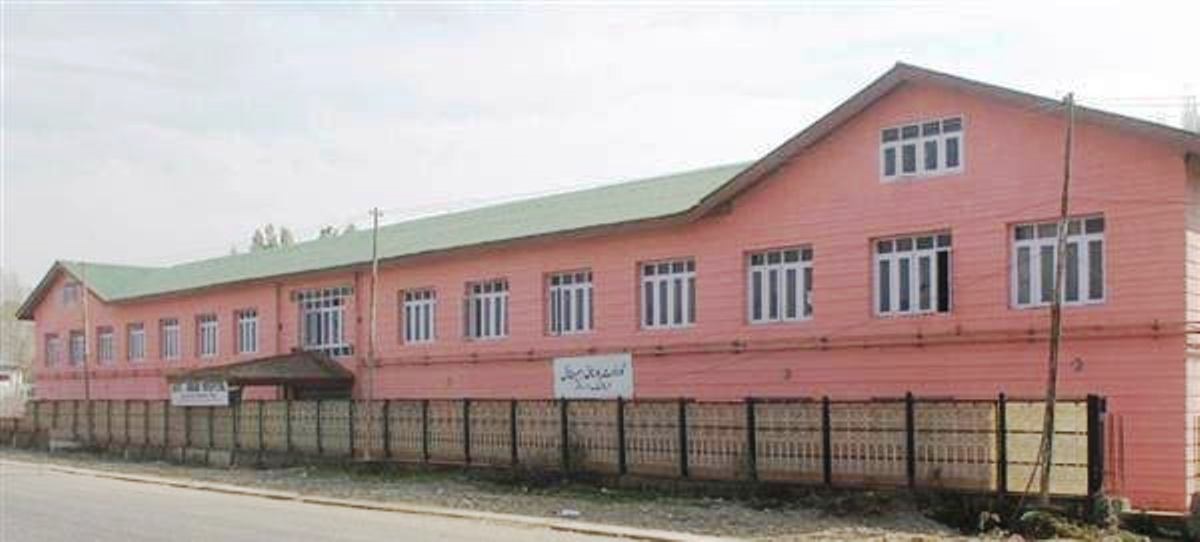
The paper also traces the history of institutional care for mental illness.
A twentieth-century lunatic asylum known as pagal-khana eventually developed into a psychiatric hospital. The institution was located near Nigeen Lake, beside an almond orchard, again providing the researchers with an example of the traditional association between healing and an aesthetically appealing natural environment.
The authors also examine the terminology used for mental illness in Kashmir.
They note that people suffering from certain forms of mental illness, particularly psychosis, were sometimes described as khuda dost, or “friends of Allah”. They interpret such terminology as suggesting that mental illness could be viewed through a framework containing elements of spirituality and compassion rather than being treated solely as a source of stigma.
Six Features
In its final assessment, the study identifies six characteristics of healthcare under Muslim rule in Kashmir.
It was integrative, because vaids and hakeems coexisted; progressive, because practitioners used Greco-Arabic medical theory and drew upon foreign medical texts and medicines; and robust, because the practice of medicine involved theoretical knowledge and personalised supervision.
It was also indigenous, through the use of locally available Himalayan herbs; specialised, through the division of medical and related occupations among hakeems, midwives, barbers, bone-setters and leech-appliers; and efficient and accommodative, because the hakeem’s home could combine the functions of clinic and pharmacy while the surrounding neighbourhood provided accommodation for chronically ill patients.
The study does not claim that Kashmir possessed a fully developed hospital system comparable with the great medical centres of the medieval Muslim world. Its more measured conclusion is that Muslim rule produced a distinctive, plural medical environment in Kashmir in which Unani medicine, Ayurveda and indigenous practices existed together, while evidence also survives of organised places of healing.
The principal historical gap, the researchers conclude, is not necessarily the absence of such institutions but the scarcity of surviving documentation about them.