by Arshdeep Singh
In the end, I realised that only the victims truly grasp the reality. Pain lives in those who have lost loved ones. In those whose homes have been reduced to rubble. In those whose dreams have been broken.
It was about 2:00 AM on May 7, and I was scrolling through Instagram reels. As time passed, I received a call from a colleague who had witnessed something unusual in the sky. I stood up at once, opened my window, and scanned the sky but saw nothing.
I shut the window, returned to bed, and a few moments later called a friend living in Srinagar. He said he had seen a red giant in the sky. I remained uncertain about what was unfolding. A loud blast rang out, likely from the border town of Uri. I called my friend again. He sounded tense and uneasy. Most of the friends I contacted seemed equally confused. The atmosphere weighed heavily. I tried to reach my family, but no one answered. That deepened my anxiety. I had lived through similar episodes before.
Still unsure, I tried calling home again around 3:30 AM. My sister answered, shouting, “Are you mentally ill? It is midnight.” I shouted back, asking why she had not answered earlier. In a firm voice, I told her to turn off all the lights. Sleep eluded me for the rest of the night. My cousin, who lives in Chandigarh, stayed in contact with me throughout. He had told me earlier that India had launched Operation Sindoor.
The next morning, most media outlets rushed to Uri town to assess the shelling. I had wanted to join them but stepped back, knowing I lacked the experience for such reporting. Sticking to my routine, I packed my bag and went to the library. Cross-border tension continued into the second night. Inside the library, everyone spoke about it. My sleep vanished again that night.
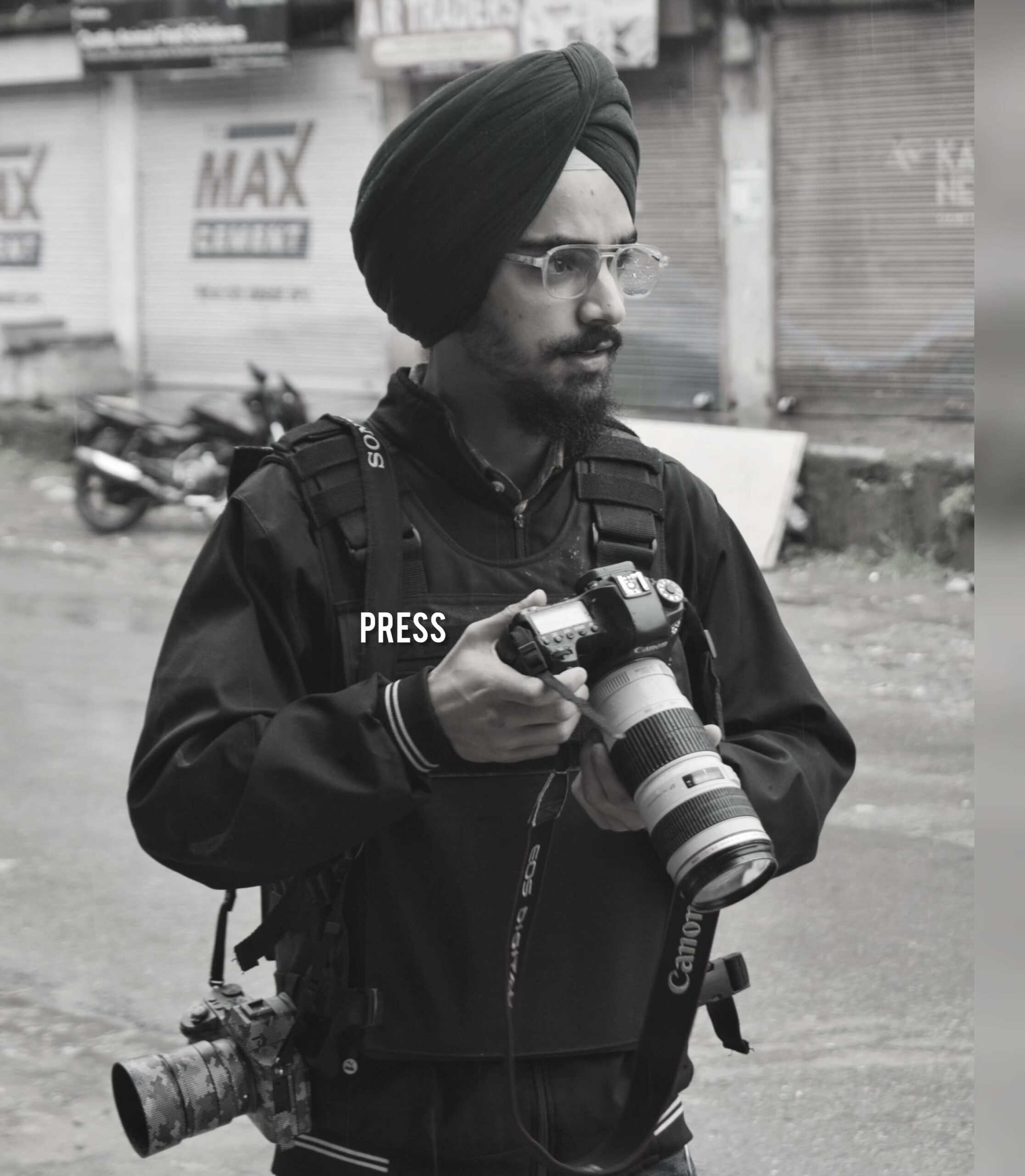
That morning, I made a video call to Khan Aabid, a video journalist. He appeared on screen wearing a bulletproof jacket, stationed somewhere in Uri. I asked whether I should come. He replied that it was my choice, but the situation was critical. Shortly afterwards, Nasir Kachroo, another journalist, came on the line and asked why I was not there. He said I should be present. I replied that I would try. I packed my camera gear and called Khan Jhangir, another journalist friend. I waited for him in the heavy rain for half an hour.
When he arrived, I climbed into his car and we drove towards Uri. Beneath the surface, I felt a surge of excitement. As we reached Lagama, I saw a structure that had been heavily damaged. I asked a local what had happened. He told me that it had been a shop destroyed by a shell. It shocked me. This was my first such experience. As the car entered the Bandi area, people were fleeing towards Baramulla in search of safety. My excitement vanished as I witnessed the distress around me.
While travelling, I contacted Shadab Gillani of Kashmir Life, who asked me to forward some pictures. I told him the road conditions were not good. Shadab Gillani said something I still remember: “Take care of yourself, Arsh. No story is more important than your life.”
We headed straight to Salamabad in Uri, where all the media outlets had gathered to assess the situation. I set up my gear and began taking photographs. Around me unfolded a stark vision of life. A mother carried her son. A son fetched medicine for his father, uncertain where to go next.
Khan Aabid offered me a bulletproof jacket. Wearing it felt unfamiliar. Arawat Mehraj, Ashir Mir, and Abid Nabi, along with several other colleagues, expressed their appreciation.
Khan offered me a cup of tea and we turned back. When we reached Lagama, I saw a family hurriedly packing their belongings. Inside their home, urgency filled the air. An elderly man, likely in his seventies, told me he could not leave. He said he had given his entire life to building the house. Tears welled in his eyes as he spoke.
A woman nearby said a shell had fallen into the river Jhelum. She told me they could not stay any longer. Her voice trembled and her eyes filled with tears. The memory unsettles me still. I hope peace will return.
By the second day, the sun had emerged and law began to reassert itself. I visited the Gurudwara Chattipatshahi in Baramulla, where I met several Hindus who had fled from Uri. Each one carried a different account of fear and loss.
Seeking more clarity, I contacted Adil Shabir, a journalist friend from Uri. He promptly arranged for a local who provided the information I needed.
In the end, I realised that only the victims truly grasp the reality. Pain lives in those who have lost loved ones. In those whose homes have been reduced to rubble. In those whose dreams have been broken.
As I write this, a line comes to mind:
kon seekha hai baaton se
sab ko ek haadsa zaruri hai.
(Arshdeep Singh is a multimedia journalist based in Kashmir. He has contributed to various national and local media outlets.)