by Dr Azhar Yousuf
The question of whether a theoretical foundation exists and is necessary for machine learning models has been a topic of debate across various academic forums.
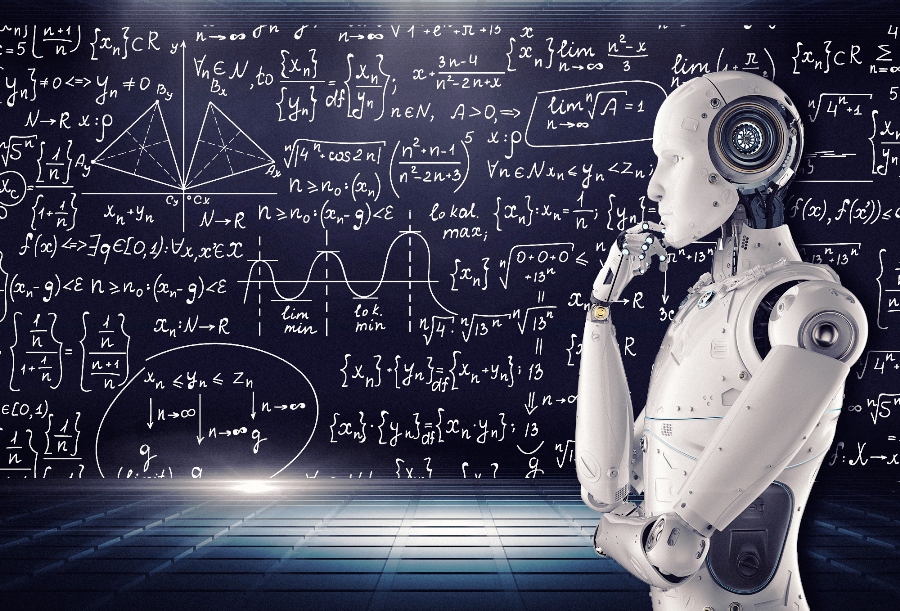
The recent ascent of Artificial Intelligence has swept across the globe, with numerous countries investing heavily in its potential to shape the future. Artificial Intelligence has, without a doubt, become the scientific field of the moment.
The question of whether machines can truly think, however, has its roots in the era of Alan Turing. In 1950, the English mathematician, widely regarded as the father of modern computer science, published a seminal paper, Computing Machinery and Intelligence. This sparked debate about machines’ ability to simulate human behaviour and perform intelligent tasks.
Alan Turing proposed a simple, pragmatic model for measuring machine intelligence, known as the Turing test. A machine passes the test if it can imitate human intelligence to the point where human and machine responses are indistinguishable.
It was the American computer scientist, John McCarthy, who first used the term “artificial intelligence” when he organised the first academic conference on the subject in 1956.
Although Alan Turing and the Turing test provided a catalyst and a clear vision for the field of AI, defining the field itself proved challenging. Instead of establishing a foundation, the test sets an end goal that can divert research down multiple paths.
Despite AI’s spectacular success in both scientific and social realms, a rigorous mathematical foundation remains in its infancy.
As the British mathematician John Ball aptly noted: “We live in an age where mathematics plays an increasingly important role, providing crucial insights into every aspect of human life. Mathematics is the language used to describe quantitative models of the world around us. As subjects become better understood, they become more mathematical.”
This underscores the need for a solid mathematical foundation to gain a deeper understanding of the processes involved in mimicking human brain functionality.
A recent major conference in artificial intelligence and machine learning highlighted this aspect prominently. At the thirty-first annual conference on Neural Information Processing Systems (2017) in the USA, Ali Rahimi, then a researcher at Google and winner of the Test-of-Time award, made a striking statement during his plenary talk. He bluntly described machine learning as “a form of alchemy”.
Ali Rahimi drew a parallel between machine learning and alchemy, noting that both achieve results to some extent. However, he pointed out that state-of-the-art machine learning models rely heavily on empirical methods, and their successes are often marred by issues like those found in alchemy.
Rahimi, the recipient of the Test-of-Time award, highlighted the “black box” problem. The mechanisms underlying these machine-learning models are so complex and opaque that researchers struggle to understand why a model produces a particular response from a given set of data inputs.
Ali Rahimi, a researcher at Amazon, is concerned that the fragile theoretical foundation and lack of technical interpretability of machine learning models pose a significant risk, particularly if AI systems are to be used for critical decision-making.
The question of whether a theoretical foundation exists and is necessary for machine learning models has been a topic of debate across various academic forums.

From a mathematical perspective, a solid understanding of artificial intelligence is crucial. However, a rigorous mathematical foundation is still in its early stages. This lack of mathematical foundations hampers the pace and rigour of research.
The absence of theoretical justifications makes it even more challenging to comprehend the dramatic failures that occur when a small input data perturbation leads to a drastic change in output.
To address such adversarial cases, mathematics is urgently needed in the field of artificial intelligence.
Although accomplished mathematicians and physicists have already joined the field, bringing their expertise to this rapidly advancing area, young researchers from mathematics, physics, and computer science must collaborate to tackle the core issues.
(The author is a Postdoctoral Fellow at the ViGIL (Video, Graphics, Imaging and Learning) Lab, Department of Computer Science and Engineering, Indian Institute of Technology Bombay (IIT Bombay). Views are personal.)