by MJ Aslam
Reti’ kol is Kashmir’s Mosum e Garma, the hottest season of the year. The summer, as such, is associated everywhere with dog days of the season, and hot and dry weather of the year. It spreads over three months from mid-Badur, Ashid, Kartak to mid-Monjhur, which corresponds to June 21, July, and August and concludes on September 20. Kol refers to a time and it takes a shape or form when used adjectively with another word like Yich-Kol, Harde-Kol and Reti-Kol.
Yich-Kol means a long period, very old; Harde-Kol means a time of the fall, and autumn, and Reti-Kol means the season of months, although reth generally means a month.
Impact on Architecture
Kashmir’s seasons had a lot to do with the design of the old Kashmiri houses. In the distant past, the plan of the Laer, Kashmiri house, was like this: the ground floor had two rooms with a small hall which was generally used for housing cattle, particularly in villages.
The first floor had three rooms where the household lived in cold seasons, while they spent their summer months on the third floor under the Pash, (thatched roof with under layer of burza bark), called Kaniy in Kashmiri. Kaniy was used like Indian khas-khana made of odoriferous grass (khas), which served as summer habitation for the natives.
In summer, the household would always have their kitchen stuff, earthen pitchers filled with cold water, firewood and other items for simple living in the Kaniy with pleasant and verdant housetops, Pash, of old Kashmiri. The shifting between two floors of the house, second and third storeys, was like the darbar-move of erstwhile Jammu and Kashmir state.
Long Sunny Days
Reti’ kol is marked by long sunny days, Taph e Doh, when sunshine and sun-heat are at their peak. Sometimes, the midday sunshine, Dupharuk Taph, of Reti’kol, becomes unbearable. The blue azure sky sometimes gets covered with wandering clouds, the sight of which gives the inhabitants a sigh of relief from the scorching heat with intermittent drizzle and rain equally beneficial to the fruit and the crop.
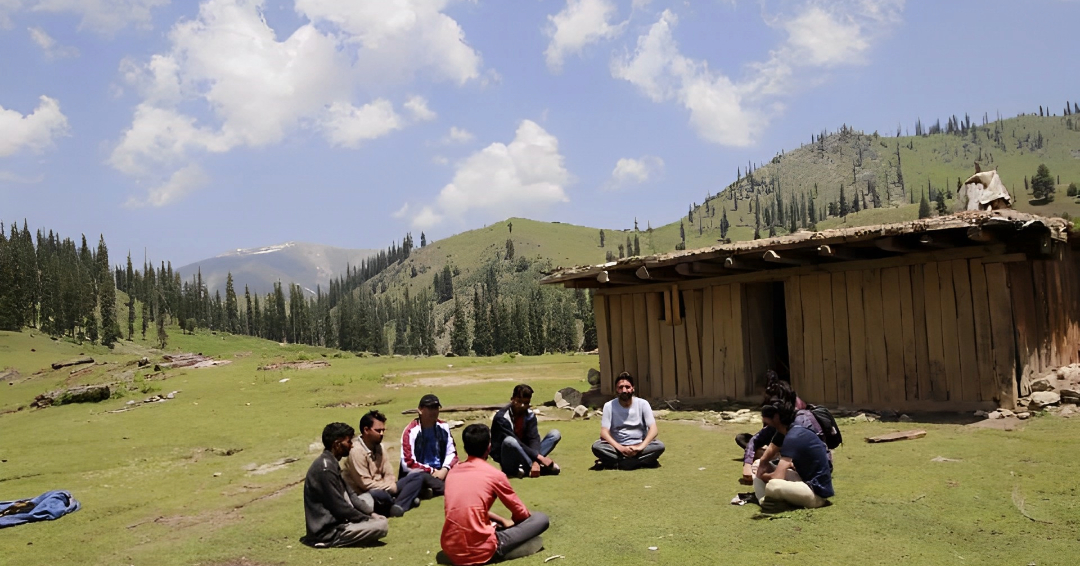
Thunderstorms and lightning are not uncommon in this season although their chain is broken by the surrounding mountain peaks. The six to eight weeks of Reti-Kol are a sufficient period for the maturation of the fruit and the crop. The farmers, who set up scarecrows in their fields and orchards to keep away pesky birds, were often found lost in rhythmic singing under the hay barracks: the sight that used to thrill the atmosphere and inspire the poets.
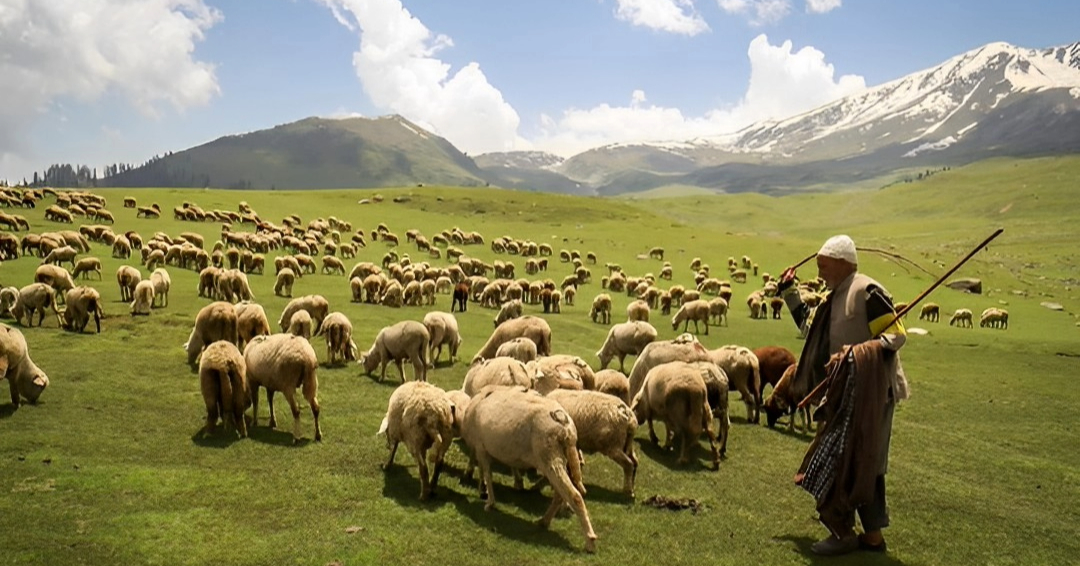
The shepherds, Pehil, spend their summer months with flocks, family and dogs in the mountain meadows and pastures. There are numerous margs, and meadows, on the top of many hills like Gulmarg, Tosmaidan, Bunghas, Sonamarg, Sind Valley, Gurez, Pahalgam, Adhu, Pir Panchal, and other grassy uplands, which afford sustenance during the months of Reti-Kol to large herds of shepherds, ponies, cattle, sheep, and goats. The Kashmir cattle grazed during the summer months in these high mountainous meadows and pastures is not now much in sight due to extraordinary human interference in the lap of the serene nature of the vale.
Summer Resorts
Kashmir was the favourite summer resort of the Mughal Emperors, Jahangir and his Queen Empress Nurjahan, in particular. To beat the effects of the simmering hot conditions of Delhi and Agra, they frequented Kashmir, their private garden, with their small caravans.
The Mughal Emperors also stressed that there should not be any sudden increase in the prices of Kashmir food grains by a disproportionate number of royal entourages. The officers kept vigil on mountain passes to check and stop any extra person of the court sneaking into Kashmir.

In 1597 the Lahore palace of Emperor Akbar was gutted down in a devastating fire which destroyed Lahore’s church also. It is said that gold and silver which melted in the heat of the flames ran down the streets of Lahore like streams of water. Emperor Akbar decided to leave for Kashmir, where he stayed for six months till November 1597.
On his trip, Akbar was accompanied by two Jesuit missionaries, Father Jerome Xavier and Benedict of Goes. Xavier was struck by Kashmir’s rich greenness, its pastures, orchards and gardens in the summer months. When his letters were published in Antwerp in 1605, the Western world first learnt that “the Kingdom of Caximir is one of the pleasantest and most beautiful countries to be found in the whole of the Indian subcontinent, we may even say in the East.” His letters gave a contrasting flip side. “But with cruel irony, amid all this seeming fertility, the priest found that the Kashmir people were starving- the country was in the grip of famine. The shortage of food does not seem to have touched the court at all, but in the city of Srinagar children were being sold by their mothers who, no longer (were) able to provide for them themselves, hoped that someone else might.”

Francois Bernier as early as 1665 AD, while accompanying Emperor Aurangzeb in his Kashmir sojourn, recognised Mughal Emperors had a great sense of fragility of eco-order in the snow-clad mountains of Kashmir. The royal entourage would pass in absolute silence without the sounding of trumpets and beating of cymbals.
During Reti-Kol the Kashmiris do not seem to have any particular cultural tradition. In the afternoon of long days of the summer, a special snack, a mixture of fried grains, Birbish, was eaten by the people. The young pumpkins were also the first to be cooked and eaten in Kashmiri homes especially Kashmiri Brahmans, Pandits, who celebrated it as a festival.