Abhishek Choudhary’s Believer’s Dilemma is a meticulously researched, psychologically sharp account of Atal Bihari Vajpayee and the Hindu Right from 1977 to 2018. It argues that Vajpayee acted less as an obstacle to Hindutva and more as the bridge that made it electable, revealing a persistent tension between conscience and reflexive loyalty to the Sangh Parivar, writes Muhammad Nadeem
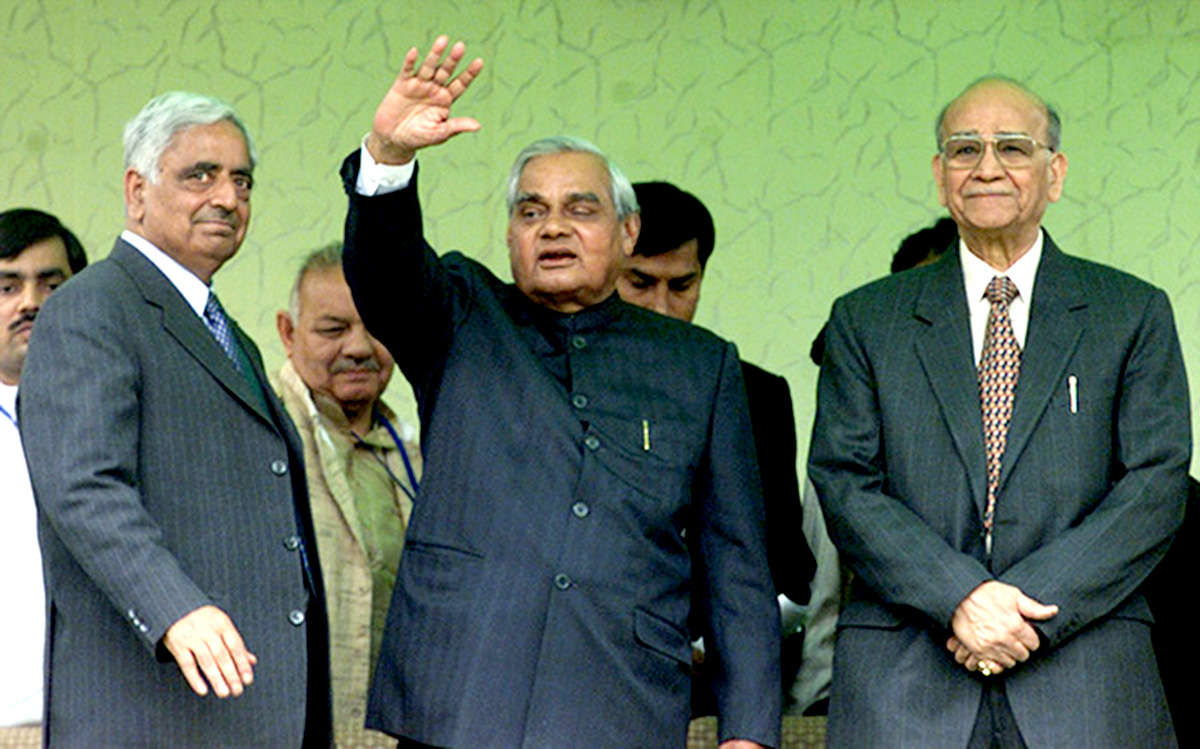
Believer’s Dilemma is the second volume of Abhishek Choudhary’s two-part study of Atal Bihari Vajpayee. This volume, subtitled The Hindu Right’s Path to Power, promises to show how institutional decline, Congress missteps, and societal fears combined to fuel the rise of Hindu nationalist power, with Vajpayee playing a key and often conflicted role along the way.
This book is a careful, searching account of a political life that, in Choudhary’s terms, became the hinge on which a larger shift in Indian politics turned. The book picks up the story from the fall of the Emergency and the Janata interlude through to the fraught years surrounding Vajpayee’s final public interventions and the broader consolidation of the Hindu Right up to 2018.
The book examines the creation of political power rather than producing a hagiography, and does so by following archival traces and interviews to illuminate the paradoxes of a man who made Hindutva electable while repeatedly expressing ambivalence about its excesses. This focus makes the book directly relevant to understanding the rise of the Hindu Right and its effects on democratic institutions, since Choudhary, an economist-turned-journalist who earned a New India Foundation fellowship to research Vajpayee’s life, builds a sustained argument about how personalities, party networks, institutional failures, and sociological shifts interacted over decades to redraw India’s political map.
A Believer
Choudhary organises the narrative around a series of episodes that together trace both Vajpayee’s evolution and the strategic ascent of the Sangh Parivar. The book discusses the Janata interregnum of 1977–79 and a revealing portrait of a newly prominent foreign minister who, while impatient with some of his own ideological family, remained deeply dependent on it. Choudhary reproduces Vajpayee’s self-criticising op-ed after the Janata government collapsed, in which the minister urged the RSS to demonstrate its apolitical credentials even as he privately retained emotional ties to the organisation. From that seed grows the author’s framing: Vajpayee was a believer who encountered repeated dilemmas as he moved from agitation to administration, and as the Hindu Right moved from the margins to the mainstream.
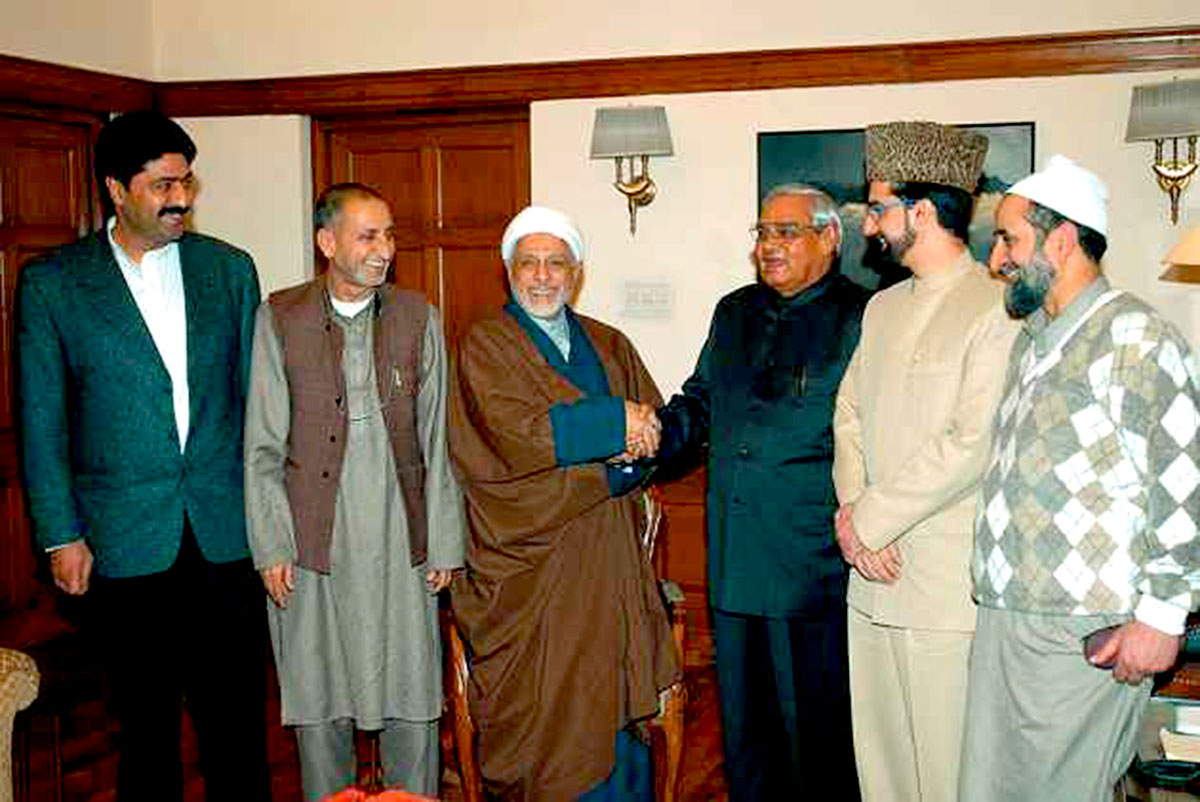
Across the book, Choudhary interweaves episodes ranging from foreign policy skirmishes and an insistence on Hindi at the Ministry of External Affairs, to the Janata years’ experiments in cabinet discipline, to the long, messy campaign around Ayodhya and the Babri Masjid.
He documents Vajpayee’s ambivalence during the Babri episode, from earlier attempts at negotiated settlement to the private moral pangs he later experienced when demolition occurred. The narrative then follows Vajpayee into his national stewardship in 1998–2004: the secretive preparation for nuclear tests, the high diplomacy and heartbreak in talks with Pakistan and China, the tactical management of an unwieldy coalition of thirteen parties, and the intimate, occasionally theatrical, details of PMO life, including the cultivation of media through family networks.
Along the way, Choudhary locates decisive moments: Advani’s Rath Yatra, the Mandal realignments of the late 1980s and early 1990s, the Godhra riots and the difficult choices of 2002, and the post-Vajpayee remaking of the party that enabled Narendra Modi’s rise. The book reads as both biography and institutional history, combining archival documents with interviews and a willingness to dwell on psychological nuance.
Line Of Enquiry
Choudhary is explicit about the book’s research architecture, a method both painstaking and revealing. This slow, craft-based approach shows on the page: the book is built from episodes that accumulate into an argument rather than from sweeping teleology. Choudhary also signals discomfort with the label biography, preferring to think of his project as a study of power, which helps explain the book’s emphasis on institutional mechanics and sociological context. The effect is a tone that is analytical and forensic.
Two features of Choudhary’s method deserve special note. First, archival material is not used as mere ballast; it is how the author corrects, nuances, and at times unsettles familiar narratives. The Janata episodes, for example, are reconstructed with details, Vajpayee’s reinstatement of Nehru’s portrait at the MEA, his push for Hindi, the secret meeting with Moshe Dayan, that complicate the simple oppositions we often carry in memory. Second, Choudhary’s willingness to place psychological detail at the centre of political explanation is striking.
He reads Vajpayee’s public op-eds and private pauses as manifestations of a man trying to reconcile loyalty and statecraft, and he repeatedly interprets political moves in terms of interior conflict: the “believer” obliged to manage the messy trade-offs of coalition politics. This psychological line of enquiry is not reductionist; rather, it sits alongside institutional analysis and sociological explanation, producing a layered account in which motives, votes, and organisations all matter.
Persuasiveness
Choudhary claims that Vajpayee functioned as a bridge between the Sangh Parivar and wider Indian society, transforming Hindutva into a respectable, electable force while repeatedly confronting the paradoxes of that role. The author adds an important corrective to single-cause explanations of the Right’s ascent: instead of attributing it solely to the demolition of the Babri Masjid, he situates the phenomenon in a broader sociological universe shaped by Congress’s failures, the decline of certain institutions, the rise of pan-Islamic anxieties, and the politics of caste and aspiration.
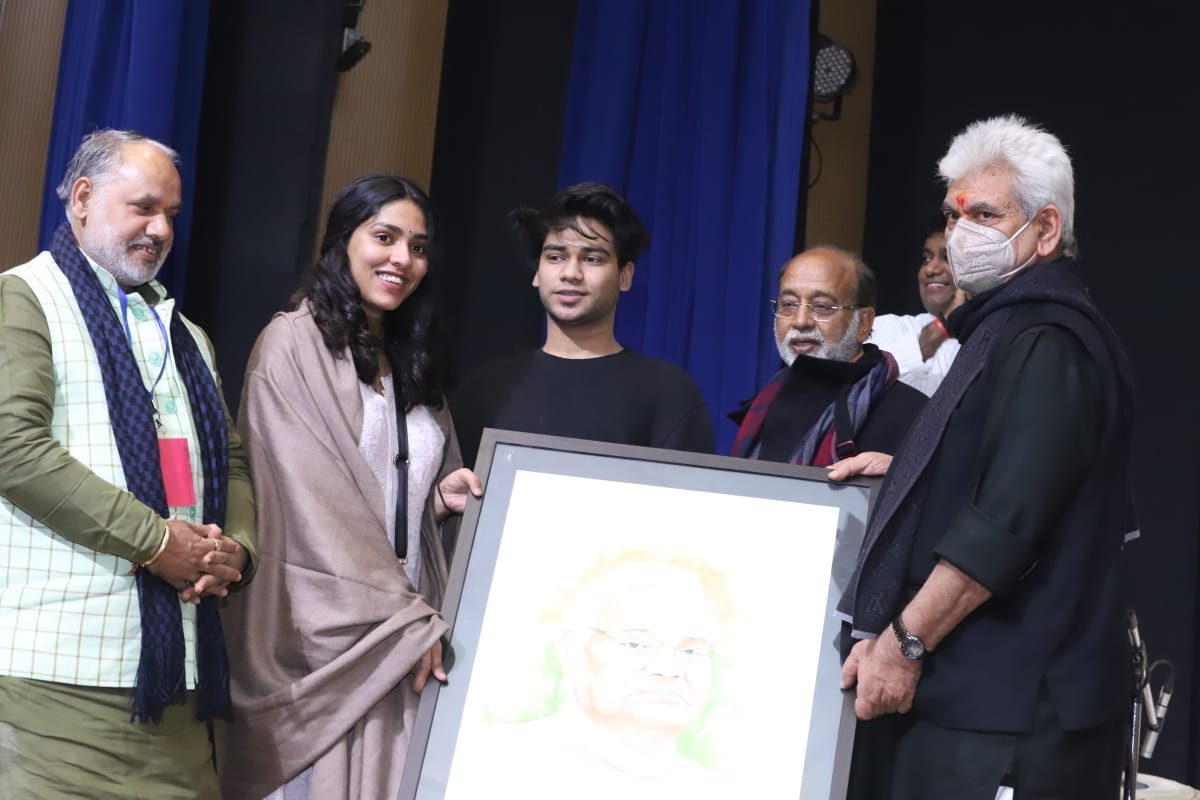
This argument is persuasive because it multiplies causal vectors and because it is repeatedly illustrated with specific episodes. The book’s strength lies in showing how different impulses, electoral opportunism, institutional erosion, ideological mobilisation, and individual agency interacted over decades to create a new political equilibrium.
At the same time, Choudhary does not shy away from moral judgment. He foregrounds moments when Vajpayee’s moderation shades into complicity, whether through “doublespeak” during Ayodhya or his inability to decisively remove Narendra Modi after 2002.
The Godhra and Gujarat chapters are especially telling: the description of Vajpayee’s visit to relief camps, the press exchange about rajdharma, and the eventual choice to “fall in line” capture the moral and political limits of liberalism inside a party undergoing conversion into a majoritarian project. By presenting these moments as ‘dilemmas’, the book preserves the complexity of responsibility while refusing to sanitise the consequences of political choices.
Revelation
The Babri sequence is handled with nuance. Choudhary gives space to Vajpayee’s attempted settlements, to his tentative public remarks, and to the private “moral pangs” that followed demolition. That ambivalence is then read against institutional outcomes: the Liberhan Commission’s later branding of pseudo-moderates, the way private family networks and PMO media cultivation remade public images, and the ultimate hardening of party lines that enabled successive transformations. The Godhra episode is presented as a test case for leadership, and Choudhary’s account of the PMO’s internal calculations, the national executive theatre, and the eventual decision to retain Modi exposes the limits of institutional restraint when electoral arithmetic and organisational survival are at stake.
Another revealing strand is Choudhary’s attention to the PMO as a site of power. The book’s reconstructive reporting on the role of Vajpayee’s foster daughter and son-in-law in managing press relationships, the Tehelka sting and its fallout, and the culture of patronage inside the prime minister’s household, all contribute to a picture of governance that is as much about networks and perception as it is about formal policy. The sketches of kitchen-table politics, media cultivation, and the shunting of bureaucrats are valuable because they show how the polity is reshaped through everyday acts as well as grand gestures.
Intellectual Debts
Choudhary positions himself against facile binary readings, and that stance is refreshing. He credits a range of factors for the Hindu Right’s success, and he situates Vajpayee within a larger sociological thrust. His refusal to let the demolition of Babri stand as the sole explanatory event is methodologically sound because it forces the reader to engage with long-term currents. The book also benefits from the author’s openness about research labour, including the archival obstacles and the slow process of assembling a draft, which lends the narrative a lived authenticity.
Readers seeking definitive closure on some controversies will have to accept the provisionality that follows from the available material. That provisionality is in truth a strength: it keeps the book from overclaiming and invites further archival work rather than pretending the archive is exhaustive.
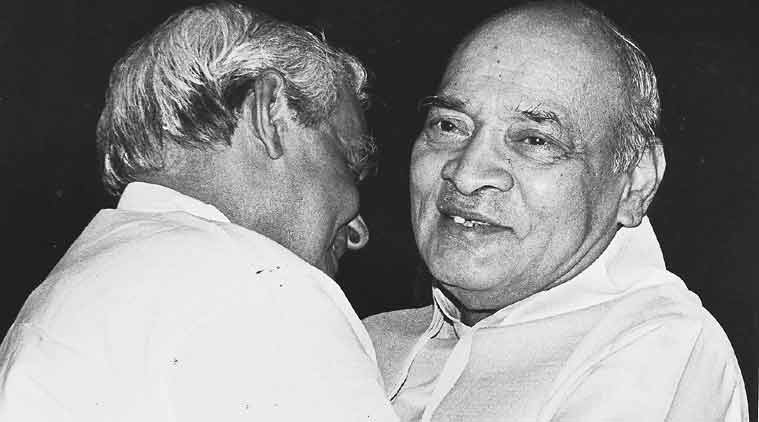
The book reminds us that the making of political power is rarely the product of a single event or actor, and that democratic decay, where it occurs, often follows not from an abrupt rupture but from a long sequence of administrative choices, symbolic moves, and sociological rearrangements.
The book’s psychological frame is particularly useful because it supplies a vocabulary for thinking about how conviction and compromise coexist in political leadership, and how those inner conflicts translate into public consequences.
In that sense, Believer’s Dilemma is a map for understanding how ideas become institutions and how, in the end, loyalty to an ideological family can come to shape the destiny of a republic.
Unsentimental History
The book ambitiously covers India’s late 20th-century political history through the lens of Vajpayee’s career. As the Janata coalition collapsed in 1979, Vajpayee “publicly apportioned some of the blame to the Rashtriya Swayamsevak Sangh” (RSS), the very ideological family he belonged to. The title phrase “the believer now had dilemmas” encapsulates this tension: Vajpayee remained emotionally tied to the RSS even as he critiqued its role, and “his relationship with the Parivar would remain a convoluted affair till the very end”.
Throughout the next decades, the book narrates pivotal events that shaped the ascent of Hindutva politics. Choudhary weaves new archival documents and interviews into an “unsentimental history” of this period. Major themes include the Rajiv Gandhi government’s cynical outreach to Hindu voters, Vajpayee’s uneasy leadership of the fledgling BJP, and the long planning that led to the Babri Masjid demolition.
The author recounts that in 1990, Vajpayee and his team secretly devised a plan to de‐escalate the Ayodhya dispute by acquiring land around the disputed site and referring the case to the Supreme Court. This careful compromise was later undermined by LK Advani’s yatras, contributing to the eventual breakdown of dialogue.
Series Of Conflicts
When the Babri Masjid was razed in December 1992, Choudhary notes that Vajpayee showed genuine anguish: he privately confessed “moral pangs about having to defend the indefensible”, and even his daughter publicly protested, foreshadowing Vajpayee’s dismay at what followed.
The narrative then shifts to Vajpayee’s prime ministership (1998–2004).The author highlights Vajpayee’s decisions on nuclear testing and foreign policy. Choudhary describes Vajpayee’s “cold pragmatism” in negotiating with Pakistan and China, and his ambition to make India a potential superpower and embed capitalist aspirations in its society.

He also details Vajpayee’s peace efforts, for example, recounting how a casual conversation at the UN General Assembly led to the idea of the Delhi–Lahore bus service. Even the protracted Kashmir issue is given new depth: the book reports a nearly complete ceasefire plan (the “Chenab formula”) worked out by Indian and Pakistani interlocutors on Vajpayee’s urging. In parallel, Vajpayee’s domestic management of a broad 13-party coalition and his policy of rotating ministerial portfolios are given attention, illustrating how he held together a fractious alliance.
Finally, the book leads up to Vajpayee’s later years. It covers his decision to author the nuclear tests in 1998 and his predicted electoral loss in 2004, as well as his last dramatic public act in 2008, voting against the very Indo-US nuclear deal he had helped initiate.
Parivar’s Propagandist
Choudhary casts Vajpayee’s life as a series of conflicts and reconciliations: a Rashtriya Swayamsevak (RSS volunteer) who became a centrist icon, a storyteller of Hindu nationalism whose moderation occasionally constrained the very forces he served. As one summary puts it, “the Sangh Parivar’s propagandist… established himself as an imaginative moderate, drawing the Hindu Right from the fringes to displace Congress as the natural party of power.” This encapsulates the book’s arc: tracing Vajpayee’s journey from fringe ideologue to mainstream statesman, and beyond.
The narrative structure itself is chronological and thematic, divided into clear parts reflecting the four divisions. This segmentation helps the reader follow the shifting eras: post-Emergency Janata years; the Indira–Rajiv interregnum; the Vajpayee-Atal coalition era; and the early 21st century. Each part blends political drama with character study. For instance, he treats Vajpayee’s first stint as foreign minister under Morarji Desai, highlighting how a portrait of Nehru at the ministry’s entrance became a metaphor for ideological continuity. Such vignettes keep the narrative vivid.
Choudhary sometimes reads like a novelist: he even scripts dialogue to illustrate larger points about image-building. This literary flair does make the book engaging and humane.
Choudhary’s description of the Prime Minister’s Office dynamics, how Namita and her husband Ranjan Bhattacharya cultivated Vajpayee’s image as a liberal statesman to counter hardliners, was eye-opening. For example, he writes that the PMO project created an “image of Vajpayee as a liberal-progressive statesman… struggling to keep in check the raging lunatics of Sangh Parivar”, an effort that involved erasing parts of Vajpayee’s past. This kind of inside story is rare in political biographies, and it testifies to Choudhary’s deep digging.
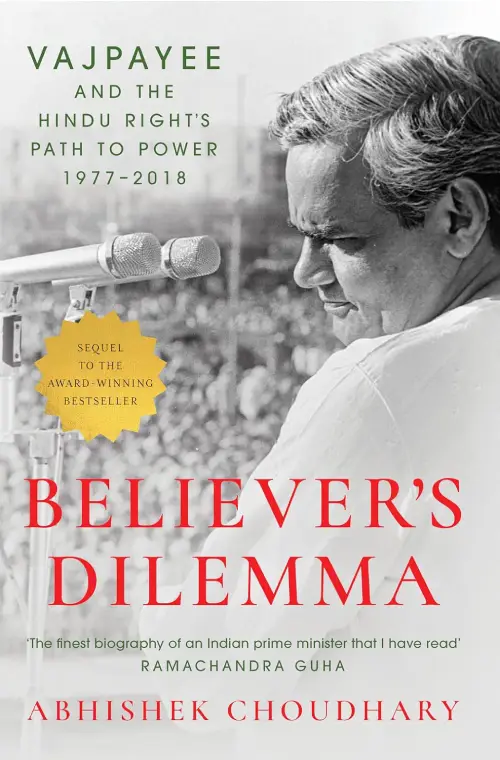
The book shows how Vajpayee enabled the RSS-BJP ecosystem to master electoral politics. Choudhary details how Vajpayee helped the RSS function as India’s “deep nation”, a parallel moral-political order working behind the scenes. In this way, the author argues that Vajpayee “made Hindutva electable, respectable”. He depicts Vajpayee not as a hindrance to Hindutva but as the bridge that carried it into mainstream respectability. At times, the tone turns barbed, as when Choudhary remarks that liberals “turned nostalgic” for Vajpayee’s moderation only after a hardliner assumed power, yet the analysis remains firmly anchored in detail.
The only caution is that the author’s perspective is strongly shaped by his interpretation of events, for example, dismissing the “dual membership” myth about Janata’s split and emphasising caste factors instead. This interpretation is plausible and supported by evidence, but it reflects Choudhary’s analytical choices. Such choices (e.g. calling Demonetisation-style politics “faux-Gandhian”) show his voice, but do not detract from the book’s solidity.
Choudhary’s Vajpayee portrait is neither hero worship nor caricature, but a textured study of a man whose rhetorical moderation masked, and at times enabled, a larger political realignment. The book gives a clearer sense of how political projects are built through a mix of personal loyalties, institutional opportunities, and social anxieties, and how a single leader can both mediate and accelerate broader historical shifts.