by Mir Tariq Rasool
An exploration of Shujaat Bukhari’s enduring commitment to dialogue, pluralism, ethical journalism, and cultural engagement as foundations for peace in conflict-ridden Kashmir and beyond.
History may march to the thunder of gunfire, yet civilisation advances only through conversation. Empires rise by force, but understanding is born of words. In lands scarred by contested borders and wounded memories, the most radical act is often the simplest: to listen.
Shujaat Bukhari, veteran journalist, public intellectual, and passionate advocate of language and dialogue, grasped this paradox with rare clarity. In Kashmir, a land too often reduced to a symbol of rivalry between nations and narratives, he insisted on seeing something deeper and more enduring: a crossroads of civilisations. Where many perceived an inevitable clash, he discerned a fragile yet persistent conversation struggling to survive.
From the earliest years of his public life, Bukhari sought to make dialogue not merely a political instrument but a way of living, a moral discipline, a cultural necessity, a sustenance for his troubled homeland. He worked tirelessly to humanise discourse, to soften hardened positions, and to remind people that words could heal what weapons had wounded. Perhaps he did not know that his unwavering commitment to nurturing a culture of dialogue, to socialising peace as a shared narrative, would one day cost him his life. Yet in that tragic irony lies the measure of his courage: he believed in conversation even when silence was safer.
Shujaat Bukhari stands as one of the most compelling voices of peace and dialogue in times of war and confrontation. A journalist, editor, and public intellectual, he dedicated his life to bridging divides, political, religious, cultural, and civilisational. At a time when polarisation and violence often dominated discourse, he consistently advocated conversation over confrontation. His life and work reflect the essence of intercivilizational dialogue: the belief that enduring peace is possible only when communities listen to and learn from one another. Shujaat time and again returned as an ardent advocate and frequent practitioner of peaceful negotiations to the conflict in Kashmir, says noted academician and author Radha Kumar. The concept of inter-civilisational dialogue implies more than cultural exchange; it requires moral courage in times of hostility.
Bukhari consistently called for talks between India and Pakistan and supported internal dialogue within Jammu and Kashmir. He believed that silencing dissent or avoiding conversation deepened mistrust, while dialogue humanised adversaries. His participation in Track II diplomacy initiatives, informal, non-governmental discussions between stakeholders, demonstrated his commitment to peace-building beyond headlines. In these forums, he represented not only Kashmiri aspirations but also the broader principle that civilisations must engage constructively rather than clash.
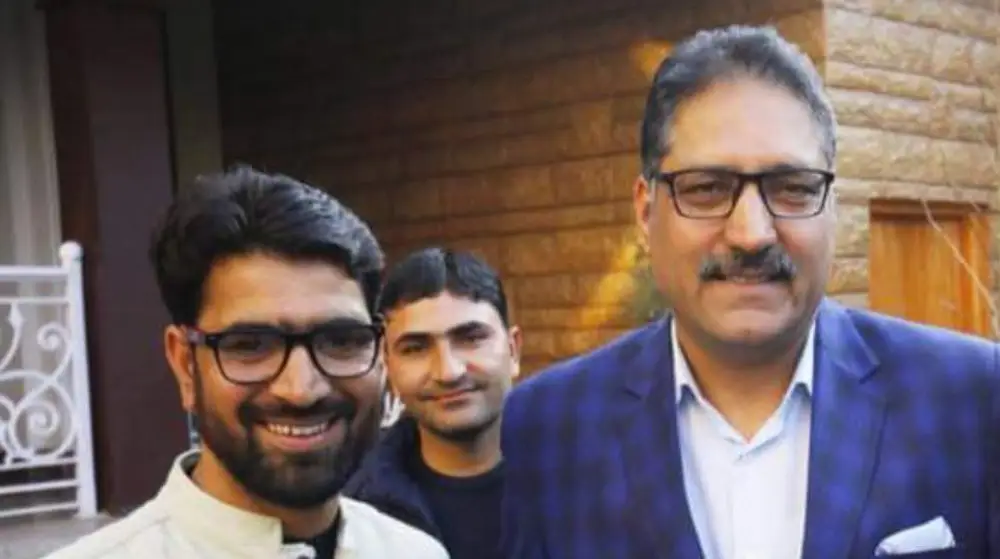
Intercivilisational dialogue is often tested most severely in environments of extremism. Bukhari faced threats throughout his career because moderation itself can be perceived as dangerous by polarised forces. Yet he persisted, believing that journalism carries an ethical responsibility to seek truth and promote understanding. As the founding editor of the English daily newspaper Rising Kashmir, Bukhari transformed journalism into an instrument of reconciliation. In a region long affected by conflict, he emphasised balanced reporting and thoughtful analysis rather than sensationalism. His editorial philosophy recognised that Kashmir was not merely a territorial dispute but a meeting ground of civilisations, South Asian, Central Asian, Islamic, Hindu, and Western influences intertwined through history.
Bukhari understood that narratives shape realities. By providing space for diverse viewpoints, Indian, Pakistani, and Kashmiri, he fostered a culture of engagement. His newsroom became a platform where ideas could intersect peacefully, even when politics could not.
Bukhari practised a kind of journalism that feels almost radical today: careful, balanced, and open to complexity. He refused to reduce Kashmir to a slogan. He understood that beneath the headlines of insurgency and state response lay a layered society shaped by centuries of shared traditions, Sufi Islam, Shaivite philosophy, Persian aesthetics, and South Asian politics. Kashmir was not a battlefield of civilisations, he suggested; it was their meeting point. That idea runs counter to the seductive narrative of inevitable civilizational clash.
Dialogue, however, is not sustained by historical memory alone; it demands a moral temperament. It requires listening to people whose views one may oppose, recognising the humanity of adversaries, and accepting ambiguity in place of absolutes. In polarised environments, that posture can appear suspect. Moderation, in such climates, is often mistaken for compromise of principle. Yet for Bukhari, moderation was not retreat — it was intellectual courage rooted in Kashmir’s own civilizational inheritance.
He drew upon the older idea of Kashmiriyat, the region’s composite culture, as proof that pluralism was not foreign to the Valley but native to it. He consistently upheld the traditional and classical identity of Kashmir, seeing in its syncretic past a framework for contemporary reconciliation. For him, intercivilizational dialogue was not an abstract theory but a lived cultural practice.
Bukhari rejected the false choice between loyalty and openness. As evident from his writings and editorials, he supported talks and dialogue within Kashmir itself. He participated in Track II initiatives, believing that informal engagement could soften hardened positions. He argued that peace was not achieved by silencing dissent but by addressing it. If there was a unifying thread in his work, it was the conviction that words, responsibly used, could create political space where violence had closed it.
Today, across the world, leaders increasingly invoke civilisational language to mobilise support and sharpen divisions. The temptation to retreat into hardened identities is not unique to South Asia; it is global. In that sense, Bukhari’s life carries lessons far beyond Kashmir. He reminds us that journalism, at its best, is not merely the chronicling of conflict but the creation of space for understanding.
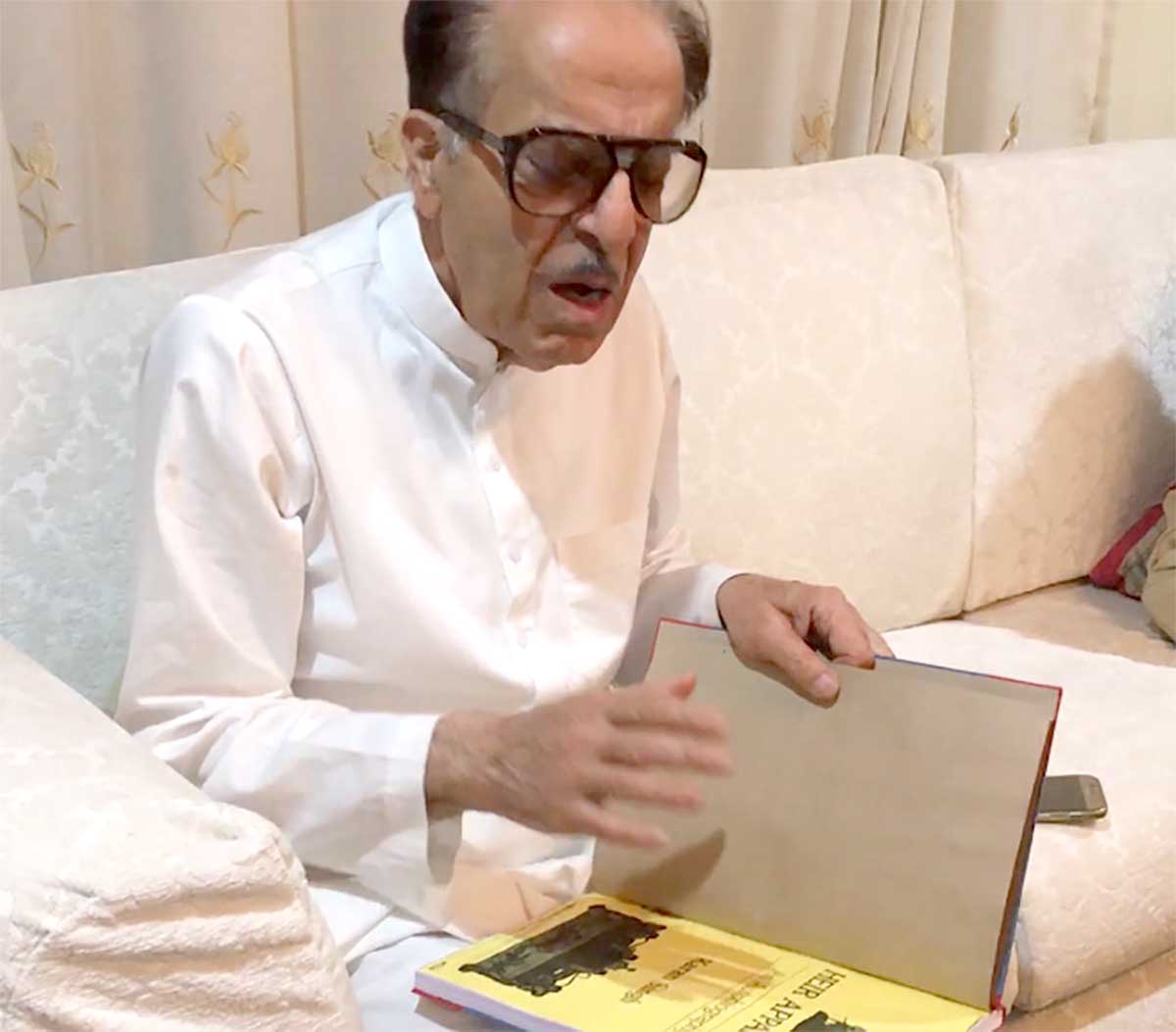
Shujaat Bukhari led one of the largest literary and cultural initiatives in Jammu and Kashmir with a rare combination of intellectual integrity and moral courage. He consistently called for quality and composite literature, advocating genuine poetry and supporting authentic voices such as Shahnaz Rashid. At the same time, he did not hesitate to critique pseudo-literati, even when they were among his close associates. For Bukhari, literature was not a matter of patronage or proximity; it was a matter of substance, sincerity, and civilisational responsibility.
He actively supported literary gatherings, seminars, and cultural initiatives in Srinagar and beyond. He was widely credited with uniting the literary and cultural voices of the Pir Panjal and Chenab valleys, creating platforms where previously disconnected regions could engage in meaningful dialogue. These events brought together writers and intellectuals from different parts of India and the wider world. In such forums, debate was not framed as confrontation but as intellectual exchange, a disciplined yet open-ended conversation.
For Bukhari, literature carried profound civilisational significance. Kashmir’s history, shaped by Persian poetry, Sanskrit scholarship, and Sufi mysticism, testified to centuries of cross-cultural fertilisation. He frequently invoked this composite heritage as evidence that coexistence was not an imported ideal but an indigenous tradition deeply rooted in the Valley’s intellectual and spiritual life.
His commitment to dialogue was not confined to urban centres. Bukhari travelled to remote corners of Kashmir to explore cultural and identity-based literature quietly flourishing in distant villages. He organised literary gatherings in places like Lolab in Kupwara and other remote areas, determined to decentralise cultural discourse. Though some within his own federation criticised these initiatives, he remained steadfast, continuing his process of regional dialogue and interaction without yielding to internal opposition.
Despite resistance, he organised a grand three-day literary conference in Bandipora as part of a broader regional cultural dialogue. The event symbolised his belief that meaningful engagement must extend beyond elite circles into the wider social fabric.
In spirit, his approach resonates with the ideas of Homi K Bhabha, who argued that dialogue is not simply exchange but performative, cultures are reshaped through the very act of interaction, and literature becomes one of the primary sites where this reshaping occurs. Bukhari embodied this principle in practice. He consistently encouraged interaction among writers and intellectuals of diverse identities and cultural backgrounds. His newsroom itself became a space of civilizational encounter, welcoming guests from different nationalities and varied traditions.
Through these efforts, Bukhari transformed literary engagement into a living model of intercivilizational dialogue. For him, literature was not merely artistic expression; it was a bridge, connecting regions, reconciling identities, and reaffirming Kashmir’s enduring tradition of pluralism.
Shujaat Bukhari left this world, but he did not leave it empty. He left behind a living inheritance, a legacy of peace, dialogue, and a deeply rooted philosophy of intercivilizational ethos. Though time and circumstance may have dimmed his presence in public memory, even among some he once mentored, the moral architecture of his thought endures. Ideas shaped by conviction do not perish with the individual; they linger, quietly persistent, waiting to be rediscovered.
His words, his courage, and his intellectual generosity continue to move beneath the surface of silence. They call out to those who hesitate, who fear to deliberate, who shrink from difficult conversations. In moments of doubt and polarisation, his memory returns as a gentle insistence: that dialogue is not betrayal, that complexity is not weakness, and that civilisations grow not by retreating into themselves but by reaching toward one another.
If he is forgotten in name, he survives in principle. If he is absent in body, he remains present in thought. And in every earnest attempt to revive conversation over conflict, his spirit quietly reenters the room. Though many among his own people may seem to have forgotten him, he continues to live, not in statues or slogans, but in the quiet endurance of the thoughts and ideals he left behind. His body was silenced, yet his philosophy still walks among us, whispering through unfinished conversations and stirring the conscience of those who dare to listen.
Shujaat Bukhari believed that civilisations speak to one another through individuals willing to risk being misunderstood. He paid the highest price for that belief. But the principle he stood for endures: that conversation, however fragile, remains the most powerful instrument we have against the darkness of mutual suspicion. In remembering him, we are reminded that dialogue is not a luxury of peaceful societies. It is the foundation upon which peace is built.
(Ideas reflected here are drawn from ‘Kashmir’s Thin Red Lines’, speeches and other writings of Shujaat Bukhari. The author is a former Secretary, Adbi Maarkaz Kamraz JK, and patron of the Kashmir Literary and Philosophical Foundation. Ideas are personal.)