by Zainab Nazki
Colonials understood history in terms of what served them and their interests, labelling Rajatarangini as the earliest piece of historical writing, often at a crossroads with its obvious flaws that countered their arguments. They often highlighted Rajatiranginis’ uniqueness ignoring the fact that Vamsavalis too had recorded genealogies.
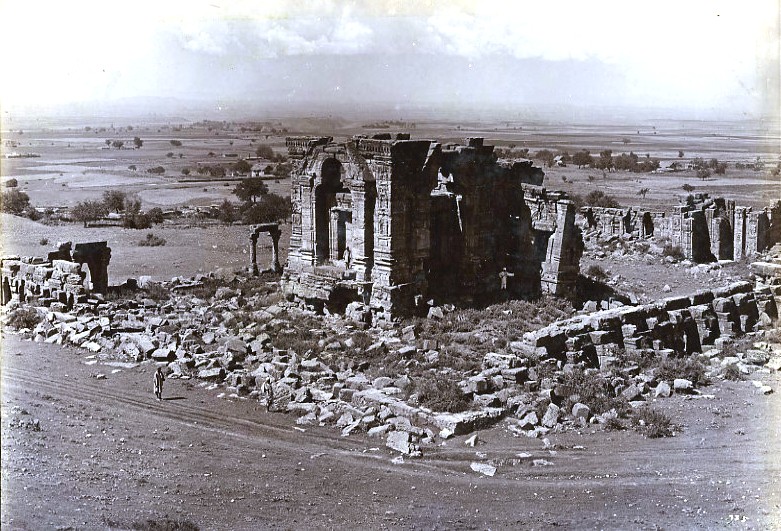
Kashmir has perpetually intrigued historians and scholars alike. It has even lured the resident scholars to write about the place they live in and that has fetched Kashmir the distinction of having its history recorded for more than a millennium.
Kalhana, the chronicler of Rajatarangini is the oldest historian of Kashmir. He is revered and critiqued at the same time. He called out earlier historians for their lack of literary flair and factual precision, urging a more rigorous approach to understanding ancient life.
Philologist William Jones cites only one example of historical writing within India, which was Kalhana’s Rajatirangini written in 1150 AD in the reign of Jayasimha. It was a form of Sanskrit poetry called Mahakavya written in the Lokakath style of Kashmiri literature.
Rajatarangini means “the river of kings” referring to the recorded genealogies in it. It records the history of the dynasties of Kashmir of over a millennium in its 8000 verses spread over eight tarangas (sections). Its Kavya (poetry) form leads it to be infused with rhetoric, myth and didactic portions which are often seen as a drawback and something that takes away from its objectivity and factuality. Its contemporary folklore and the local oral traditions heavily influenced Kalhana’s work, therefore, it is impossible to categorise the history writing of Kalhana in terms of Western and even Sanskrit theoretical frameworks.
Three Sequels
Within the next four centuries, Rajatirangini had at least three sequels, authored by Jonaraja, Srivara, Prajnabhatta and Suka, which attempted to continue Kalhana’s work but it was not at par with the original work. While the early volumes of Rajatarangini written by Kalhana contain unreliable narratives filled with legends and myths, there is a belief that within religious imagination lies a form of cultural or social truth that can be understood.
Romila Thapar talks about how to distinguish between ‘earlier books’, where supernatural causes and fate were important, and later ones which reflected Kalhana’s matured sense of history.
Historians believe it to be the first and only work of true recorded history in Sanskrit literature from Ancient India. Other scholars argue that this notion feeds into the colonial idea that early India had no sense of history. However, even scholars who hailed Kalhana as a “great and objective” historian, had to come to terms with his didactic and rhetorical passages, which led to some scepticism regarding the accuracy of his chronology.
Historians, like RC Majumdar, have criticised Rajatarangini for ascribing mythical causes to events rather than providing rational criticism, often the cause of events would be attributed to fate. Thappar too dismisses Kalhana’s moralist attitude and didacticism.
While Kalhana’s records are impressive, it can be argued they are not as unique as believed. Vamsavalis, traditional records of royal genealogies, produced in Sanskrit and the puranic genealogical lists performed the same function. So it was not the first chronologically recorded account in Kashmir but among the very last few. It has also been suggested by some historians that to create a meaningful pattern the timeline could have been manipulated or rearranged. During that period yugas were used at that time as a culturally appropriate measure of time and Kalhana based the timeline of his records in Kaliyuga. This adds to the list of things that modern historians find unacceptable in Kalhana’s history writing.
Legends and Myths
Myths in Rajatarangini are based on local Kashmiri legends (katha) about the actions of kings and their cities, deities or the origin of the land. While recounting the deeds of these kings, Kalhana would also offer moral judgments. He portrays himself as an impartial judge in these narratives. He introduces the social space as being governed by varna (caste), and he condemns rulers like Yudhisthira, the last ruler mentioned in the first Taranga (section) of Rajatirangini who believed in treating everybody as equal. However, on the other hand, he praises rulers like Lalitaditya and Avantivarman, even though neither of them was known to uphold the Varna system.
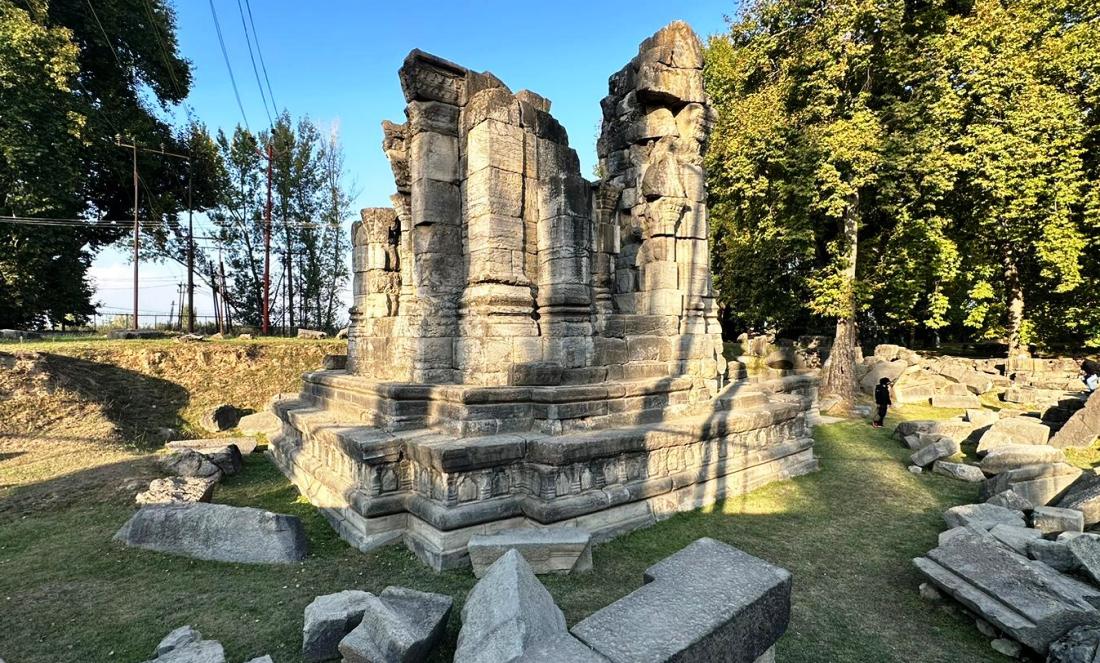
In early Kashmiri intellectual and cultural discourse, several major Sanskrit texts and genres played a crucial role in the perception and evaluation of knowledge as true and relevant. These texts encompassed a wide range of genres and philosophical traditions like itihasa (history), puranas, kavyas and shastras. At that time it is not certain who was this text written for, however, it is conferred from the Kavya Srikanthacarita written by Mankha (around 7th century CE) who was Kalhana’s contemporary, that Kalhana’s work was recited in front of audiences at a type of literary events. Its first translation was made from Sanskrit to Persian during Sultan Zainul Abidin’s time, naming it Bahr-ul-Asmar (The Sea of Tales). And during Akbar’s reign, he ordered Mulla Abdul Qadir Badauni to revise this version and to complete this translation. Ultimately during the colonial times, Sir Aurel Stein translated it into English.
Verifying Kalhana’s work poses a challenge since none of the sources he used have been preserved or studied, apart from the Nilamata Purana. The systematic recording of history began with the Karkota dynasty in the seventh century, as Kalhana lacked accurate records for Mehrakula. The chronology of Rajatarangini starts from 704-634 BC which has a huge time gap from when Rajatirangini was written. Kalhana successfully recounts the first correct date of King Avantivarman’s accession in 855/56, following that his records seem to be accurate.
Non-Native Histories
Chinese Annals (yearly records of events) provide the names of Kashmiri kings of the Karkota dynasty. Taking its accuracy into consideration it is believed that history recording in Kashmir started from the Karkota dynasty, as even Kalhana did not have any accurate records for Mehrakula (sixth century), the Huna monarch, whose date has been established by the Chinese Annals.
The Karkota dynasty seems to have been influenced by the Chinese culture where brother-to-brother succession seems to be frequent; this practice seems to be exclusive to these places. To some extent, Kashmir has been in touch with some non-South Asian cultures like the Greeks, the Chinese and the Central Asian, which had their historical traditions which have influenced Kashmiri history writing.
Then, Kashmir is referenced in texts from different regions at various points. For instance, Patanjali mentions Kashmir as a country and details its kings and queens around 150 BC. In his work Kavikanthabharana, Ksemendra, the 10th-century Sanskrit poet, asserted that recording history, or itihasa, was the responsibility of poets. Kalhana, however, believed Ksemendra’s work in history writing to be full of inaccuracies and discrepancies. Ksemendra’s work helps us comparatively study Kalhana’s work and literature.
The Nilmat Purana
The Nilamata Purana, known as the Kashmira Mahatmya, dates back to the sixth to eighth century and provides a comprehensive account of Kashmir’s history, geography, religion, and folklore. This text was the only significant source for Kalhana’s Rajatarangini that was preserved.
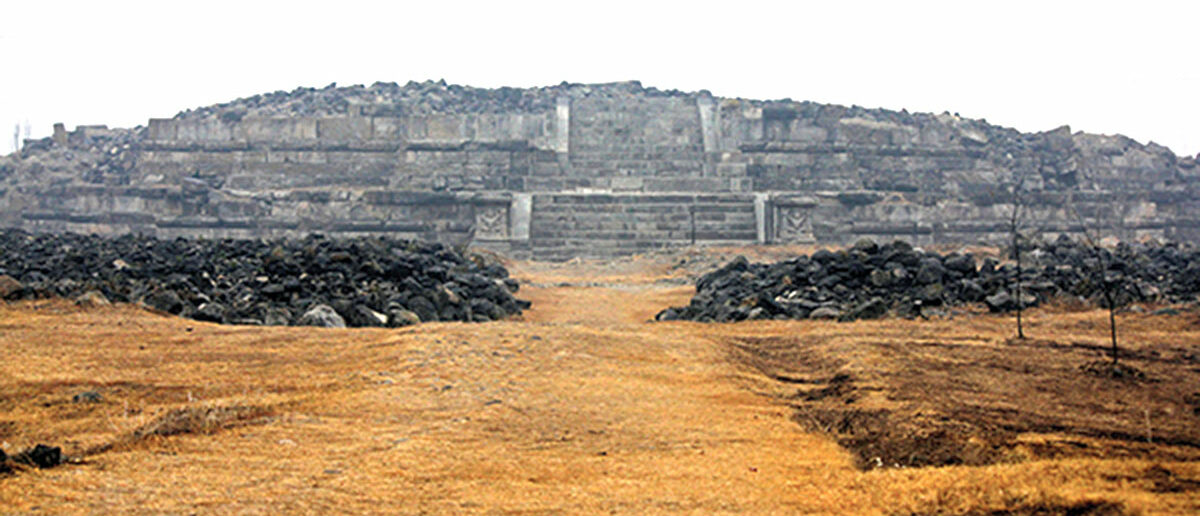
Nilamata Purana suggests Kashmir was originally a vast lake named Satisar, inhabited by Nagas. The demon Jalodbhava terrorised the people living on the mountain slopes until Kashyapa Rishi, a saint, intervened. Through extensive penance, Kashyapa successfully cleaved open a mountain near Baramulla, draining the lake and vanquishing the demon. In gratitude, the valley was named Kashyapa-mar after the saint.
Kashyapa had been highlighted in Buddhist scriptures as a key disciple of Gautama Buddha. He was prominently featured in early Buddhist texts such as the Vinaya Pitaka and Sutta Pitaka of the Pali Canon (standard collection of scriptures in the Theravada Buddhist tradition), as well as in various Mahayana texts.
The ancient Greeks began referring to the region as Kasperia and the Chinese pilgrim Hien-Tsang who visited the valley around 631 AD called it KaShi-Mi-Lo. The way Kashmir has been articulated in Nilamata Purana and Rajatirangini are quite different. Unlike Nilamata Purana, the descriptions of the geographical demarcation of Kashmir in clear in Rajatirangini.
Understanding Kashmir
Kashmir’s rich historiography has been closely studied for centuries, especially by colonialists who tried to create a certain narrative or understanding of Kashmiri and Indian historiography, initially labelling India as a-historical. It is interesting to understand that even though there is a lot of literature that exists during the early times in Kashmir, it is only Rajatarangini that is considered the only true work of history.

Colonials understood history in terms of what served them and their interests, labelling Rajatarangini as the earliest piece of historical writing, often at a crossroads with its obvious flaws that countered their arguments. They often highlighted Rajatiranginis’ uniqueness ignoring the fact that Vamsavalis too had recorded genealogies.
Most of what Kalhana had used as a reference cannot be studied now as it has not been preserved. What has been preserved, however, is Nilamata Purana which has been a major source for him.
Chinese Annals to some extent support what Kalhana has recorded after the 7th century. Kalhana, while not only acting as the moral judge for the kings of his time, also acted as a critic for his contemporary writers, like Ksemendra. As scholars explore these complexities, Kashmir’s historical literature continues to teach us about its culture and how society has changed over hundreds of years.
(The author is an undergraduate student from Miranda House at the University of Delhi studying History and Sociology. Ideas are personal.)