by Muhammad Nadeem
A first-person reflection on the closure of a Srinagar bookstore, as a symbol of Kashmir’s cultural and intellectual erosion. A piece blending memory, history, and reportage to explore how bookstores once fostered dialogue, resistance, and identity, and questions what their disappearance means for the region’s literary and communal future.

When I was a schoolboy, prone to the occasional innocent rebellion, I would sometimes slip away from class and wander the roads that led to Srinagar’s Mughal Gardens. But my detours had a secret destination. Outside a modest little shop near Lal Chowk called Bestseller, I would pause, mesmerised by the books displayed on its glass-fronted shelves. One title, in particular, never failed to catch the attention of my restless, wonder-hungry mind: 101 Magic Tricks, published by Pustak Mahal. I can’t quite say why that book left such an imprint on my memory—perhaps it was the promise of the impossible, the thrill of illusion, or simply the idea that a book could unlock hidden worlds.
One day, after gathering more courage than I knew I possessed, I stepped inside and asked the owner, Mr Sanaullah, for the price. Forty or fifty rupees, he said gently. It might as well have been a fortune. My pocket money was two rupees a week. Undeterred, I scraped together half the amount and convinced a friend, with the charm of a magician-in-the-making, to contribute the rest. I still remember the excitement of walking out with that book in hand, and even today, fragments of those tricks—sleight of hand, floating rings—reside in the corners of my memory.
That shop was more than a store; it was a portal. A place where I would later spend much of my adult life’s earnings, chasing stories, ideas, and the quiet company of books. It was in those aisles that I stumbled into friendships, learned the weight of words, and began my lifelong love affair with literature. I didn’t know it then, but Bestseller would become a silent witness to my growing up—a place where my imagination was first set alight.
But now in the same heart of Srinagar’s Lal Chowk, where the pulse of Kashmir’s cultural and political life has throbbed for decades, a quiet extinction is unfolding. Bestseller, a bookstore that weathered 40 years of tumult, through curfews, conflicts, and fleeting calm, is closing its doors. For generations, including my own, this shop was more than a commercial space; it was an archive of aspirations. To step inside was to wander through corridors of possibility: shelves heavy with works on Islamic theology, Kashmiri poetry, dog-eared novels, and political treatises. Here, a child’s curiosity about magic tricks could evolve into a lifelong dialogue with Rumi or Haruki Murakami.
The closure of Bestseller is not merely the shuttering of a shop; it is the folding of a sanctuary, a library of dreams, and a chapter in Kashmir’s collective memory. Its owner, like others before him, is abandoning books for pragmatic wares —items that endure the harsh arithmetic of survival in a conflict-ridden region. We should question the confluence of challenges driving this cultural transformation, the implications for Kashmir’s intellectual and literary fabric, and the enduring significance of bookstores as spaces of resistance, identity, and hope.
A Personal Reflection
For me, Bestseller’s closure is a personal elegy. It was where I first discovered the joy of reading, pooling coins with a friend to buy a book on magic tricks, and later delving into Islamic studies and world literature. The smell of its shelves—a blend of aged paper and Srinagar’s damp winters—the quiet hum of readers, and the thrill of unearthing a rare title are memories now tinged with loss. These shops were incubators of identity, where we parsed our past, critiqued our present, and imagined our future.
The loss of such spaces is a theft of intimacy. When a bookstore vanishes, it takes with it the quiet rituals that bind a community: the caress of a book’s spine, whispered recommendations between strangers, and the scent of pages that carry the weight of history. For an entire generation, Bestseller was a bridge between worlds—a place where Said, Sartre, and Sufi poetry coexisted, offering solace amid the dissonance of life in Kashmir.
The Calculus of Survival
Kashmir’s bookstores have long been casualties of an unspoken war. Their decline is driven by a confluence of legal, economic, and societal pressures.
The legal environment in Kashmir has grown increasingly restrictive. Police raids, such as those in February 2025 that saw 668 books seized from shops linked to banned organisations, have cast a shadow of fear over booksellers. Historically, during the 1990s, booksellers buried texts to avoid police raids—a testament to the enduring tension between intellectual freedom and state control. These actions, criticised by figures like Mirwaiz Umar Farooq as “condemnable,” stifle dissent and narrow the avenues for diverse perspectives.
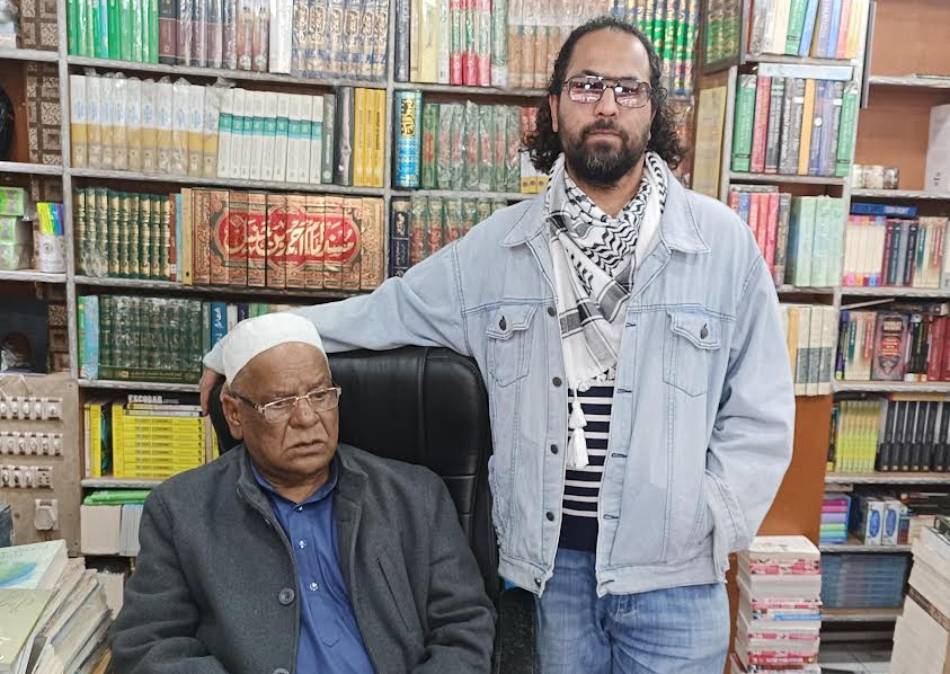
Bookselling has become a precarious venture in a region grappling with unemployment and inflation. Sani Yasnain, who inherited Bestseller in 2016, introduced innovations like selling books by weight to make literature accessible. Yet, even this “desperate poetry” could not offset the rising costs of physical books, competition from e-books, and the post-2019 abrogation of Article 370, which disrupted supply chains and consumer behaviour.
The rise of audiobooks and social media has redefined reading habits. Younger generations, lured by the immediacy of digital content, increasingly view physical books as relics. A 2022 article lamented the decline of reading culture among youth, attributing it to expensive books and “internet distractions.”
COVID-19 lockdowns exacerbated these challenges. Bestseller adapted with discounts and home deliveries, but the prolonged closures left indelible scars. For many shops, survival now demands pivoting to stationery or textiles—a surrender of cultural purpose for economic pragmatism.
The Erosion of Cultural and Intellectual Life
The decline of bookstores threatens more than commerce; it imperils Kashmir’s cultural resilience. These spaces were hubs for dialogue, where generations exchanged ideas on literature, politics, and faith. Their closure risks severing a lifeline to critical thinking and historical memory.
Bookstores like Bestseller served as antidotes to isolation, offering refuge from checkpoints and internet blackouts. Their absence deepens the divide between external narratives and internal Kashmiri experiences, as seen in the scarcity of English-language novels by local authors. Without these forums, the region’s intellectual landscape risks becoming a monologue.
Kashmir’s bookstores have long preserved narratives marginalised by mainstream discourse. The 2025 seizures of books on history and politics exemplify a broader erasure. When shops close, they take with them rare texts on history, resistance poetry, and oral histories—works that defy homogenised accounts of the region.
The loss of reading culture among youth is particularly alarming. As someone noted, “A generation that does not read becomes a generation that cannot think.” Without access to affordable books or communal spaces for discussion, young Kashmiris risk losing touch with their heritage.
Bastions of Resistance
Independent bookstores in Kashmir have always been more than retail spaces. During the 1980s and 1990s, they emerged as safe havens for dissent. Sanaullah Chiloo, Bestseller’s founder, curated works on Islamic philosophy and global uprisings, transforming his shop into a clandestine library during crackdowns.
This legacy of resistance continues. In 2016, Sani Yasnain launched social media campaigns to reach younger audiences. Such acts of ingenuity—selling knowledge by the kilo or hosting underground poetry readings—reflect Kashmir’s broader narrative of resilience. Yet, they also reveal a grim truth: in Kashmir, even culture must bend to survive.
Beyond Commerce
Independent bookstores are vital to preserving Kashmir’s cultural identity. They champion local authors, amplify marginalised voices, and foster intergenerational dialogue. These stores also serve as platforms for activism.
The shuttering of bookstores has ripple effects across Kashmir’s economy and society.
Local bookstores generate jobs, support publishers, and circulate wealth within communities. Their decline weakens this ecosystem, funnelling revenue toward online giants like Amazon.
Bookstores gather spaces that combat isolation. Initiatives taken by Bestseller brought together students, academics, and activists, fostering trust in a fractured society. I even met one of my best friends at Bestseller.
A Call to Action
The decline of Kashmir’s bookstores serves as an urgent wake-up call, demanding collaborative action from policymakers, educators, and civil society to safeguard the region’s literary and cultural heritage.
Firstly, subsidising local publishers could alleviate financial burdens for regional authors and booksellers, ensuring affordable access to culturally significant works. Secondly, embracing digital-hybrid models—combining curated physical collections with e-books—would modernise outreach while preserving the tactile essence of traditional reading. Furthermore, protecting intellectual freedom is paramount; advocacy against censorship and arbitrary raids must be prioritised to uphold the right to diverse thought and expression.
Finally, fostering youth engagement through literacy programs, writing competitions, and school partnerships can reignite a passion for reading among younger generations, securing the future of Kashmir’s literary legacy. Together, these steps form a roadmap to revive bookstores as vital spaces of resistance, identity, and hope in a region where survival too often overshadows the sustenance of the soul.
As Sani Yasnain reflects, “Every shelf we keep alive is a stand against forgetting.” The story of Kashmir’s bookstores is not yet finished—it awaits a new chapter where words regain their weight, and bookstores once again become bridges between worlds.
The Weight of Words
In Kashmir, every closed bookstore is a library burned. The transition from selling Ghazals to groceries is not just a market shift but a metaphor for a society prioritising survival over expression. Yet, as long as a single shelf remains, hope lingers. Bestseller’s four-decade endurance is proof that Kashmiris refuse to let their narratives be erased.
To mourn these shops is to mourn a version of Kashmir that persists in fragments. But in their struggle, we find a defiance that mirrors the region’s own: a fight to preserve memory in a landscape scarred by forgetting. The final pages of this story have not been written; they await readers willing to carry forward the quiet revolution of a book.
(Author is a Srinagar-based writer. Ideas are personal.)