by Sneha Gupta
To be Chenabi is to belong to a region shaped by tradition, resilience, and deep-rooted cultural pride.
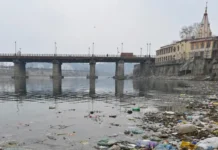
The Chenab River begins in the Himalayan ranges of Himachal Pradesh, where the Chandra and Bhaga rivers merge to form its powerful flow. From there, it winds its way through the districts of Doda, Kishtwar, and Ramban in Jammu and Kashmir, before entering Pakistan. Along its journey, it nourishes lands and lives, serving not merely as a geographical entity but as a vital presence in the region’s identity. For the people of these districts, collectively known as the Chenab Valley, the river is far more than a body of water. It is a symbol of continuity, a bearer of memory, and a quiet witness to their shared history. Those who inhabit its banks call themselves Chenabi.
Language remains central to the cultural landscape of Chenab Valley. It is through language that customs are preserved, values transmitted, and belonging reinforced. A wide range of languages can be heard across the region: Kashmiri, Bhaderwahi, Bhalesi, Sarazi, Poguli, Gojri, Kishtwari, Padri, Urdu, Hindi, and Dogri. Each language reflects a community, a lineage, and a set of inherited meanings passed down over generations.
Across religious boundaries, the Chenabi people have long lived in harmony. Hindus and Muslims in the valley have not only shared space but also joy and celebration. Festivals are moments of collective expression, reflecting both cultural specificity and shared spirit. Kanchoth, Devigol Festival, and the Bhaderwah Winter Festival bring together locals and tourists in spaces where tradition and togetherness converge. These events offer more than entertainment; they are embodiments of coexistence.
Chenab Valley offers not only cultural depth but also geographical beauty. Bhaderwah, often referred to as “Mini Kashmir,” is renowned for its expansive valleys, dense forests, and snow-covered peaks. With its association to the ancient Naga tradition, Bhaderwah is sometimes called the “Land of Snakes,” anchored in the veneration of the Vasuki Nag Temple. It attracts trekkers, photographers, and cultural seekers alike.
Elsewhere in Kishtwar, landscapes unfold in places like Gulabgarh, Sarthal, and Bimalnag. These areas hold not only visual appeal but a strong sense of place. Pilgrimage routes intersect with tourist trails in temples such as Machail Mata and Sarthal Devi in Kishtwar, as well as Vasuki Nag and Gupta Ganga in Doda, drawing a steady stream of visitors throughout the year.
Beyond its landscapes and festivals, the Chenab Valley is known for its craft traditions. Handwoven woollen sweaters, embroidered shawls, and intricate needlework form part of the region’s material culture. These items are not merely decorative. They tell stories of endurance, skill, and inherited artistry—each thread shaped by the fingers of generations past.
The Chenab River binds more than the lands through which it flows. It binds memory, language, celebration, and craft, anchoring a people to their history and one another.
In the Doda district of the Chenab Valley, Bhaderwah is recognised for its traditional folk dance known as Dheku. Another dance form, the Thali Dance, is observed in various parts of Doda and Kishtwar, particularly in the Ramban district. These performances are not merely acts of celebration. They are expressions of identity, shaped by rhythm, movement, and memory, sustained across generations.
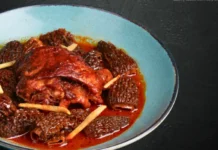
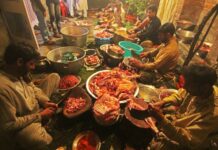
The cuisine of the Chenab Valley reflects a connection to local soil and seasonal rhythm. While daily meals often include dishes such as rajma-chawal, dum aloo, and makki ki roti with sarson ka saag, the food culture is defined by less common, deeply traditional preparations. Satrodhiyan, a dish specific to Kishtwar, is prepared during festivals and family gatherings. Ingredients like kasrodh (fiddlehead ferns) and kolth (horse gram), foraged or grown locally, are central to household meals. Recipes are often preserved through oral memory, with spices and methods handed down across generations.
The Chenab River serves as a critical source of hydroelectric energy. Projects such as the Baglihar Dam and the Dul Hasti Dam harness its flow for electricity production. Several others, including the Ratle Hydroelectric Plant and the Kiru Hydroelectric Project, are currently under construction. These installations have placed the river at the centre of energy generation for the wider region, linking natural resource to infrastructure.
Debates around reservation policies for the Chenab Valley have grown in recent years. Many believe that targeted quotas in education and employment could help correct longstanding disparities. Social and economic inequalities, coupled with poor representation in policy decisions, have prompted calls for structural intervention. Proposals aim to extend opportunities to marginalised groups, but without implementation, the promises remain unfulfilled. A sense of exclusion continues to prevail among those who feel overlooked by mainstream development frameworks.
The region continues to face basic structural challenges. Infrastructure remains insufficient, while public services such as healthcare, education, and transport are limited. Earthquakes and landslides frequently disrupt life, damaging homes and isolating communities. Rural roads are often in poor condition, contributing to accidents and delays. Electricity supply is unreliable, and internet access in areas such as Paddar (Machail), Bimalnag, and other remote villages remains erratic. These gaps hinder mobility, limit access to information, and restrict broader participation in economic and social life.
To be Chenabi is to belong to a region shaped by tradition, resilience, and deep-rooted cultural pride.
(The author is a BA student of Government Degree College Thathri, views are personal.)