by Dr Nisar Farhad
Riding is more than merely keeping a hand on the clutch, a foot on the brake, and eyes on the road; it is about shedding worries and leaving behind the burdens of life with every passing mile. It embodies the essence of life itself—to keep moving forward, for life never stands still.
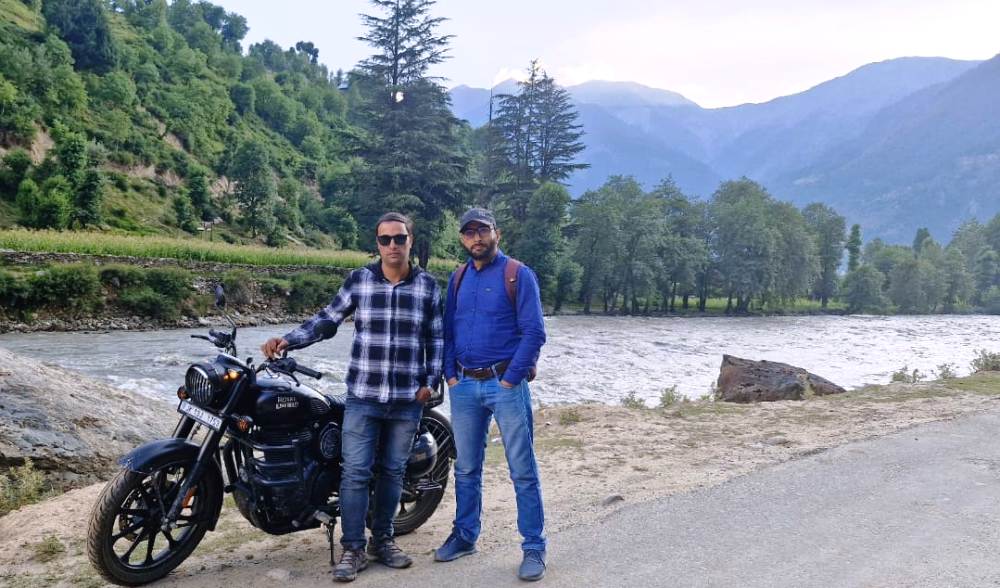
I, Dr Nisar Farhad, aged 38, along with my pillion rider, Firdous Ahmad Magray, a native of Pulwama district in Jammu and Kashmir and a lecturer in the School Education Department, am delighted to share the memorable experiences, challenges, and rich cultural heritage encountered during my ride from Kashmir to Kanyakumari.
Undertaken from December 23, 2024, to January 1, 2025, the journey was completed in just ten days. Covering a total distance of 3,737 kilometres, the ride commenced from Pulwama, the northernmost region of Kashmir, and culminated at Cape Comorin, Kanyakumari Beach in Tamil Nadu, the southernmost tip of the country. The journey involved an elevation gain of 17,710 metres, with an average of 350 to 400 kilometres covered per day.
The route followed National Highway 44, the longest highway in India, traversing diverse terrains and climatic conditions. Riding along this scenic yet challenging stretch is a Herculean task, and it is truly remarkable for any rider to pass through cities steeped in historical significance and adorned with monuments of immense cultural value. The allure of the long roads, the bustling localities, the vibrant people, the flowing rivers, the dense woods, and the towering mountains, coupled with the companionship of my Enfield bike, was not just exhilarating but overwhelming.
Although I had embarked on numerous adventures and travels to refresh my mind, explore new places and cultures, and better understand my inner self, the dream of undertaking the K2K ride had long consumed me.
This ambition became an all-encompassing desire, and after careful consideration, I decided to embark on the journey during the last week of December, coinciding with the winter vacations. Having secured the necessary permissions, I, along with my friend Mr Firdous Ahmad Magray, began our ride on the cold morning of December 23, 2024, at 11:00 AM in Kashmir. The biting chill of -4°C added a spine-tingling thrill to the start of our adventure.
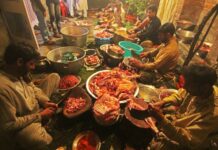
That day, we covered 233 kilometres, navigating through tunnels and valleys, with an elevation gain of 2,523 metres, finally reaching Residency Road in Jammu by 4:45 PM. We spent the night at Hotel Rafiq Lodge near Talab Khatikan, where I was captivated by the sight of Nun chai, halwa, and Kashmiri wazwan near the Jamia Masjid. A large crowd of locals relished these delicacies, adding to the vibrant atmosphere.
Jammu, the winter capital of Jammu and Kashmir, is the most populous district in the region, with a population of 1.6 million. The demographic makeup is diverse, with 84 per cent practising Hinduism, 7 per cent Islam, and the remainder predominantly Sikh. The district comprises 10 administrative units, 21 tehsils, and 20 rural development blocks. Dogri is the primary language spoken in five districts of the Jammu division, including Jammu, Udhampur, Kathua, Samba, and Reasi.
Other languages such as Gojri, Pahari, Kashmiri, Hindi, Punjabi, and Urdu are also widely spoken. Known for its picturesque landscapes, ancient temples, Hindu shrines, and historical landmarks like the Mubarak Mandi Palace and Amar Mahal Palace—now a museum—Jammu also boasts gardens, a zoo, and forts. The Suchetgarh border, located 28 kilometres from Jammu and just 9 kilometres from R.S. Pura, holds immense historical significance. Here, one can witness the retreat ceremony, a well-orchestrated parade performed by the Border Security Force, India’s largest border-guarding force.
On the second day, December 24, 2024, the weather in Jammu was more favourable. After breakfast, we set off at 7:30 AM and reached Ambala in Haryana by 5:30 PM, covering a scenic 388-kilometre stretch with an elevation gain of 1,070 metres. However, our progress was delayed by 2.5 hours due to the closure of NH44 caused by the Kisan Andolan in Haryana, forcing us to take an alternate route. We spent the night at Mohan Vilas Hotel in Ambala’s old town, where we dined on mixed dal and rice.
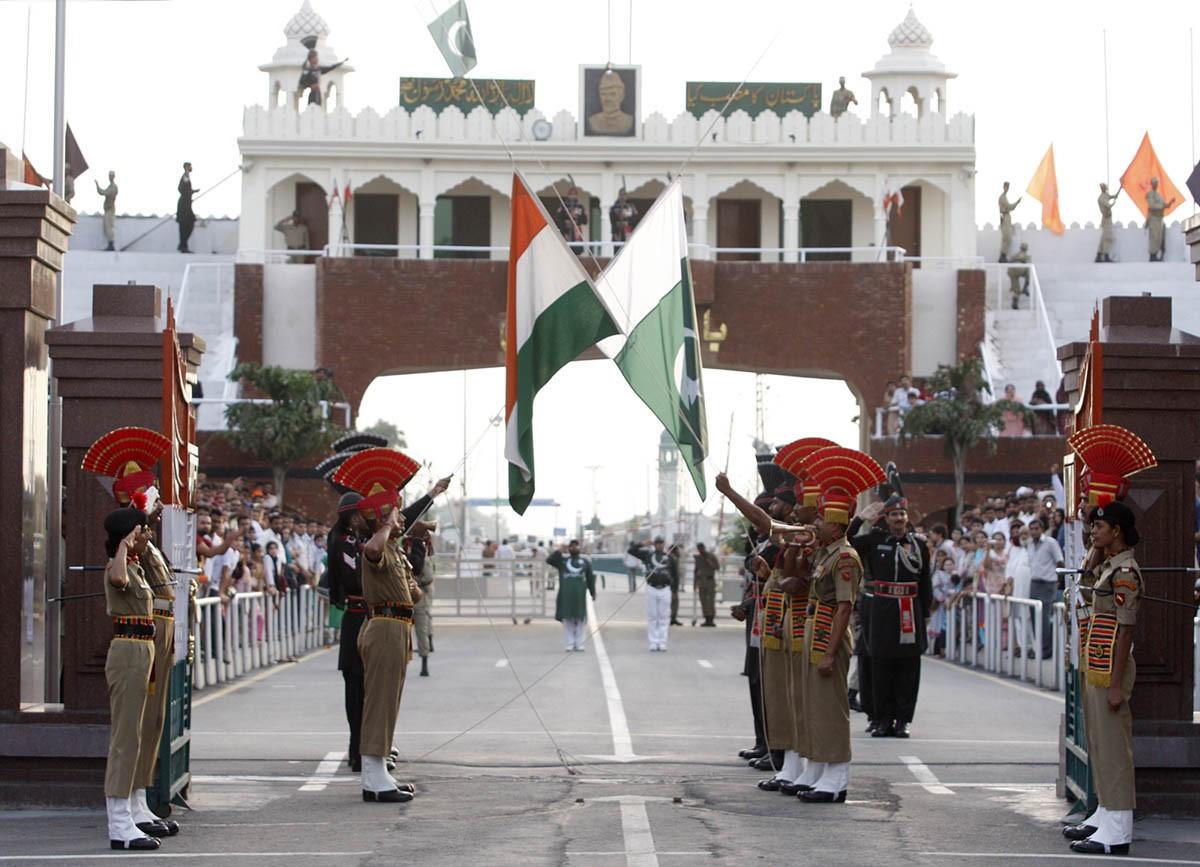
Punjab and Haryana are renowned for their rich cultures, folk dances, spicy cuisine, agricultural heritage, festivals, and Sikh gurudwaras. Punjab, meaning “the land of five waters,” is not only home to the Golden Temple in Amritsar but also preserves remnants of the ancient Indus Valley or Harappan civilisation. Following the partition of India and Pakistan, Attari village remained with India, while Wagah became part of Pakistan. The daily retreat ceremony at the Wagah-Attari border held two hours before sunset, is a spectacle of national pride.
Punjab is also a land steeped in the sacrifices of freedom fighters, commemorated by the Jallianwala Bagh Massacre Centenary Memorial in Amritsar, which bears the names of 492 martyrs. Today, Punjab is a major contributor to India’s wheat and rice production, supplying 17 per cent and 11 per cent of the nation’s yield, respectively. With 84 per cent of its land under cultivation, Punjab is India’s largest agricultural state, relying primarily on canal irrigation, much like Haryana. The primary languages spoken in these states are Punjabi and Haryanvi, with Hindi, Urdu, and English also in use. Chandigarh serves as the joint capital for both states.
On Day 3, December 25, 2024, I began the ride at 8:00 AM, eager to reach Agra in Uttar Pradesh, 428 kilometres from Ambala. By 10:30 AM, we arrived in Panipat, Haryana, where I took my bike to the Royal Enfield service centre, Monga Automobiles, for a two-hour servicing. The staff were exceptionally cooperative and treated us with great respect. Panipat, a historic city known as the City of Weavers and Textile City, was the site of three pivotal battles in Indian history—1526, 1556, and 1761. It boasts notable attractions such as Ibrahim Lodhi’s Tomb, Kabuli Bagh Mosque, and the Panipat Museum.
After the bike was serviced, we continued our journey, reaching Tajgang in Agra by 7:00 PM via the Yamuna Expressway. This six-lane (expandable to eight), 165.5-kilometre access-controlled expressway connects Greater Noida near Delhi to Kuberpur on NH-2 in Agra and is currently India’s third-longest expressway. We stayed at the 3-Star Taj Hotel and dined on naan and various meat dishes in Tajgang. My brother-in-law, Mr Reyaz Ahmad Dar, who had completed his graduation and master’s degree from Agra University, provided invaluable guidance about the city, knowing its every corner.
Agra, situated on the banks of the Yamuna River in Uttar Pradesh, lies approximately 230 kilometres southeast of Delhi and 330 kilometres west of Lucknow. It is the only Indian city with three UNESCO World Heritage Sites: the Taj Mahal, Agra Fort, and Fatehpur Sikri. Serving as the Mughal capital from 1556 to 1648 during the reigns of Akbar and Shah Jahan, Agra is also India’s largest footwear manufacturing hub. The city is famed for its petha, a soft, translucent sweet originating from Mughal kitchens, now enjoyed worldwide. The most widely spoken languages in Uttar Pradesh are Hindi, Urdu, and Awadhi, and the state is home to one of India’s largest Muslim populations, accounting for 19.5 per cent of its residents.
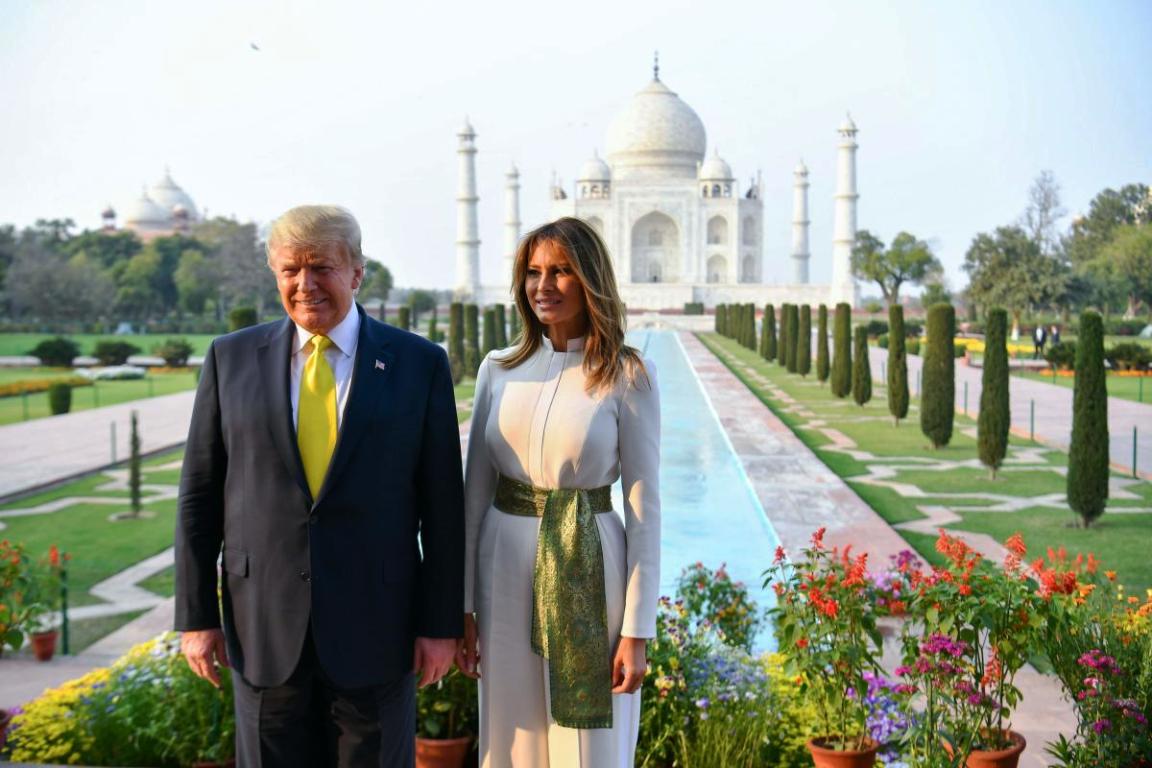
On Day 4, December 26, 2024, after spending a few hours at the Taj Mahal, I set off from Agra at 11:30 AM and reached Gwalior in Madhya Pradesh by 1:15 PM, covering 121 kilometres. In Gwalior, I visited Jiwaji University, where my wife had completed her master’s degree in chemistry. The place held cherished memories for her, and when I called her from there, she was overjoyed. She guided me through the city, celebrated as the “City of Temples” for its palaces, religious sites, bustling textile markets, and shopping malls. The most spoken languages in Madhya Pradesh are Hindi, Marathi, and Urdu. From Gwalior, we proceeded directly to Jhansi, arriving by 8:30 PM after covering 233 kilometres from Agra. We spent the night at the Kamla Hotel in Jhansi.
Jhansi, a city in Uttar Pradesh, is renowned for its historical significance, monuments, and role in India’s independence movement. Rani Lakshmibai, the “Fiery Queen,” ruled Jhansi from 1857 to 1858. Popular tourist destinations include Jhansi Fort, Rani Mahal, the local museum, St Jude’s Church, and Raja Gangadhar Rao Ki Chhatri. The city is also famous for its iconic dish, poha jalebi—a flattened rice dish cooked with onions, tomatoes, and spices—as well as desserts like malpua, rabri, mawa batia,and gujiyas, which are local favourites.
On Day 5, December 27, 2024, I set off at 9:30 AM with Seoni in Madhya Pradesh as my destination. By 7:30 PM, I had covered 475 kilometres from Jhansi and arrived in Seoni, where we spent the night at Hotel Yash, located in the heart of the city. Seoni, a city and municipality in Seoni district, was established in 1956 and is predominantly inhabited by tribal communities. The district offers a wealth of attractions, from wildlife sanctuaries like Pench National Park to temples, ponds, and forts. Today, Seoni serves as a vital road and rail junction and is the primary commercial hub of the east-central Satpura Range region. Key industries include cloth weaving, sawmilling, oil milling, and the production of shellac and lac bangles.
The surrounding area, largely forested, yields teak, bamboo, lac, and myrobalan fruit, while the chief crops grown are grains, cotton, and oilseeds. The city boasts a diverse population, with languages such as Hindi, Marathi, Urdu, Oriya, Gujarati, Punjabi, Telugu, Bengali, Tamil, and Malayalam spoken widely. Approximately 203 kilometres from Jhansi lies Sagar city, often referred to as the Switzerland of Madhya Pradesh. As the administrative headquarters of the Sagar district, the city enjoys well-developed infrastructure, a robust educational system, and notable tourist destinations, including lakes, forts, and waterfalls.
On Day 6, December 28, 2024, I began my ride at 10:00 AM and reached Nagpur, Maharashtra, by 12:30 PM, covering a distance of 131 kilometres from Seoni. Nagpur, the winter capital of Maharashtra, is a rapidly growing metropolis and the state’s third-largest city after Mumbai and Pune. Known as the “Orange City” for its prominence as a trade centre for oranges, Nagpur offers a blend of scenic landscapes and historical monuments. The most widely spoken languages here are Hindi and Marathi. After spending a few hours exploring Nagpur, we continued our journey, reaching Adilabad by 8:30 PM after covering 390 kilometres from Seoni. We stayed overnight at Mamta Lodge near Bhagya Nagar in Adilabad.
Adilabad, a district headquarters in the northernmost part of Telangana, is situated on a plateau between the Godavari and Penganga rivers. Renowned for its extensive cotton cultivation, the city is often called the “White Gold City.” It serves as an agricultural trade centre and is known for mining coal, talc, and limestone. Adilabad is home to attractions such as the Kuntala Waterfalls, the highest in the region, and the Pochera Waterfalls, the deepest. Temples and other sites of interest further enrich the area.
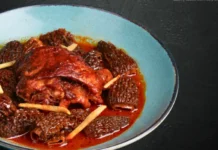
Telugu is the most spoken language (65 per cent native speakers), while Marathi, due to geographical proximity to Maharashtra, is also widely understood (10.5 per cent native speakers). Other languages include Hindi, Urdu, and Gondi. The local cuisine features dishes such asSajja Rotte, Jonna Rotte, Brinjal Vepudu, Potlakaya Pulusu, Gongura Chana Dal, Bachali Kura, andPachi. Non-vegetarian specialities include Kodi Pulusu, Golichina Mamsam, and Kodi Pulusu, with curry or gravy referred to as “Kora.” I indulged in five varieties of non-vegetarian dishes at a Muslim hotel near our lodge, which provided the energy I needed for the ride ahead.
On Day 7, December 29, 2024, I began my journey at 9:30 AM, heading directly to Hyderabad. By 2:45 PM, I had covered 332 kilometres from Adilabad and arrived in this vibrant metropolis, the heart of Telangana. Known for its rich history, cultural diversity, and architectural marvels, Hyderabad is often referred to as the “City of Pearls.” Once the capital of the Nizams, a dynasty that ruled for centuries, the city is adorned with historical landmarks such as the Charminar, Golconda Fort, the Buddha Statue in Hussain Sagar Lake, and the Chowmahalla Palace. Hyderabad boasts numerous achievements, including housing the world’s largest film studio, Ramoji Film City.
Spread across 1,666 acres, this city within a city holds the Guinness World Record for the largest studio complex. When it comes to biryani, Hyderabad is unparalleled. Abiryaniparadise, the city offers over 26 varieties, with Hyderabadi chicken dum biryani and Hyderabadi zafrani biryani being among the most celebrated. We relished the Hyderabadi chicken dum biryani for lunch, and it was truly exquisite. After spending a few hours at the Charminar, we departed for Mahabubnagar, another city in Telangana, arriving by 9:00 PM. We stayed overnight at Hotel Srinivasa Lodging.
Mahabubnagar, located 103 kilometres from Hyderabad, was formerly known as Rukmammapeta and Palamooru. It was renamed in 1890 in honour of Mir Mahbub Ali Khan Asaf Jah VI, a ruler of the Nizam dynasty. The area is steeped in history, culture, and heritage, with numerous religious and historic sites. It is also renowned for its diamond mines, including the Golconda mine, believed to be the origin of the Kohinoor diamond.
On Day 8, December 30, 2024, I set off at 8:30 AM with great curiosity to reach Bengaluru, Karnataka, India’s first electrified city, 478 kilometres from Mahabubnagar. By 7:00 PM, we had arrived and checked into Sahara Guest House in Shivaji Nagar, near Russell Market. Bengaluru, the capital of Karnataka, is a hub for entrepreneurship and technology, home to innovative companies and talented engineers. It was the first Indian city to receive electricity in 1906 and boasted Asia’s first electric streetlight.
In 2017, JLL’s City Momentum Index ranked Bengaluru as the world’s fastest-growing city, surpassing even Silicon Valley. While it has evolved from the “Garden City of India” into a corporate and investment hub, its roots remain firmly grounded in its historical identity. The city’s history, from the Chola Empire to colonial rule, blends seamlessly with its modern aspirations, creating a unique cultural tapestry.
Bengaluru is one of Karnataka’s most important tourist centres. Its central business district includes MG Road, Brigade Road, Commercial Street, and Vidhana Soudha. The city is dotted with lakes such as Agara Lake, Ulsoor Lake, and Hebbal Lake, and parks like Lal Bagh, Cubbon Park, and Bannerghatta National Park. Historical monuments such as Bangalore Fort, Tipu Sultan’s Summer Palace, and Bangalore Palace stand alongside war memorials and museums, including the Government Museum and HAL Aerospace Museum. The city also has numerous places of worship, reflecting its religious diversity. Karnataka is known for its high-density cultivation of bananas and oranges.
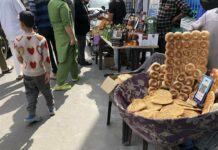
For dinner, we visited Shivajinagar, a bustling central neighbourhood built around the historic Russell Market. Nearly half of its residents are Muslim, and the area is famous for its vibrant street food culture. From haleem and mutton samosas to kebabs and phirni, the local delicacies attract visitors from across the city and beyond. Karnataka is home to around 150 languages, with Kannada being the most widely spoken. Tamil, Marathi, Telugu, Malayalam, Urdu, Konkani, Kodava, and Tuluare also prevalent, reflecting the state’s linguistic diversity.
On Day 9, December 31, 2024, I began my journey from Bengaluru at 12:10 PM, reaching Karur in Tamil Nadu by 8:00 PM after covering 315 kilometres. Along the way, we paused for rest in Salem, a city nestled on the banks of the Thirumanimutharu River, surrounded by mountains. Salem, the fifth-largest urban agglomeration in Tamil Nadu, lies approximately 182 kilometres from Bengaluru and is renowned for its cotton and silk handloom weaving. Upon arriving in Karur, we spent the night at Star Hotel, located in the heart of the city.
Karur, a municipal corporation and the administrative headquarters of Karur district, is situated on the banks of the Amaravathi, Kaveri, and Noyyal rivers, about 395 kilometres southwest of Chennai. Once the capital of the early Chera Kings during the Sangam age, Karur is now a prominent industrial centre, celebrated for its cottage and handloom textiles. The Pasupatheeswarar Temple, a landmark of the city, features striking sculptures, including the Pasupatheeswarar Lingam, a milk-oozing cow, and a Rangamatha, which add to its allure. The 2025 New Year celebrations in Karur were marked by vibrant gatherings at RK Mess, The Residency Karur, and other venues, with videos of the festivities going viral on social media.
On Day 10, January 1, 2025, I set off from Karur at 8:30 AM, reaching my final destination, Cape Comorin Kanyakumari Beach, by 4:30 PM. Covering 385 kilometres, the journey culminated at the southernmost tip of India, marking the successful completion of my K2K ride. Kanyakumari, also known as Cape Comorin, is a celebrated tourist destination and the southernmost town on the Indian mainland. The district derives its name from the Kanyakumari Temple, dedicated to Goddess Kanya Kumari, believed to be an incarnation of Goddess Parvathi. Evidence suggests that Kanyakumari has been inhabited for over 4,000 years, with the temple itself believed to be more than 3,000 years old.
Spice cultivation is a vital industry in Kanyakumari, with black pepper, nutmeg, cloves, and other spices grown extensively. The district is particularly famous for its cloves, which account for 65 per cent of India’s total production and hold a Geographical Indication (GI) tag. Kanyakumari is also celebrated for its unique sunrises, sunsets, and moonrises, as well as its stunning tourist attractions, including the Kumari Amman Temple, Bhagavathy Amman Temple, Vivekananda Rock Memorial, Statue of Thiruvalluvar, Padmanabhapuram Palace, Cape Comorin Beach, St Mary’s Church, Thirparappu Waterfalls, and the Wax Museum.
We spent considerable time at Cape Comorin Beach, renowned for its breathtaking sunrises and sunsets. It is the only place in India where both can be witnessed from the same spot, with full moon nights offering an especially enchanting experience. The beach is also the meeting point of three seas—the Indian Ocean, Arabian Sea, and Bay of Bengal—known as the Triveni Sangam, considered a sacred confluence. The view from the lighthouse, overlooking the ocean and surrounding areas, is particularly captivating.
Kanyakumari district has been a pioneer in wind power generation for the past four decades. The Muppandal wind farm, located in Aralvaimozhi, is the largest in India, generating 1,600 MW of electricity. We spent the night at the New Cape Hotel, near Kanyakumari Railway Station. The official language of Kanyakumari is Tamil, though Malayalam is also widely spoken due to its proximity to Kerala. English is understood by only a few residents, adding to the region’s distinct cultural charm.
On January 3, 2025, after offering Friday prayers at a local mosque near the railway station, I boarded the 16317 Himsagar Express at 2:30 PM for my return journey to Jammu. My bike was also transported on the same train. The Himsagar Express, a weekly service operated by Indian Railways, runs between Kanyakumari and Shri Mata Vaishno Devi Katra in Jammu and Kashmir.
It holds the distinction of being the 35th longest train service in the world and the third-longest in India in terms of distance and time. Over 73 hours, the train covers 3,790 kilometres at an average speed of 52km/h, traversing twelve Indian states—Tamil Nadu, Kerala, Andhra Pradesh, Telangana, Maharashtra, Madhya Pradesh, Rajasthan, Uttar Pradesh, Delhi, Haryana, Punjab, and Jammu—and halting at 73 stations.
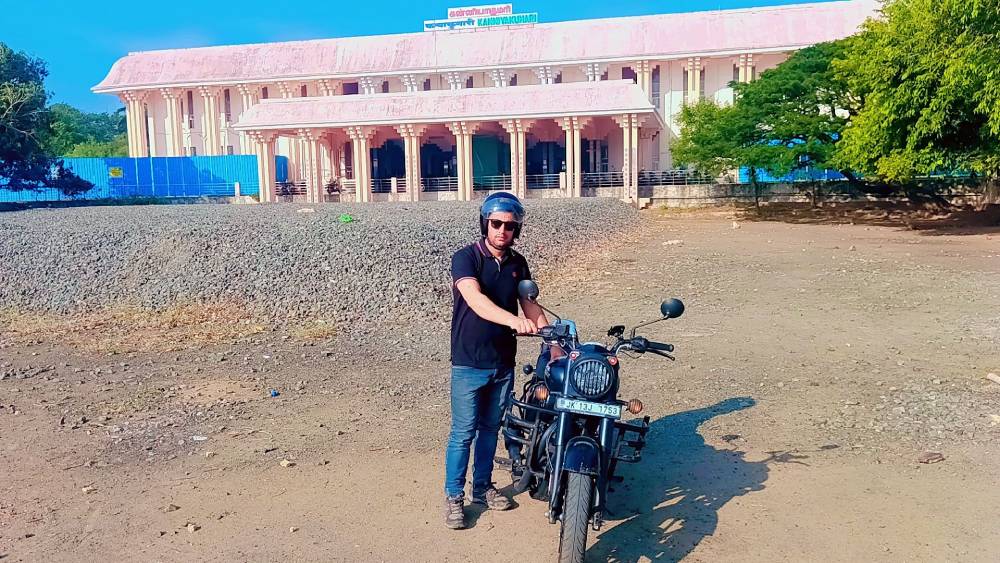
On January 6, 2025, I disembarked at 12:30 PM and received my bike in good condition. It was at this moment that I truly felt like a rider. The joy and sense of fulfilment were indescribable. I had achieved what once seemed impossible—the journey from Kanyakumari to Kashmir was now a reality.
Riding is more than merely keeping a hand on the clutch, a foot on the brake, and eyes on the road; it is about shedding worries and leaving behind the burdens of life with every passing mile. It embodies the essence of life itself—to keep moving forward, for life never stands still.
I owe immense gratitude to my wife, though understandably concerned for my safety during such endurance rides, who remained a pillar of support. Her magnanimity and encouragement were unwavering. Her words, “Why would I project my fears onto you and make it more difficult for you? Then you would be more worried about being safe for me than enjoying your adventurous ride,” filled me with confidence and determination to pursue my dream.
(The author is an educator currently serving as a Lecturer in Chemistry with the School Education Department in Jammu and Kashmir. Beyond the classroom, the author is an avid adventurer and travel enthusiast.)