by Syed Shahnawaz Bukhari
This is not a failure of students. It is a failure of the system.
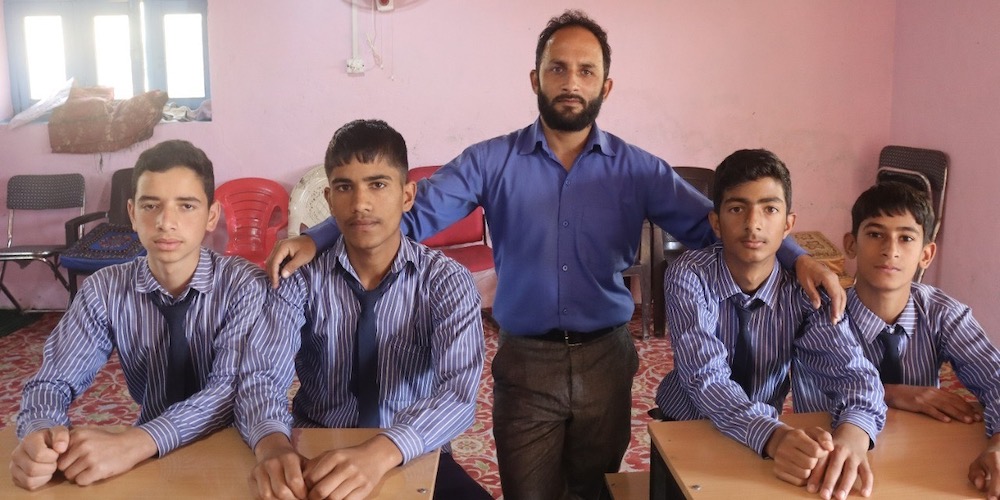
There was once a time when a teacher’s presence in the classroom symbolised far more than just a delivery of knowledge. It was the opening of a window to new ideas, new possibilities, and new futures. Teachers were admired not for their qualifications, but for the dignity and purpose they brought to their work. They inspired students to not only study but to dream.
However, things have changed. Many classrooms now feel uninspiring and transactional. The passion for learning has waned, and with it, the enthusiasm of both students and teachers. A difficult question now looms: What happens when teachers cease to inspire?
The effects are already evident. Aspiration has declined, not because of a lack of talent, but because students no longer feel guided or believed in. Take the recent KAS preliminary exam, for instance. Out of the 33,000 candidates, only around 8,000 were from Kashmir, despite the valley constituting nearly 60 per cent of J&K’s population. This discrepancy is not due to a shortage of ability, but rather an absence of inspiration.
Many teachers today are grappling with more than just professional skills; they are struggling with purpose. Overburdened, undertrained, and often stationed far from their families for long stretches, they frequently feel neglected by the system they serve. Opportunities for professional development are scarce, with promotions being mechanical and training seldom available. Mentorship is neither encouraged nor rewarded. When a disillusioned teacher stands before a classroom, something essential is lost, the transmission of hope from one generation to the next.
Instead of nurturing students’ dreams, some teachers have retreated into cynicism. Statements like “IAS officers are just glorified clerks,” once dismissed as casual remarks, now carry a more damaging weight. Such comments erode students’ belief in themselves and their potential.
Even ambition has become a target. A student aspiring to join the UPSC or pursue research in artificial intelligence is more likely to face ridicule than guidance. This dismissal crushes confidence before it can take root, and the absence of inspiration leaves lasting scars on their potential.
This lack of guidance is reflected in the employability struggles faced by young people in Kashmir. Many lack the communication skills, confidence, and readiness needed to thrive in today’s competitive world. Schools and colleges, instead of fostering holistic development, fail to equip students with the necessary tools to succeed. Personality development is almost entirely neglected, and career counselling remains a rarity.

There are academic consequences as well. Fewer students are choosing subjects like Mathematics and Science, disciplines that sharpen thinking and form the foundation of most competitive examinations. Mathematics, central to aptitude and logical reasoning, is being sidelined. Fewer students opt for it, and in some cases, are actively discouraged. Yet mathematical reasoning remains a core component of nearly every entrance examination, from banking posts to civil services. At the same time, early specialisation in fashionable courses is being promoted without students having the space to understand their strengths. Teachers and school counsellors, instead of challenging this trend, often comply without resistance.
Leadership in schools and colleges cannot be based on seniority alone. It must also be shaped by vision. There is little regard for educational leadership or student engagement, leading institutions to drift without direction. A competent principal is not merely an administrator but a cultivator of academic culture.
They must shape not only discipline and timetables, but ambition, mentorship, and purpose. Without strong and dynamic leadership, even the most dedicated teachers become isolated, and innovation goes unnoticed. In Kashmir, where aspiration already hangs by a thread, the failure of institutional leadership widens the gulf between students and their potential.
This is not a failure of students. It is a failure of the system. Classrooms have ceased to be spaces of ambition and imagination. Career paths are unclear. Mentorship is absent. In far too many cases, students complete twelve years of schooling without once hearing a teacher say they are capable of success.
This problem is not unique to Kashmir. But in the valley, it has a deeper root. Conflict, trauma, and disconnection from wider opportunities have left students especially vulnerable. In other parts of India, students may still access private coaching, digital platforms, or professional networks. In rural and peripheral areas of Kashmir, most students depend solely on the teacher standing in front of them. When that teacher stops inspiring, the future dims entirely.
The solution does not lie beyond reach. Teachers need more than refresher courses. They require structured training in career counselling, motivation, and preparation for civil services. Every higher secondary school and college must house fully functional mentorship and career cells, not symbolic units, but real and active ones. Career talks, interactions with professionals, and exposure to successful journeys must become routine features of the academic environment.
Value must return to subjects that nurture thinking, Mathematics, the Basic Sciences, including Zoology, Botany, Chemistry, Physics, and Economics. The rush toward early specialisation must be reconsidered. Teaching must no longer be treated merely as a secure job. It must be seen as a role of leadership. When a teacher inspires, they do more than impart information. They help shape futures. When they fall silent, the damage is generational.
What is needed today is not only infrastructure, policies, or funds. What is needed is a quiet revolution in classrooms. A humanisation of education. A return to belief, purpose, and guidance. Somewhere, in a classroom at this moment, sits a future doctor, scientist, civil servant, entrepreneur, or reformer. They do not need to be told what to study. They need only to hear someone say they can.
(A senior JKAS officer, the author is Joint Director, Directorate of Information and Public Relations (DIPR), Kashmir. Ideas are personal.)