by Mohammad Zubair Ud Din
Those who refused to compromise on quality and continued sourcing from reputable local suppliers now face the collateral damage of being grouped with the offenders in the eyes of the public.
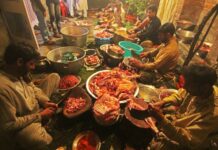
The recent discovery of hundreds of kilograms of rotten, unlabelled meat across various locations in Kashmir has sent shockwaves through the region. It has exposed what can only be described as a calculated betrayal of public trust. While the Food Safety Department’s official statement is expected soon and may uncover the full extent of this scandal, one fact has already emerged with disturbing clarity: nearly every prominent brand in the hotel industry serves meat sourced from outside Kashmir, often of questionable quality and origin.
Until a few days ago, I believed that local butchers were the primary suppliers for Kashmir’s hospitality sector. The reality is far more troubling. The unlabelled, suspect imports entering the market are not simply a food safety crisis; they represent a breach of the social contract between businesses and consumers.
The most revealing element lies in the economics. How could meat products be sold at only Rs 160 per kilogram? That price alone should have raised concerns along the supply chain. In contrast, legitimate meat prices in Kashmir’s local markets range between Rs 350 and Rs 400 for beef, and Rs 700 to Rs 750 for mutton. The stark difference exposes the uncomfortable compromises made to preserve profit margins.
Seen through this economic lens, the hotel industry’s move away from local butchers becomes clear, if deeply troubling. Local suppliers, bound by standards of freshness and quality, could not compete with the rock-bottom prices offered by questionable external sources.
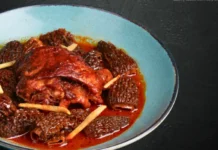
The scandal reaches far beyond immediate health concerns. Meat is central to Kashmir’s culinary culture, with consumption levels among the highest in the region. Serving elaborate meat-based dishes to guests had become a widespread custom, particularly among the elite, but increasingly among ordinary families as well. This cultural norm is now shadowed by a profound breach of trust.
In a Muslim-majority region, care is taken to ensure that all meat consumed, whether chicken, mutton, or beef, is strictly Halal. The unclear origins of this imported meat cast doubt not only on its safety but also on its religious compliance.
The damage also extends to tourism, where the reputation for authentic, high-quality cuisine has long been one of Kashmir’s attractions. The scandal risks tarnishing the entire hospitality sector, unfairly penalising establishments that have consistently upheld ethical standards. Those who refused to compromise on quality and continued sourcing from reputable local suppliers now face the collateral damage of being grouped with the offenders in the eyes of the public.
Perhaps the most pressing question emerging from this scandal concerns its potential long-term impact on public health. Could there be a connection between the rising incidence of heart attacks and cancer cases in Kashmir and the consumption of spoiled or rotten meat, disguised with heavy spices to conceal its deteriorated state? The possibility demands urgent investigation, yet it remains largely absent from public debate.
It is widely known that once meat begins to decay, it becomes a breeding ground for harmful bacteria and produces toxins that neither spices nor salt can neutralise. Prolonged consumption of such contaminated protein could contribute to the development of serious health conditions.
This food safety crisis has unfolded in a society already confronting multiple challenges. Drug addiction, according to current statistics, has reached alarming levels. Unemployment continues to drive many young people into frustration and despair, fostering a generation uncertain about its future. The gradual erosion of Kashmir’s reading and writing culture is yet another troubling sign of decline.
The Food Safety Department faces a formidable task, yet one that offers perhaps its greatest opportunity to serve the public. The inquiry must extend beyond identifying immediate offenders to addressing the systemic failures that allowed such contamination to persist unchecked.
The hotel industry, too, faces the urgent challenge of restoring public trust. Achieving this will require more than compliance with updated regulations. It will demand a fundamental change in business practices, with long-term credibility placed above short-term profit.
(The writer is an Assistant Professor (History) in the Higher Education Department. Views are personal.)