by Iqbal Ahmad
Jammu and Kashmir’s terracotta art, dating from the 1st century BC to the 8th century AD, remains largely unexplored, with pavements, motifs, and artefacts awaiting systematic study and preservation.

Although the evidence of terracotta art and its culture has been encountered at scores of places across Jammu and Kashmir, decades have passed, yet the actual purpose of laying these settlements has still not been explained. At several of these places, well-designed pavements have been recovered with remains of little diaper walls. But what could have been the purpose of these magnificent pavements is beyond one’s understanding.
Attempts have been made to attribute these sites to Buddhist establishments, but at most of these settlement places, there is no such concrete evidence available about Buddhist traditions. In fact, it has remained a hidden culture, and no efforts are made to lift the lid from this centuries-old, unknown culture. This is usually called the terracotta culture, which is believed to have flourished during the first few centuries of the Christian era.
It is in place to mention here that the remains of ancient, wonderful terracotta settlement sites and artefacts were found at several places across Jammu and Kashmir. The major terracotta settlement sites which have been almost excavated include the archaeological site of Harwan in Srinagar, the Ushkara site in Baramulla, the Semithian archaeological site in Anantnag, and the Ambaraan archaeological site in Akhnoor. In the recent past, evidence of this culture has come to light at a few other places in this land, for example, at Hionar and Darakote on the left bank of Nallah Lidder in Lidder Valley, and at Kotebal in the Kothar sub-valley of Anantnag.
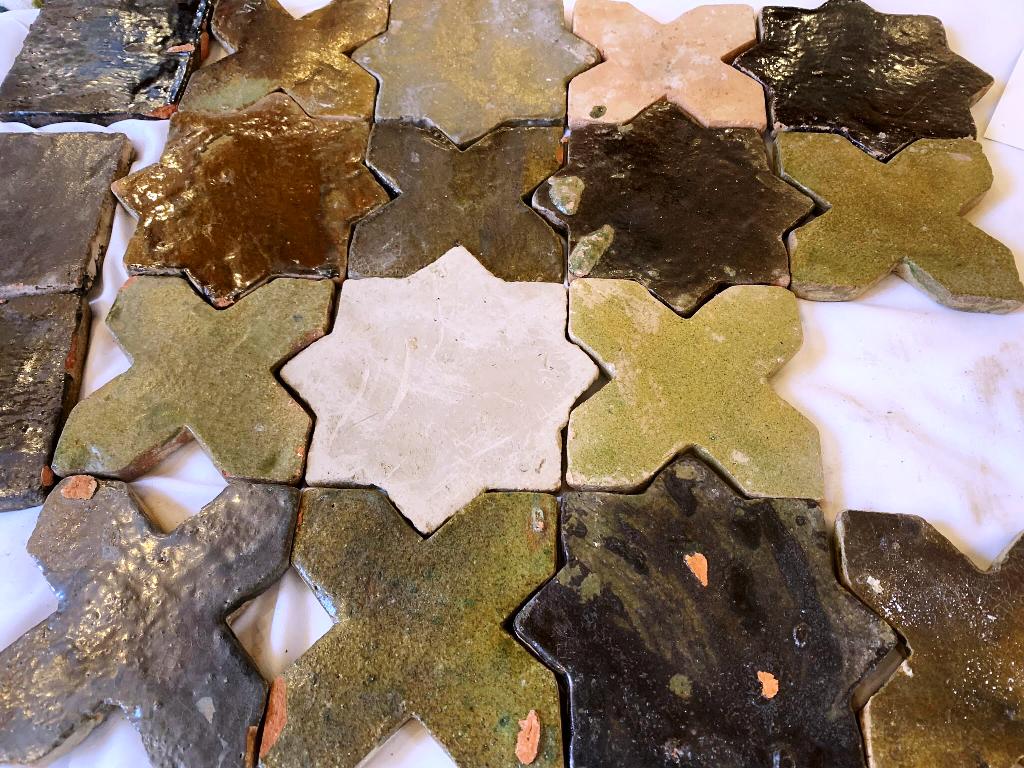
These are significant terracotta pavement sites, which not only speak about the earliest terracotta settlements but also about their advanced art and culture. The pavements are formed of terracotta tiles, which are baked once and laid out in concentric circles with a motif of a full-blown lotus in the centre. The tiles are of various shapes, sizes, and patterns, laid in a circular shape, which forms a circular-shaped pavement. The tiles on their obverses are stamped with a variety of motifs of human beings, animals, birds, and other flora and fauna designs with Kharoshti numerals and letters.
These artefacts reveal traces of an advanced culture which, according to experts, flourished here during the early centuries of the Christian era. This culture, in archaeological terms, has been named the early terracotta art and culture of Jammu and Kashmir, which, according to archaeologists, evolved here from the time of the Indo-Scythians in the 1st century BC and extended up to the 8th century AD, during the period of the Karkotas.
In my recently published book titled Terracotta Art and Culture of Jammu and Kashmir, I have documented this culture, including terracotta sites, pavements, tiles, and other artefacts, and have deciphered and described them.
The terracotta heads and motifs devised on the tiles are in Hellenistic style and speak of some advanced civilisation. Attempts have been made to identify the people and tribes who established this wonderful tradition here. Besides, the logic behind setting such highly advanced terracotta pavements at abandoned places is being ascertained, but so far, no definite hypotheses have been agreed upon.
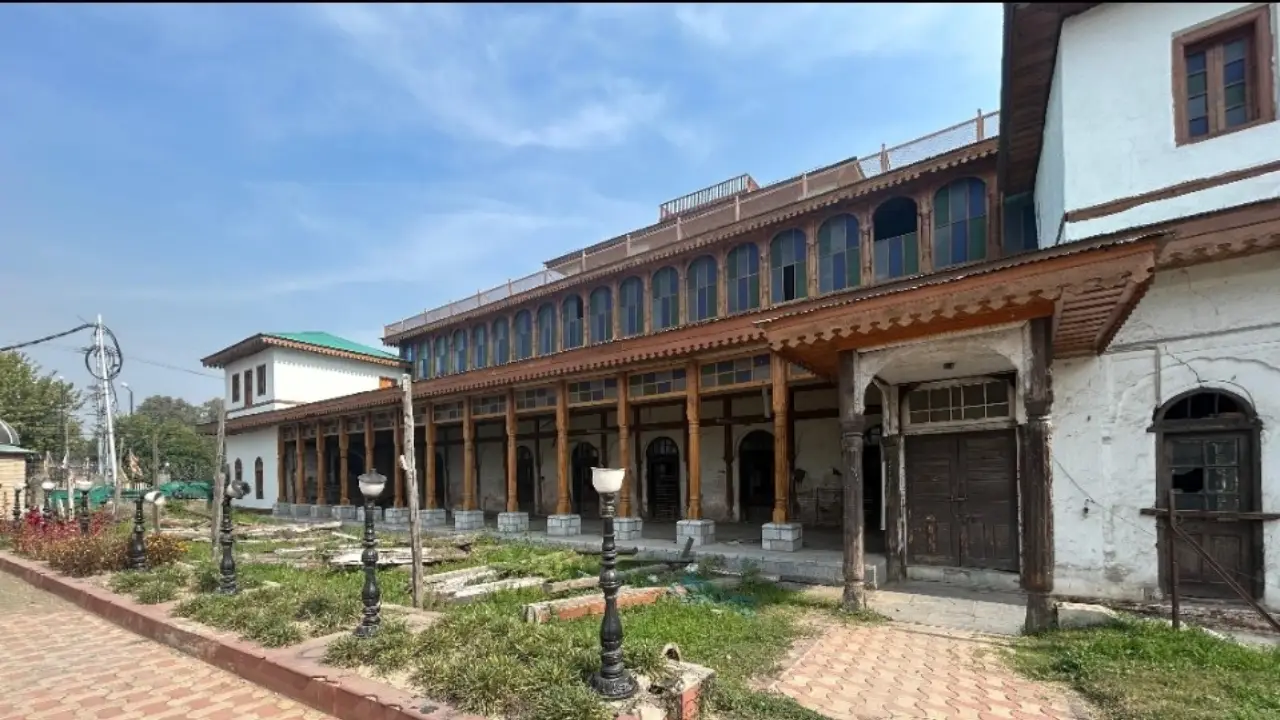
On the other hand, one can see and observe the glory of this terracotta art in various museums in the country. In the archaeological gallery of the SPS Museum, Srinagar, there is a designated section for Kashmir terracotta, showcasing a representative series of this wonderful heritage. But even here, no replica of any tile pavement has yet been designed.
In fact, it appears that this art is undoubtedly highly professional, focusing on themes apart from religion. The art involved not only the preparation of stamped moulded bricks but miniature sculptures as well.
I have made several observations about this culture and have also raised very interesting queries for working archaeologists. No doubt, part of the terracotta heritage has been recovered and preserved, but several questions related to this heritage have not been satisfactorily answered by archaeologists. I do not know if any material analysis of these tiles has ever been conducted. Since I verified most of the excavation and trial dig reports of these sites, I could not find any material analysis of the exhumed materials recorded in any such report.
The major questions requiring serious attention of scholars and researchers concern the purpose of laying such marvellous terracotta floors and pavements at abandoned sites, the identity of the people or tribes who created them, and the ancient manufacturing and baking techniques and technologies used in making these tiles and sculptures.
No doubt, substantial evidence of terracotta culture has been acquired through excavations and trial digs, but these questions remain unresolved. These issues will be addressed only when our institutions produce and encourage efficient and genuine researchers and archaeologists to undertake detailed, scientifically based studies of these sites and materials. The history and archaeology departments of Jammu and Kashmir universities should involve their research scholars to study terracotta sites and their exhumed artefacts.

It is in place to mention that decades have passed since the major terracotta settlement sites were excavated, and while some of these sites were explored through trial digs, systematic excavations have yet to be undertaken at a number of these sites. Over decades of neglect, a few terracotta find spots have disappeared. These sites need to be re-identified, excavated, and mapped, and the archaeological materials recovered through trial digs need to be documented and properly studied. The exposed trenches should be refilled with earth and left open for tourists, and at major terracotta find spots such as Harwan and Ambaraan, terracotta museums should be established to showcase the exquisite tiles and artefacts. This will enable visiting tourists to glimpse this remarkable heritage.
(The author is an archeologist. Ideas are personal.)