by Junaid Rashid Lone
A quiet, unsettling portrait of how television news gradually shifts from information to emotional conditioning, normalising control, fear, and compliance without ever announcing the change.
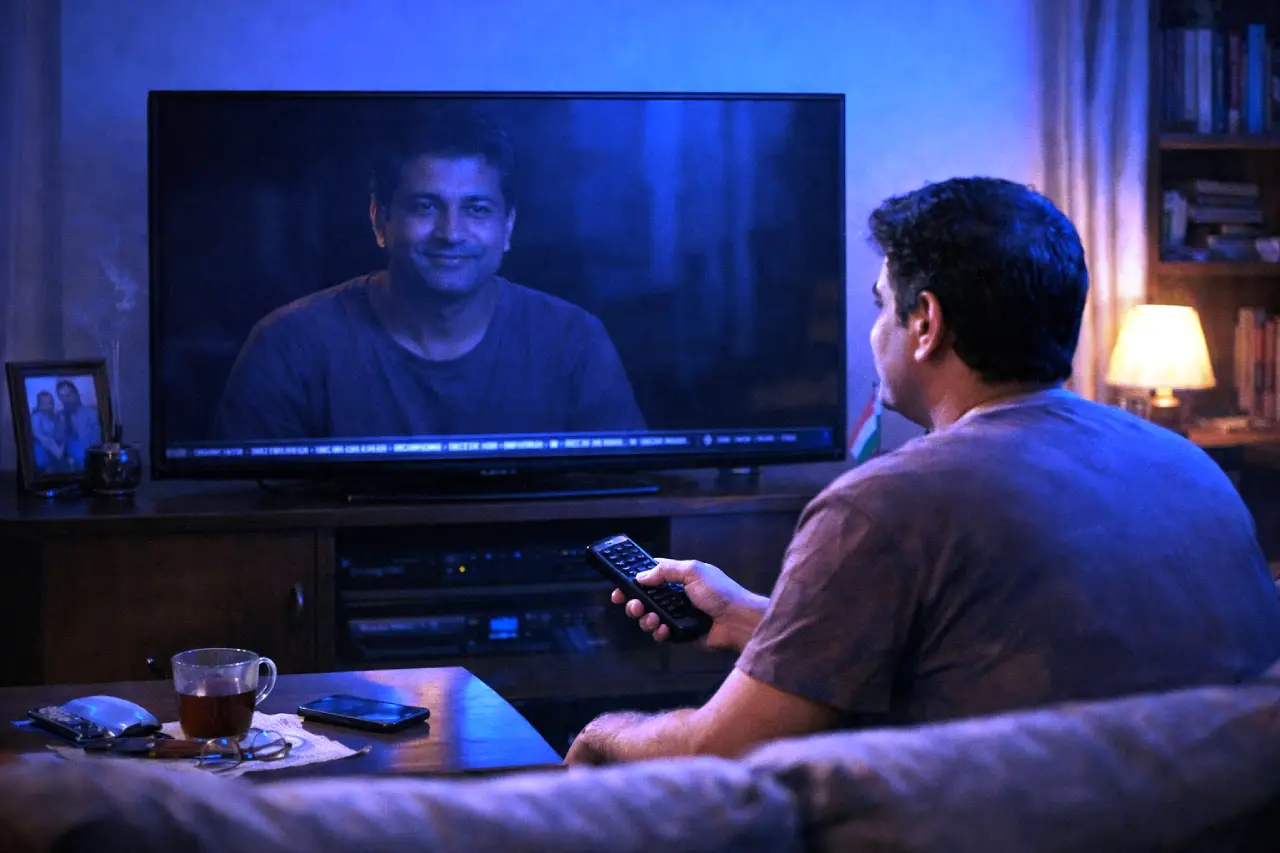
Every evening, at roughly the same hour, millions of homes across India glow with the same blue light. It is the hour when the nation gathers, quietly, habitually, around television screens to understand what the day has meant. Aarif is one such viewer.
He sits in his living room, remote in hand, scrolling without intention. One channel declares the winner of a dance reality show with the urgency once reserved for election results. Another follows paparazzi cameras as they trail an actress through an airport terminal. Elsewhere, a studio chef assembles a street-food recipe in under three minutes while a panel debates whether a celebrity divorce has “changed the culture.”
There is motion, chatter, constant excitement, but little gravity. Aarif smiles faintly. This, he thinks, is how normal looks.
He remembers when the news at eight meant markets, unemployment, and social crises, ending perhaps with a long shot of Parliament at dusk. His father would lower the volume during dinner, complaining that anchors talked too much and said too little. Aarif had not disagreed then. He does not think about it now.
Without warning, the tone shifts.
The same channels carry images of unrest. Sirens cut through grainy footage. Fires burn in looping frames. The banners turn red. Language hardens. Viewers are told that law and order are under threat, that stability itself is fragile. Causes are left vague, but emotions are carefully directed. Fear enters first, followed closely by anger.
By nightfall, an official statement fills the screen. A calm, firm voice assures the nation that decisive steps are necessary in the interest of public safety. Aarif nods. In moments of uncertainty, firmness feels responsible. Few notice that the crisis appeared suddenly, fully formed, and already explained.
What follows does not arrive dramatically. Change rarely does.
The measures are described as temporary. The restrictions are limited. Each adjustment is small enough to seem sensible. Offices remain open. Deliveries arrive on time. Entertainment streams uninterrupted. Life continues, only now, a thin line of scrolling text runs along the bottom of the screen, listing new rules in tidy sentences.
A week later, a camera appears outside Aarif’s neighbourhood grocery store. It is mounted neatly above the entrance, its lens dark and unblinking. He notices it once, instinctively looks up, then corrects himself and walks in without meeting its gaze. Inside, prices are unchanged. The shopkeeper chats as usual. Nothing feels different enough to question.
Another update suggests alternate traffic routes during “sensitive hours.” Aarif begins taking a longer way home, avoiding a particular crossing. He tells himself it saves time. After a while, he forgets the original route entirely.
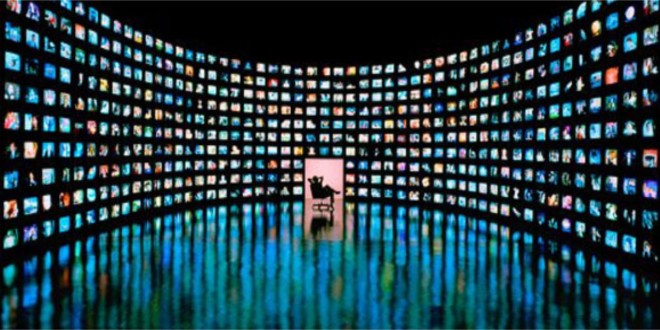
Questions surface, briefly. When will things return to normal? The answer is always later. Not now. At the appropriate time. Aarif mentions his unease to a friend over tea. The friend shrugs. Large systems move slowly, he says. Aarif agrees. The tea goes cold.
The language on television shifts almost imperceptibly. Policies are no longer debated; they are simplified. Anchors speak gently, with practised concern.
“This is for your safety.” “Responsible citizens understand.” Complexity begins to sound unnecessary. Curiosity, faintly disruptive.
Facts give way to feelings. Arguments are no longer settled with evidence but with reaction. Aarif’s thumb hovers over the angry emoji more often now. A headline flashes across his screen, and his pulse quickens before he has finished the second line. He shares articles he has not opened, reacts to clips without context, and feels a brief satisfaction in the speed of his response.
Later, he struggles to recall what, exactly, he had been angry about.
Fear is introduced carefully, one episode at a time. New threats are named.
New enemies outlined. Aarif locks his door twice at night. He checks updates before sleeping. Vigilance, he tells himself, is maturity.
In this atmosphere, standing out feels risky. Excellence attracts attention. Questioning sounds indulgent. Silence, on the other hand, passes unnoticed. Aarif stops arguing. He scrolls, watches, moves on.
Those who speak up are framed differently now. Their questions are described as irresponsible. Their timing was unfortunate. Aarif types a comment once, something mild, almost apologetic, but deletes it before posting. No rule has been broken. Still, the discomfort lingers.
By the time he notices the final shift, it feels ordinary.

The news no longer reports events alone; it prepares reactions. It explains not just what has happened, but how one ought to feel about it. The screen anticipates outrage, relief, and gratitude, often before Aarif is aware of feeling anything at all.
One evening, much like the first, Aarif sits with the remote in his hand. The channels are unchanged. The faces are familiar. The production is smoother now, more confident.
During a pause between segments, the screen briefly darkens. Aarif catches his reflection and smiles faintly.
Everything appears to be in order.
The television continues to play.
(The author is a consultant in CSR, strategic liaison, and digital growth with over 12 years of experience across government, PSUs, and corporates. Ideas are personal.)