by Dr Suheel Rasool Mir
The distinct identity of the Shina tribe risks fading without sustained documentation and conservation.
Gurez, locally known as Gorai, is the land of the Dards who speak the Shina language. It is the only region in Jammu and Kashmir where Dard-Shina people live together. Beyond its breathtaking beauty, Gurez is known for its Dardic cultural landscape, a living testament to endurance and resilience. The Dards are among the most distinct tribal communities in India. Spatially, Dardistan begins from Tragbal in Gurez, stretching beyond Pamir Badakhshan, with its boundaries extending towards Drass and Kargil.
The Cultural Heart of Gurez
Situated along the Kishanganga River beneath the shadow of the majestic Habba Khatoon Mountain, the Shina Cultural Centre stands as a confluence of heritage and landscape. Known locally as Shinon Meeras, it offers more than a visual experience. It is an encounter with the living memory of the Shina people.
The centre is not merely a structure but a repository of cultural legacy. It brings together art forms, rituals, and customs that narrate the Shina community’s story. It safeguards their intangible heritage and offers a platform for preserving and celebrating their identity. Traditions here are not frozen relics; they are dynamic practices evolving with time.
The Shina Cultural Centre is both a museum and research space, a place where history meets contemporary life. It reconnects the present with ancestral memory, enabling people to rediscover their roots. The complex comprises interactive exhibits, artefacts, textiles, and digital installations across multiple sections dedicated to Dardistan, the Kishanganga River, Gurezi life, Operation Eraze 1948, governance, language, and the region’s relationship with the Indian Army.
It also houses a research unit dedicated to studying the sociology and anthropology of Gurez through empirical methods. This makes it the first museum-cum-research centre of its kind, aimed at sustaining the Shina heritage through scientific documentation and cultural revitalisation.
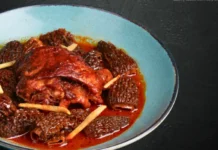
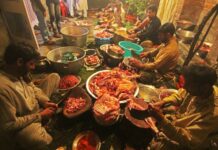
Within the centre, a traditional kitchen space offers a sensory connection to the region’s culinary identity. The experience extends beyond the walls into the landscape itself, blending culture and geography in one seamless narrative. As a researcher engaged in documenting the centre, I found that the Dards of Gurez have maintained remarkable continuity with their roots. They embody a deep sense of belonging, living communally and cherishing values passed down through generations while preserving their civilisational ethos.
Reviving a Forgotten Past
On 28 August 2023, the Lieutenant Governor of Jammu and Kashmir, Manoj Sinha, inaugurated the Shina Cultural Centre in Wanpora, Gurez. A joint initiative of the Indian Army, civil administration, and the local community, the centre holds special significance for a borderland historically linked with Gilgit and Central Asia.
Its primary mission is to protect and promote the cultural heritage of the Shina tribe. Every exhibit encourages visitors to explore the tribe’s identity through both textual and cultural perspectives. The structure’s design and curated records underline the aim of reviving the forgotten legacy of the Dards.
The centre includes a library with an extensive collection on Dardistan, providing insight into the region’s people and history. Recently, I authored the Cultural Encyclopaedia of the Dard Tribe: Journey Through Gurez and Ladakh in collaboration with the centre. It is the first comprehensive work on the Dards, exploring their traditions, folklore, and adaptive resilience. The study spans social, cultural, economic, and literary dimensions, documenting the transformations shaping the community today.
A Fragile Heritage
Gurez is undergoing rapid transformation due to improved connectivity, mobile networks, and infrastructure development. These changes, while beneficial, have also led to the erosion of cultural memory. The distinct identity of the Shina tribe risks fading without sustained documentation and conservation. Initiatives like the Shina Cultural Centre are essential in preserving this rare socio-cultural fabric.

Having worked in the region for over a decade, studying marginality and ethnicity, I have observed that sustainable preservation depends on collaboration between local communities, government, and cultural institutions. The focus must remain on community-led conservation, using indigenous knowledge and traditional methods to protect Gurez’s heritage.
(The author is a sociologist and cultural conservationist working on the borderlands of Kashmir and Ladakh, specialising in the sociology of ethnicity and marginal communities. He is the author of the Cultural Encyclopaedia of the Dard Tribe. Ideas are personal.)