by Muhammad Nadeem
Pir Mohammad Iqbal, formerly Assistant Curator at the SPS Museum in Srinagar, is more popularly known by his pen name, Iqbal Ahmad. He is regarded as the first local numismatist and senior archaeologist from Jammu and Kashmir, who has voluntarily dedicated himself to the study of the region’s ancient coins, epigraphs and archaeological artefacts. Originally trained in the arts, with no academic background in history, he went on to become the first Kashmiri scholar to engage in the scientific research of archaeology, numismatics and epigraphic sources. Through his work, he has sought to answer significant questions that shape the ancient historiography of Kashmir.
Inspired by the archaeological and numismatic studies of European missionaries, he first trained in numismatics at the Indian Numismatic Historical and Cultural Research Foundation in Nasik, Maharashtra, followed by further learning at the Institute of Archaeology in New Delhi.
Over the years, Iqbal has produced extensive work in archaeology, numismatics and epigraphy, authoring more than two dozen books and hundreds of research papers. Remarkably, he never joined a university and holds no formal degree in history. His reputation as a historian rests entirely on his passion, discipline and regular study of archaeological, epigraphic and numismatic literature. With a scientific approach, he has sought to uncover the ancient history of Jammu and Kashmir and distinguish myth from historical fact.
In this interview with Kashmir Life, Iqbal Ahmad reflects on his intellectual journey and makes significant observations about the region’s archaeological, numismatic, and epigraphic heritage. He describes these disciplines as secluded fields that have never been incorporated into the mainstream history of Jammu and Kashmir.
Kashmir Life: Have you been a student of history?
Iqbal Ahmad: No. I have never studied history formally and had no academic training in the subject. Economics was my main discipline. However, when I secured a position in the Department of Archaeology, I had to change my field of interest.
KL: How did you learn history?
Iqbal: In the beginning, it was very difficult for a non-history student like me to learn about Kashmir’s history and archaeology. Gradually, by studying archaeological and numismatic reports produced by European scholars, I managed to gain some understanding of the subject.
KL: Where did you draw inspiration from?
Iqbal: I studied the writings on history, archaeology, numismatics and travel produced by European missionaries. These included the works of Alexander Cunningham, W H Nicholls, Trebeck, Aurel Stein, Frederick Drew, W R Lawrence, C J Rodgers, R B Whitehead, James Prinsep, E Thomas, Lassen, Wilson and Brown. Their writings inspired me.
KL: Did you also find inspiration from any local historian?
Iqbal: Yes. I was equally inspired by the works of Professor Mohibul Hassan, P N K Bamzai, S L Shali, Professor Fida Mohammad Hussainian and Mohammad Yousuf Taing. I learned much from their writings.
KL: What is numismatics, and what is its scope?
Iqbal: Numismatics is the study of ancient coins, and it is one of the major sources of history. The historic value of these coins is immense. An unidentified coin is just a piece of metal, but once identified, it becomes a page of our history. Although a coin carries little information, what it does reveal is precise and reliable, provided it is correctly identified and deciphered.
KL: Where did you learn numismatics?
Iqbal: I undertook short training courses in archaeology, numismatics and epigraphy at institutions of the Archaeological Survey of India. My real grounding came under the guidance of world-class numismatists such as Dr David Macdowall, Dr Michael Mitchiner, Dr P L Gupta, Dr K K Maheshwari, Dr Amiteshwar Jha and others at the numismatic institution in Nasik, which is run by the K K Maheshwari Foundation to train scholars in numismatic studies.
KL: What are your concerns about this field of research?
Iqbal: There is no arrangement in any institution or university for the teaching and learning of numismatics and palaeography, both of which are vital sources of history. The ancient history of Jammu and Kashmir that is taught in colleges and universities relies largely on traditional sources, such as folklore or on already written records. There has been little institutional effort to explore other sources.
For example, archaeology, palaeography and numismatics, which are material sources, have not been taken seriously in reconstructing the ancient and medieval history of Jammu and Kashmir. If we speak only of coins, these have perhaps been the least exploited source. Numismatics has remained a secluded discipline, its insights rarely incorporated into mainstream historical work.
KL: Are numismatic treasure troves still found here?
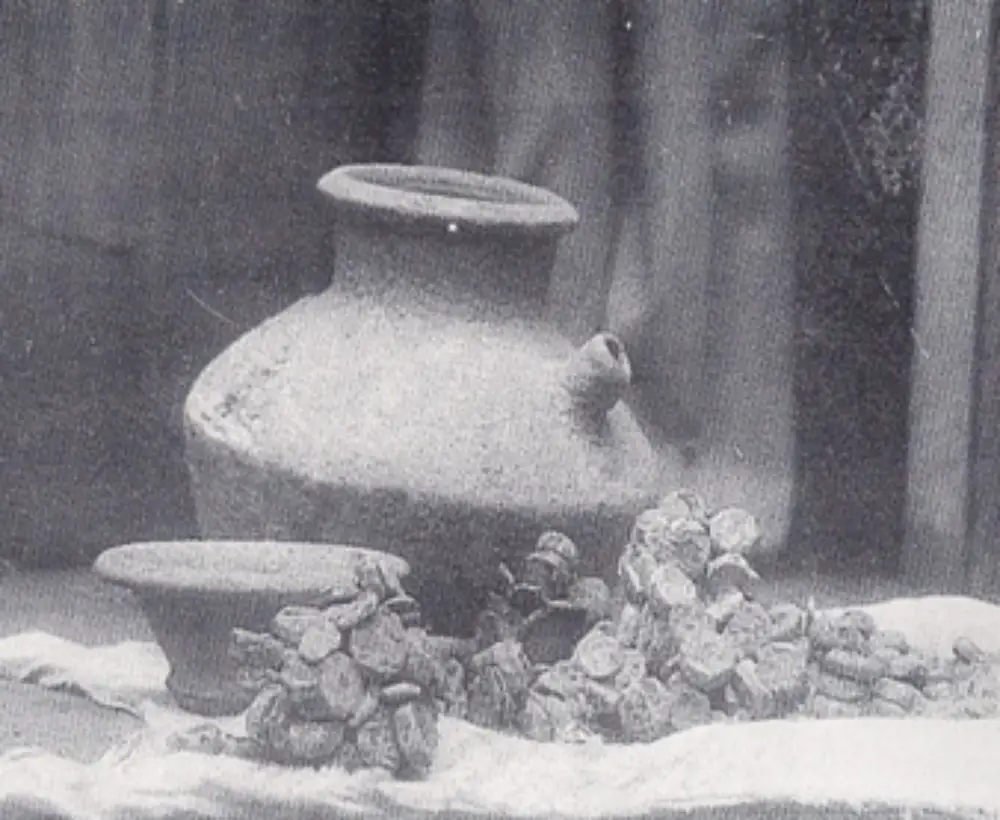
Iqbal: Yes. Coins are often discovered through excavations or chance finds. In recent decades, several major discoveries have been recorded from different parts of the Valley. Hoards have been found at Maidan Chagul, Handwara, Turkhpura Bandipora, Safapura, Barathan Qamarwari in Srinagar, Valtora in Rafiabad, Watnar in Kokernag, Charar-i-Sharief and Nunar in Budgam. These were recovered during the years 1987, 1992, 1999, 2010, 2011, 2014 and 2016.
Besides these finds, more than eighty thousand coins are already stored in the museums of Srinagar and Jammu.
KL: Is any earlier study of Kashmir coins recorded anywhere?
Iqbal: General Alexander Cunningham was the first to undertake the archaeology and study of coins in Kashmir. During his stay in the Valley, he collected many ancient coins. A close study of these helped him address several unknown aspects of Kashmir’s history.
In a paper published in the Numismatic Chronicle of 1846, Cunningham presented the results of his research on Kashmir coins. He demonstrated the value of numismatic evidence for the critical analysis of Kalhana’s Rajatarangini and other ancient records. He was also the first numismatist to find several Greek and Scythian coins on the banks of the Jhelum River in the upper valley.
Cunningham was followed by C J Rodgers, Sir Aurel Stein and R B Whitehead, and later by several local scholars. Most of these studies were undertaken during the colonial period in the nineteenth and twentieth centuries. Since then, numismatic studies in Jammu and Kashmir have remained largely forgotten.
KL: When did you get involved in numismatic research?
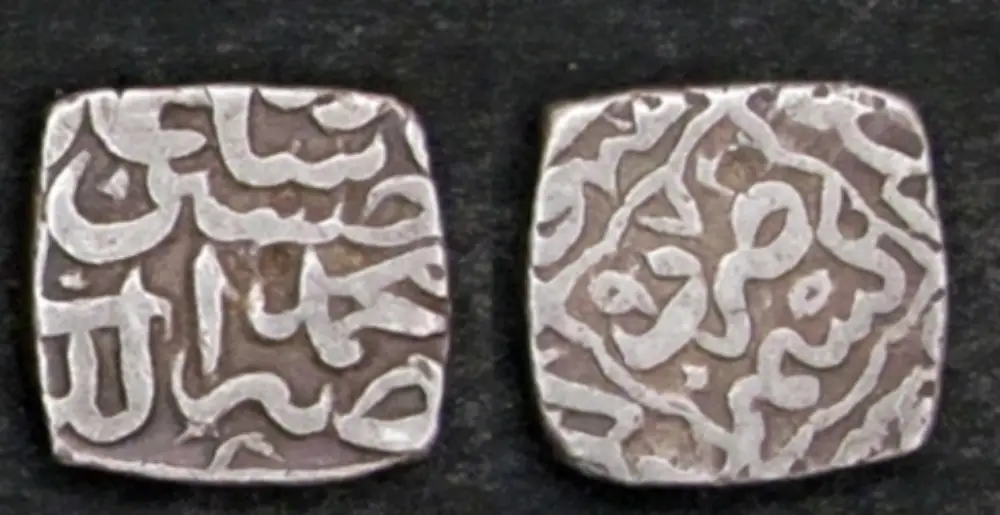
Iqbal: I have been engaged in numismatic research since 1995. I identified several hoards and deciphered their coins. My work includes the study of punch-marked, Greek, Scythian, Kushan, Hindu and Sultanate coins of Kashmir.
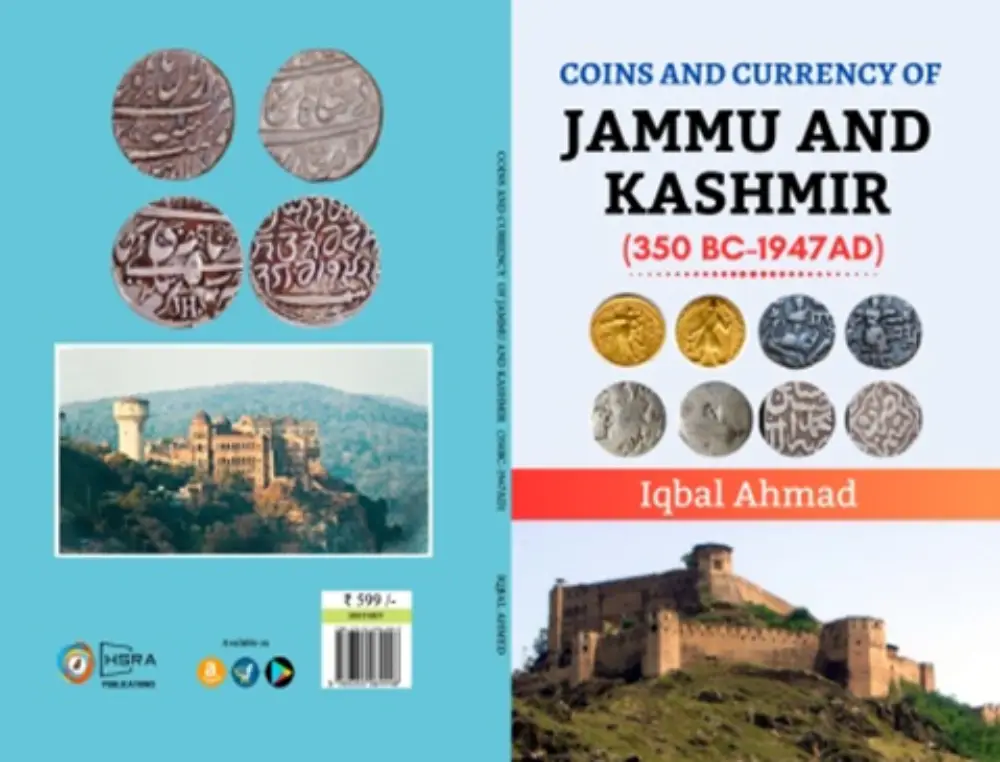
I have also investigated ancient Greek, Kushan and Roman coins found in Jammu and Kashmir. My published books are Kushans in Kashmir, Ancient Greeks in Kashmir, Kashmir Coins, Ancient Romans and Greeks in Kashmir, and, more recently, Coins and Currency of Jammu and Kashmir. In the latter, I catalogued coins from the punch-marked series to the Dogra period, including currency notes.
KL: Which are the first and most ancient coins of Kashmir, and when were they in circulation?
Iqbal: The earliest coins were punch-marked coins, known in numismatic terminology as Karshapana. These were the earliest coins of north India, including Jammu and Kashmir. They were made of silver, with an average of fifty to fifty-four grains, and weighed thirty-two rattis. Each carried four to five punched symbols, with the sun and a six-armed symbol repeated across series.
These coins were in circulation between 500 BC and 200 AD, during the Janapada and Mauryan periods. Such coins are preserved in the numismatic collections of Jammu and Kashmir. They were also recovered in the 1980s during the excavation of the Semthan-Bijbehara archaeological site.
KL: Did you find any evidence of ancient foreign tribes in Jammu and Kashmir?
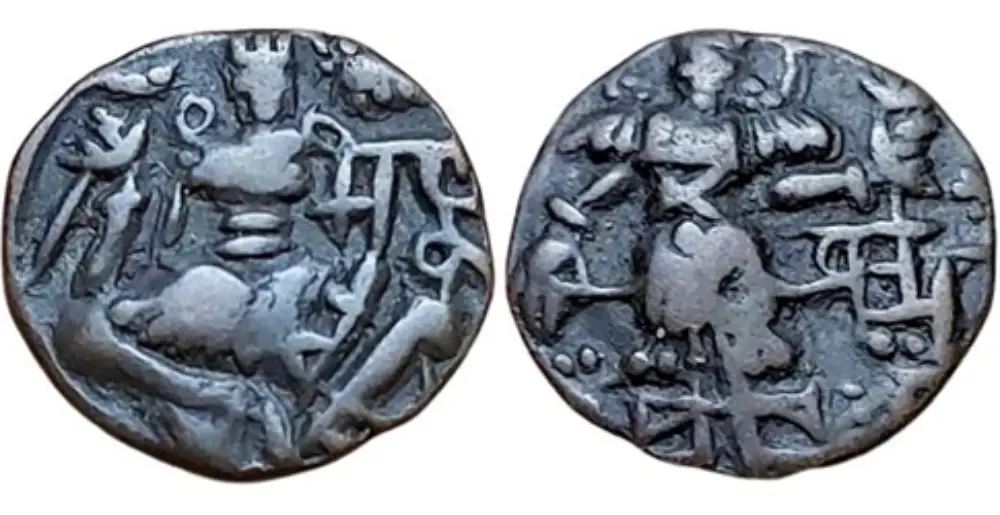
Iqbal: Yes. In my numismatic research, I found strong evidence of the Mauryans, Indo-Greeks, Indo-Scythians, Indo-Parthians, Kushans and White Huns in Jammu and Kashmir, particularly in the Kashmir province.
Demetrius, the most renowned king of the Indo-Greek Empire, is recorded to have ruled territories that included the southern parts of Jammu and Kashmir during the second century BC. Another Indo-Greek ruler, Menander, who is remembered as one of the most prominent of his dynasty, established his capital at Sangala, the site of present-day Sialkot, only twenty-three kilometres from R S Pura in Jammu.
Several ancient places in Kashmir bear Hellenistic names. Memender in Shopian, Nics in Pulwama, Menader in Poonch, Ajas in Bandipora and Zandapharun in Baramulla are notable examples. Alongside these traces, coins of Greek, Scythian, Parthian, Kushan and Hun origin have been discovered across the region. Dr Michael Mitchiner, in his monumental work The Classical World, documented several such finds under the Jammu and Kashmir chapter.
KL: What steps should be taken to preserve this heritage?
Iqbal: To address fear and encourage treasure finders to hand over their discoveries to legal and registered museums, both the Ancient Monuments Preservation Act of 1920 and the Treasure Trove Act of 1972 require amendment. These laws need to be made more flexible.
The government could also introduce a scheme that offers rewards and certificates of appreciation to individuals who voluntarily deposit their finds in museums. Such measures would help reduce the loss of antiquities to other regions and allow museums and archaeology institutions to enrich their collections.
Furthermore, the history departments of colleges and universities should create space for the teaching of numismatics and palaeography. Alongside this, the departments of Archaeology, Museums, Archives, Research and Culture ought to revise their recruitment rules to accommodate trained archaeologists, numismatists and epigraphists, ensuring these disciplines are properly represented.