by Dr Masoon Ahmad Beig and Dr Hasrat Hussain
Prof Marghoob Banihali’s life, works, academic journey, and literary achievements have a lasting influence on the Kashmiri language and intellectual discourse
Today, April 26, we pay our respects to one of the greatest Kashmiri poets and scholars, Prof. Marghoob Banihali. The demise of this great poet marked the end of an era, leaving a permanent gap in Kashmiri literature.
An eminent and visionary poet, scholar, and academician, Marghoob Banihali dedicated his whole life to poetry, research, education, and the preservation of culture. He was deeply involved with the humanistic spirit, intellectually profound, and highly concerned with society; all these attributes earned him fame not only nationally but internationally as well. Even after many years since his death, his poetic spirit continues to touch the hearts of readers and inspires them with wisdom and spirituality.
The great academician and poet, Ghulam Mohammed Giri, was born in the Giri family in the Bankoot area of Banihal in Jammu and Kashmir’s Ramban district in 1937 CE. Popularly known by his pen name, Marghoob Banihali, he was a Kashmiri poet. Marghoob lost his mother when he was only 5 and his father at the age of 14.
In his academic career spanning decades, he was initially a school teacher and then was posted as Tehsil Education Officer before he joined Kashmir University’s Persian Department as a lecturer. Soon, he rose to the position of Reader in Central Asian Studies; then, in 1986, he was elevated to Head of the Kashmiri Department. After retirement, Marghoob was a visiting professor at the Iqbal Institute of Philosophy, Kashmir University.
Prof Banihali was a luminary whose contribution in the field of Kashmiri language and literature is an acclaimed treasure for generations to come. The enormous contributions of Prof Marghoob to Kashmir’s literary, cultural, and educational spheres, as well as to the growth and development of the Kashmiri language, are widely acknowledged. Dr Marghoob devoted his life to literature and research work that earned him laurels both at the national and international levels.
Marghoob Banihali was a representative of the Renaissance generation of writers and poets. Marghoob Banihali has contributed enormously to the Kashmiri language and literature and is also remembered for his best services as an academician and writer. The depth of thought, originality, self-expression, and creativity of his writings garnered him laurels and accolades. The services he rendered in his capacity as an academician remain invaluable. The resonance of his poems and writings will continue to enthral present and coming generations.
Marghoob proved his mettle in academics right from his school days in Banihal. By the time he reached university, he was way ahead of his contemporaries. Marghoob has the distinction of being the first PhD degree holder in Persian from Kashmir University.
Dr Marghoob authored more than fifty books, comprising poems, prose, translations, and critical analysis in Kashmiri, Urdu, and English. For his work, he won 12 major and dozens of smaller awards. One famous book among them is Kasheer Baale Apaer (Kashmir Across the Mountains), which chronicled the history of Kashmiris who were exiled by autocratic rulers from the valley. Formerly, Marghoob’s family was from Safakadal, and after four generations, they returned. Marghoob’s ancestors were also exiled to Banihal during the Sikh era.
Marghoob mapped the development of the Kashmiri language and culture across the Pir Panjal, a contribution that remains unparalleled in the annals of research in Kashmir.
Banihali was awarded the Sahitya Akademi Award for Kashmiri literature in 1979 for his collection of poetry Partavistan. The ideas reflected in the book were inspired by the 1975 Emergency and the period preceding it. The book was highly appreciated, and some enthusiasts have even memorised it in its entirety. He created a chain of successful translations and monographs on Khwaja Ghulam Rasool Kamghar Kishtwari, Rasa Javidani, Abdul Rahim Aama, Wali Ullah Matoo, and translations of Padmini Sen Gupta’s monograph on Sarojini Naidu, Gopal Haldar’s work on Kazi Nazrul Islam, and Prof Mujeeb’s work on Ghalib.
A follower of Maulana Rumi and Allama Iqbal, Marghoob termed their work, along with that of Hafiz, Ghalib, and Sheikh-ul-Alam, as Quran pasand shayari. His book on Allama Iqbal titled Kalam-e-Iqbal Kay Sarchashmay and Adamgari-e-Iqbal, reflects his distinctive critical and analytical power, along with a deep understanding of philosophy.
Marghoob was always concerned for the welfare of the Kashmiri language and conducted extensive research on its origin, growth, and development. He propounded his distinctive theory known as the Marghoob Theory, in which he sought to devise a script for his mother tongue and natural medium of creative expression.
Though Marghoob did not exclusively write on the post-90s situation, a number of his poems are sprinkled with suffering. Marghoob saw the intertwined history and politics of Kashmir through the words of wise men. “Zi Aab Aatash Ast Aabad Kashmir, Wazi haani shawad barbaad Kashmir,” said Marghoob, who often used adages. This Persian saying roughly means that fire and water sustain Kashmir, and it is the same elements that destroy it.
For Marghoob, Islam was extremely important for character building. His book Islamiyatas Kun Sath Kadam (Seven Steps Towards Studying Islam) has already been adopted by some schools in the valley, helping students learn both Kashmiri and Islam. The literary chain of Marghoob Banihali was quite remarkable; being a humanist, he had a close affinity with well-known personalities such as Mirza Ghulam Hassan Beigh Arif, Moulana Qasim Shah Bukhari, Manshoor Banihali, Prof. Majrooh Rashid, and Prof. Rattan Talashi, etc.
He was also a very good father, having ten children with an equal number of sons and daughters, whom he nurtured properly and provided with a good education, making them well-versed in different spheres of life. As he himself says wistfully:
“Maakar grend vanisehendnin harisatan”
“Zenis pou cheni gasilt fawlood karoun”
“Don’t count the miseries and hardships of your wistful life, since the dry wood burned to such an extent that it was able to melt iron.”
In another couplet of a ghazal, he depicts the chaotic social order with grief and sorrow:
“Panjras manz pakhe wayan peez”
“Fizhas manz qawan yenwool”
“The eagle is trapped and fluttering inside a cage, while the crows are freely celebrating in the open sky.”
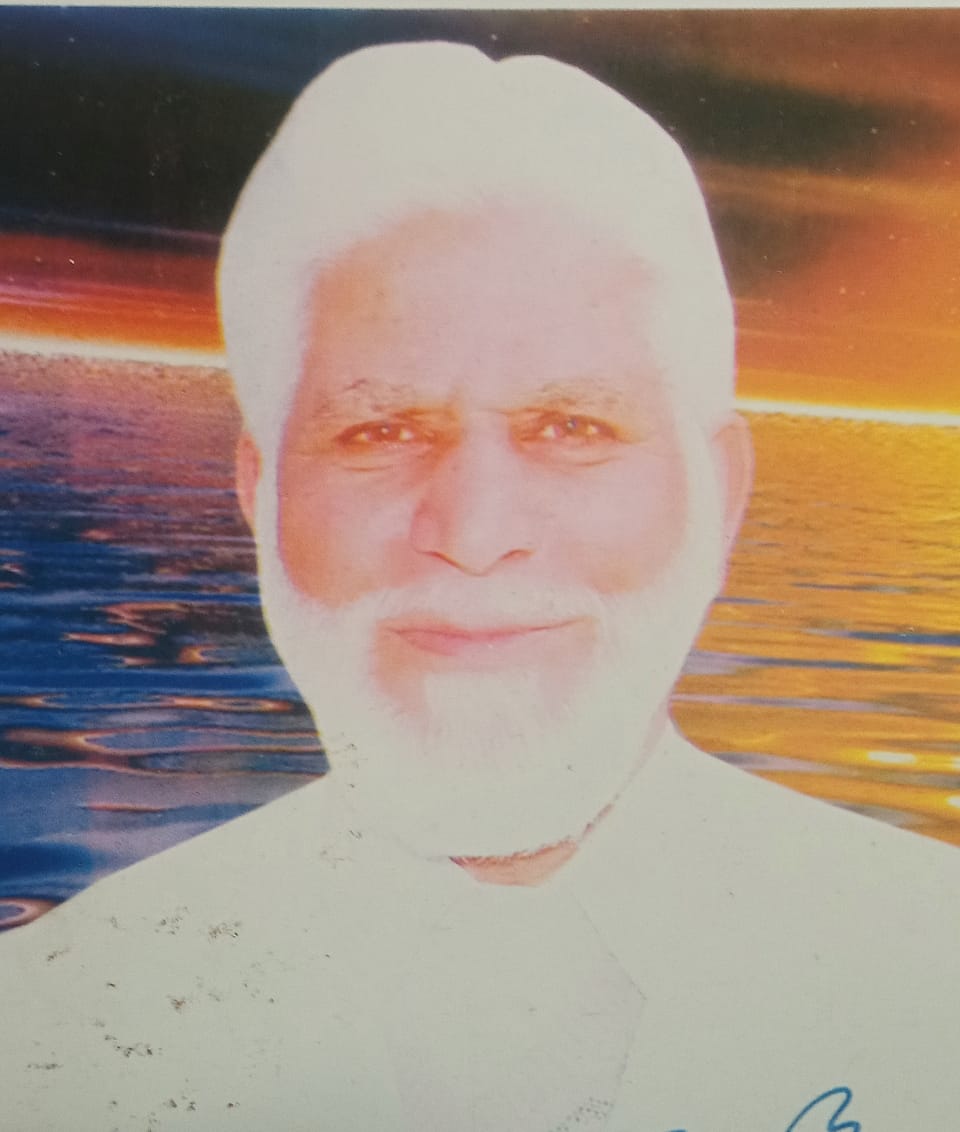
Marghoob Banihali was a man of self-determination and resonance. Principle governed his sound belief and honour. He never compromised on any issue that he found false or against his virtues as a poet of humanism.
Under such circumstances, though some of his opponents were not pleased, it did not affect his personality as a good human being in any manner. He was clear in his beliefs and always supported orphans, the downtrodden, and underprivileged scholars of his era. He was a true advocate of their inner feelings.
Dr Marghoob Banihali left this world on April 26, 2021, the 24th day of the holy month of Ramazan 1442 Hijri. On his death, Dr Hasrat Hussain wrote his elegy and brought his death year into the words of Hurafi Abjad:
“Margi oh dile hasrat beggared az huzun,
Ah hubi Marghoobi kuja ba kuja husun” (1442 Hijri)
“His death has left the heart of longing shattered in grief; Alas! Where has that beloved Marghoob, that embodiment of beauty, gone?”
“Qasid de Marghoob misli Farhad bood,
Shart-e-oh hardilberi ummad bood” (1442 Hijri)
“Marghoob was like Farhad in devotion and dedication; his nature was such that he was loved by every heart.”
Finally, we should accept that our society has borrowed a great treasure of knowledge and experience from this great soul of the soil. It is our responsibility to carry forward his belief and ideology as a poet of a humanist nature.
(The authors teach Geography and Kashmir at GDC Kulgam. Ideas are personal.)