by Iqbal Ahmad
Kashmir’s coinage retained a Kushana-derived design for twelve centuries, yet numismatics remains neglected, with little institutional support for studying this vital heritage
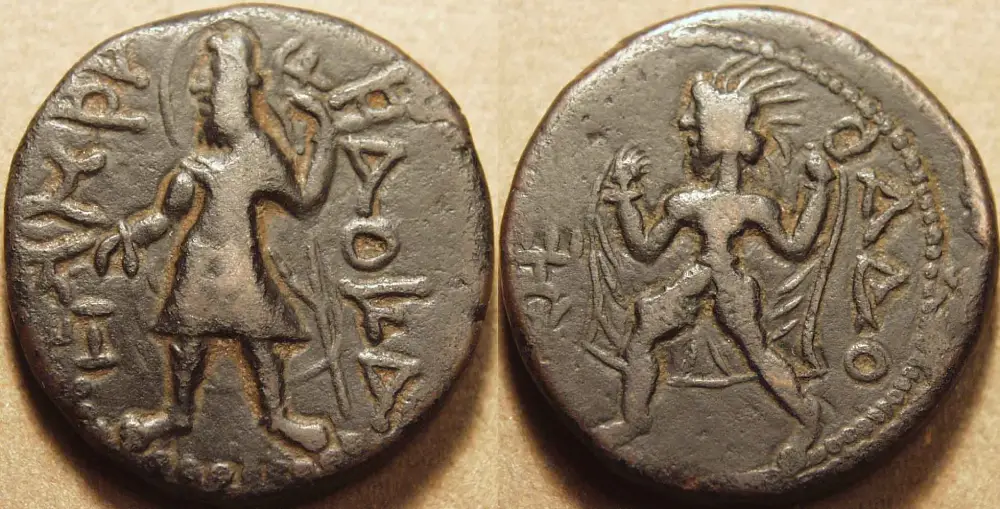
During the study of the ancient numismatic heritage of Jammu and Kashmir, one thing is very clear: the influence of Kushana Imperial Series coins has been very effective and dominant. A very interesting coin type called drachm and tetra-drachm, locally known as dirham and chugni dirham, with its motif of a standing king and seated goddess, has been one of the most popular coin types of this land.
Although in other provinces of the Kushana empire, which included Varanasi, Mathura, Punjab, Taxila, Peshawar and Kandahar, this type of coin disappeared soon after the downfall of this large empire, in Kashmir, it has remained a constant coin type for more than 1,200 years. First struck by Maharaja Kanishka in circa first century AD, it continuously served the Kashmir money market till the last ruler of the Lohara house, Kota Rani, circa 1339 AD.
It is pertinent to mention that the local Hindu rajas of all four major houses, Karkota, Utpala, Yassakara and Lohara, who ascended the Kashmir throne one after the other from circa 600 AD to 1339 AD, continued to carry their mint with this type and did not make any major change in their monetary system.
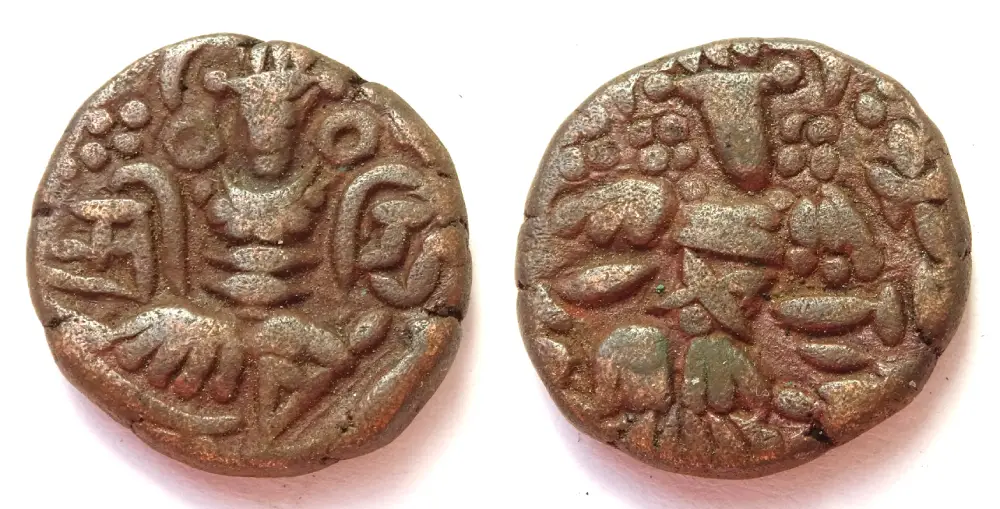
Alexander Cunningham, the father of Indian archaeology, was the first to identify and document such coin types. In his monumental book on Indian numismatics Coins of North India, he catalogued the Kashmir coins of Hindu rajas. In a brief description of these coins, he wrote:
“The constant type of the Kashmir coinage, the standing Raja and the sitting goddess, was adopted from the money of the Kushan kings, Kanishka, Huvishka, and Vasudeva. It was the common type also of the great Gupta dynasty of India from its adoption by Samudra Gupta in the middle of the fourth century A.D.”
On the earliest certain specimens of the Kashmir kings of the Hun period, the coins of Miherakul and others, the king is represented standing to the front with his face turned towards the left. His left hand holds a spear upright, and his right hand is stretched out over a small object believed to be an altar. On the reverse, there is a seated goddess, named Ardoksho, who holds a cornucopia in her left hand and a royal fillet or diadem in her right hand. On these coins, Ardoksho represents the “earth goddess”.
On the coins of Toramana and his son Pravarasena, the cornucopia is replaced by the lotus, but on later coins, the arms of the goddess are gradually displaced by letters of the inscription. At first, the left arm is omitted, as on the coins of Sankaravarma and Gopalavarma, but on later coins, the right arm gives place to the title Sri, which precedes most of the names. The types rapidly become more and more degraded until it is difficult to trace them back to their originals.
Durlabhavardhana was the first king of the Karkota dynasty whose coins are known to have a rude figure of a standing king on the obverse with the words Jaya and Kidera. The reverse carries the motif of a seated goddess identified with Lakshmi, with the legend Sri Durlabhadeva. The king seems to have retained the title Kidara, introduced by the Kidara princes.
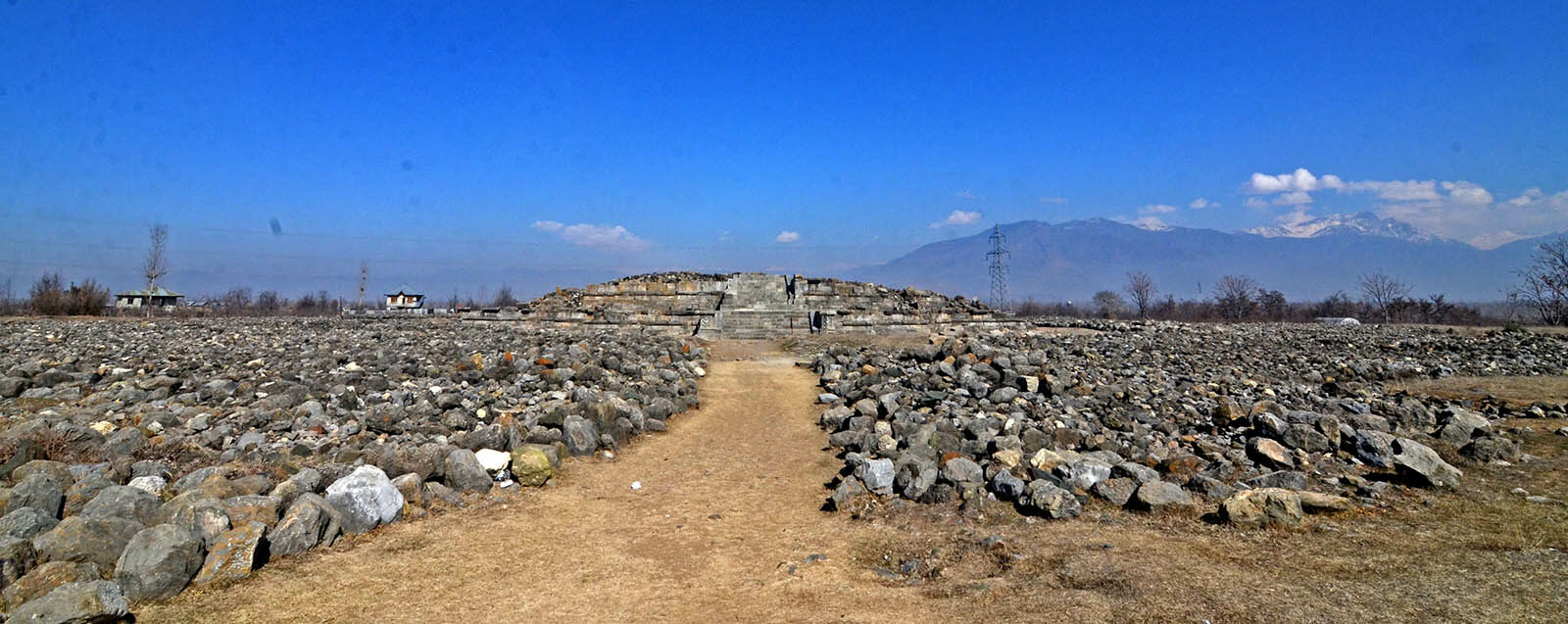
Another Karkota king whose coins have been found not only in Kashmir but also in different parts of India is Lalitaditya Mukhtapida. His coins depict the legend Sri Pratapa, found in hoards at Bhitaware (Faizabad), Manu (Banda), Sarnath, Rajghat (Varanasi), Monghyr and at the ancient site of Nalanda {places situated in Uttar Pradesh and Bihar}. Their discovery in distant regions speaks of the political and commercial links the king had with these areas. The coins bear the traditional motif of a rudely executed standing king on the obverse and a seated goddess on the reverse, with the legend Sri Pratapa inscribed on the right. These coins also retain the title Kidera on the reverse.
Jayapida’s coins bear his common name, Vinayaditya, written on the obverse. These coins are of the same type, featuring the standing king on the obverse and the seated goddess on the reverse.
The coins of other Karkota rulers are not known; however, typologically similar coins exist whose attribution to any known Karkota king has become difficult. Karkota kings had no golden coinage; their coins are found in electrum (base gold), silver and copper. Their copper coins are viewed by some numismatists as forgeries. Cunningham says that copper coins of the Karkotas were simple forgeries originally minted to be passed as genuine. Aurel Stein also thinks that no genuine copper coin exists bearing the name of any Karkota monarch. He believes that the genuine copper coins bear the legend Tormana.
A long series of copper coins, devised in a similar typology, carries the legend Sri Toramana. Such coins are reported to have been used in the empire for a long period. Historical evidence suggests that a few Kashmiri Muslim Sultans did not coin their own money but circulated the available coins of Sri Toramana. However, copper coins of a few Karkota princes are known, and their genuineness cannot be doubted.
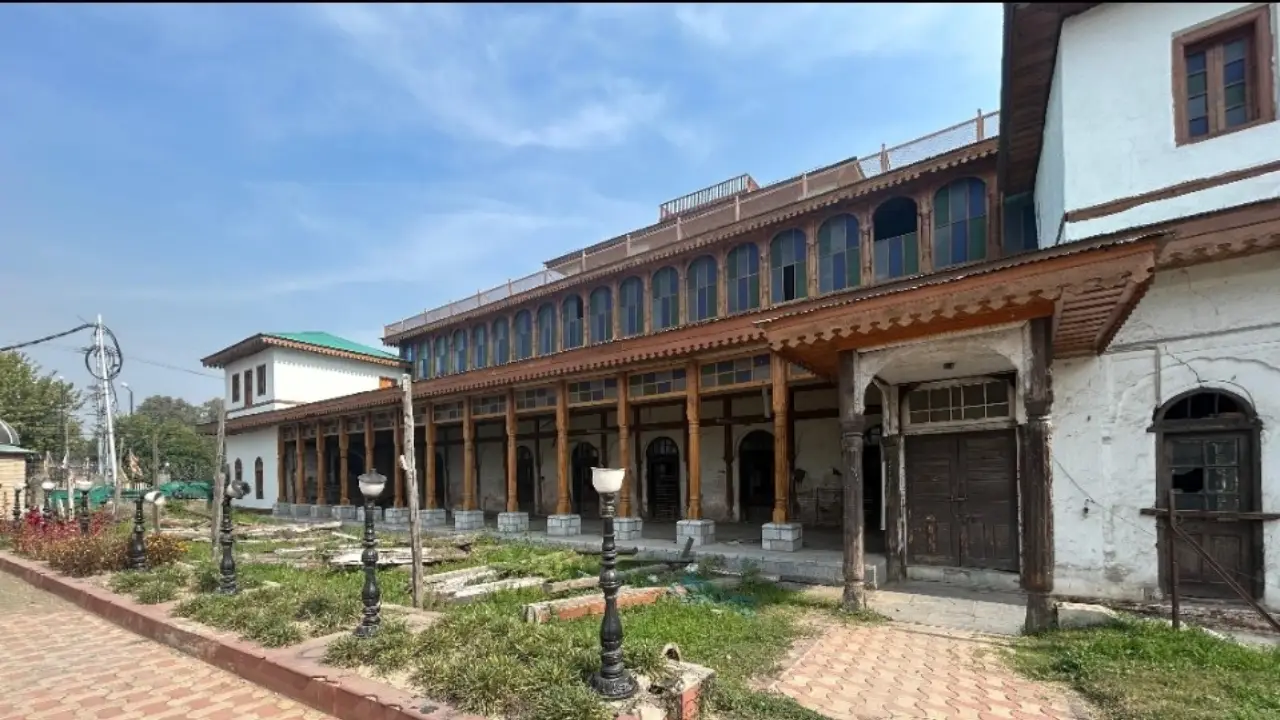
Generally speaking, the numismatic history of this period is confusing. Coins of only a few Karkota rulers are known. Archaeologists have found silver and base-gold copper coins of some rulers of this dynasty. The legends on these coins are in Gupta Brahmi letters, reading the names Sri Vinayaditya, Sri Vigrahadeva, Sri Durlabha and Sri Pratapa on the right field, and Kidera on the left. Coins bearing the legend Sri Durlabha and Sri Pratapa are identified as those of Sri Durlabhadeva and Lalitaditya Mukhtapida. These coins carry legends in Gupta Brahmi with crude figures of a standing king and a seated goddess. The attribution of other coins is confusing. This entire series is itself confusing, the motifs so crude that it is difficult to determine which side carries the standing figure and which the seated one.
Such coins have been found in hoards at Bhitawara (Faizabad), Manu Banda, Sarnath, Rajghat (Varanasi) and at Nalanda. If certainly issued by Karkota rajas, they clearly speak of Karkota expeditions towards north India, corroborating Kalhana’s accounts through numismatic evidence. But I am not sure of this fact; although well recorded from distant lands, I am not convinced these coins were issued by Karkota rulers.
The only new types in the Kashmir series, according to Cunningham, were those introduced by Harshadeva for his gold and silver coins. The “elephant” type used in both metals was copied from Karnataka, and the “horseman” type was imitated from the Brahmani kings of Kabul. Cunningham has published photographs of these two types in his catalogue, but I have not found a single coin of the type he mentioned, though a friend told me that such coins have been found in Pakistani Punjab. The standard coin type of Kashmir thus remained unchanged from the type of Kanishka in AD 78 down to the Muhammadan conquest in AD 1339—over 1,261 years. The types became so degraded that on the coins of Jagadeva and Rajadeva of the thirteenth century, it is difficult to say which figure represents the standing king and which the seated goddess. Thus, Kashmir’s coinage presents a unique example of one coin type remaining unchanged for more than twelve centuries.

Indeed, we have been studying this heritage on our own but have been unable to pass its study to the coming generations. There is no arrangement in any institution or university for teaching and learning this heritage. Only on a few special Heritage Day events do we discuss it, but archaeology, numismatics and palaeography—vital sources of our history and culture—stand almost forgotten. The ancient history of Jammu and Kashmir taught in institutions relies largely on traditional sources such as folklore or written records. There has been little institutional effort to explore material sources.
Archaeology, palaeography and numismatics have not been taken seriously in reconstructing the ancient and medieval history of Jammu and Kashmir. Speaking only of coins, they have been the least exploited source. Numismatics has remained a secluded discipline, rarely incorporated into mainstream historical work. This will change only when this subject is given space in educational institutions—not only in terms of learning but also in terms of job opportunities.
(The writer is a senior archaeologist and author. Ideas are personal.)