by Dr Mir M Hussain
With cancer rates consistently increasing in Kashmir each year, there is an urgent need to refocus research priorities and explore newly emerging risk factors.
Cancer has coexisted with mankind for centuries, affecting people regardless of circumstances or social standing, and has affected not only research and medicine but also governance and public policy. Despite constant technological and medicinal advancements, cancer rates are unfortunately only increasing, with global cases being projected to surpass 20 million by 2030, a 69% jump from the rates in 2008.
Most of the newer cases are from third-world countries, with India’s cases being a reported 19-20 lakhs. This is, however, an under-representation of the truth, and the actual count is estimated to be about 1.5 to 3 times the amount of the reported cases. The estimated number of Indians suffering from cancer is projected to increase to nearly 30 lakhs by 2030, increasing the rates of cancer-caused deaths. The constant growth of cancer in India has prompted the GOI to establish a separate fund to establish cancer care facilities in nearly 200 districts by 2025-26, especially in far-off and rural areas. According to the data, Kashmir is not far behind, with about 51,000 new cases being registered in the past four years resulting in over 34,000 deaths. It is to be noted that this information is from 2023 and needs to be updated to understand the current situation better.
Why is there a steep rise in cancer?
There are several reasons why cancer rates are increasing, and a lot of the cases can be attributed to an increase in population and life expectancy, as the elderly are more likely to develop cancer. The current national average life expectancy in Kashmir is 74 years, and the population of Kashmir has increased at the rate of 23-29% in the last five decades, with the current population estimated to be a staggering 1.5 crore in comparison to the 35 lakh it was in 1961.
What are some known and important risk factors of cancer?
The most common risk factors about cancer are typically divided between modifiable and non-modifiable. Non-modifiable factors are the ones that cannot be controlled or changed, like race, age, family history, or genetic predisposition, believed to increase the risk of cancer in less than 20% of all cases. On the other hand, associated with over 80% of cancer cases, the modifiable or sporadic risk factors are far more important. Modifiable factors can include smoking, alcohol consumption, unhealthy diets and sedentary lifestyles, obesity, infections, etc. with smoking and alcohol consumption being a significant cause in 30-50% of all cases. Infections like Hepatitis B and C, HPV, HIV, H.Pylori, etc. play a role in around 15-20% of cases, and poor lifestyle choices increase the risk of cancer by 30-35%. Less common risk factors include exposure to harmful substances.
Is there a demographic shift in traditional risk factors?
If we look at early Kashmir in comparison to current-day Kashmir, there were higher rates of cancer due to the usage of Kangris. Esophageal and stomach cancers were the most common types.
Kangri
A kangri is an earthen pot insulated by wood that is used as a heat source by putting burning charcoal in it. Its use led to the growth of a type of skin cancer that predominantly affected the areas most exposed to the kangri smoke – the inner thighs and lower abdomen – aptly referred to as ‘kangri cancer.’ With the popularisation of electric and LPG heaters, the usage of kangris has significantly decreased, practically eliminating them as a risk factor in modern Kashmir.
Stomach and Oesophagal Cancers
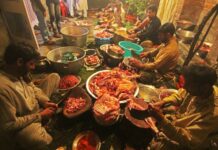
A decade and a half ago most cancer cases from Kashmir were of the digestive tract, primarily the esophagus and the stomach. Research insinuates that this could be due to the popularity of hokh syun (dried vegetables), noon chai (salted tea), wazwaan and other spicy food. The consumption of dried vegetables has decreased in most families due to the availability of fresh vegetables around the year, and the trend of over-drinking noon chai has lessened due to winters being less intense. Food habits have changed for most people in Kashmir, and they now typically drink English tea or other types of breakfasts, bringing the cases of stomach and oesophagal cancers down.
Smoking
The most common types of cancer in the last decade have been lung cancer in men and breast cancer in women. It is a well-established fact that smoking is strongly associated with lung cancer, and with the easier accessibility of cigarettes in current-day Kashmir, lung cancer rates are steadily rising. Kashmir is ranked as the sixth biggest consumer of cigarettes in the country, spending an estimated Rs 850 crore annually. Despite there being some legislation from the government to combat this growing problem, it will be impossible for it to fully stop unless there is public cooperation.
Meat Consumption
Red meat consumption has been linked to various health issues including colon and rectal cancers. The overconsumption of mutton has increased the risk of cancer not only among the elderly but also among the youth. The mutton industry of Kashmir has an annual turnaround of Rs 3900 crore.
Lifestyle
A total of 4-8 per cent of cancers are linked to obesity and a sedentary lifestyle. Breast cancer is the most prevalent kind of cancer among women in Kashmir, and some other common types of cancers are prostate, uterine, and liver cancers. There is a need to educate the youth about cancer and how lifestyles can affect their health.
Alcohol consumption
Alcohol consumption is attributed to cause cancers of the mouth, throat, liver, colon and breast. There is a significant rise in liver cancer, colon cancer and breast cancer, all of which have been linked to alcohol consumption.
Pesticides and Herbicides
Horticulture and agriculture are the backbone of Kashmir’s economy, with nearly 70-80 per cent of the rural population being directly or indirectly involved in it. A great deal of herbicides and pesticides are used every single day to maintain a healthy crop, but the excess use of these chemicals can cause serious illnesses like multiple myeloma, non-Hodgkins lymphoma, brain tumours, and leukaemia. The horticulture industry earns an estimated Rs 15000 crore and to ensure the health of farmers and the preservation of the practice the government and SKAUST-K need to explore protective measures, safer alternatives, and better drugs.
Infections
Around 15-20 per cent of all cancers are caused by infections like liver cancer, cervical cancer, anal cancer, oral cancer, etc. There has been a reported increase in liver cancers due to hepatitis B and C infections in certain areas of the liver. The best way to combat infection-caused cancer is to make easily available vaccination programmes.
Food adulteration
There is a strong concern globally about the use of various food adulterants and their propensity to cause cancer, with some associating them with gallbladder cancer. This also requires action from the Food Safety Department and strong legislation by the government.
Air pollution

Nearly one per cent of cancers are attributed to air pollution, most of which are cases of lung cancer. With the growing use of automobiles and industries, the level of air pollution is rising and is going to have an impact on cancer rates.
Conclusion
Throughout the years the risk factors of cancer have changed and evolved to the ones we see today. The need of the hour is to reorient our preventive strategies and research focus to explore these newer risk factors and find means to tackle them.
(The author is MD General Medicine, DM Medical Oncology, Post DM Fellowship in Blood and Marrow Transplantation AIIMS New Delhi. Currently works as Assistant Professor of Medical Oncology at SKIMS Srinagar. Ideas are personal.)