by Javaid Ahmad Lone
Declining enrolment reflects students’ fading faith in education as weak job prospects, flawed recruitment systems and economic uncertainty erode its purpose.
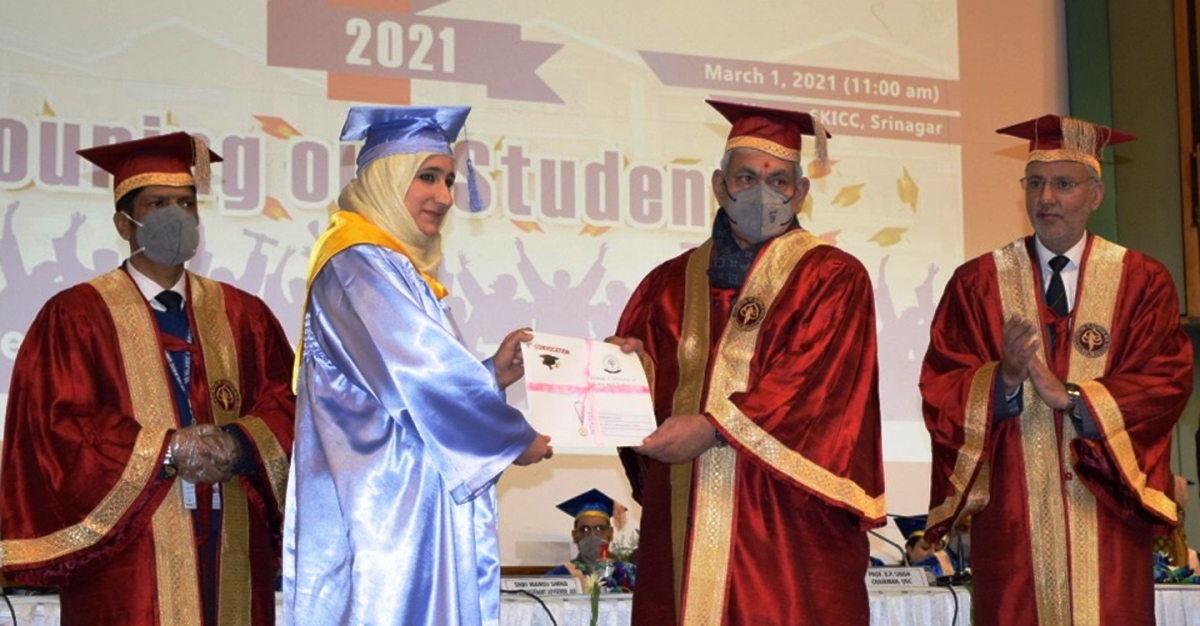
There was a time when education was never judged by the salary it promised. Parents sent their children to schools because they wanted them to become better human beings. Schools were places where children were groomed, socialised, and taught values, beliefs, customs, traditions, culture and the art of living together. Education was expected to transform behaviour, nurture morality and prepare individuals to contribute to society.
Every child grew up hearing one simple definition: “Education is the modification of behaviour.”
Today, that definition stands on the verge of extinction.
Somewhere along the journey, education ceased to be about creating responsible citizens and gradually became a race for certificates, competitive examinations and government jobs. The purpose of learning is narrowed to one question: Will this degree get me a job?
This transformation did not happen in isolation. It is driven by powerful social forces.
Visit any home, any marketplace, any family gathering, and the first question directed at a student is rarely, “What have you learned?” Instead, it is “What are you earning?” or “Have you applied for government jobs?”
In Kashmir society, employment has become the measure of human worth. A government job is often seen as the gateway to social respect, financial security and even marriage. Degrees are no longer valued for the knowledge they represent but for the income they can generate. Education has been commodified, and students have become unwilling participants in that marketplace.
This has profoundly reshaped the psychology of young people.
Students spend years in schools, colleges, universities and research institutions with hope in their eyes. They sacrifice their youth, postpone personal dreams, endure financial hardships and dedicate countless hours to study. Yet, after graduation, many are met not with opportunity but with silence.
Instead of appreciation, they encounter questions that slowly become wounds.
“What are you doing these days?”
“Still unemployed?”
“So much education, but what did you achieve?”
These are not merely questions. They become reminders of failure in a society that increasingly measures human dignity through employment alone.
The result is a generation living between aspiration and despair.
As Sahir Ludhianvi sahab writes:
Maayusiyon ka majma hai jee mein
Kya reh gaya hai is zindagi mein
Rooh mein gham, dil mein dhuaan
Jayen toh jayen kahan
Samjhega kaun yahan dard bhare dil ki zubaan
(A crowd of sorrow gathers within me
What is left now in this life’s journey
There’s grief in my soul and smoke in my heart
Where do I go? Where can I go
Who here would understand the language of a painful heart)
Many students no longer ask whether education will transform their lives intellectually or morally. They ask a far more painful question: “Why should I spend years studying if there is no future waiting at the end?”
This crisis extends far beyond employment statistics. It is a crisis of hope.
As admissions decline across colleges and universities, we must ask ourselves whether students are abandoning education or whether education has abandoned students.
Recent figures showing a sharp decline in enrolment at colleges and universities are not just institutional statistics. They are indicators of a deeper social reality. We built universities, expanded campuses and established colleges across districts, but we failed to build an economy capable of absorbing the talent these institutions produced.
Students noticed this long before policymakers did.
They calculated the cost of years spent studying against uncertain employment and quietly chose different paths.
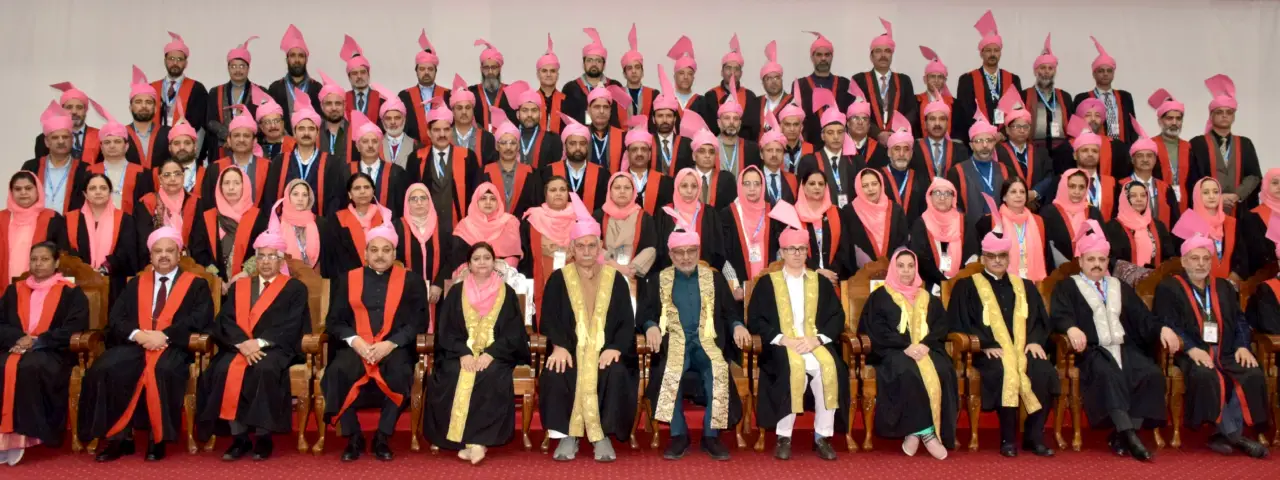
Can we blame them?
When a doctoral researcher struggles to find employment, when highly qualified graduates are forced into work unrelated to their expertise and when years of education fail to provide either economic security or social recognition, younger students naturally begin questioning the value of higher education itself.
A researcher is not merely someone seeking a degree. Researchers generate knowledge, develop innovative ideas, analyse social problems and provide evidence that informs public policy. They help societies understand themselves and prepare for the future. When such minds remain neglected, society loses far more than individual careers it loses its capacity for progress.
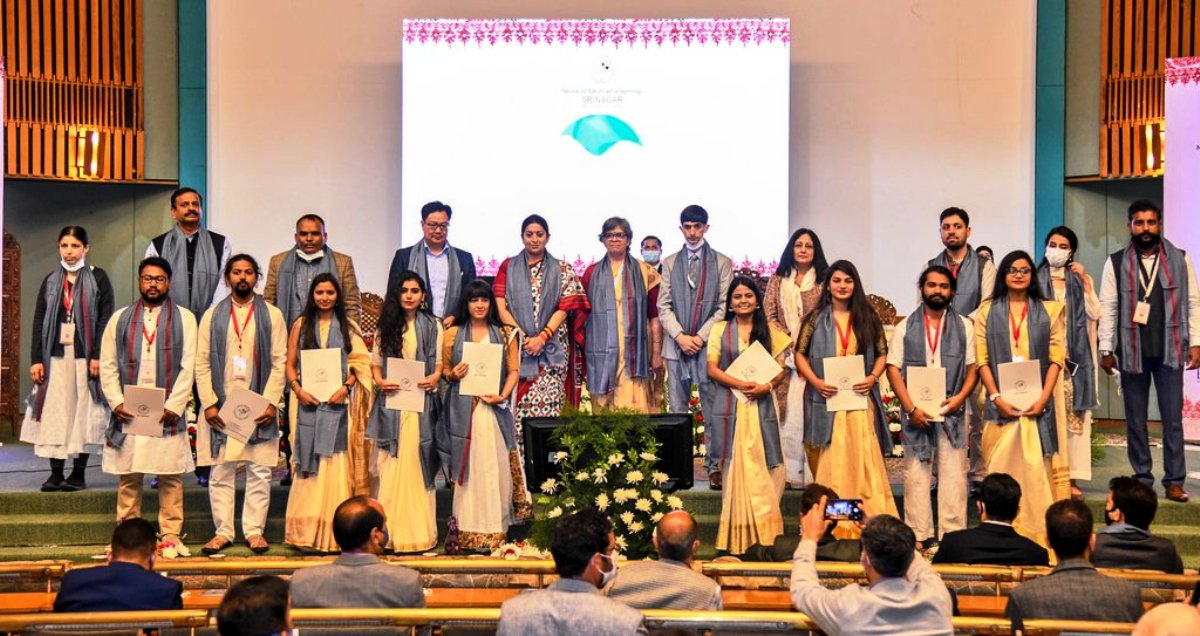
But there is another wound that runs even deeper, and it is structural.
Consider a student who chooses Arts and Social Sciences from Class 11th, pursues it through graduation, master’s, and even a PhD. This student has spent nearly a decade immersed in Sociology, Anthropology, Education, Social Work, Gender Studies, Philosophy, Political Science and Literature subjects that shape public discourse, preserve culture and build the moral fabric of society. Yet when this same student turns to the JKSSB for a government job, what does the examination syllabus offer? Mathematics, Science, Accountancy, and Computer Science subjects. Why is JKSSB including the Mathematics, Science and Accountancy syllabi for candidates from the Arts and Social Science stream, when they have never studied these subjects during their academic course?
The real question is this: if the system cannot create enough jobs for anyone, why does it at least not design examinations that honour what students have actually studied? Why does a student who spent ten years understanding society through Sociology, Anthropology, Education, Social Work, Gender Studies and Philosophy find no trace of these subjects in the recruitment syllabus? Why is there no paper that asks what caste and class mean, what gender justice requires, what philosophy teaches about ethics and governance, what anthropology reveals about human diversity, what social work demands of compassion and policy?
If the government examination body does not recognise the value of these disciplines, why were they offered as educational paths at all? Why lure students into years of study only to tell them at the end that their knowledge has no currency in the only marketplace that matters?
This is not merely a syllabus problem. It is a betrayal of trust.
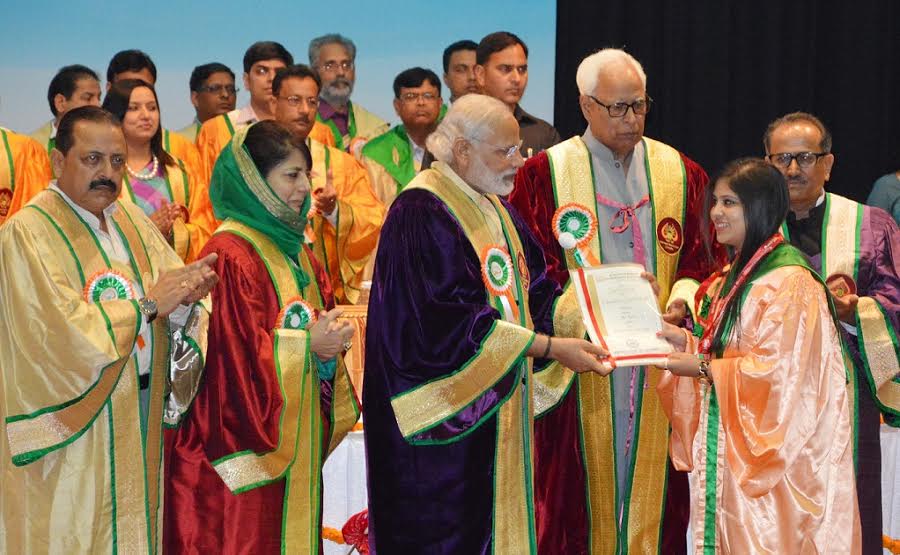
Students who chose the Arts were not choosing an easy path; they were choosing to understand the world differently. And now the same system that educated them refuses to even acknowledge their existence at the door of employment.
We must also confront an uncomfortable truth about our times.
There was once a saying that money cannot buy everything. We grew up hearing that virtue, knowledge and character matter more than wealth. But we must honestly ask ourselves: in the world we have built, does money not determine access to dignity, healthcare, shelter and even respect? A student who has spent years in education cannot be expected to survive on ideals alone. We do not have strong alternative livelihoods, no thriving private sector, no robust entrepreneurship ecosystem, no safety net that allows a graduate to build a life outside government employment. When the only bridge to economic security is a government job, and that bridge is designed only for certain streams of students, what choice remains?
This is why education and employment cannot be treated as separate conversations. They must go hand in hand. Every year, as students graduate, there must be meaningful job opportunities aligned with their fields of study. The syllabus of recruitment examinations must be reformed to include and value Sociology, Anthropology, Education, Social Work, Gender Studies, Philosophy and all the disciplines that train minds to think critically about society. A student who studied the human condition for ten years should not be tested on accountancy. A PhD in Education should not be rendered irrelevant by an examination that never asks what teaching and learning mean for a nation.
Education must be revived, yes, but revival without economic assurance is hollow. We cannot ask students to trust in the transformative power of learning while simultaneously denying them the means to live with dignity.
The responsibility does not lie with students alone.

Government must ensure that education remains meaningful by connecting learning with economic opportunities, innovation, entrepreneurship and dignified employment. At the same time, educational institutions must move beyond producing degree holders and instead cultivate critical thinking, ethical responsibility, creativity and civic engagement.
Education has both a visible and a hidden purpose.
Its visible purpose should be to produce enlightened citizens who can distinguish right from wrong, question injustice, contribute to the welfare of society and uphold humanity. Its hidden purpose is to enable individuals to earn a dignified livelihood and live with economic security.
Today, these purposes have been reversed.
Employment has become the only visible objective, while character formation has quietly disappeared into the background.
Perhaps that explains one of the greatest paradoxes of our time.
We have more graduates than ever before, yet public concern over corruption, dishonesty, intolerance and ethical decline continues to grow. If education truly modifies behaviour, why do these problems persist?
The crisis, therefore, is not simply about declining admissions.
It is about a generation slowly losing faith in the promise that education once carried.
No student dreams of becoming unemployed after years of sacrifice. No parent sends a child to university hoping that a degree will become a source of humiliation. No researcher spends years producing knowledge merely to be told that learning has no value unless it immediately translates into a salary.
Education was never meant to produce only workers.

It was meant to produce thinkers, innovators, teachers, scientists, researchers, artists and responsible citizens capable of transforming society.
If we continue reducing education to its market value alone, we will eventually produce graduates with degrees but without hope, qualifications without purpose and institutions without students.
The decline in admissions is not merely an educational problem.
It is a mirror reflecting the anxieties of an entire generation.
The real question is no longer why students are leaving colleges and universities.
The real question is not why students are walking away from education. The real question is whether education is still leading them towards a destiny or merely handing them a degree.
I would like to end this write-up with a timeless line by Sahir Ludhianvi sahab:
Samjhega kaun yahan dard bhare dil ki zubaan
(Who here will understand the language of a heart filled with pain)
(The author is a doctoral researcher. Ideas are personal.)