by Junaid Maqbool
AYUSH cannot continue to function as a secondary appendage to modern medicine. It must be treated as a complementary and essential pillar of national healthcare, in line with the recommendations of the National Education Policy and the World Health Organisation.
It was a bitter January morning when Dr Andleeb, a young AYUSH doctor, stood outside the Health Directorate office, clutching a file to her chest. Inside it were the records of her medical education, the long hours of night duties, and years spent serving patients in government dispensaries. The chill in the air mirrored the apathy of a system that continued to ignore her. Like many of her colleagues, she had worked on the frontlines during the pandemic, attending to hundreds of patients each week in ill-equipped clinics, risking her health. She had believed that such service would eventually be recognised. That day, however, had not yet come.
Systemic Neglect in Plain Sight
The experience of AYUSH doctors, graduates of Ayurveda, Unani, Siddha, and Homoeopathy, is one marked by resilience amid institutional indifference. They are trained medical professionals, yet they find themselves marginalised at every step. While MBBS graduates are routinely recruited through Public Service Commission (PSC) exams, AYUSH doctors remain excluded. In many states, posts for AYUSH Medical Officers have not been advertised for over a decade. Across India, hundreds of dispensaries continue to function on an ad hoc basis, with doctors engaged temporarily or paid token honorariums.
The marginalisation is not just procedural. It speaks to a deeper failure to value traditional medical systems. Despite the establishment of the Ministry of AYUSH in 2014 and the introduction of schemes such as the National AYUSH Mission (NAM), implementation on the ground has been inadequate. The official rhetoric promotes integration with mainstream healthcare, but AYUSH practitioners remain outside the scope of permanent recruitment, pension plans, and regular salaries. Often posted in remote areas, they fill essential roles in places where allopathic doctors are scarce, yet they are denied the benefits and respect that come with regularised service.
A Question of Recognition
Dr Andleeb and her peers must navigate bureaucratic corridors, write repeated representations, and seek political intervention to gain basic job security and professional dignity. Their qualifications are recognised, but their role as doctors remains unacknowledged. If the government trusted AYUSH professionals to manage pandemic response and rural health delivery, why are they absent from policy considerations today?
This neglect is not a bureaucratic oversight; it is a structural failure. The demand is not for favours, but for fairness. These doctors ask to be treated with the same seriousness as their counterparts in allopathic medicine. They seek transparency in recruitment, stability in employment, and dignity in service. The question for policymakers, and society at large, is straightforward: Can a country with an overburdened healthcare system afford to alienate a cadre of trained medical professionals?
Caught in Legal Gridlock
The same pattern of neglect extends to the Unani medical community in Jammu and Kashmir. A postgraduate doctor, who preferred to remain unnamed, shared her story. It has been nearly a year since she completed her degree in Unani medicine. Like hundreds of others, she entered the field to serve the community and establish a stable career. Instead, she remains unemployed. Her story reflects a wider reality, one marked by official silence, procedural delays, and legal obstacles.
In January 2022, the Jammu and Kashmir Public Service Commission (JKPSC) advertised posts for faculty and gazetted officers at the Government Unani Medical College in Ganderbal. When the process stalled, the posts were re-advertised in June 2023. Yet, more than two years later, no written examination has been held. Legal petitions by a small group of existing contractual faculty members, who continue to draw salaries, have delayed the process for everyone else. Those with no employment continue to wait.
Seven Years Without Recruitment
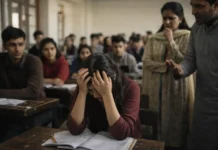
For Unani medical officers, the last open merit advertisement was published in 2018. Since then, not a single new opportunity has emerged. Hundreds of graduates now find themselves in a vacuum, watching their degrees lose relevance. Meanwhile, other healthcare disciplines have seen regular intake and career progression. The frustration is not just professional; it is emotional and psychological. These young doctors bear the burden of family expectations, financial strain, and fading hope.
The situation under the National AYUSH Mission is equally dispiriting. While recruitment for Community Health Officers (CHOs) took place in the Jammu division last year, the results are still pending. In Kashmir, there has been no advertisement, no notification, and no indication that recruitment is even being considered. This lack of parity within a single administrative unit reinforces the sense of exclusion felt by Unani professionals.
A System Failing Its Own
Dr Andleeb’s voice captures the sentiment of an entire generation of AYUSH practitioners: “We have written letters, filed grievances, knocked on doors, only to receive vague assurances or no response at all. How long will the authorities remain indifferent to the anguish of their citizens?”
The brightest graduates, those who once led group discussions and served diligently during clinical postings, now sit at home, unemployed and invisible. The investment of nearly a decade in medical education has yielded neither employment nor recognition. This is not the failure of the individual; it is the failure of a system that refuses to acknowledge its healers.
India cannot continue to promote its heritage of traditional medicine while ignoring the very professionals trained in it. This is not just a policy failure. It is a moral failing. The government, health authorities, and the Ministry of AYUSH must act, not out of charity, but out of responsibility. The voices rising from clinics, dispensaries, and homes across Jammu and Kashmir are not calling for privilege. They are demanding justice.
An Overlooked Tradition
AYUSH systems, including Unani, have long formed a vital strand in India’s healthcare fabric. At a time when global recognition of traditional medicine is rising, India’s practitioners find themselves neglected. The silence of institutions has placed the future of an entire medical community at risk. These are individuals who chose service over status, and commitment over convenience. If the indifference continues, it will not merely be careers that are lost, but an entire generation of healers. The call to policymakers is not one of complaint, but of urgency. This profession was not chosen to lead a life of unemployment. It was chosen to serve. Now the system must respond with fairness, transparency, and timeliness. The problem is not personal. It is structural.
Every year, hundreds of AYUSH graduates complete their education with the intent to strengthen public health. They often come from modest backgrounds, from families who placed their trust in education as a path to dignity. Many return to rural areas with the intent to serve the communities they came from. Yet, they find no jobs, no transparent recruitment process, and no institutional acknowledgement. Their absence from the public health system is a loss not only to them but also to a country that struggles to provide affordable care to its population.
Policy Paralysis and Delays
The government must act decisively. Recruitment processes, especially those relating to the Jammu and Kashmir Public Service Commission (JKPSC) and the National AYUSH Mission (NAM), need to be expedited. These should follow clear timelines and be subject to public accountability. Legal disputes must be resolved promptly, prioritising unemployed candidates over those already on contract. The advertising of fresh posts should no longer be an occasional event. Recruitment calendars must be regularised, comparable to those of other professional streams.
At the same time, the state must create space for AYUSH professionals within public health. These doctors can contribute to school health programmes, telemedicine networks, drug rehabilitation initiatives, and mental health services. For this to happen, there must be structural inclusion. This requires a comprehensive AYUSH Development Policy in Jammu and Kashmir. Such a policy should go beyond infrastructure and address career progression, research opportunities, and livelihood support. Fellowship programmes, public-private partnerships, and academic collaborations must be actively promoted. AYUSH cannot continue to function as a secondary appendage to modern medicine. It must be treated as a complementary and essential pillar of national healthcare, in line with the recommendations of the National Education Policy and the World Health Organisation.
From Silence to Action
What is being demanded is not empty reassurance, but decisive steps. Aspirants are not seeking privileges, but fairness. They ask for recruitment timelines, not another round of red tape. They seek dignity, not abandonment. These demands come from every corner of Jammu and Kashmir, where unemployed Unani doctors wait with degrees in hand, their aspirations suspended indefinitely. Justice delayed, in this context, is justice denied, not only to them but also to the patients they could have served. Their silence has been mistaken for resignation. It is not. It has been a sign of patience, but if this silence breaks, it will do so not as noise, but as a reckoning. The tragedy would not lie in the protest, but in the healthcare system’s failure to respond to its own.
AYUSH is not foreign to India. It is local in origin and deeply connected to social and cultural practices. It reflects indigenous knowledge, dietary norms, and regional understandings of health and wellness. Its low cost makes it accessible to those who cannot afford expensive procedures. Yet it remains absent from key health policy decisions and budget allocations. The contradiction is glaring. The government continues to establish educational institutions that produce skilled AYUSH doctors, while failing to create the positions necessary for their employment. It is like constructing a bridge while refusing to build the roads that lead to it.
A Structural Crisis
This is not a question of inadequate training or limited talent. It is a problem of political indifference and bureaucratic inertia. The National AYUSH Mission, introduced with ambitious goals, has failed to deliver on those promises in regions such as Jammu and Kashmir. The hiring of Community Health Officers (CHOs) was expected to improve rural healthcare and create employment. Instead, the process became defined by delays and irregularities. Many existing contractual workers were reappointed, bypassing new aspirants. This undermines the principles of fairness and equal opportunity.
The need of the hour is a structured, data-driven policy. Annual mapping of unemployed AYUSH graduates, along with their areas of specialisation and regional preferences, should be undertaken. Such data can inform recruitment, training, and deployment strategies. Collaboration between AYUSH colleges, research centres, and health departments can lead to internships, apprenticeships, and small-scale ventures in preventive medicine and herbal formulations. With the right tools and institutional support, these professionals could drive holistic healthcare instead of being left behind.
The Role of the Media and the Way Forward
The media must also shoulder its responsibility. It must report on the quiet struggle of AYUSH graduates and hold decision-makers to account. It must highlight the missed opportunities and ask why a trained medical workforce remains idle while the healthcare system remains overstretched. These are not abstract numbers, but real individuals whose futures have been put on hold.
This appeal does not stem from resentment, but from hope. Hope that the right person will read it. Hope that action will replace delay. Hope that future graduates will not face the same indifference. Let that change begin now, not with another policy statement, but with tangible, measurable decisions that restore trust in the system.
(The writer is a researcher in immuno-oncology, and a public health advocate. Ideas are personal.)