by Dr Suheel Rasool Mir
In a world fractured by borders and ideologies, Gurez stood as a testament to the unifying power of a simple sport. On its rugged terrain, horse polo became more than a pastime; it was a celebration of life, a symbol of hope and unity in adversity.
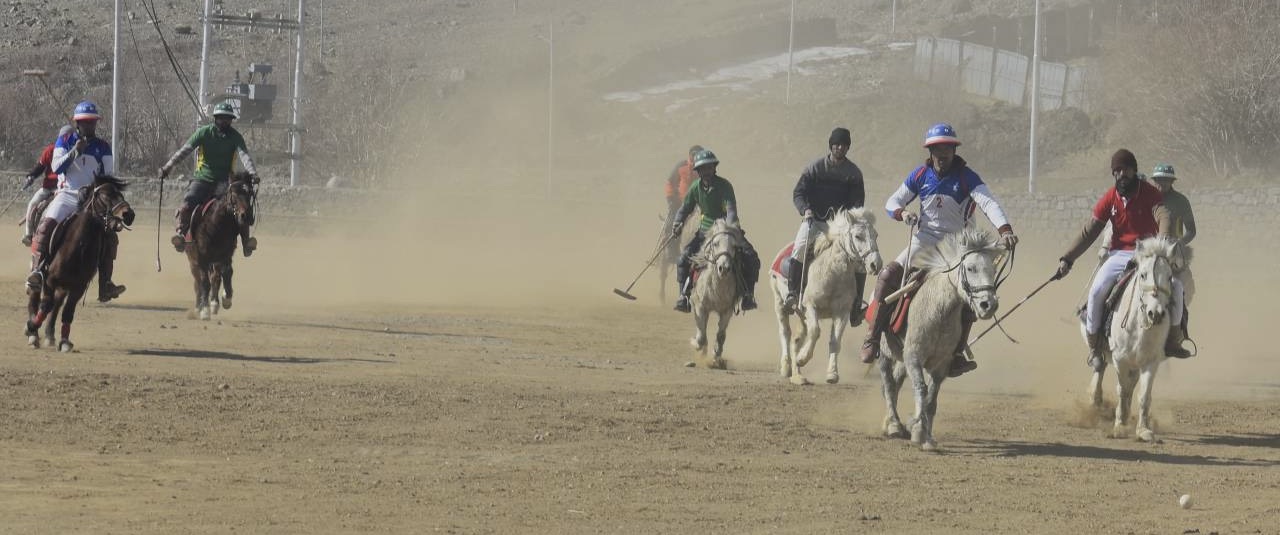
The history of traditional horse polo—known as Chaughan Bazi or Tappa in the Shina language—is deeply rooted among the Dards of the Gurez Valley. Its origins lie in Central Asia and Persia, spreading across regions via the ancient Silk Route. The game took root and flourished in the high-altitude terrain of Dardistan, a cultural and geographical expanse that includes Gilgit-Baltistan and the areas of Gurez and Ladakh. Here, it became a living cultural memory for the Shina-Balti ethnic groups.
Since antiquity, Gurez—the valley inhabited by the Shina-speaking people—has been a centre of sporting tradition, encompassing both indigenous games and more contemporary pursuits such as snow cricket. Traditional sports like horse polo served not merely as recreation but as moral and social instruction, instilling values of righteousness and communal harmony among the Dard-Shina people. Gurez, once a key landmark on the Silk Route, now finds itself severed from these ethnic and cultural ties. The Silk Route once offered Gurezi polo players access to neighbouring regions such as Astore, Diamer, and Gilgit, facilitating a rich exchange of tradition and sport.
Horse polo occupied a central place in the culture and civilisation of Dardistan. It is widely believed to have originated and evolved in this region, spanning Gilgit-Baltistan, Gurez, Kargil, and Ladakh, over two millennia ago. Originally conceived as a military training exercise, the game swiftly gained popularity among the Dards of Gilgit, Gurez, Drass, and Kargil, as well as among the Baltis of Baltistan and Ladakh. During the colonial era, the British discovered horse polo in these Dardic highlands and later introduced it to Europe, where it developed into the modern sport recognised today. Yet, in Gilgit and Baltistan, including Kargil and Ladakh, horse polo has remained anchored in its ethnic and cultural origins.
Polo in Gilgit-Baltistan is a cherished sport, passionately played across high-altitude landscapes. Among the Dards of Dardistan, it is proudly hailed as the “Game of Kings”, deeply embedded in the cultural fabric of the region. The renowned Shandur Polo Festival, held annually on the world’s highest polo ground, draws teams from Gilgit, Diamer, Chitral and surrounding areas. The event offers not only thrilling matches but also the lilting rhythms of Shina and Balti folk music, set against an overwhelming Himalayan backdrop. Steeped in the centuries-old Dard-Shina tradition, horse polo—Chaughan Bazi or Tappa—represents far more than a game; it evokes a profound bond between the Dard-Shina people and their ancestral geography and identity.
Recently, the Union Territory of Ladakh designated horse polo as the official sport of the region. In Drass-Kargil and Ladakh, it enjoys a revered status as a traditional favourite, promoted actively by both the local communities and the Ladakh administration.
Mohammad Amin, aged 45, a local horse polo expert who trains young players and organises tournaments in Drass-Kargil, remarked, “Through this ancient ritual sport, we honour our roots and ancestral legacy. Polo is in our ethnic spirit—it is not just a game; it is an ethnic feeling and emotion that symbolises our identity and history. It is the game echoed in the top mountain ranges of the Himalayas, Pamir, Karakoram, Badakhshan, Hindukush and Nanga Parbat.”
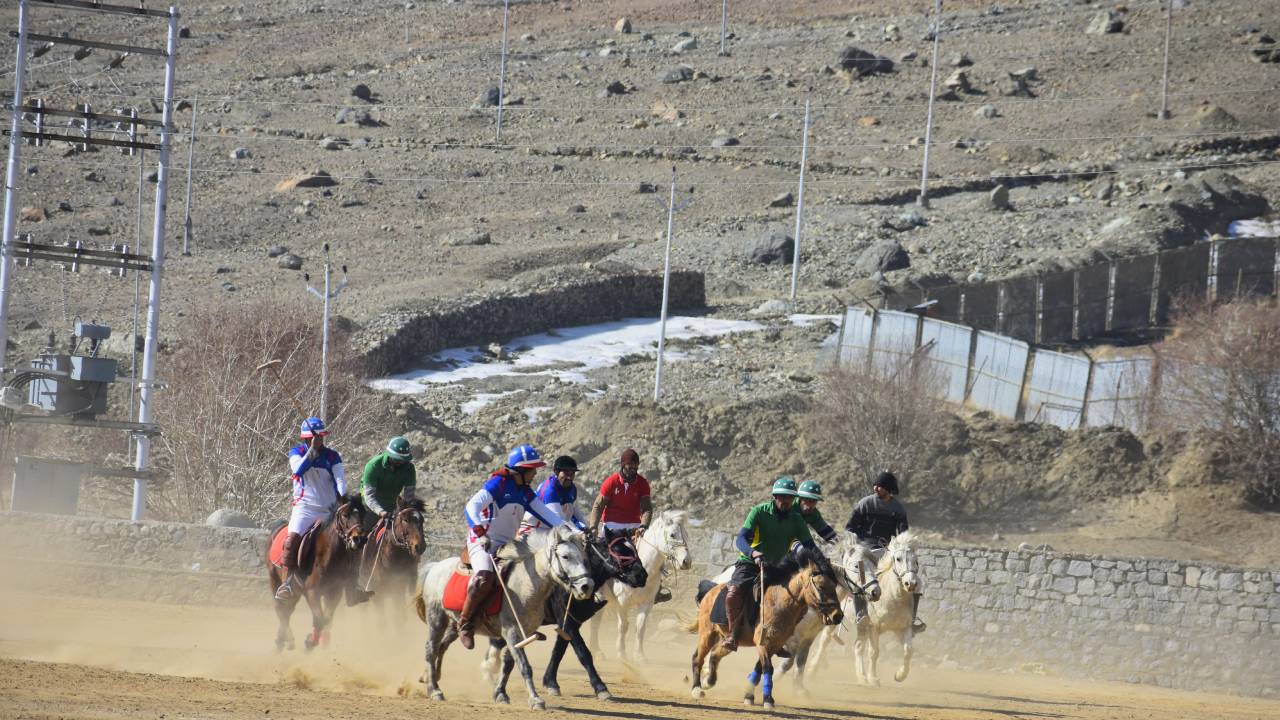
In his travelogue Dardistan, G W Leitner observed that Chaughan Bazi—described as hockey on horseback—was once widely popular across northern Kashmir. The sport, also known as polo by the Baltis and Ladakhis, was locally referred to as Tappa in the Gurez Valley. It continued to be played there until the 1950s and 1960s, after which it gradually faded from the cultural landscape. Nonetheless, horse polo still thrives in Drass, Ladakh, Gilgit and Baltistan. Among the Shina-speaking people of Gurez, it was once commonplace, but from the 1960s onwards, the game lost its footing and eventually disappeared from this ethnic minority valley.
In ancient times, the people of Gurez Valley found joy and meaning in traditional pursuits such as horse polo, horse riding and hunting. These activities did more than entertain; they cultivated resilience, physical strength and strategic thinking. Horse polo, once a pinnacle of cultural life in the valley, served not only as a source of recreation but also as a powerful symbol of unity and shared identity. In a land defined by geopolitical tensions and an unforgiving environment, the game offered a rare and cherished reprieve. It drew together individuals from diverse backgrounds, languages and social strata, becoming an enduring emblem of Gurez’s fortitude and collective will to persevere.
Polo, one of the world’s oldest team sports, originated over 2,000 years ago in ancient Iran as a cavalry training game for Persian nobility. Known as the “Sport of Kings,” it is played on horseback by two teams of four using mallets to hit a ball into the opponent’s goal. The game, which lasts one to two hours in periods called chukkas, spread globally and became a prestigious spectator sport. Polo was once an Olympic event (up to 1936) and is now played professionally in 16 countries, with over 100 nations affiliated with the Federation of International Polo.
Beyond mere play, horse polo in Gurez forged connections that transcended borders and instilled a profound sense of belonging. In those fleeting moments of sport, the valley overcame its physical remoteness, as the rhythm of the game spoke a universal language—one that resonated deeply with its scattered yet resilient people.
Within Gurez, the sport fostered kinship and nurtured an ethnic communitarian bond, untouched by distinctions of caste or colour. It was played with an inclusivity that encouraged interaction and growth, both mental and physical. Horse polo promoted peace and harmony, reinforced youth engagement, and strengthened communal ties. It was more than a pastime; it was a unifying ritual. Families, clans and castes gathered to form cohesive teams, embodying a shared spirit and transforming the game into a collective cultural expression.
There is little doubt that the elderly population of Gurez mourns the fading legacy of their age-old sporting tradition—horse polo. In 2022, during my fieldwork in the valley, I had the chance to interview Mohammad Anwar Khan, then 102 years old. As we began our conversation, he lowered his voice, placed a trembling hand upon his forehead, and expressed profound sorrow at the death of the game that had coloured his childhood. With a tone heavy with regret, he lamented the vanishing Dardic heritage, accusing the present generation of being consumed by a superficial modernity. He criticised the wave of projected modernisation that, in his eyes, had eroded the cultural core of Gurez. Among the casualties of this transformation, horse polo—once a cherished meeras, or heritage—had been left to wither.
Since the 1990s, he observed, the Dardic ethos has steadily declined. He attributed this to a growing trend of migration, as the Shina people abandoned their native highlands for semi-urban and urban settlements. This movement, he argued, lay at the heart of the ethnic erosion afflicting the Dard-Shina community. Tappa—horse polo—was not merely a sport, but an ancient tradition unique to the tribe, one that bore immense cultural resonance. Passed down through generations, polo had served as a vessel of heritage, preserving the values, memories and identity of the Shina people. It embodied a living history, fostering social cohesion and strengthening communal bonds.
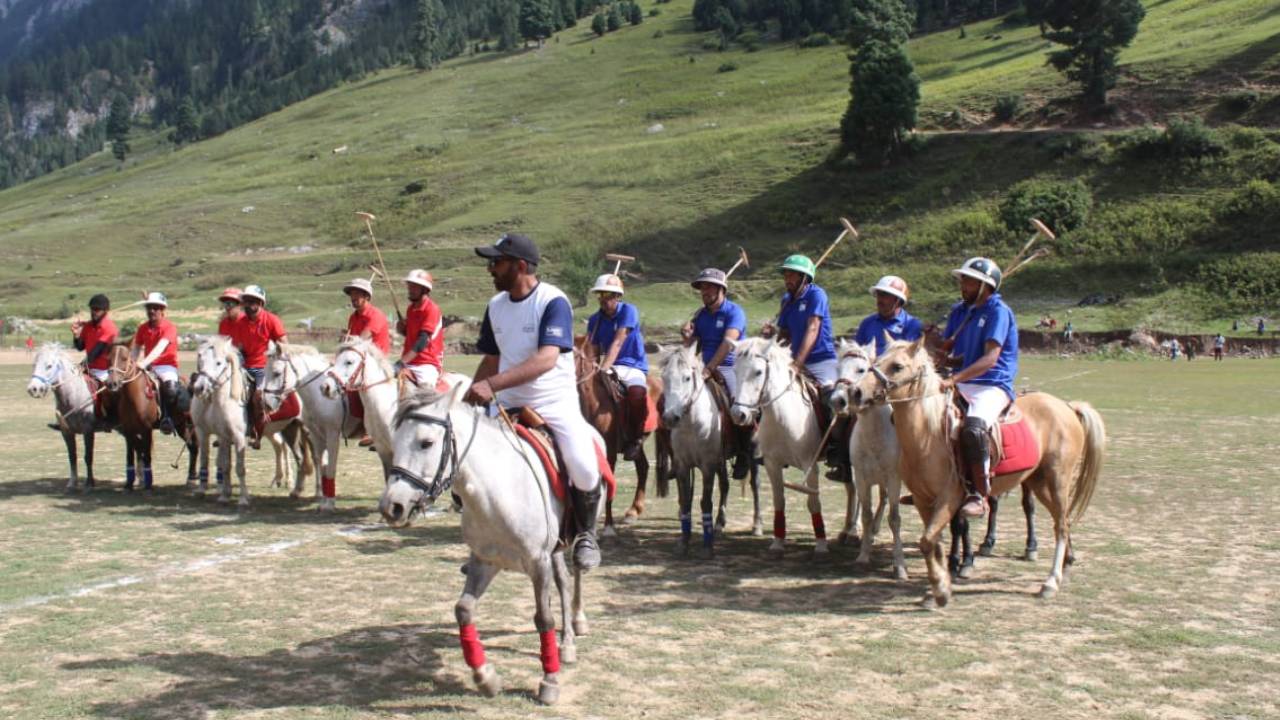
Another historical blow came with the closure of the Silk Route, the vital socio-economic and diplomatic artery once used by Gurezi polo players to travel to Gilgit for matches. The subsequent partition and the imposition of borders further fractured the region, pushing ethnic minorities to the periphery. Amid these historical upheavals, polo—once the pride of every Gurezi heart—was reduced to a distant memory. Today, even among the Shina-speaking youth of Gurez, few are aware that this sport was once the crowning symbol of an undivided and culturally vibrant Gurez.
Before the 1960s and 70s, when horse polo thrived in Gurez, it created a space where people from Gilgit-Astore, Diamer, Chilas, and Drass-Kargil could gather, interact, and forge bonds in the spirit of Dard-Shina camaraderie. The game, which originated in the Dard-Shina and Balti regions—stretching from Gilgit-Baltistan through Gurez and Ladakh—played a vital role in preserving the Dardic and Balti ethos. It fostered social cohesion, promoted physical and mental well-being, and transmitted enduring values across generations of Dards.
In a world fractured by borders and ideologies, Gurez stood as a testament to the unifying power of a simple sport. On its rugged terrain, horse polo became more than a pastime; it was a celebration of life, a symbol of hope and unity in adversity. The game fostered a deeper sense of belonging and solidarity within the tribe than contemporary sports such as cricket, snow cricket, or skiing. Once the cradle of horse polo, Gurez now mourns its absence.
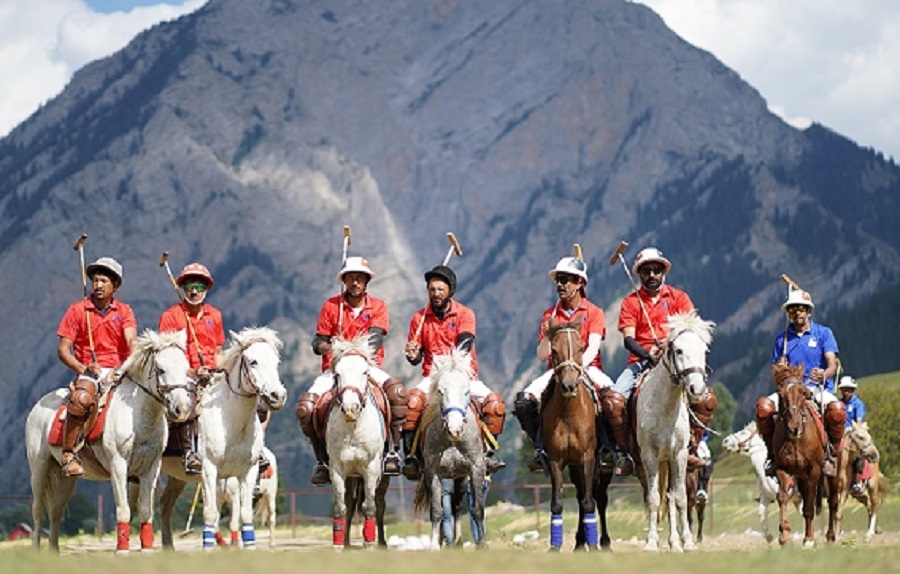
Gurez, once an integral part of the larger Dardistan, is witnessing the slow erosion of its Dardic traditions. Many traditional sports have already been lost, while the few that remain teeter on the brink of extinction, are threatened by an encroaching cultural homogenisation. Ironically, amid the commodification of ethnic identities, much of the traditional ethos is being swept aside by the relentless forces of capitalism. The rise of ventures such as fantasy leagues and online gambling platforms has inflicted physical and mental harm, eroding cultural spaces and diverting attention from ancestral pastimes.

The Government of Jammu and Kashmir, alongside local communities, must act urgently to restore and revive horse polo, recognising its socio-cultural and political importance. In an age obsessed with material pursuits and rapid change, it falls upon the state to create meaningful spaces where the legacy of horse polo can be reborn—spaces that honour the sporting heritage of the Gurez Valley.
As the echoes of galloping hooves fade into silence, a story remains—will the Jammu and Kashmir government succeed in reviving a game that once defined the Dards of Gurez? Today, horse polo survives only in memory. Its revival is not merely about a sport, but about restoring identity, reclaiming pride, and preserving an intergenerational legacy—meeras. Can thoughtful policy breathe life back into those forgotten polo fields and awaken the riders who once brought them to life?
(The author is a sociologist working on the borderlands of Kashmir and Ladakh, specialising in the sociology of ethnicity and marginal communities. He is the author of the Cultural Encyclopedia of the Dard Tribe. Ideas are personal.)