An Australian teacher gave up his profession and started trekking into the Himalayas till he fell for Kashmir. These off-track treks led him to find his best half, a venture and a mission to write what others cannot afford, writes Aiman Fayaz
In 1970, when Garry Weare, an Australian trekker, first landed in Kashmir he lost himself to the Vale’s charms. Soon, he became deeply passionate about the region and emerged as the leading authority on Kashmir’s Himalayan connection.
Like any other adventurer, Garry initially visited Kashmir for a short trek. Afterwards, he spent five months trekking in Nepal, but the enchanting memories of Kashmir lingered in his mind. Determined to return with a purpose, he decided to organise treks. This was a sound idea it helped him retain his Kashmir connection and funded his passion. He led his first commercial trek in Kashmir in 1973, which marked the beginning of his deep connection to the region.
A Detention
Incidentally, Garry’s first group trek took him from Kashmir to Ladakh, a region that had only been open to domestic travellers for a year. His adventure, however, took an unexpected turn as he was held back for nine days by the Jammu and Kashmir Police, as foreign travel to Ladakh required special permission. Ladakh has frontiers with Pakistan and China.
In custody, Garry remained under detention for more than a week in Ladakh and faced the uncertainty of bureaucratic delays. Ultimately, the magistrate resolved the situation, releasing him with a mere court summons, and allowing Garry to continue his exploration of the mountainous region.
“It was a wonderful experience,” Garry remembers. “For the first time, I felt bad about leaving a place of detention. Bidding farewell to the people who had shared that time with us was truly heartbreaking.”
Garry further explained that their nine-day detention was largely because most of the policemen in the Cargo were Kashmiris who were bored. “We played chess every evening for nine straight days and became a source of entertainment for them. So, it was hard for them to set us free.”
The Roots
Born in the wilds of South London, Garry often contrasted the suburban life of his birthplace with the majestic Himalayan mountain range. After studying politics and philosophy, he realised that life was about more than just choosing a profession and sticking to it. He believed his best decision was to think outside the box and embark on his first trek to Kashmir. This visit began his understanding that he truly enjoyed exploring the outdoors, transforming his hobby into a lifelong passion.

Garry met his wife, Margie Thomas, at the age of 57 after returning from one of his treks. They connected through mutual philanthropic work when Margie was involved with the Australian Tibetan Society, while Garry had recently founded the Australian Himalayan Foundation. Needing someone to write an article for his first magazine, Garry found Margie to be the perfect candidate. As an avid trekker, Margie completed several treks in Nepal and India.
Their paths eventually crossed during a Ladakh trek led by Garry. It was during this trek that they fell for each other. Their connection was so strong that Garry soon asked Margie to marry him, and she happily accepted.
“We both shared a deep love for the Himalayas, and that was a bond that brought us together,” Margie reflected. “The Himalayas truly united us.”
Twenty years ago, Margie visited Kashmir for the first time with Garry and was awestruck by the beauty of the region amidst its chaos.
“It seemed like a troubled place, with people warning us about the safety,” Margie recalled. “But we never felt unsafe, and we have continued to visit the region frequently.”
Every time the couple visits Kashmir, they usually book a houseboat and immerse themselves in the serene beauty of Dal Lake. They enjoy peaceful Shikara rides and leisure walks along the University of Kashmir, cherishing every moment spent in the picturesque paradise.
Fascinating Crafts
Their love for the mountains apart, Garry and Margie are captivated by the rich history of handicrafts and shawl-making in Kashmir. They have become avid observers of every intricate step in the process. From the dyeing of the yarn to the delicate spinning and intricate embroidery, their fascination with Kashmiri handicrafts goes beyond mere admiration.

Garry worked for a couple of years in the Australian bush and saved money for his future adventures so that he would not face any financial problems. Then he started organising backpacking trips in Kashmir. Alongside two partners, he founded the Australian Himalayan Expeditions, which marked the beginning of something significant. This initiative later expanded into World Expeditions, an organisation aspiring to have a global presence.
Till The Peace Prevailed
Garry’s experiences in Kashmir up until the 1990s were filled with wonder and joy until the region was engulfed by insurgency. Reflecting on this period, Garry lamented: “Everything was going well until everything fell apart in January 1990. We tried to continue visiting Kashmir, but it became increasingly difficult for years thereafter.”
The lack of communication in the region became a major hurdle, preventive travel advisories from countries like Australia, the UK, Canada, and New Zealand added to the crisis, making travel to Kashmir challenging. This posed significant challenges for Garry’s company, which was unable to organise trekking expeditions for thirty-five years due to restrictions and safety concerns. Navigating through these obstacles, Garry and his team faced a prolonged period where their passion for exploring the Himalayas through expeditions was put on hold.
Since the abrogation of Article 370, news channels have depicted Kashmir as a peaceful destination. However, European travel companies have faced challenges in organising treks in the Himalayan region of Kashmir, reportedly due to denial of permission by the authorities.
“It’s deeply frustrating for us,” Margie expressed. “We come here and see everything is perfectly fine, yet we’re held back from performing any activities.”
Last year’s G20 delegation in Kashmir portrayed the region as serene, with glowing reports highlighting its peaceful ambience. However, the reality on the ground paints a different picture. Despite these positive portrayals, logistical and bureaucratic challenges persist that prevent international activities like trekking from fully resuming in Kashmir.
“The last time foreigners were killed by militants was back in 1995, nearly thirty years ago,” Garry lamented. “How long do we have to wait to get back to doing things? It’s ridiculous.”
Committed to Kashmir
Even after all these years, Garry remains dedicated to developing programmes aimed at addressing the challenges of foreign travel in Kashmir.
Having been involved with Kashmir tourism since the 1970s, Garry witnessed the region’s emergence from a prolonged period of despotic rule that ended in 1947. During this transformative period, Kashmiris were navigating the complexities of forging a new future post-imperialism.
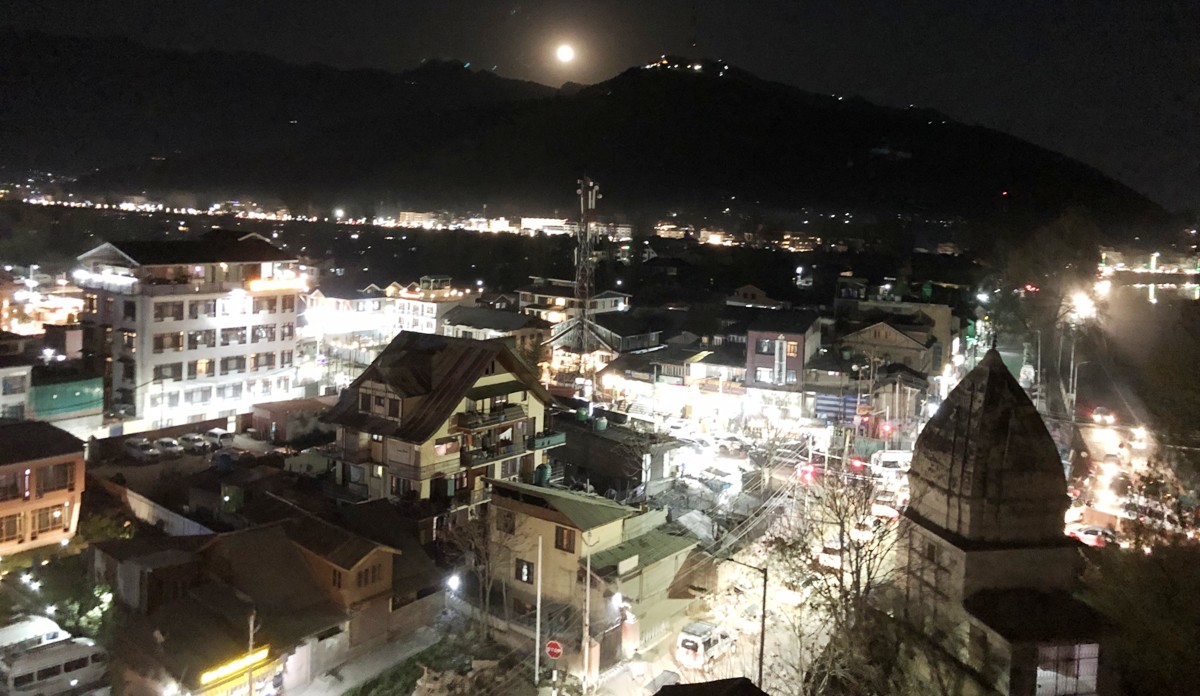
The support and hospitality that Garry has received from his Kashmiri hosts over the years have been invaluable and that encouraged him to return to Kashmir annually without fail. Despite witnessing significant changes in the region’s socio-political landscape from the 1990s to 2024, particularly during challenging times, Garry has consistently found resilience and warmth in the faces of the Kashmiri people.
“As progress unfolds in Kashmir, we believe that the region’s infrastructure requires significant improvement,” remarked the couple. “There are incredibly beautiful places in Kashmir, but accommodating 50 to 55 trekkers at once is simply unsustainable and impractical.” They said the policymakers must think about the carrying capacity of the place before getting into inviting people, now mostly domestic tourists.
They believe the administration must take proactive steps to preserve these natural assets for future generations. This includes enforcing strict regulations to ensure responsible tourism practices, such as limiting group sizes and encouraging smaller, more intimate trekking groups. By doing so, they can help minimise environmental impact and maintain the pristine beauty of Kashmir’s landscapes.
Garry also stressed the importance of tourists adopting a respectful attitude towards the environment during their visits. This involves leaving no trace, respecting local customs and traditions, and supporting initiatives that contribute positively to the community and ecosystem.
Garry pointed out that it will take considerable time for Kashmir to regain its place on the travel map for foreign visitors, especially if government travel advisories are not quickly lifted. The region’s history of militant activity over several years had significantly deterred international interest.
Acknowledged the substantial efforts made by India’s central government to revitalise tourism in Kashmir, Garry asserted that it cannot rely solely on a few interested parties. While foreign trekkers may eventually return, he said it will require sustained and concerted efforts to rebuild trust and promote Kashmir as a safe and welcoming destination once again.
An Accomplished Writer
Garry is also an accomplished writer. He has penned the captivating book A Long Walk in the Himalayas, which features a comprehensive section dedicated to Kashmir. His literary journey was not just about documenting his travels but also fulfilling a profound personal quest.
One of Garry’s ambitions was to symbolically connect the sacred waters of the Ganges, taken from its source at Gamuk, to Gangabal, a revered source of the Jhelum and ultimately the Indus River. This symbolic act carried deep spiritual significance for him.
For many years, Garry had envisioned writing such a book, a project close to his heart long before his hair turned grey. Reflecting on the experience, he described it as the most fulfilling and rewarding journey of his life.
Having the distinction of writing almost all editions of Lonely Planet’s definitive Trekking in the India Himalaya, he recently published his Kashmir Long Walk through History. The book meticulously traces the influences of Buddhism, Hinduism, and the diverse Islamic rulers who shaped Kashmir’s identity leading up to 1946. Beyond these cultural dynamics, Garry delves deeply into the interactions between the Maharajas of Kashmir and the British Empire, providing detailed insights into their complex relationship until 1947.
The New Book
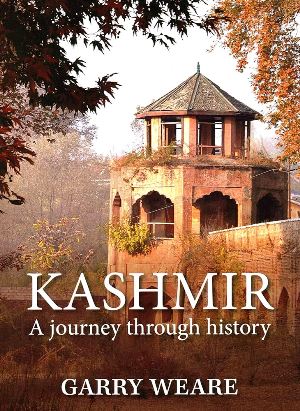
Kashmir: A Journey Through History is a book that captures the history of Kashmir through various eras. The book explores the history of Kashmir through the lens of three major religions – Buddhism, Hinduism, and Islam – which have shaped the region’s cultural heritage. The book starts with the Amarnath cave and the trek that leads there. Weare describes his experience of the trek he undertook in August 2015, discussing the historical significance of the cave’s discovery and linking it to Kashmir’s ancient history. The author also includes Naga legends from Kashmir’s prehistoric times, such as the tale of the demon Jaladeo who resided in the Kashmir lake and caused distress, and how Brahma took his seat on the throne of the gods of Konsarnag.
The next chapter is dedicated to the Buddhist era in Kashmir. Weare writes about how Buddhism was introduced in Kashmir during the time of Emperor Ashoka, and how several hundred monks arrived in the region after the Third Buddhist Council held in Patna in 251 BCE. He describes how the arrival of these monks made an immediate impression on the local villagers, whose faith was aligned with simple shrines in favour of Shiv Lingam or the Naga. The chapter also discusses how Kashmir became an outpost of the Kingdom of Gandhara in the first century CE, and the likelihood of the establishment of Buddhist viharas along the shores of Dal Lake and in Harwan, where the Fourth Buddhist Council was held. Weare also covers the spread of Buddhism in Ladakh and Kargil, and the political events that shaped the surrounding territories.
The third chapter introduces Aurel Stein, the noted Hungarian scholar who translated the Rajatarangini. Weare chronicles Stein’s journey to Kashmir and his work on translating the text, which took him over 12 years. The author then delves into the events of the region’s history, covering the Kushan, Hun, and Karkota eras, with a particular focus on the influential ruler King Lalitaditya and his efforts to ensure equal treatment of Buddhists and Brahmins. The architecture of the era, including monasteries, the Sun temple, and the development of Parihaspura as the capital, is also discussed.
The following chapter is dedicated to the advent of Islam in Kashmir and the role of Sufi preachers, followed by the rule of the Shahmiri dynasty. The chapter highlights the significance of Zainul Abidin, who made great efforts to develop the region.
The subsequent chapters chronicle the Mughal, Sikh, and Dogra eras, describing the political, social, and architectural developments that took place during these periods. The author praises the Mughal rulers for creating magnificent gardens and patronizing the fine pashmina shawls that were graced in India and Europe.
Weare also writes about how Kashmir became part of the British Great Game in 1846 when Maharaja Gulab Singh signed the Treaty of Amritsar and the final Instrument of Accession to India signed by Maharaja Hari Singh in October 1947. The book features over 120 beautiful images and is packed with nuggets of information.
= Now, he is also collaborating on a new book project with Mahmud Shah, the former Director General of Tourism. A casual conversation with Mahmud Shah sparked a new idea in Garry’s creative mind that helped him ignite his passion for yet another exploration into the realms of culture, tourism, or perhaps a blend of both.
“One afternoon, as we savoured Kahwa and beer, Mahmud Shah gazed towards the PirPanjal range and shared a visionary idea,” Garry recalled. “He envisioned a trek that would encircle the entire Kashmir Valley.”
Inspired by Mahmud’s insight and their mutual love for exploration, they began conceptualising interconnected trekking routes. From these discussions emerged the concept for his upcoming book: The Kashmir Himalayan Circuit. This title embodies their ambitious plan to outline a comprehensive trekking circuit around the Kashmir Valley, showcasing its breathtaking Himalayan vistas and rich cultural abundance.
Due to the COVID-19 pandemic, the launch of their book, The Kashmir Himalayan Circuit, was postponed. However, Garry and Mahmood Shah are now gearing up to finally unveil their envisioned trekking route in September 2024, coinciding with Garry’s return to Kashmir.
(With inputs from Humaira Nabi)