Eight years before the undoing of the special status of Jammu and Kashmir, AG Noorani (1930-2024), an outstanding expert on border issues, the constitution and Kashmir, published the authoritative history of Article 370. Five years after the abrogation took place, he passed away. Muhammad Nadeem read the book and found it revealing
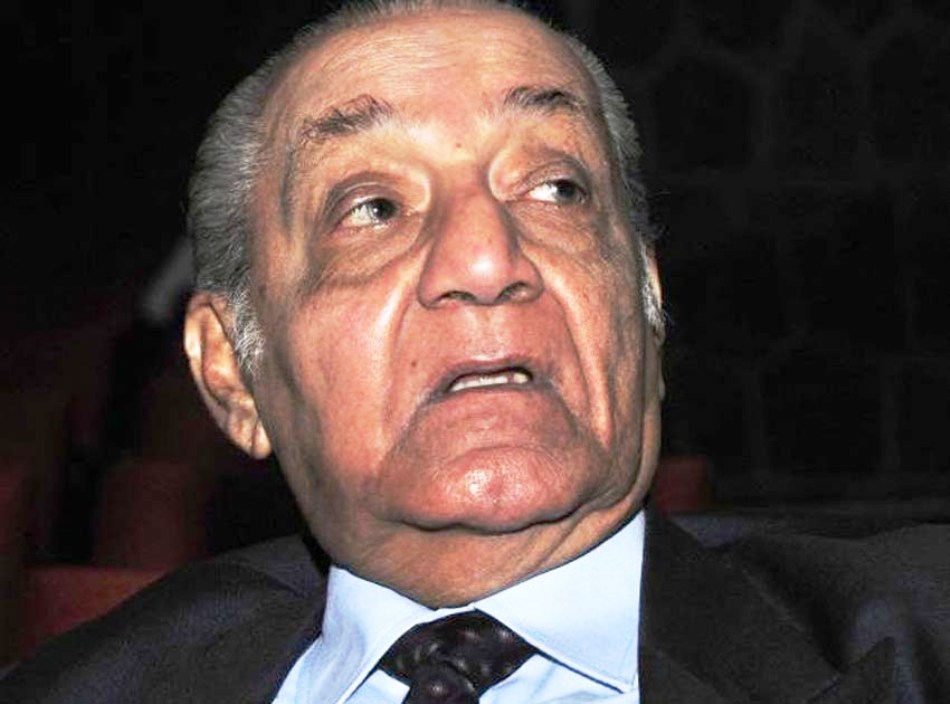
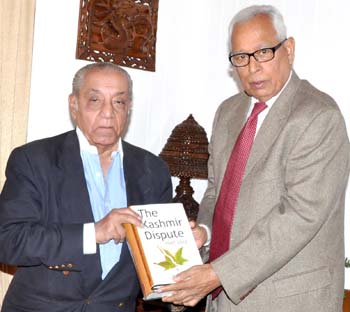
AG Noorani’s Article 370: A Constitutional History of Jammu and Kashmir is an extensive examination of the constitutional framework surrounding Jammu and Kashmir, specifically the history and implications of Article 370, a provision that was read down by the BJP-led Central Government on August 5, 2019, and upheld by the Supreme Court later. Noorani (1930-2024) passed away on August 29, 2024.
The book’s introduction emphasises the provision’s significance, calling it a “solemn compact” negotiated between the Union of India and the State of Jammu and Kashmir. Noorani wrote that “neither side can amend or abrogate it unilaterally, except by the terms of that provision,” establishing the fundamental nature of the article and the conditions under which Jammu and Kashmir acceded to India.
Noorani structured his exploration around historical and legal documents, tracing the origins of Article 370, its gradual erosion, and the political motivations that shaped its trajectory.
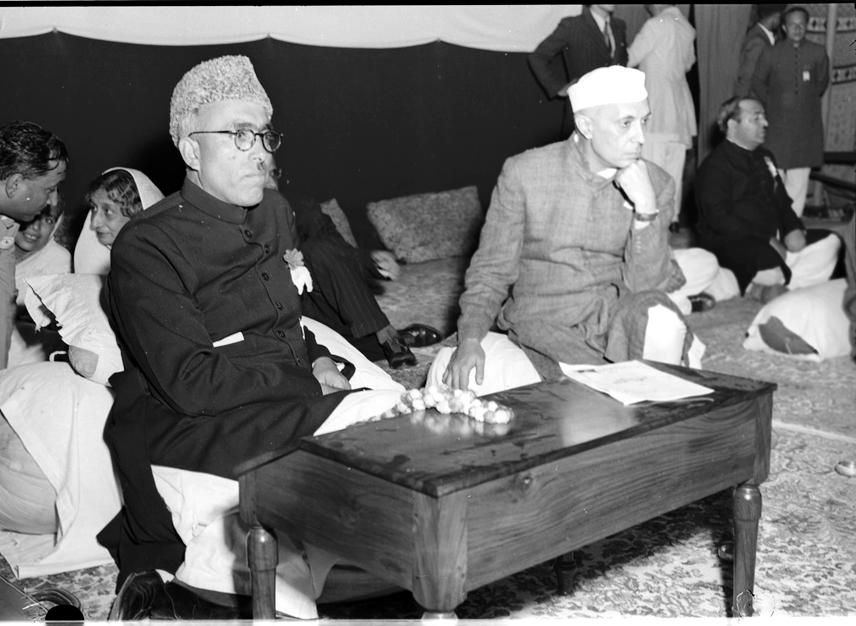
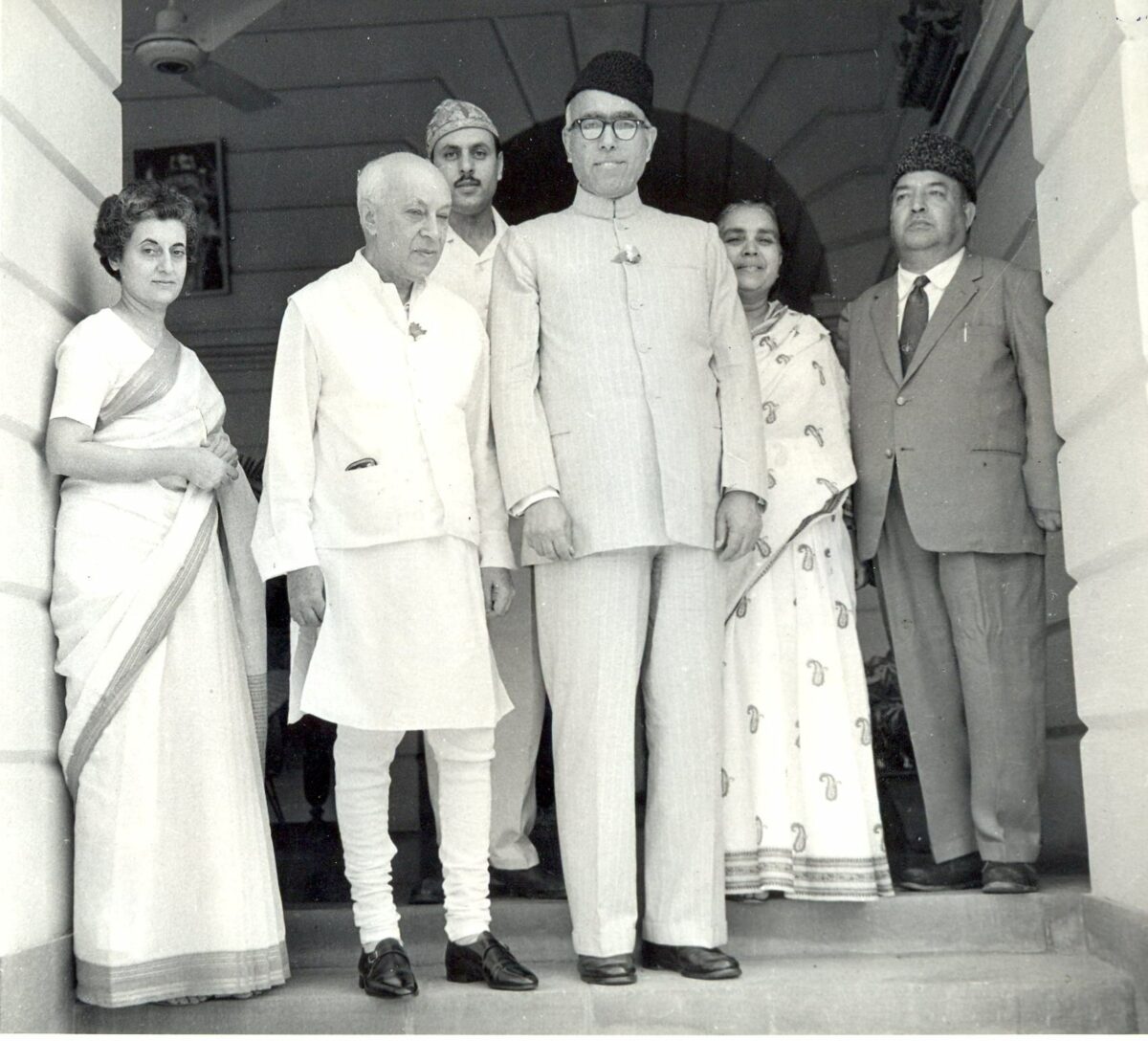
His narrative begins with the negotiations between Jawaharlal Nehru, the then Prime Minister of India, and Sheikh Mohammad Abdullah, the Prime Minister of Jammu and Kashmir. These discussions, held between May and October 1949, laid the groundwork for the inclusion of Article 370 in the Indian Constitution, which Noorani refers to as “a unique provision” established under “unique circumstances”. Noorani’s work challenges the reader to reconsider the historical narratives that have overshadowed the nuanced legal and political dimensions of Kashmir’s relationship with India.
Historical and Legal Examination
Noorani analyses the legal framework underpinning Article 370, beginning with the Instrument of Accession, signed by Maharaja Hari Singh in 1947, which granted India jurisdiction over defence, foreign affairs, and communications while leaving other powers to Jammu and Kashmir. The unique nature of the Instrument of Accession is emphasised, with Noorani highlighting that “no specific form was prescribed by the Act itself,” but that it allowed Jammu and Kashmir to maintain significant autonomy in matters outside of the agreed-upon terms.
The book also explores how Nehru himself admitted the erosion of Article 370 over time. Noorani quotes Nehru from a speech in the Lok Sabha in 1963: “Article 370 has been eroded… We feel that this process of gradual erosion of Article 370 is going on”. This acknowledgement sets the stage for Noorani’s critical analysis of how successive governments, through executive orders, weakened the constitutional safeguards provided to Jammu and Kashmir. For example, he discusses how Presidential Orders, bypassing the stringent requirements of constitutional amendments, were used to extend Indian laws to Jammu and Kashmir, a process described as reducing Article 370 to “a tunnel” through which much of the Indian Constitution was imported into Jammu and Kashmir.
The Erosion
Article 370, originally intended as a protective legal framework to ensure Jammu and Kashmir’s autonomy, was systematically undermined and eventually read down (after a few years of publication of the book). Noorani presents this erosion not merely as a series of legal adjustments but as a betrayal of the trust and agreements made with the Kashmiri leadership at the time of accession. The book details how amendments to the Constitution of India were applied to Jammu and Kashmir without the requisite approval from the State’s Constituent Assembly, which Noorani argues violates the foundational agreement between the two entities.
The author further discusses the importance of the State’s Constituent Assembly, which was dissolved in 1957 after drafting the Constitution of Jammu and Kashmir. After this dissolution, the power to amend the constitutional relationship between Jammu and Kashmir and India essentially disappeared. Noorani critiqued the use of Article 370 to extend Indian laws to the state without the State’s approval, calling it a violation of both the letter and spirit of the law. He points out, “All additions to Union powers since then are unconstitutional”.
Legal Implications
Noorani’s analysis is not limited to the legal domain; he examines the political underpinnings that led to the manipulation of Article 370. The book delves into the Delhi Agreement of 1952, an accord between Nehru and Abdullah, which was intended to strengthen Jammu and Kashmir’s relationship with India while preserving its autonomy. However, as Noorani describes, the accord soon became another tool in the erosion of Article 370, as the Union government continued to extend its influence over the state. Noorani quotes Abdullah’s warning to the Constituent Assembly in 1952: “Any suggestions of altering arbitrarily the basis of our relationship with India… may invite serious consequences for a harmonious association of our State with India”
This political manipulation reached its zenith with the dismissal and arrest of Sheikh Abdullah in 1953, an event Noorani views as a turning point in the relationship between Srinagar and Delhi. He notes that the unconstitutionality of Abdullah’s dismissal is now “universally recognised” and that it marked the beginning of a long period during which Jammu and Kashmir’s leadership was handpicked by New Delhi, often through rigged elections.
Broader Implications
Noorani’s book is not merely a historical account; it also engages with the contemporary relevance of Article 370. He discusses the ongoing alienation in Jammu and Kashmir, which has been exacerbated by the gradual erosion of the State’s autonomy. The author quotes Sitaram Yechury (d September 2024), a senior political figure, who, after visiting Kashmir in 2010, remarked: “We believe that Article 370 has constantly been diluted and is not being implemented. Article 370 is a historic commitment we made to Kashmiris. How can you nullify that?”
In light of the abrogation of Article 370 in 2019, Noorani’s work takes on an even greater significance. While his book predates the abrogation, his analysis offers a prescient warning about the dangers of undermining constitutional safeguards. Noorani argues that Article 370 was a vital part of India’s democratic and constitutional framework, and its erosion, and now abrogation, represents a deviation from the principles upon which the Indian Union was founded.
The book argues that the solution to the Kashmir issue lies in a “constitutional settlement which satisfies the aspirations of the people of Jammu and Kashmir,” a sentiment that echoes through his rigorous and evocative exploration of Article 370.
A Fragile Federalism
The book presents itself as an essential cornerstone for understanding one of the most contentious legal-political entanglements in modern Indian history. Noorani’s thorough examination transcends the mere recounting of historical events, offering a meditation on the fragility of federalism, the role of constitutional safeguards in pluralistic democracies, and the long shadow of political expediency over legal promises.
Noorani underscores that Article 370 was not simply a legal provision but a reflection of a much larger political and constitutional vision—a vision that sought to honour the distinct identity of Jammu and Kashmir within the framework of Indian federalism. He explains how the article allowed Jammu and Kashmir to maintain its constitution and laws while other Indian states had no such privileges. The reader is invited to consider the article as a unique experiment in federalism, an attempt to integrate a culturally and politically distinct region into a larger nation without erasing its uniqueness.
By focusing on the initial intentions behind Article 370, Noorani sets the stage for a broader reflection on the nature of federalism in India. His exploration of the article’s legal intricacies highlights how fragile constitutional promises can be, especially when they are entangled with larger political objectives. The provision was meant to safeguard Kashmir’s autonomy, yet the historical record, as Noorani demonstrates, is a tale of systematic erosion.
Noorani aptly states, “Article 370 was the bridge between India and Jammu and Kashmir. To tamper with it is to question the very terms of that union.”
Presidential Orders
In one of the most incisive sections of the book, Noorani documents how successive Indian governments, starting as early as the 1950s, used presidential orders to undermine the autonomy enshrined in the article. The cumulative impact of these legal manoeuvres, Noorani suggests the erosion of Article 370 as part of a broader pattern of political expediency triumphing over constitutional integrity.
The legal tactics used by the Indian government to dilute the article were, in Noorani’s view, a form of constitutional manipulation that fundamentally undermined the spirit of federalism. “The use of presidential orders to undermine Article 370 was not just a legal strategy; it was a political assault on the very foundations of Kashmir’s autonomy.”
Autonomy and Identity
Noorani’s exploration of the erosion of Article 370 goes beyond the legal realm to examine the broader cultural and political stakes involved. Noorani traces how the special status granted to the state was a recognition of its unique historical, cultural, and religious identity. The article was, in many ways, a constitutional acknowledgement of the distinctiveness of Kashmir within the Union.
The gradual erosion of the article, Noorani argued, was experienced by the people of Kashmir as a cultural and political betrayal. It was seen as an attempt to impose a uniform national identity on a region that had long prided itself on its distinctiveness. Noorani powerfully evokes the sense of alienation and resentment that grew in Kashmir as its autonomy was steadily undermined.
Through his exploration of the cultural implications of the erosion of Article 370, Noorani raises important questions about the relationship between autonomy and identity in a multi-ethnic, multi-religious state. “The dilution of Article 370 was not merely an administrative decision; it was an assault on the identity of a people who had been promised autonomy as the price of their accession to India.” His analysis forces readers to consider whether genuine federalism is possible in a nation-state that seeks to impose a singular national identity on its diverse regions.
One of the most striking aspects of Noorani’s book is the way it foreshadows the eventual abrogation of Article 370 in August 2019. Long before the BJP-led government made the controversial decision to revoke the article, Noorani had warned that the continuous erosion of Jammu and Kashmir’s autonomy would lead to a point where the article could be revoked altogether. He argued that the groundwork for the abrogation was laid over decades, through the legal and political processes he documents in painstaking detail.
“The abrogation of Article 370 abrogates along with its application of Article 1 to the State, with the result that the State ceases to be part of the territory of India. I do not think that this could have been the intention of the framers of the Constitution, for nowhere is the President empowered” he writes.
The Legal and Historical Interplay
A crucial aspect of Noorani’s technique is his masterful blending of legal exposition with historical narrative. He does not merely recount legal cases or constitutional amendments in isolation but situates them within the broader political and historical context. This technique not only makes the book accessible to readers without a legal background but also deepens its intellectual appeal by showing how legal decisions are often driven by political imperatives.
The use of archival materials, including letters, speeches, and official correspondence, adds depth to Noorani’s analysis. The history of Article 370 is not just a legal story; it is a political story told through the lens of law, he notes. By drawing on primary sources, Noorani can demonstrate how the legal erosion of Article 370 was mirrored by political shifts in both Jammu and Kashmir and Delhi.
Noorani widened his lens to consider the broader implications of the erosion and abrogation of Article 370 for the future of federalism. He argues that the case of Jammu and Kashmir is a warning sign for other states with distinct identities and aspirations for autonomy. The centralisation of power, Noorani contends, threatens to undermine the federal structure of India, turning it into a unitary state in all but name.
His critique extends beyond the specifics of Article 370 to engage with larger questions about the balance of power between the centre and the states in India. Noorani’s analysis suggests that the abrogation of Article 370 sets a dangerous precedent for the future of democracy, one in which the central government can override constitutional guarantees to further its political agenda.
Legal Loopholes
One of the strengths of Noorani’s work lies in his ability to dissect the constitutional aspects of Article 370 with clarity and precision. As a constitutional lawyer, he brings to the forefront the legal arguments that have shaped the debates around this provision. Noorani emphasises the provisional nature of Article 370, which was placed in Part XXI of the Indian Constitution, dealing with “temporary, transitional, and special provisions.” Yet, as he shows, the political establishment consistently treated it as a permanent fixture, selectively applying or ignoring the article’s provisions based on political expediency.
Noorani delves into the specifics of how this manipulation occurred. His analysis of the legal texts—such as the Presidential Orders that extended various provisions of the Indian Constitution to Jammu and Kashmir—is particularly instructive. He shows how these orders, issued without the requisite consent of the state’s Constituent Assembly or its later legislative bodies, slowly hollowed out the autonomy promised to Jammu and Kashmir.
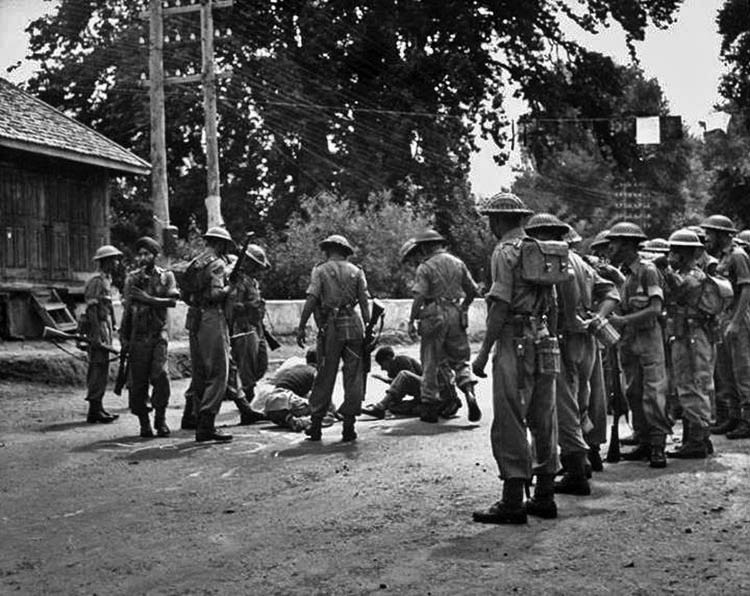
Besides, he addresses the political consequences of this decision, particularly the alienation of the people of Jammu and Kashmir. The abrogation carried out in a context of heightened militarisation and political repression, has further deepened the divide between Kashmir and the rest of India. The implications for democracy are equally troubling, as how the abrogation was carried out without any democratic mandate from the people of the state, using the central government’s emergency powers under the President’s rule.
Structural Narrative
Noorani was methodical, as he organised the book thematically rather than chronologically. This allows him to explore the different dimensions of Article 370 in depth, rather than simply recounting events linearly. Each chapter is dedicated to a particular aspect of Article 370’s history, such as its origins, the process of erosion, and the political dynamics that culminated in its abrogation.
This thematic structure served Noorani’s purpose well, as it allowed him to draw connections between different periods and events, highlighting the continuity of certain political and legal strategies over time. For instance, his discussion of Nehru’s role in the early erosion of Article 370 is juxtaposed with showing how the same arguments about national security and integration were used to justify actions that undermined Jammu and Kashmir’s autonomy.
The Delicate Balance
One of the central themes in Noorani’s work is the tension between autonomy and integration. This tension is embodied in the negotiations that followed Jammu and Kashmir’s accession. Noorani meticulously chronicles the back-and-forth between Sheikh Mohammad Abdullah, the state’s Prime Minister, and Indian leaders such as Jawaharlal Nehru and Gopalaswami Ayyangar. These negotiations culminated in the Delhi Agreement of 1952, which aimed to clarify the constitutional relationship between Jammu and Kashmir and India. The agreement was an attempt to reconcile the aspirations of Jammu and Kashmir for autonomy with India’s desire for greater integration.
Noorani’s in-depth legal analysis of Article 370 is perhaps the book’s most significant contribution. He draws on numerous Supreme Court cases to demonstrate how the central government gradually eroded Jammu and Kashmir’s autonomy. Noorani’s expertise as a legal scholar shines through in his exploration of landmark cases such as the Puranlal Lakhanpal case (1961) and the Sampat Prakash case (1970). In both instances, the Supreme Court upheld the central government’s broad powers under Article 370 to extend provisions of the Indian Constitution to Jammu and Kashmir, without consulting the state’s legislative assembly.
A notable aspect of Noorani’s legal critique is his discussion of the ambiguous language used in Article 370. He highlights the term “modifications” used in Article 370(1)(d), which allowed the President of India to apply the Constitution to Jammu and Kashmir with certain “modifications” and “exceptions.” According to Noorani, this word became the legal loophole through which the central government could extend its powers over Jammu and Kashmir. He cites the Puranlal case, where the Supreme Court stated, “The word ‘modify’ may just mean ‘vary,’ that is, amend; and when Article 370(1) says that the President may apply the provisions of the Constitution to the state of Jammu and Kashmir with such modifications as he may by order specify, it must be given the widest possible amplitude”.
Noorani’s analysis illustrates how Article 370 originally intended as a safeguard for the state’s unique status became a mechanism for its subjugation. Its use as a tool for central control, Noorani argues, reached its apex in 1954, when the President issued the Constitution (Application to Jammu and Kashmir) Order. This order extended several provisions of the Indian Constitution to Jammu and Kashmir, including Articles 1 and 356, thereby significantly curtailing the state’s legislative powers.
Political Ramifications
Beyond the legal realm, Noorani explored the political consequences of Article 370’s dilution. His political analysis is grounded in a deep understanding of the history of Jammu and Kashmir’s internal politics, particularly the disenfranchisement of the Kashmiri people. He contends that the central government’s actions not only undermined the state’s autonomy but also alienated its population. Noorani points out that the erosion of Article 370 was a key factor in the rise of insurgency in the region, as it shattered the trust of the Kashmiri people in the Indian state.
Noorani did not shy away from criticising the Indian government’s failure to uphold its democratic principles in Kashmir. “The issue in that state is not whether elections should be held or not. An election just for the sake of an election will be a farcical exercise which will fail to carry conviction with the people and therefore, not ensure their participation”. This statement highlights Noorani’s critique of the central government’s heavy-handed approach to governance in Jammu and Kashmir, where political legitimacy was often undermined by a failure to address the root causes of discontent.
The Legal and Ethical Questions
Although Article 370: A Constitutional History of Jammu and Kashmir was published before the abrogation of Article 370 in August 2019, Noorani’s work provides a prescient analysis of the legal and ethical questions surrounding such a move. In the book, Noorani anticipates the arguments that would eventually be used to justify the abrogation. He critically examines the legal provisions of Article 370 and argues that its abrogation would be unconstitutional without the concurrence of the state’s Constituent Assembly, which was dissolved in 1957.
“The recommendation of the Constituent Assembly of the State shall be necessary before the President issues such a notification,” Noorani explained. This clause, he argues, renders any unilateral attempt to abrogate or amend Article 370 legally untenable. The central government’s argument that Article 370 was “temporary” and therefore could be abrogated was, in Noorani’s view, a misreading of the Constitution. By labelling Article 370 as ‘temporary,’ the government disregarded the historical and political context in which it was conceived.
Noorani further elaborated on the ethical dimension of this legal debate, emphasising that Article 370 was not merely a legal provision but a solemn political promise made to the people of Jammu and Kashmir. He wrote: “Far from enjoying a special status, as Article 370 envisaged, the State was put in a status inferior to that of other States”. This violation of political trust, Noorani contends, has had long-lasting consequences for the relationship between Jammu and Kashmir and the Indian Union.
Autonomy
He pointed out that other states in India, such as Nagaland and Mizoram, also enjoy special provisions under the Constitution, which are meant to protect their unique cultural and political identities. Noorani suggested that the abrogation of Article 370 could set a dangerous precedent for the future of federalism. He wrote, “Indeed, none can be urged as casus omissus cannot be read into the constitutional text which must be interpreted to give full and wide meaning to its words for it must endure through generations.”
This breach, according to Noorani, has had devastating consequences for the legitimacy of democracy in the region, contributing to a sense of alienation and resentment that continues to fuel conflict.