After going through the two latest novels of Ayaz Rasool Nazki, an academician and a cultural administrator, Muhammad Nadeem found the poetic plots that reflect Kashmir in a global portrayal
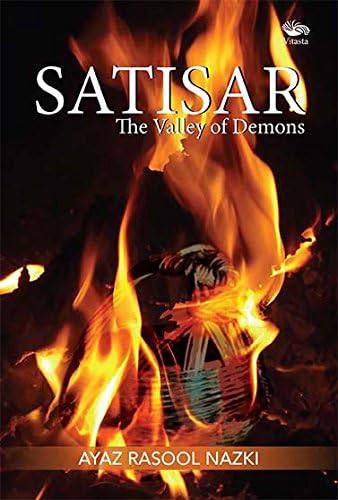
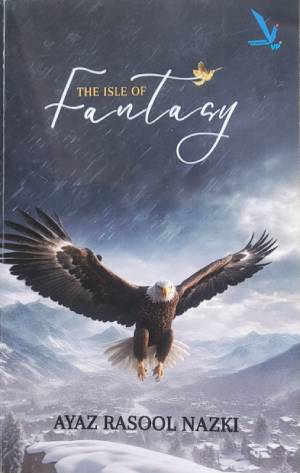
Ayaz Rasool Nazki’s novels Satisar: The Valley of Demons and The Isle of Fantasy each weave rich allegories to interrogate identity, power, and resilience in societies marred by conflict. Drawing from myth, folklore, and socio-political contexts, Nazki explores the psyche of apparently besieged communities. Satisar depicts a mythical Kashmir where the supernatural and historical blend, The Isle of Fantasy constructs a microcosmic society of animals, casting an anthropomorphic lens on the themes of resistance and erosion. Through these distinct yet complementary worlds, Nazki uses allegory to address universal struggles for autonomy and meaning.
Plot Structure
Nazki’s plots in Satisar and The Isle of Fantasy are crafted with allegorical precision, reflecting broader societal concerns through intricate, multi-layered narratives. In Satisar, Nazki employs a fragmented and non-linear plot that traces the mythical journey of characters rooted in Kashmiri folklore and history. Some of these characters seek liberation from powers in physical and spiritual control of the ecosystem. This quasi-historical journey, in which we interact with deities, militants, and ghosts, mirrors the cyclical nature of real-world oppression, allowing Nazki to explore complex ideas about the persistence of trauma and the layered nature of memory.
Contrastingly, The Isle of Fantasy employs a more linear, allegorical plot that follows the evolution of a community of pigeons as they resist an oppressive regime. The pigeons’ journey from subjugation to rebellion encapsulates the psychological transformation of controlled communities, embodying a transition from silence to voice. Through their struggle, Nazki critiques authoritarian power structures and underscores the importance of collective action. While the pigeons’ rebellion serves as the climax, it also represents a deeper commentary on the reclamation of lost agency, reflecting the experiences of marginalised societies worldwide.
Nazki’s choice of setting is particularly strategic: the valley in Satisar and the confined island in The Isle of Fantasy function as isolated ecosystems that intensify the characters’ interactions with controlling forces. The valley, timeless and mystical, parallels the psychological landscape of Kashmir, where past and present continuously intersect, while the island functions as a contained society where the imbalances of power are starkly visible. This contrast between open and closed settings emphasises how different forms of control impact individuals’ psyche and their capacity for resistance.
Symbolic Roles
Nazki’s characters serve as both individual figures and archetypes, a dual role that enables him to represent diverse responses to control and cultural displacement. In The Isle of Fantasy, the pigeons symbolise passive compliance that shifts to rebellion, but they also represent resilience and the longing for autonomy. The transformation of Pixie from a cat to a human is particularly layered, underscoring themes of imposed identity adaptation and self-discovery. Pixie’s evolution symbolises individual metamorphosis and explores the sacrifices inherent in reclaiming agency; she loses connection with her family and past life, mirroring the loss that often accompanies personal and cultural transformation.
In Satisar, Nazki’s characters reflect mythological figures who embody the collective Kashmiri memory and spirit. His journey across time and through spiritual realms represents a community’s search for meaning amid prolonged suffering. The character of Maqbool, a bard who transforms from an idealist to a politically conscious figure, illustrates how artists can act as both witnesses and participants in the social landscape. Similarly, Lally, a rebel figure, offers an example of defiant resilience in the face of insurmountable challenges.
Nazki’s use of anthropomorphic and mythological characters reflects his intent to create a symbolic framework within which readers can explore varied responses to control. By imbuing these characters with symbolic depth rather than focusing solely on interpersonal relatability, Nazki emphasises the broader societal implications of their actions. While this approach sometimes limits emotional intimacy with individual characters, it enhances the novels’ allegorical significance, allowing the characters to resonate as representations of cultural resilience.
Imagery
Nazki’s writing style in both novels is marked by poetic intensity and metaphorical richness, qualities that lend the texts a hypnotic, meditative quality. In Satisar, the lush, vivid descriptions of Kashmir’s landscapes transform the valley into an almost divine character, representing both paradise and imprisonment. This duality reflects the conflicting perceptions of Kashmir as a land of beauty marred by relentless violence. Nazki’s language captures this contradiction with lyrical descriptions that evoke a melancholic longing for a besieged paradise. His portrayal of the valley as a mythical paradise ravaged by “demons” symbolises external political forces that disrupt peace, while also critiquing the exploitation and suffering inflicted upon the land and its people.
In The Isle of Fantasy, the island’s landscape, including the decayed palace where Pixie resides, symbolises societal decay and the persistence of oppressive structures. Nazki’s descriptions of the palace’s grandeur and decay serve as metaphors for lost heritage and resilience in the face of systemic repression. His depiction of the confined spaces, where pigeons and mice struggle to assert their agency, encapsulates the limitations imposed on marginalised groups. Through this symbolic world-building, Nazki invites readers to ponder the psychological consequences of confinement, adding layers to the novel’s allegorical power.
Nazki’s frequent use of extended metaphors and philosophical asides imbues his prose with reflective depth but occasionally impedes narrative flow. In Satisar, the philosophical digressions, while intellectually stimulating, disrupt the immediacy of the narrative, potentially alienating readers seeking linear progression. In The Isle of Fantasy, Nazki’s detailed descriptions enhance the reader’s engagement with the thematic content, though some passages risk overshadowing the plot. Nonetheless, this style reflects Nazki’s intent to create works that are as much philosophical inquiries as they are narratives, blending narrative progression with meditative reflections on identity and autonomy.
Survival
Nazki’s exploration of identity in both novels reflects a nuanced understanding of cultural and personal dislocation. In Satisar, the theme of “paradise lost” serves as an overarching metaphor for cultural survival amid political fragmentation. Nazki examines the tension between spiritual ideals and the harsh realities of life. The desire to reclaim a “paradise” lost to forces of control resonates powerfully with the broader experience of communities facing cultural erasure, symbolising the internal conflict between preservation and adaptation.
Similarly, in The Isle of Fantasy, Nazki’s depiction of the pigeons’ rebellion against an oppressive regime is emblematic of the resilience found in marginalised societies. The pigeons’ evolution from compliance to self-expression through flight symbolises the reclaiming of identity and voice. Pixie’s transformation into a human further intensifies the exploration of identity, as she confronts the alienation of existing between two worlds, unable to fully belong to either. This theme echoes the psychological impact of imposed assimilation, where individuals face the erasure of their real identities to navigate hostile environments.
The idea of resistance in both novels underscores the importance of agency. The pigeons’ collective action, a powerful representation of unity and defiance, mirrors the diverse forms of resistance within real-world societies. In Satisar, resistance takes on a more complex form, with characters who embody defiance and resilience while others use their art to challenge the status quo. Nazki’s varied portrayals of resistance in both novels illustrate that defiance can manifest in different forms—through physical rebellion, artistic expression, or internal resilience.
Character and Theme
Nazki’s choice of setting is essential to the thematic resonance of both novels. In Satisar, Kashmir is not merely a geographical location but a spiritual entity representing a contested paradise. The blend of real and mythical places like Pataal Desh (underworld) serves as an allegorical tool, depicting the valley’s tumultuous history and its spiritual undercurrents. This blending creates a surreal atmosphere that mirrors the psychological fragmentation experienced by the characters, particularly Kashyap, who oscillates between hope and disillusionment as he navigates Kashmir’s complex reality.
The island in The Isle of Fantasy serves a similar purpose. Its decayed palace and confined spaces symbolise the restrictions placed on marginalised communities. The confined world of the island magnifies the characters’ struggles, with each part of the landscape reflecting the limitations imposed upon them. The closed, insular nature of the island also enhances the themes of containment and surveillance, highlighting the tension between autonomy and control. By using the setting as a symbolic extension of his characters’ internal landscapes, Nazki amplifies the novels’ themes, creating an immersive experience that resonates on both emotional and intellectual levels.
Global Context
A trained veterinarian and former head of the ICCR, the cultural arm of the MEA, Nazki’s works bear striking thematic similarities to various classics in world literature, especially those that delve into allegorical representations of socio-political oppression and identity. Drawing from his experiences as a Kashmiri scholar and poet, Nazki’s works appear influenced by traditional Kashmiri folklore and mythology. This infusion of indigenous myth situates Nazki’s novels in the tradition of magical realism and mythopoeic literature, evoking the similar feelings of Javid Nama, One Hundred Years of Solitude and Midnight’s Children, which employ magical realism to critique political and social oppression, Satisar and The Isle of Fantasy utilise allegory to interrogate the psychological toll of subjugation and cultural dislocation.
Moreover, Nazki’s anthropomorphic portrayal of societal dynamics in The Isle of Fantasy can be said to be inspired by Mantiq al-Tair, but also aligns with works like George Orwell’s Animal Farm, which uses animal characters to critique totalitarianism. The pigeons, mice, and cats in Nazki’s novel represent distinct social groups, embodying the struggles and resilience of marginalised communities under authoritarian rule. This allegorical approach places The Isle of Fantasy within a literary lineage that includes Orwell’s satirical style, extending it to explore issues of cultural identity and psychological transformation.

Nazki’s myth-infused portrayal of Kashmir in Satisar also echoes aspects of William Faulkner’s Yoknapatawpha County, where history, memory, and place are entwined to create a symbolic setting rich in local colour but universal in its themes. Like Faulkner’s works, Satisar tries to capture the enduring trauma of a community through its fragmented narrative, blending historical and mythical elements to create a multilayered portrayal of Kashmir. This combination of mythology and political allegory helps Nazki’s novels to resonate as both timeless and urgent, drawing on regional specificity to address broader human experiences of loss, resilience, and resistance.
Wider Reach
If Satisar: The Valley of Demons and The Isle of Fantasy were published through international publishing houses with broader distribution networks, they could play a significant role in bringing Kashmiri narratives to a global audience. These novels offer a window into the socio-political realities of Kashmir, a region often misunderstood or simplified in international discourse. Nazki has crafted stories that transcend specific cultural boundaries, allowing global readers to connect with the themes of identity, autonomy, and resistance. A wider publication reach could enable readers around the world to engage with these themes in a uniquely Kashmiri context, contributing to a deeper understanding of the cultural and political landscapes that shape Kashmir’s identity.
Additionally, Nazki’s works would add to the canon of South Asian literature, which has traditionally focused more on themes relevant to larger nations in the region, like India and Pakistan. Nazki’s novels could introduce a unique perspective within the South Asian literary tradition, like how Chinua Achebe’s Things Fall Apart and Ngũgĩ wa Thiong’o’s A Grain of Wheat brought Kenyan and Nigerian perspectives into global conversations.
Nazki’s novels could also inspire further storytelling from Kashmiri authors, encouraging them to explore their narratives through innovative and symbolic frameworks. Wider recognition of his works might contribute to a growing body of Kashmiri literature that highlights regional experiences through powerful allegories and myth-inspired storytelling. In an era when marginalised communities seek spaces for their voices to be heard on the world stage, Satisar and The Isle could help pave the way for a new genre of Kashmiri fiction, showcasing the unique blend of myth, history, and socio-political critique that characterizes Nazki’s approach.