by Asad Mirza
As India hosts BRICS amid tensions with China, Russia’s strategic demands, US pressure and the Iran war, Modi faces the challenge of preserving relevance while managing deepening divisions.
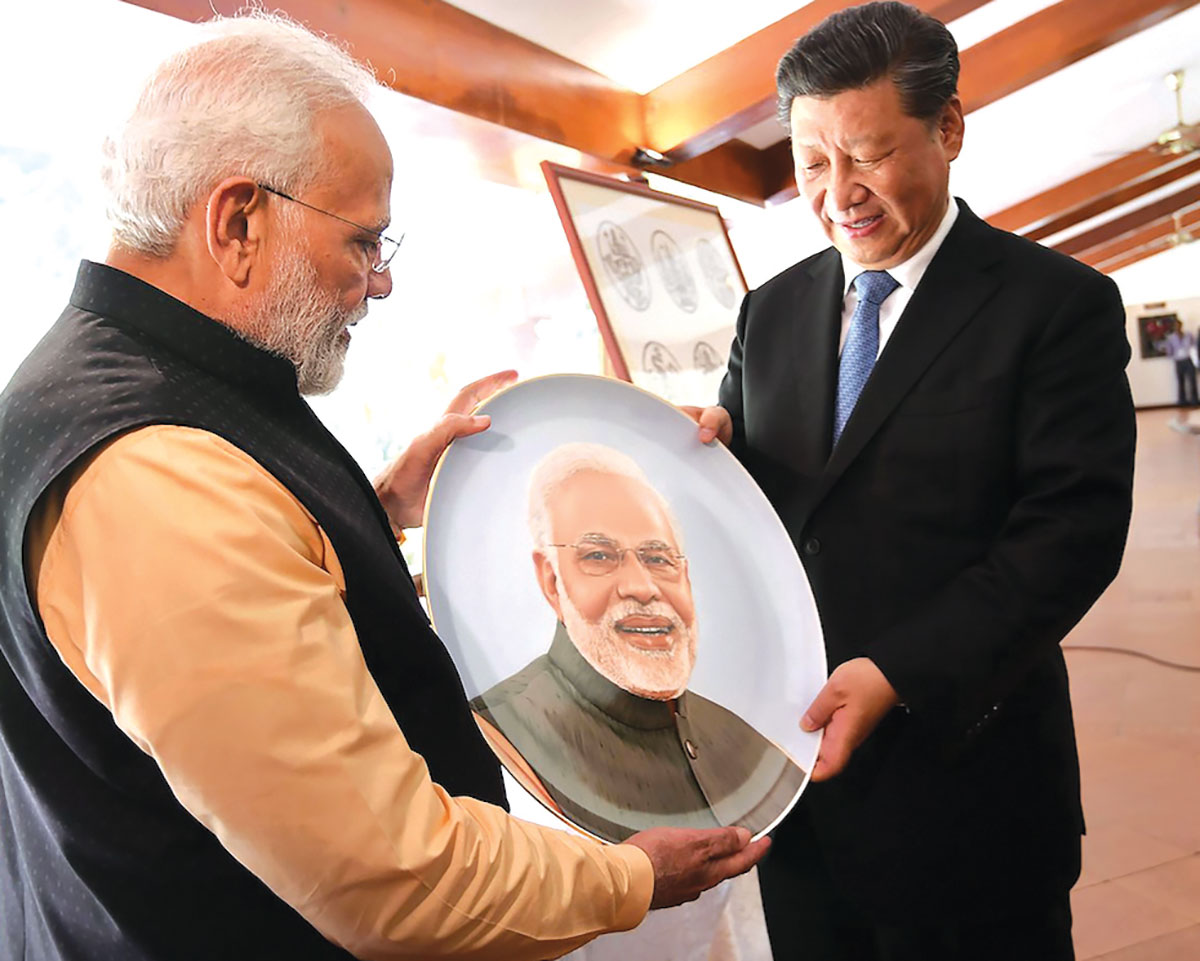
New Delhi is hosting the 18th BRICS Summit at a combustible moment – Xi Jinping’s first India visit in seven years, Putin’s fresh arrival, a Congress spat over BRICS’s worth, and an unresolved Iran war threatening the joint declaration PM Modi desperately wants.
After chairing the grouping three times before, India is hosting its fourth BRICS presidency at a moment when the bloc looks less like a coherent alliance and more like an unwieldy coalition of convenience. The 18th summit, running September 12-13 under the theme Building for Resilience, Innovation, Cooperation and Sustainability, brings together 11 full members – Brazil, Russia, China, South Africa, Egypt, Ethiopia, Iran, the UAE, Indonesia and India – representing roughly 41% of global GDP in PPP terms. For PM Modi, hosting it is both a prestige project and a diplomatic tightrope, with India having run over 350 meetings across 25-plus cities this year to keep the chairship substantive rather than ceremonial.
Congress turns BRICS into a domestic slugfest
Even before the leaders landed, India’s opposition supplied its own subplot. Senior Congress leader P Chidambaram publicly questioned what India has actually extracted from BRICS, saying he didn’t believe the last two or three summits had delivered “tangible benefits or tangible results”, and extended the same scepticism to the SCO, G20 and Quad.
However, his party colleague Shashi Tharoor pushed back within a day, calling India’s hosting a demonstration of “diplomatic convening power” and framing BRICS as an indispensable platform for the Global South’s 100-plus nations, even while conceding the bloc’s internal divisions and India’s trade imbalance with fellow members.
The BJP seized on the split, “Congress exposes Congress”, but the underlying question Chidambaram raised is one serious commentators share: does BRICS produce outcomes, or mostly photographs?
De-dollarisation
The idea of a BRICS currency to rival the dollar has effectively died on the vine, largely because Washington threatened tariffs of up to 100% on members seen as building a rival reserve currency.
India has been the most consistent voice of caution, insisting it never supported a common currency and preferring narrower, practical fixes: cross-border payment interoperability and a proposal to link central bank digital currencies, including India’s digital rupee and China’s digital yuan, without touching sovereign monetary policy.
The numbers underline the gap between rhetoric and reality: close to 95% of India-Russia trade now settles in rupees and rubles, a bilateral shift achieved quietly, while the dollar’s share of global reserves has barely moved from around 58%. De-dollarisation at BRICS in 2026 is less a currency revolution than a payments-plumbing exercise.
Xi’s 24-hour olive branch
The marquee moment is Xi Jinping’s bilateral with PM Modi, his first visit to India since 2019, and the first since the deadly 2020 Galwan clash froze relations.
The two sides have spent efforts since 2024 cautiously rebuilding ties: an LAC patrolling agreement, resumed direct flights, restarted tourist visas and more frequent ministerial contact.
But the substance gap remains stark – bilateral trade hit a record $151.1 billion, yet India’s trade deficit with China has also swelled to a record $112 billion, driven by dependence on Chinese inputs across electronics, solar and pharma supply chains.
Border stability, de-escalation along the LAC and market access for Indian exports top PM Modi’s list; Xi will be pushing India to ease investment restrictions and technology curbs imposed since 2020. Analysts frame this less as reconciliation than as a tactical thaw – both sides using BRICS as cover for a “substantive” conversation neither wants to have unattended.
Delighted to meet President Putin in Delhi, less than two weeks after our meeting in Bishkek.
During today’s meeting we talked about:
Closer trade ties, including implementation of the Programme for Economic Cooperation 2030.
Cooperation in areas like infrastructure, energy,… pic.twitter.com/nLaMDxnDEc
— Narendra Modi (@narendramodi) September 11, 2026
Putin brings defence, energy and rare earths
A day ahead of the summit proper, Putin held his own dedicated sit-down with PM Modi – their second meeting in under two weeks after the SCO summit in Bishkek.
The agenda was heavily defence-and-resource focused: the pending delivery of S-400 air defence systems, a possible Su-57 stealth fighter sale, upgrades to the jointly-built BrahMos missile programme, new nuclear power plant negotiations, and – notably – early-stage cooperation on rare earths and critical minerals, an area where India is seeking to diversify away from Chinese dominance.
Commerce minister Piyush Goyal has separately flagged a bilateral investment treaty and a shared target of pushing trade to $100 billion by 2030, up from roughly $68 billion in 2024-25. For India, Russia remains the reliable hedge – a partner it can extract hard security and energy assets from, without the strategic baggage that comes with Washington or Beijing.
Egypt: the bridge India wants to build
Among the newer members, Egypt has emerged as a quiet Indian priority. Cairo formally joined BRICS in January 2024, and India has worked deliberately to deepen the relationship – elevating it to a Strategic Partnership in 2023, hosting over 15 ministerial exchanges in two years, and convening a dedicated “India-Egypt Partnership in BRICS” conference in Cairo just weeks before the summit.
Bilateral trade rose roughly 35% to $6.8 billion in 2025-26, and Indian investments in Egypt now exceed $5.5 billion, supporting around 50,000 local jobs. India’s calculation is geographic and geopolitical: Egypt is a bridge connecting Africa, the Arab world and Asia, and a moderating voice within BRICS’s fractious West Asia bloc.
Alongside Indonesia – BRICS’s newest big-population member and a fellow non-aligned-tradition democracy – Egypt gives India ballast against being squeezed between the China-Russia axis and the Iran-UAE-Saudi fault lines.
From Bishkek to Delhi, the productive discussions continue.
Happy to have met Dr. Masoud Pezeshkian, the President of Iran. This visit is more special because it is his first visit to India.
We talked about the India-Iran friendship. We believe that we should move forward… pic.twitter.com/DtxWuhB9Ba
— Narendra Modi (@narendramodi) September 11, 2026
The Iran war shadow over the joint declaration
The summit’s hardest problem has nothing to do with trade. The US-Israel war on Iran fractured BRICS’s foreign ministers’ meeting back in May, when the bloc could only issue a chair’s statement acknowledging “differing views” rather than a joint communiqué – Iran demanding condemnation of US-Israeli strikes, the UAE (itself hit by Iranian missiles and having suspended trade with Tehran in August) resisting language that implicated Gulf states which had opened bases to American jets.
India, Russia, Brazil and Egypt have reportedly worked through September to narrow the gap between Iran and the UAE ahead of the leaders’ summit, drawing on the more successful Bishkek Declaration at the SCO, which India, Russia and China all signed onto with pointed language against strikes on Iranian territory.
Whether Delhi can replicate that formula at BRICS – a bloc that, unlike the SCO, includes the UAE – remains genuinely uncertain. A joint declaration mentioning West Asia is possible; a BRICS-brokered end to the war itself is not.
The bloc lacks the institutional machinery, military weight or unified position to mediate an active conflict – at best it can offer a face-saving diplomatic formulation that lets all sides claim their principles were reflected.
The chairship ledger: gains and gaps
India’s year at the helm delivered visible wins – sustained multilateral convening power, incremental progress on the New Development Bank and the BRICS Economic Partnership Strategy 2030, and high-profile bilaterals with Xi and Putin that Delhi could not easily have arranged otherwise.
But the losses are real too: no breakthrough on India’s core asks (market access from China, a firm S-400/Su-57 timeline from Russia), a bloc more fractured on geopolitics than when India took over, and a domestic opposition openly questioning the exercise’s payoff.
BRICS 2026 will likely be remembered less for a single grand outcome than for what it reveals – a multipolar grouping increasingly defined by what its members cannot agree on, held together, for now, by India’s careful diplomatic stitching.
(The writer is a New Delhi-based senior commentator on national, international, defence and strategic affairs, environmental issues, an interfaith practitioner, and a media consultant. Ideas are personal.)